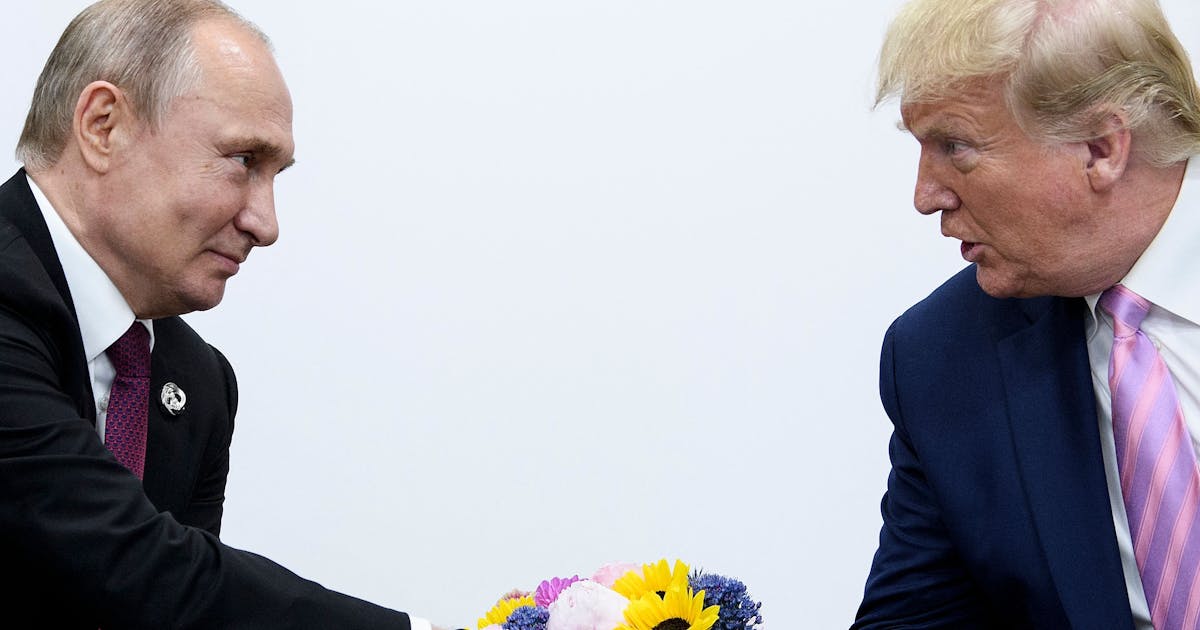
China hits back at Canada with fresh agriculture tariffs

China's fear of gold and silver price rising too much due to China's stand as manufacturing leader in the need for metals at low prices, is going to be China's undoing. Gold and silver are the check on the US empire.
 
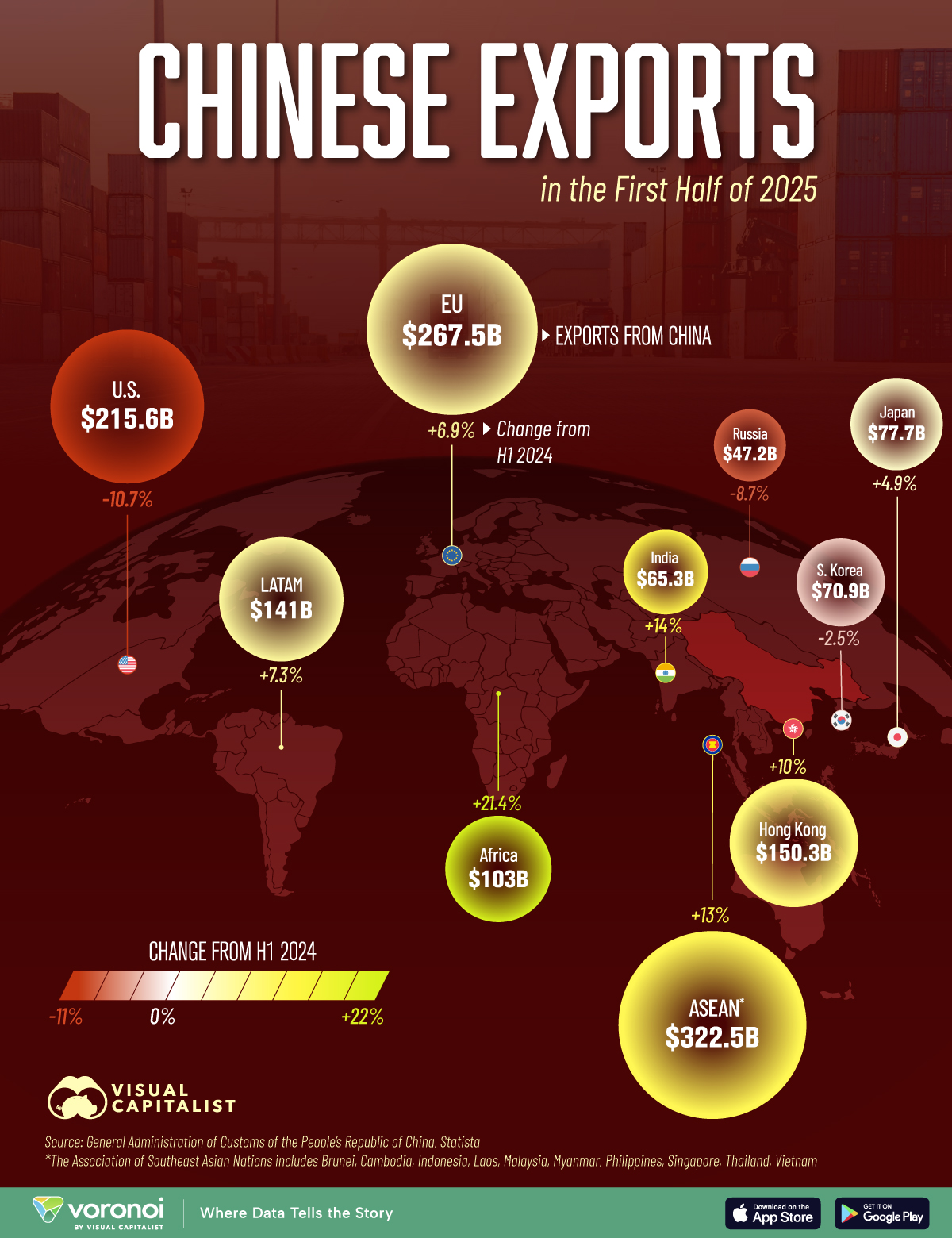
Top-Destinations-Chinese-Exports_Site.jpg
Accepting dollars as good as gold and having the US export dollars as their trade "good" is the dollar empire. Using those dollars china has to buy gold to go to a gold global currency is the defeat of the dollar empire. China is waiting to make a move on the dollar empire, until it is too late, because China is the only nation that has the money and military to defeat the dollar with metal money, yet China is addicted to the crack of her trade empire with trade to the US. Kissinger set it in place that China is the only nation strong enough to defeat the US, while China does nothing and makes the money.

China won't bite the hand that made China a success, wall street investment to move manufacturing from the West to China to import deflation to America from China in cheap goods as the US went from deflationary gold dollars to inflationary fiat money. Despite the Ft. Detrick virUS blamed on China to destroy the old order with Russia sending Europe into crisis too, China knows her place is to serve Washington. Let's see, China fell for the psy-op to divide Europe and China from close partnership in 2022 after the European nations were not into the blame China Washington game. China wanted Iran to not close the Straits to not cause trouble for Washington, China wants to be junior partner to Washington to make the next 50 cents. Western populism fell for the psy-op and went to Putin, China went to Putin believing Russia wants to take down Trump and Republicans.


China sides with Putin, Putin is part of the Republican agenda against Europe to take down the old order with blockchain and crypto. Putin has been a Republican asset since the Bush years.

To view this content we will need your consent to set third party cookies.
For more detailed information, see our cookies page.


Blair told journalist Anna Politkovskaya: “It’s my job as Prime Minister to like Mr Putin.”

Wow, Putin is used as the means to keep Europe submissive to Washington. And China calls this a victory.

When China believes it is defeating Washington, China in fact helps Washington. Yet a move against the dollar could be too little too late. China would need Europe to convince them their European Central Bank gold reserves would save Europe with gold as money. Except China is into bashing Europe with Republican stooges. China is controlled opposition to Washington, a lacky.
 
Last edited:

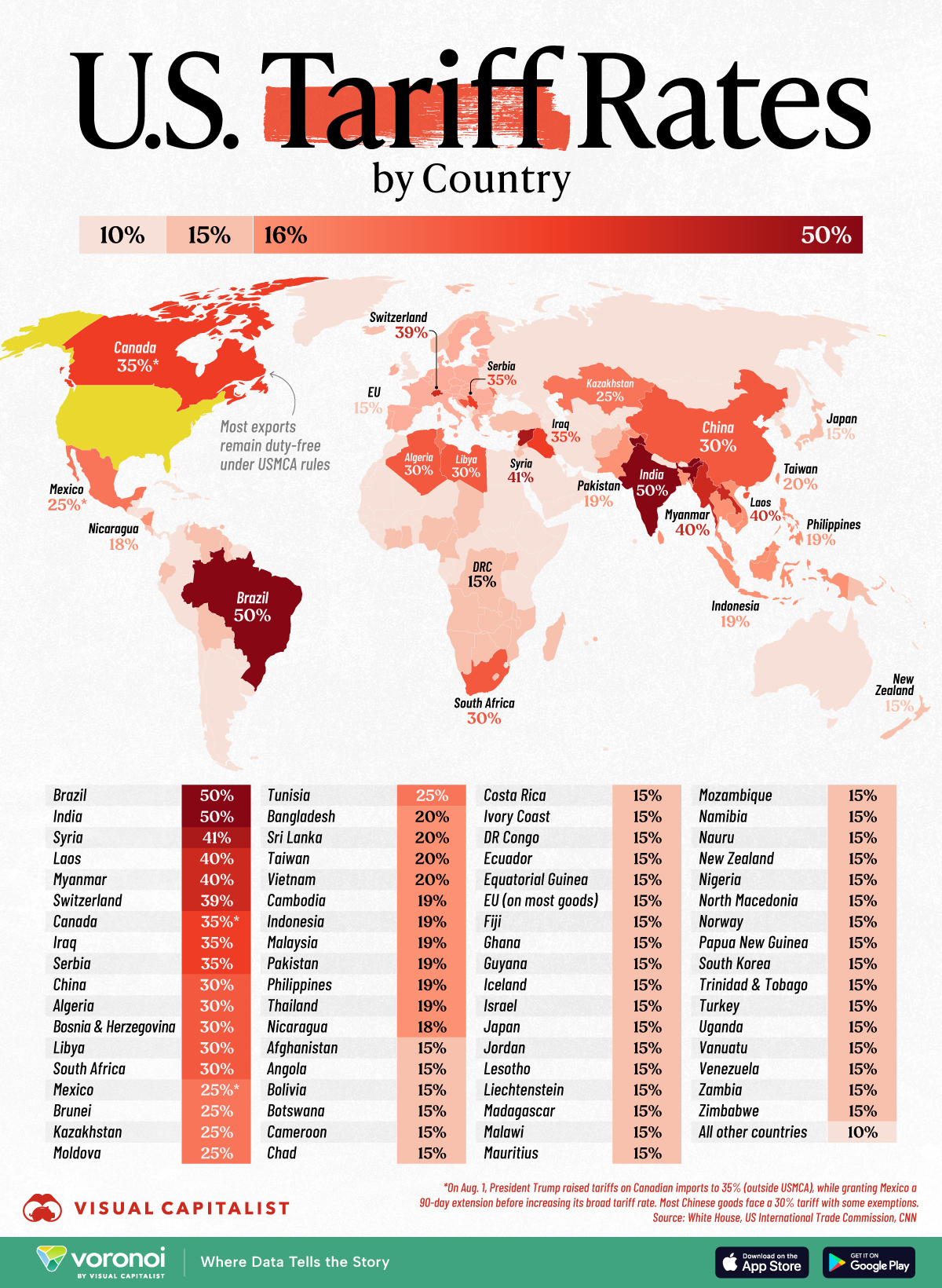
Mapped: U.S. Tariff Rates by Country

August 28, 2025
By Bruno Venditti

How-U.S.-Tariffs-Affect-Each-Country_Site-3.jpg


Key Takeaways​

  • The Trump administration increased tariffs, citing trade deficits and national security concerns.
  • Brazil and India received the highest tariff rate of 50%.
Under the second Trump administration, new tariff levels have been applied to over 80 countries, with rates ranging from 10% to 50%. The U.S. President argues that persistent trade deficits and unfair foreign trade barriers harm American industries and threaten national security, even in cases where the U.S. runs a trade surplus with some of these countries.

This infographic visualizes the new tariff landscape, highlighting how different trading partners are affected. The data for this visualization comes from CNN and the White House.

High Tariffs, Even on Surplus Partners​

India and Brazil both received the highest tariff rate of 50%. Despite the U.S. running a $7 billion goods surplus with Brazil in 2024, it received the steepest rate. In addition to claims that trade with Brazil has been unfair to the United States, Trump has used tariffs to pressure Brazil’s judiciary over a criminal case involving former President Jair Bolsonaro, which the Republican has called a “political execution.”

Similarly, on August 26, 50% tariffs took effect against India as a penalty for its purchases of Russian oil and weapons.

Meanwhile, other major trade partners with large U.S. deficits saw relatively moderate tariffs. For instance, Vietnam ($123 billion deficit), Taiwan ($74 billion), and Japan ($69 billion) were all placed in the 15–20% range. The European Union received a 15% tariff on most goods, despite a massive $236 billion deficit.

微信图片_20250906003858.png

North American Neighbors Hit Hard​

At the beginning of the year, President Trump threatened to impose tariffs of 25% on Mexican imports and 35% on Canadian imports. He justified these threats as part of his strategy to curb illegal immigration, reduce the flow of fentanyl into the United States, and address the U.S. trade deficit with both countries.

On August 1, he raised tariffs to 35% on Canadian goods not covered by the United States–Mexico–Canada Agreement (USMCA), while Mexico received a 90-day extension before any increase takes effect. Since goods that meet USMCA rules of origin are exempt, the vast majority of Canadian exports—over 85–95%—still enter the U.S. duty-free.

Combined, the two countries accounted for over $230 billion in trade deficits with the U.S in 2024.

 
To let China know, the American public never elected Trump once or twice. Trump stole the 2016 election and 2024 election and tried to overthrow the government of Biden. Americans never supported the tariff war.

Auditing is futile because the ballots have been replaced from the stolen elections:


No other major Western G6 nation has computer/machine voting tabulation. It is hand counting for most of Europe. When you don't do hand counting, you get this:

To view this content we will need your consent to set third party cookies.
For more detailed information, see our cookies page.


To view this content we will need your consent to set third party cookies.
For more detailed information, see our cookies page.


To view this content we will need your consent to set third party cookies.
For more detailed information, see our cookies page.


To view this content we will need your consent to set third party cookies.
For more detailed information, see our cookies page.


The deep state stealing elections for the cia Republican Party.

Ignore the down ballot differences, that is the only stat that can be explained. The other stuff is textbook rigged elections in the open. Washington did not hide it because the ballots have been changed and the stolen elections are dangling in front you.

Trump is a dictator, nations that make deals with Trump are worse than the electorate that voted for Hillary, Biden and Harris. And those three won the election. Democrats are controlled opposition. So as China does nothing to defeat MAGA Washington, Democrats let MAGA steal elections without consequence because both parties are run by the cia. Bernie Sanders was not run by the cia and Hillary was, look at events of the Democratic Primary in 2016 to figure the difference between promoted cia candidates and real populist outsiders such as Bernie.

There is no point in having elections in the US because they are stolen elections.
 
Last edited:
Europe was buying natural gas from Russia. China gave green light to Russia for the invasion of Ukraine, and now Europe is switching buying natural gas from Russia in the cheap to more expensive American natural gas in their trade deal. China could make themselves useful and frack their shale for natural gas to under cut American natural gas and sell that cheap gas to Europe in a trade deal to undercut Washington. The trade balance in selling more natural gas to Europe and elsewhere is going to give Trump the trade parity needed to go to crypto as money since you can't run trade deficits with crypto as money. Do something useful.

As China plans for victory over the US in 2045, US is preparing for victory in 2026.

So where Europe was gaining independence, revenge pron from Russia with hate got the Chinese to want Europe punished for "NATO crimes" of the Ft. Detrick virUS. When Europe was welcoming the BRI.

“We are [for the] first time in the history in a situation where the president of the United States and [the] president of Russia seem to share the same view on Europe: the weaker, the better, because they think that it’s better for their own country, which is obviously not right,” Katainen, a former prime minister of Finland, said.


Trump went after the EU, before China:

Donald Trump’s transition team have called EU leaders to ask “what country is to leave next” with a tone suggesting the union “is falling apart” this year, according to the outgoing US ambassador to the bloc.

Speaking days before leaving office, Mr Gardner said it would be “lunacy” and “the height of folly” for the US to ditch half a century of foreign policy in order to support further EU fragmentation or become a “Brexit cheerleader” in Brussels.


Europe is totally dependent on Washington after the Ukraine War and trade deal for natural gas. Unintended consequences of kill whitey for the white skin, gave Europe to Trump. Total blowback on China policies. Would the US go after Korea for being colonies of Japan instead of seeking to defeat Japan for Pearl Harbor. Putin and Jeffrey Sachs and company got China to destroy partners that hated Trump, to throw Europe into Washington's lap.

The only instance where you listen to Putin is when Putin says go to gold. Yet Putin was likely the block on gold at the BRICS meetings and pushed rather for blockchain. The same blockchain that Trump wants.

To nations making temporary deals or deals with Trump, you look like clowns to those that know Trump is a dictator.

Washington had to steal elections to put forth their burn down the system candidate because if events stayed as they were, the American Empire would slowly collapse and China would replace it. So it staged wars, crisis and rigged elections, to keep the empire going. The goal of 2025-2029 is to not deal with Trump, avoid Trump.
 
Last edited:
To view this content we will need your consent to set third party cookies.
For more detailed information, see our cookies page.

Over the past six months, nearly all new job openings in the United States have come from healthcare, elderly care, tourism, or local government.

Almost all other industries are shrinking, particularly manufacturing and federal government positions
 
This is how China buying gold is saving the nations from a US mandated global bitcoin currency.

The fed can't lower interest rates too much with high gold and silver prices. Doing so would risk de-dollarization.

The fed wants to get away with no consequences to their lowering of interest rates, no consequences meaning low gold and silver prices allowing the fed to keep cutting interest rates for a US growing economy.

The goal is to have dollar weakness go to bitcoin, not gold and silver. The fed does not care if lower interest rates goes to ballooning bitcoin prices.

China should want the US to keep high interest rates or low interest rates with high gold and silver prices so the fed loses with rate cuts. And there would be less likely crypto backing the dollar in the US crypto reserve. Gold and silver are the only things that can save the global economy from a mandated bitcoin global currency.

China buying gold during the trade war is combating this agenda.
 
Why mention gold vs bitcoin? The gold vs bitcoin battle is the key battle for the 2020s. China needs a strong military to give China security if China wants global independence from Washington bitcoins.

Qaddafi got bombed because Libya went to gold and did not have the military strong enough to defend from Washington's war on gold and silver:

To view this content we will need your consent to set third party cookies.
For more detailed information, see our cookies page.


AI on this battle

The debate between Bitcoin and gold as potential global currencies involves several factors, including store of value, deflationary nature, and inflation resistance. Let's break down these aspects:
Store of Value

Gold: Gold has a long history as a store of value. It has been used as a medium of exchange and a store of wealth for thousands of years. Its scarcity and durability make it a reliable asset.
Bitcoin: Bitcoin is often referred to as "digital gold" because it shares some of gold's properties, such as scarcity and durability. However, it is a relatively new asset with a shorter track record compared to gold.

Deflationary Nature

Gold: Gold is naturally deflationary because its supply increases at a slow and predictable rate. New gold is mined at a rate that is roughly constant over time.
Bitcoin: Bitcoin is designed to be deflationary. Its supply is capped at 21 million coins, and the rate of new coin issuance decreases over time. This makes it inherently deflationary.

Inflation Resistance

Gold: Gold is often seen as a hedge against inflation because its value tends to rise when the purchasing power of fiat currencies declines. However, gold does not generate income or yield, which can be a drawback.
Bitcoin: Bitcoin also serves as a hedge against inflation. Its fixed supply and decentralized nature make it resistant to the inflationary policies of central banks. However, its price volatility can be a significant risk.

Other Considerations

Liquidity and Accessibility: Bitcoin is more accessible and liquid than gold. It can be easily transferred digitally, making it more convenient for global transactions.
Regulation and Acceptance: Gold is widely accepted and regulated, but it is not as easily divisible or transferable as Bitcoin. Bitcoin, while not yet universally accepted, is gaining traction in various industries and countries.
Technological Advantages: Bitcoin's blockchain technology offers transparency, security, and immutability, which are not features of gold.

Conclusion

Gold is a strong alternative to Bitcoin as a store of value and a hedge against inflation. However, Bitcoin's technological advantages, deflationary nature, and increasing acceptance make it a formidable competitor. The choice between the two depends on individual preferences, risk tolerance, and specific use cases. Both assets have their strengths and weaknesses, and neither is a perfect solution for all scenarios.
====
End of AI chat

The battle between gold and bitcoin, so long as gold has the upper hand, the media and shills don't want you focused on this battle because then there would be a rush to gold to stop Washington. When bitcoin is more popular than gold, then the media and elites are going to be telling you to support backing fiat currencies with bitcoin.

Gold is the only thing that can stop bitcoin as money. And 0.1% of the global population own more than 75% of bitcoin.

AI:

One study by the University of Cambridge estimated that in 2020, around 0.1% of the global population, or approximately 7 million people, held around 90% of the total Bitcoin supply.

Another report by the blockchain analytics firm, Chainalysis, found that as of 2021, the top 1% of Bitcoin holders controlled around 90% of the total supply, while the top 0.1% of bitcoin owners controlled around 65%.
===
End of AI chat

China not rewarding gold investors by instead playing the role Washington wants of China, is only defeating Chinese gold support around the globe and pushing them to bitcoin. China is the only one that can give gold value and if China chooses not to do this, then bitcoin wins by default. As the Chinese know themselves, there are not any other viable opposition to Washington other than China. If China chooses to fold to Washington, it is game over for the nations. The US can then choose to go to bitcoin any day. When China folds, the battle then is fiat dollars vs bitcoin and you have to support a booming US economy with a strong dollar to prevent bitcoin as money. When China folds, you have to cheer for Washington because Kissinger pushed total success of the global economy to China (see FHN post above) for the US to later defeat in a war with China or for China to side with Washington. This is why Trump is praising China, because Trump praises those Trump fears and needs on Trumps side.

China wins... no bitcoin. China loses and there is a greater chance of a bitcoin global economy.
 
Last edited:
To view this content we will need your consent to set third party cookies.
For more detailed information, see our cookies page.

Over the past six months, nearly all new job openings in the United States have come from healthcare, elderly care, tourism, or local government.

Almost all other industries are shrinking, particularly manufacturing and federal government positions

China keeps that going with metal inflation threats to the fed lowering interest rates. If the fed starts to decease interest rates, China should buy precious and industrial metals to lower supply and increase price, this would put pressure on the fed to stop cutting, sending the US economy into a free fall and stagflation. And still keep buying precious metals after for finishing off the US economy. Trump would try to back the US dollar with bitcoin, though it could be too late and gold could be over 5K and reaching 10K per ounce. Meaning gold would be defeating bitcoin.

Europe is the trouble maker then, and probably would side with Washington and bitcoin. The trade deal is the forerunner to decisions on US imposing bitcoin on those nations. If you folded with the trade deal, you are likely to fold to Trump bitcoins.

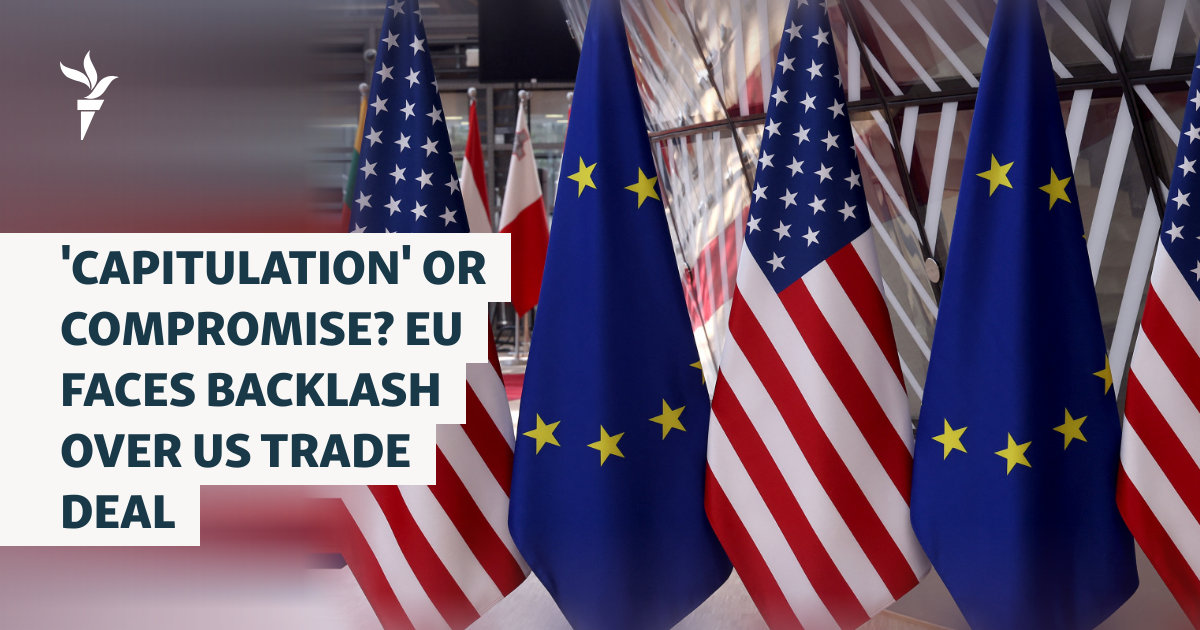
'Capitulation' Or Compromise? EU Faces Backlash Over US Trade Deal​


Europe would capitulate to bitcoin, the same way the commission bent over to kowtow to trump.
 

Easing Chinese EV tariffs on the table, federal ag minister says​

Premiers have called on Ottawa to lift duties as retaliatory tariffs hurt canola industry​

The Canadian Press · Posted: Sep 09, 2025 3:46 PM EDT | Last Updated: 10 hours ago

Any decision on easing tariffs on electric vehicles from China would have to take into consideration impacts on other sectors, federal Agriculture Minister Heath MacDonald said in Winnipeg Tuesday.

Canada, following the lead of the United States, slapped a 100 per cent tariff on Chinese electric vehicles last year and committed to a review within 12 months.

China later imposed tariffs on Canadian canola, in what was widely seen as a retaliatory move that has hurt Canadian producers.

Saskatchewan Premier Scott Moe, who is currently in China, and Alberta Premier Danielle Smith have called on Ottawa to lift its tariffs.

When asked whether Canada might do so, MacDonald said it's "certainly something that we're looking at" but cautioned that other trade concerns are being kept in mind. MacDonald didn't specifically mention the United States, which is also a big importer of Canadian canola and was the first to slap a tariff on Chinese EVs.

"Every decision that we make as a federal government, we want to ensure that we're not jeopardizing a situation that could be ever broader," MacDonald told reporters at the end of a meeting with his provincial and territorial counterparts.

"And not knowing the ... ask of the Chinese government specifically at this point in time, to speculate on any decisions that we make, and to put that speculation into possible jeopardy of another industry or sector, would be inappropriate."

Manitoba Agriculture Minister Ron Kostyshyn said all provinces should be consulted on any possible change to the EV tariffs.

MacDonald said he hadn't yet been briefed on the Canadian delegation to China. Kody Blois, parliamentary secretary to the prime minister, joined Moe on the trade trip.

As part of the meeting in the Manitoba capital, the federal and provincial ministers toured farms and heard from producers who said the tariffs on their canola are hurting.

The canola industry represents 200,000 jobs and $43 billion for the economy, the Canadian Chamber of Commerce has said.

Last Friday, Prime Minister Mark Carney announced a series of trade-related measures, including a $370-million production incentive for the canola sector to help soften the blow of the Chinese tariffs.

The Canadian Canola Growers Association said the package doesn't go far enough and doesn't recognize the tariffs' effects on exporters and processors.

MacDonald said Tuesday that everyone's main goal is to reopen the Chinese market, and he repeated assurances from Carney that more help could be coming in the meantime.

"We said that it wasn't the end," MacDonald said.


Published: September 10, 2025 at 5:00AM EDT

If Canadians were in the driver’s seat, tariffs imposed by Ottawa on Chinese electric vehicles (EV) would have an easier road to the Canadian market.

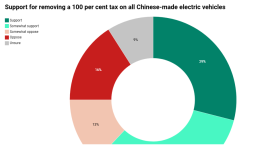
At least that’s according to a Nanos Research survey with CTV News, which found 62 per cent of respondents either support or somewhat support removing a 100 per cent tax on all Chinese-made EVs, in the hopes that China may remove tariffs against Canadian crops like Canola.
1757501046981.png

Agriculture Minister Heath MacDonald said Tuesday a decision to scrap or ease these tariffs is under review, but would include consideration of the impacts on other sectors, and that China had not yet communicated what exactly it wants.

“The prime minister did say there is an EV review. We will see where that leads … the discussions are ongoing,” said Macdonald. “We are in a fragile position, but we are here to support the farmer first and foremost, and if that decision has to be made, then that decision has to be made.”

Canada imposed the tariffs in October 2024, with the government saying at the time it was protecting local manufacturers from China’s unfair trade practices. But since then, the EV market has hit a series of bumps in the road.

Statistics Canada released new numbers Tuesday that show sales of fully electric vehicles dropped 39.2 per cent, while sales of plug-in hybrids have gone down 2.2 per cent. New registrations for hybrid electric vehicles, however, increased 60.7 per cent.

Statistics Canada pointed to new zero-emission vehicle registrations having continued a downward trend, as incentive programs in several parts of the country had dried up.

Last week, Prime Minister Mark Carney announced a pause in the federal government’s EV target of 20 per cent of light-duty vehicles sales to be zero-emission by 2026.

Simon Fraser University professor Jonn Axsen says in the long term, Canada is heading towards electric mobility and that dips in the market reflect normal variations in a transition. He also says a strategy to boost sales is likely to include incentives, mandates and a more open market.
 

China Launches Anti-Dumping Probe Against Some US Chips​


By Bloomberg News
September 13, 2025 at 7:56 PM GMT+8

China’s commerce ministry announced an anti-dumping probe against certain US analog chips, according to a statement Saturday.

The announcement came a day after the US added more Chinese companies to its entity list and ahead of a meeting between Treasury Secretary Scott Bessent and Chinese Vice Premier He Lifeng in Madrid for talks on trade and other issues.
 

Sept. 15, 2025, at 4:13 a.m.

BEIJING (Reuters) - China will continue an investigation into U.S. chip giant Nvidia after preliminary findings showed it had violated the country's anti-monopoly law, China's market regulator said on Monday in a statement.

Beijing's decision to extend an antitrust probe into Nvidia's acquisition of Israeli chip designer Mellanox Technologies - claiming the California-based company violated the terms of the Chinese market regulator's 2020 conditional approval of that deal - comes as the U.S. and China hold trade talks in Madrid.
 

Posted: Sep 15, 2025 7:46 PM EDT | Last Updated: 1 hour ago

Premier Scott Moe, back in Saskatchewan after a trip to China to try and resolve a trade dispute, said Monday he's hopeful they can find a solution.

Moe told reporters he and Prime Minister Mark Carney's parliamentary secretary Kody Blois met last week with Chinese officials who oversee an agency responsible for imposing steep tariffs on Canadian canola products.

They also met with Li Chenggang, the international trade negotiator with China's Ministry of Commerce, and other industry officials.

The meeting "was a little more positive than I think I expected," Moe said at Saskatoon's airport.

"I think there's confirmation that China's very interested in not looking back, but looking forward in recalibrating the trade relationship that we have, and moving forward in a pragmatic and reasonable fashion that is good for both countries."

Saskatchewan producers say they've lost around $650 million since the tariffs came into effect.

"The biggest impact is on the current commodity prices. So what we as farmers can can get at the elevator when we sell our canola, that's what's being affected the most by these tariff," Bill Prybylski, farmer and president of Agricultural Producers Association of Saskatchewan, said in an interview.

He said Ottawa increased interest-free limits on loans which buys them some time — but those loans need to be repaid and financial commitments need to be met.

Prybylski said farmers can't just quit canola, as crop rotations are locked in months — even years — ahead.

Moe said his recent meeting was just one step in many that will be needed for both countries to resolve the trade dispute.

But Jim Farney, the director and a professor at the Johnson Shoyama Graduate School of Public Policy at the University of Regina, said the premier's visit doesn't go far enough.

"The issue is much more important to Saskatchewan than it is to Canada as a whole so I don't thing it moves the needle federally other than a sign of co-operation," he said in an interview. He said however, Moe's efforts are not in vain, as it keeps more lines of communication open.

Moe said it's likely Blois and other federal ministers will be in China "very soon" to continue speaking with officials. Carney could have an opportunity to meet Chinese President Xi Jinping at global summits later this year, he added.

"I would say engage, engage, engage," Moe said.

"All these negotiations, whether it be in the United States of America, China or any other country in this new world order ... we need to represent Canada boldly without apology."

Carney's office did not immediately respond to a request for comment about whether Blois and ministers plan on visiting China again for further talks.

His office said last week the meeting in China was constructive.

Moe said the talks are signals of other positive developments, including the relaunching of the Joint Economic and Trade Commission, a forum where Ottawa and Beijing can attempt to sort out bilateral trade issues.

He also said Ottawa's decision to pause its electric vehicle sales mandate also shows Canada is open to "moving forward in a broader discussion, in a pragmatic and strategic way."

While Moe has previously said he would like Ottawa to remove the electric vehicle tariff, he said Monday that Canada must find the right balance in dealing the United States and China.
 

Users who are viewing this thread

Country Watch Latest

Latest Posts

Back
Top