China hits back at Canada with fresh agriculture tariffs

Canada looks to improve strained relations with India and China as foreign minister plans visit​

Canada must ‘ensure we have a bilateral relationship with significant economic powers in the Indo-Pacific,’ Anita Anand said

Published Sep 23, 2025

Foreign Affairs Minister Anita Anand will travel to China and India in the coming weeks as her country looks to improve its strained ties with two major Asian economies.

Anand said she’ll meet with her counterparts in those countries and discuss ways to cooperate amid the issues that have plagued relationships in recent years — including a tariff battle with China and accusations of transnational repression and violence by India.

Prime Minister Mark Carney has sought to ease tensions with both countries after disputes flared up under his predecessor, Justin Trudeau. U.S. protectionism has brought Canada’s need to diversify trading relationships into sharp focus, and China’s tariffs on Canadian canola, pork and seafood are cranking up the economic pain.

China imposed those tariffs in response to Canada’s decision last year to align with the U.S. by adding 100 per cent levies to Chinese electric vehicles, and 25 per cent on its steel and aluminum products. While the EV tariffs are currently undergoing a review, removing them now may threaten delicate trade talks with the U.S., ahead of an upcoming review of U.S.-Mexico-Canada Agreement.

That leaves the question of what Canada can realistically offer China as it seeks relief from China’s agricultural import taxes.

Carney says he will meet China's president 'at appropriate time' to talk trade​

PM also confirms foreign minister will visit China 'soon'​


CBC News · Posted: Sep 23, 2025 8:42 PM EDT | Last Updated: 38 minutes ago

Prime Minister Mark Carney on Tuesday said he's anticipating a meeting with Chinese President Xi Jinping as the two nations work to build a new, stable trade relationship as they navigate the United States' changing policies.

Carney made the remarks after what he described as a positive conversation with China's next-highest ranking official, Premier Li Qiang, in New York City.

"We had a very constructive set of discussions which built on earlier phone calls, which built on exchanges between our trade ministers. Those discussions will deepen," Carney said, speaking to reporters after the United Nations General Assembly.

"I will expect, at the appropriate time, to be meeting with President Xi JinPing but [also] continuing this dialogue with the premier."

Following a meeting with Chinese Premier Li Qiang, Prime Minister Mark Carney said there's a range of opportunities to broaden Canada and China's trade relationship, including clean and conventional energy and agriculture, and that he had an 'open discussion' with the premier about steel tariffs.

Carney said there are a range of opportunities to broaden Canada and China's trade relationship, including clean and conventional energy and agriculture. He said he also had an "open discussion" with Li about steel tariffs and confirmed Foreign Affairs Minister Anita Anand will be visiting China "soon."

Anand's office said she will also be going to India.

Canadian businesses, analysts and lower-level politicians have pressured Carney this year to improve the country's trade relationship with China as part of the response to U.S. President Donald Trump's trade overhaul. In June, Carney described negotiations with China as "a top priority."
 
IF China wants leverage to force the US to capitulation in trade negotiations. Tell the US that China would have the Chinese commodity markets only trade in gold and silver in physical delivery and paper contracts for only one bar to one paper contract. No 100 to one paper to physical. Also drain the global exchanges of physical gold and silver. Washington would cry like children. The goal is not bidding up gold and silver, it is about shortages in the West of gold and silver. If gold prices go down and you hold paper, then your bet lost. If you hold physical and gold down does 50 dollars, you still win with owning physical. Paper gold is casino nonsense. Physical gold is true wealth. Same is true for silver.
 
This is a big fear of the Evil Empire: shortages on the exchanges of physical gold and silver. The evil empire does not care about shortages of paper gold and silver on the exchanges, because there can be endless amounts of paper gold and silver traded on the exchanges. The fear to Washington is low supply of physical gold and silver, and this would jump precious metal prices and show weakness of both bitcoin as the anti-dollar play and of dollars. BRICS can have a platinum backed currency because of South Africa and Russia (leave Palladium for auto parts). SCO can have a gold backed currency because of China's reserves. And the yuan can be redeemable in silver for Chinese citizens in currency holdings. This would totally defeat the Evil Empire. The unknown is Europe and parts of Latin America. You have leverage in deflationary goods, green technology, EVs, and market access. If you roll out the red carpet to Europe and Latin America weeks after getting support from BRICS and SCO nations, then you could peel a few nations in Europe to China. Tell then you seek partners and want their European gold holdings to be worth its true value to help Europe pay off their debt, invest in the economy of Europe and back their euros with gold if Europeans choose to do that in long term plans. Offer investments in Europe and market acess to China. The monetization of metal would totally rival the dollar and bitcoin.

To view this content we will need your consent to set third party cookies.
For more detailed information, see our cookies page.


Trump wants to go to bitcoin and is gonna provide an excuse for doing so. The goal to monetize bitcoin began in 2008. The sooner the dollar is defeated with gold and silver, the weaker bitcoins position would be. If China went to gold in 2010 (though China did not have the military to defend this position then), bitcoin would have not been monetized and it would have been a 100% gold global monetary system. The longer China waits the more bitcoin expands. Be friends with those bullied by the Evil Empire. And tell Putin to not wage more wars on Europe as this could push Europe into the arms of Trump.


As the cia trolls on PDF promoted Tesla, with a PE ratio way out of wack, and got rich off of a cia linked op - Musks links to NASA, bitcoin is the same. The US with bitcoin as money would be the same as Tesla stock owners with Tesla stock as global money, incredible riches to buy the global economy and for the US to build a military capable of defeating China because of the vast amounts of money that can easily pay 35T in debt in one payment. The US cornered bitcoin and is planning to make it global money. The only thing stopping that is precious metals.

You can tell those that made trade deals with the US to leave the agreements, that Chinese trade would take care of their economies. You don't want nations in trade deals leading to the bitcoin push by Trump, as Trump would seek to build on those trade agreements.
 
Please ignore the fake economic data out of the US, to wage trade wars, the US faked their employment data to show a stronger than real economy to make the US look trade war proof and that it could outlast those it was waging trade wars. Then it revised the data to urge the fed to cut interest rates. The cos-play administration of Trump is manipulating the markets because if it does not, the US implodes very fast.

The fake data out of Washington, the government assassination two weeks ago and many more things are Trump chimping out because of US weakness. Faking it, false flags and other means of manipulation are the remaining cards of a dying Empire. China needs to exploit this by going to gold. Bitcoin is the only thing to reverse this US implosion for a total US takeover of the global economy with bitcoin.
 
Last edited:
Would this ban by China be a form of temporary sanctions, as a bargaining move:

To view this content we will need your consent to set third party cookies.
For more detailed information, see our cookies page.


To view this content we will need your consent to set third party cookies.
For more detailed information, see our cookies page.


To view this content we will need your consent to set third party cookies.
For more detailed information, see our cookies page.
 
Last edited:
China reroutes clothes exports to Europe after US tariffs upset trade

Published 5 HOURS AGO

ftcms%3A0407bc94-ce94-4d44-a8ac-75cde10fb2b3


China’s textile exports into the EU have surged as manufacturers hit by heavy US tariffs redirect goods to Europe, the European textile industry body has said.

EU imports of Chinese clothing and textiles increased by 20 per cent in value and volume in the first half of 2025, compared with last year, according to Euratex data shared with the Financial Times. The majority of the value increase came from an approximately €2bn rise in cheap clothing imports.

“We are talking about this tariff war and we see that China is exporting less to the USA,’’ said Mario Jorge Machado, president of Euratex. ‘‘We see a significant amount of it exported to Europe but [it] also connects with a decrease in price in the articles we are importing.”

“The Chinese companies, because they cannot sell in the United States, are behaving in a very aggressive way to sell in Europe.”

The knock-on impact of US tariffs has been coupled with the EU’s slow progress to cut the number of packages flooding into the bloc from online sellers such as Temu and Shein. The European Commission has proposed scrapping its €150 de minimis threshold, below which parcels can be sent to the EU duty-free, and charging a flat €2 fee on packages with a value under €150 instead. Member states must agree on the change before it becomes law.
 

Brazil's beef exports to China jump 38% in September amid US tariffs

October 9, 20252:21 AM GMT+8Updated 4 hours ago

SAO PAULO, Oct 8 (Reuters) - Brazil's beef exports to China rose 38.3% in September from a year earlier, reaching 187,340 tonnes, industry group Abrafrigo said on Wednesday, helping push total monthly exports to a record high.

China is the largest market for Brazilian beef, and has increased purchases as part of its broader strategy to avoid agricultural goods from the United States amid an ongoing trade dispute.

Global demand for beef has helped Brazil offset the impact of U.S. tariffs on its exports, Abrafrigo said. In August, the U.S. imposed a 50% tariff on shipments of several Brazilian goods, including beef, which already had a 26.4% tax levy.

Latin America's largest economy has been expanding exports to both new and traditional markets amid a global trade reshuffle triggered by U.S. tariffs, with similar trends also seen in soybean exports, which also reached record volumes.

Total beef exports, including fresh and processed meat, edible offal, and tallow, generated $1.92 billion in revenue in September, with volumes reaching 373,867 tonnes, up 49% in value and 17% in volume year-on-year.

"This strong performance came in the second month of additional tariffs imposed by the U.S. on Brazilian products, showing the sector's resilience and ability to seize new commercial opportunities," Abrafrigo said.

Exports to the U.S., Brazil's second-largest beef market year-to-date, fell 41% in September to $102.9 million.

The European Union became the second-largest destination last month, led by Italy, the Netherlands, and Spain. EU purchases totaled $131.7 million, up 106% from a year earlier.

Abrafrigo said 130 countries increased purchases of Brazilian beef this year, while 48 reduced them.


Brazil posted record monthly shipments of pork and beef in September, driven by strong global demand and market diversification, according to industry and government data released this week.

Brazil, the world’s top beef exporter and among the largest pork exporters, is increasing business with China and Mexico after the U.S. imposed a 50% tariff on shipments of several Brazilian goods, including beef, in August.

Exports surged despite steep tariffs imposed by the United States in August, as increased shipments to China, Brazil’s top beef importer, and to Mexico, helped offset lower U.S. demand, according to beef industry group Abiec.
 

Russia is the largest supplier of corn to China in 2025​

17:48 | Oct 7, 2025

According to the results of the first eight months of this year, Russia exported more than 287.000 tons of corn to China, which is three times more than in January-August of the previous year (96.000 tons), reports the federal center "Agroexport".

As specified, in monetary terms, the supply of Russian grain to China increased 3.1 times, to $70 million compared to $22 million in 2024.

As a result, based on the results of January-August, Russia topped the ranking of corn suppliers to China


Brazil becomes China’s leading soybean supplier

China’s soybean imports have undergone a major shift in 2025, with purchases from Brazil surging to record levels, according to a recent economic report cited by Agência Brasil.

The report shows that the South American nation has become the leading supplier of the commodity to the world’s largest soybean importer.

Between January and August this year, China imported over 77 million tonnes of soybeans from Brazil, while Argentina also expanded its exports after temporarily lifting export taxes on the crop.
 

Updated: 2025-10-09 09:54

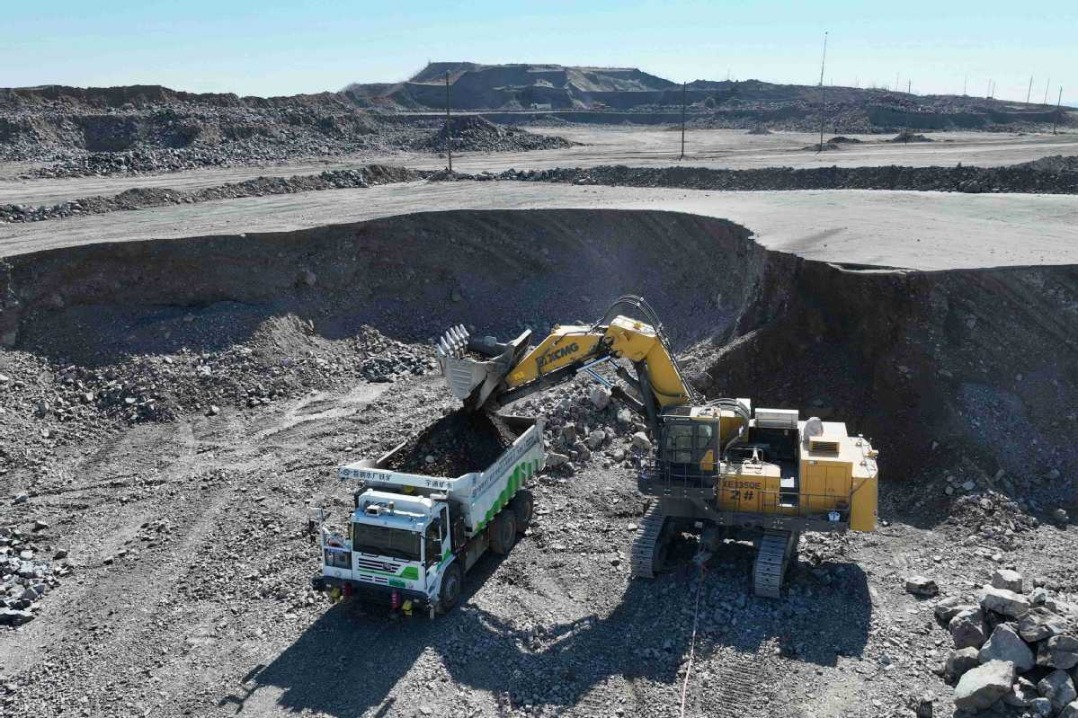
BEIJING - China's commerce ministry announced on Thursday to impose export control measures on technologies related to rare earths, with immediate effect.

China also decided that foreign organizations and individuals must obtain dual-use items export licence before exporting certain rare earths related items to countries and regions outside China, the Ministry of Commerce said in a statement.
 

China adds 14 foreign entities to unreliable entity list​

Updated: 2025-10-09 16:54

BEIJING - China on Thursday announced placing 14 foreign entities, including Dedrone by Axon and TechInsights Inc and its branches, on an unreliable entity list, according to the Ministry of Commerce.

The foreign entities are prohibited from engaging in import and export activities related to China, and are forbidden from making new investments in China, according to an announcement by the ministry.

Organizations and individuals within China are prohibited from conducting transactions, cooperation and other activities with these entities, particularly the transmission of data and provision of sensitive information to them.
 

China hits US vessels with retaliatory port fees

Move comes as Beijing seeks leverage ahead of face-to-face meeting between Donald Trump and Xi Jinping
October 10 2025

ftcms%3A479c5db9-4364-4ca6-8083-c68679246242

From October 14, ships owned by US companies or individuals must pay Rmb400 a tonne to dock © Cheng Xin/Getty Images
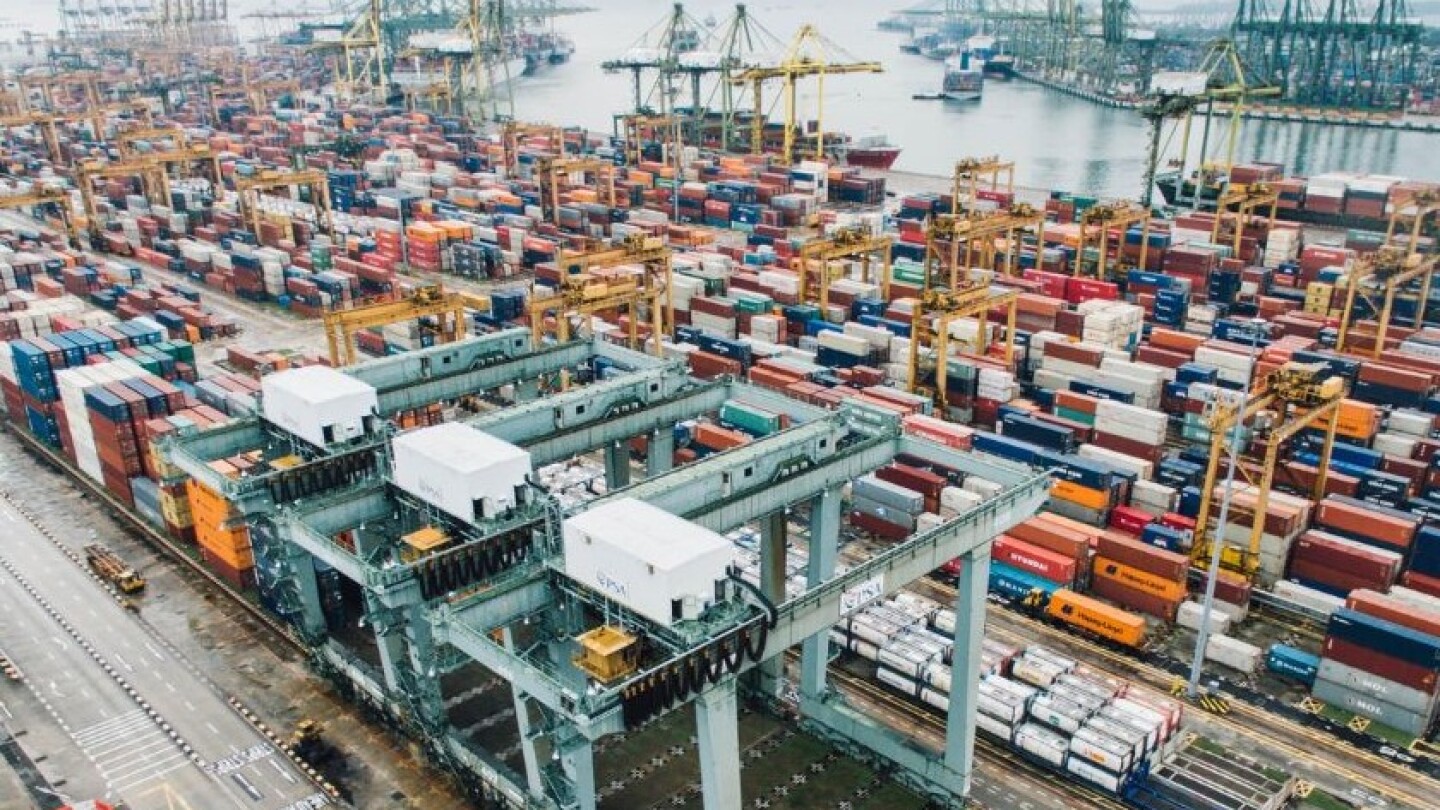
China will impose fees on US-owned ships docking at Chinese ports, the latest in a series of retaliatory moves against the Trump administration that are likely to escalate trade tensions between the world’s two biggest economies and military superpowers.

Beijing has fired a volley of trade measures at Washington this week as it seeks leverage ahead of a face-to-face meeting between Presidents Donald Trump and Xi Jinping expected to take place in South Korea this month.From October 14, ships owned by US companies or individuals must pay Rmb400 ($56) a tonne to dock, China’s transport ministry said on Friday.

The rate, which also applies to foreign-owned vessels made in the US, will increase by Rmb240 each year to Rmb1,200 a tonne by April 2028.The fees and schedule broadly mirror rules announced by the US in April, which come into effect next Tuesday.

The US is requiring -built vessels docking at US ports to pay $18 a tonne or $120 per container discharged. The US rates will also increase over three years.Beijing’s state-owned Global Times newspaper warned this week that China would take “necessary” and “far-reaching” countermeasures against foreign actions “targeting Chinese operators, vessels or crew engaged in international maritime transport and related services”.

The US embassy in Beijing did not immediately comment.The move came a day after China’s commerce ministry unveiled new export controls on rare earths and related technologies.

They marked the first time Beijing deployed its own version of a so-called foreign direct product rule, a measure used by the US to sever China’s access to some semiconductor-related products through third countries.

Also on Thursday, Beijing announced new restrictions on shipments of some battery anodes and on lithium cathodes and precursors as well as equipment for making batteries.Earlier on Friday, the Financial Times reported that China had stepped up enforcement of its controls on chip imports, as Beijing seeks to wean the country’s technology sector off US products such as Nvidia’s artificial intelligence processors.

The expanded export curbs on rare earths and batteries highlight China’s sweeping control over the supply chains of critical materials, components and technologies that underpin large swaths of global manufacturing, including the car and defence sectors.Jens Eskelund, president of the EU Chamber of Commerce in China, said the latest rare earths restrictions would “add further complexity to the global supply chains” by widening the scope of items that export controls apply to and by introducing curbs over the use of related technologies outside China.He added that the “most immediate concern” regarding export controls was the backlog of export licence applications still awaiting approval.
 
Abstract: The Chinese Ministry of Transport issued a notice on October 10th, announcing that starting from October 14th, 2025, special port fees will be charged to US ships to counter the unilateral sanctions imposed by the United States on China's shipping industry. This measure will be implemented in stages, with a maximum rate of 1,120 yuan per net ton, attracting attention from the global shipping industry.

---

1. Background of the event: US provocation triggers reciprocity

2025 On April 17, 2011, the Office of the United States Trade Representative launched a "301 investigation" into China's maritime, logistics, and shipbuilding industries, and announced that from October 14, port service fees will be charged to Chinese ships and ships operated or built by Chinese companies. This move by the US side has been accused of violating international trade principles and the China-US maritime trade agreement, seriously disrupting the maritime trade order between the two countries.

China's countermeasures this time are based on the "Regulations of the People's Republic of China on International Maritime Transport" and the basic principles of international law, approved by the State Council, and aimed at safeguarding national interests and industry fairness.

---

II. Fee standards: Increase in stages, with a maximum of RMB 1120 per net ton

According to the announcement, the special port fees are charged per voyage, and the rates will be gradually increased in four stages within four years. The specific standards are as follows:

· From October 14, 2025: RMB 400 per net ton

· Starting from April 17, 2026: RMB 640 per net ton

· Starting from April 17, 2027: RMB 880 per net ton

· Starting from April 17, 2028: RMB 1120 per net ton

(Note: If less than 1 net ton is calculated as 1 net ton, only the first port will be received at multiple ports of the same voyage

3. Scope of application: Five categories of U.S. ships affected

This fee covers the following U.S.-related ships:

1. Ships owned by a U.S. company, organization, or individual

2. U.S.-operated ships

3. Ships owned or operated by enterprises with a US shareholding of more than 25%

4. Ships flying the American flag

5. Ships built in the United States

The fees shall be collected by the maritime authorities at the port of call to ensure the effectiveness of implementation.
 
The situation shows that China and the United States will engage in a long-term trade war, and this phenomenon will not end in the short term. In the future, there will be many kinds of frictions, from trade, economy, technology, to the end of all-out war.
 
How many hulls does this impact? This may be insignificant and more of a "feel good" reaction.
 

Users who are viewing this thread

Back
Top