
Feroze
Trusted Member


China hits out at British Steel nationalisation
5 hours ago
Share
Save
Add as preferred on Google
Peter HoskinsBusiness reporter
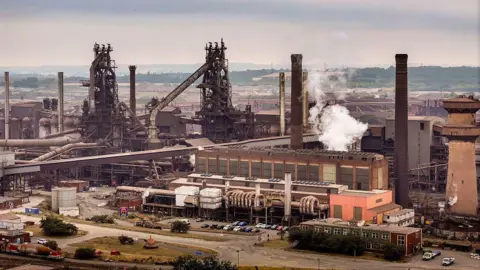
China has hit out at the nationalisation of British Steel, saying it "firmly opposes and is strongly dissatisfied with the British government's decision".
On Thursday, the UK government said that taking the loss-making firm into public hands would protect jobs and safeguard a "vital national capability".
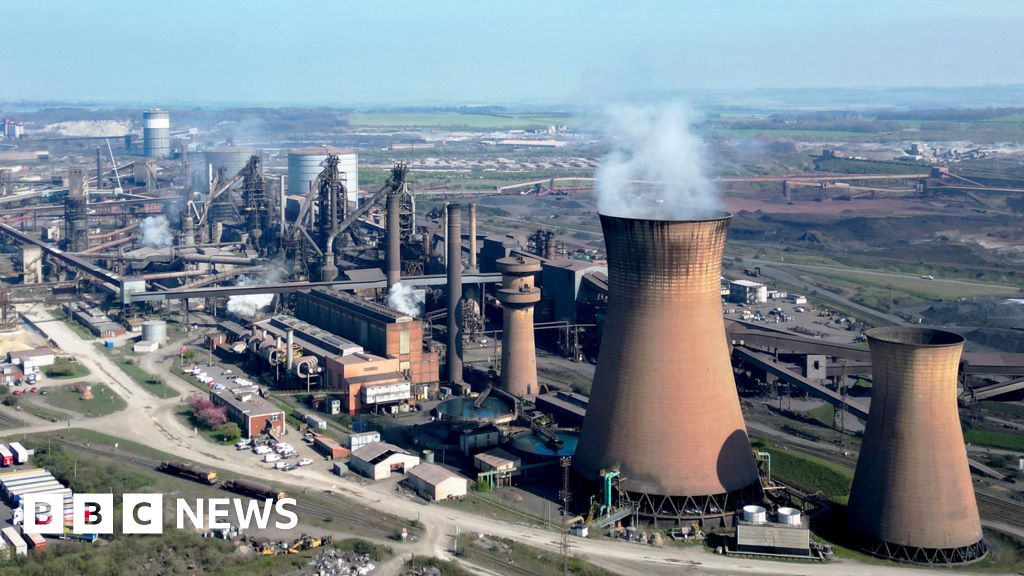
The UK took control of British Steel's operations in Scunthorpe last year, though it was still owned by China's Jingye Group, limiting the government's ability to steer its future.
China's commerce ministry said on Friday that the moves "seriously infringed upon Jingye's legitimate rights and interests and severely undermined the confidence of Chinese companies investing in the UK".
Why has British Steel been nationalised?
It also called on Britain to "faithfully fulfil" its obligations under the China–UK Bilateral Investment Treaty.
"Disregarding Jingye's significant contribution to the UK economy and society, the British side forcibly took control of the company in the name of national security," the ministry said.
The statement added that Beijing would monitor developments closely and support Chinese firms to protect their rights, but did not specify what protecting Chinese companies' rights might involve.
The decision to nationalise British Steel threatens to strain the relationship between London and Beijing just as Andy Burnham is set to become the prime minister on Monday.
The incoming PM will have to weigh his approach to the issue with the economic benefits of ties with the world's second largest economy.
The China-UK Bilateral Investment Treaty is a legally binding agreement that was signed in 1986. It was designed to promote and protect investments between the two countries.
The nationalisation came after Parliament on Wednesday passed legislation allowing the government to bring the steel industry into public ownership under circumstances where it met a public interest test.
Jingye is seeking compensation, having previously said the business was losing £700,000 a day. The BBC has been unable to get a response from Jingye itself to Thursday's announcement.
Small Business Minister Blair McDougall told the House of Commons on Thursday that the government will appoint an independent valuer in the autumn "to make a judgment on any compensation that is due, and that could be nil".
By taking British Steel into public ownership the government now has the power and freedom to decide on the future of the plant, while keeping the blast furnaces going.
It is unlikely the government will want to continue running the business in the long term as it is costing it more than a million pounds a day.
In March, the National Audit Office said the Scunthorpe steelworks was costing the government about £1.3m a day.
Business Secretary Peter Kyle told the BBC the government would need to cover the running costs "for the immediate future".
The steelworks directly employs around 2,700 people in Scunthorpe as well as supporting thousands more jobs in the supply chain.
The UK imports most of its steel, with major suppliers including the European Union, the US, China and India.
If the plant stopped producing virgin steel, the UK would become the only member of the G7 group of leading economies without the ability to make it.
Steel output elsewhere in Britain relies on electric arc furnaces (EAFs), which recycle scrap metal to turn it into new products.
Although the government's long-term strategy is for all domestically produced steel to come from EAFs, which are cheaper and much less carbon-intensive to run, it does not want to lose production at Scunthorpe yet.
The plant produces types of steel that are not yet made anywhere else in the country, much of it needed by Network Rail and the building industry.
The fear had been that losing this output would be disruptive and make the country too reliant on imports. So the decision was made that Scunthorpe should be kept open until alternatives are available.
British Steel was last under state ownership in 1988 when it was privatised by Prime Minister Margaret Thatcher's government.
China hits out at British Steel nationalisation
The UK government said taking the firm into public hands would safeguard "a vital national capability".
 www.bbc.com


