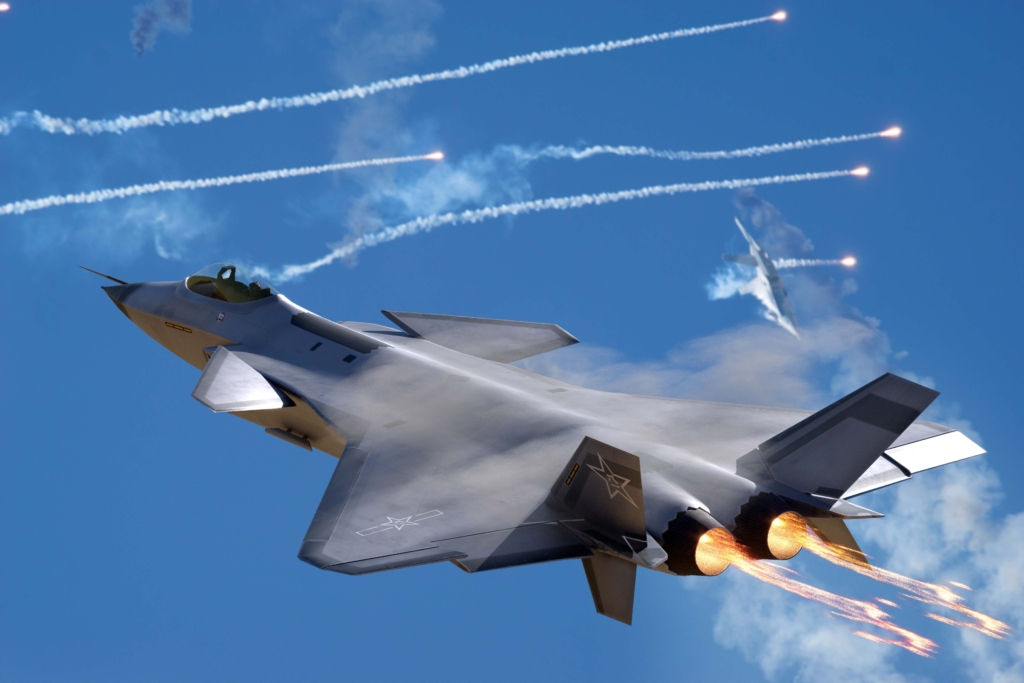
China may soon have more J-20 stealth fighters than the USAF has F-35As

I think the J-20 production line will slow down once China has successfully tested the 6th gen VCE on both J-36 and J-50 around 2030.
We don't know when the Third World War will break out, but it's acceptable to prepare in advance. For me, four thousand aircraft is not too many. It would only cost a few hundred billion dollars over ten years. That's no problem.
Don't forget that in 2016 we were constantly preparing and getting ready, and the production line was proceeding according to plan.
 
We don't know when the Third World War will break out, but it's acceptable to prepare in advance. For me, four thousand aircraft is not too many. It would only cost a few hundred billion dollars over ten years. That's no problem.

Basically China will not slow down as the J-20 will be mass produced until 2030, then starting in 2030, the 6th gen aircrafts will be mass produced instead of the J-20.

This means that China will not lower its guard for the possible outbreak of the ww3.
 
Basically China will not slow down as the J-20 will be mass produced until 2030, then starting in 2030, the 6th gen aircrafts will be mass produced instead of the J-20.

This means that China will not lower its guard for the possible outbreak of the ww3.
lol, the Chinese people will never be satisfied with the current military output. They will only demand that the government invest more funds.
 
lol, the Chinese people will never be satisfied with the current military output. They will only demand that the government invest more funds.

The period of 2021-2025 was just to put China on par with the US on most domains, also ahead in some domains.

The period of 2026-2030 will push China ahead of the US in most domains, and overwhelmingly ahead in some domains.

We just need to be more patient.
 
If China had such plans for J-20, it wouldn't be building 4/4.5/4.5+ geneeration fighter jets in 2026. Common sense dictates that China will not build more than 1200 J-20 and 1500 J-35.
Actually, in the first half of 2026, apart from the J-15, Chinese military enthusiasts did not notice any new J-10 or J-16 fighters being produced.
 
J-16D is still a main product. J-16 hasn't been noticed for a while though.

J-15T is still obviously a main product as well as the DT electronic warfare version. This is more because J-35 simply doesn't have the heavy payload capacity of the Flanker and PLANAF wants and needs both along with MUM-T UADFs/CCAs which have been spotted on 004 Fujian carrier.
 
China can build newer type of stealth jet without slowing down J-20 production with its unrivaled industrial might.

China can also build 5000 J-10C. But will it ? And should it ? Chinese production capability is not under question here. The need and requirement is.
 
Basically China will not slow down as the J-20 will be mass produced until 2030, then starting in 2030, the 6th gen aircrafts will be mass produced instead of the J-20.

This means that China will not lower its guard for the possible outbreak of the ww3.

Chinsese VCE engine is exlected to be fielded in J-36 and J-50 around 2035. Do you think china will wait for this engine or start initial block production of J-36 and J-50 with WS-10 variant ?
 
China can also build 5000 J-10C. But will it ? And should it ? Chinese production capability is not under question here. The need and requirement is.

Yes it could build 5000 J-10C with 10 years of production similar to how it can produce approx another 2500 5th gens in the same 10 years of production to total around 3000 5th gens by 2035-36.

Until 6th generation hit mass production, the most capable fighters available to PLAAF is still the J-20 and J-35, not the J-10. Therefore, it is not a correct logical statement to make that China can produce 5000 J-10 but has no need or requirement therefore it won't produce 3000 5th gens between 2017 and 2035 (or whenever 6th gen mass production starts). J-10 and J-20 + J-35 are not remotely in the same capability spectrum and therefore the need and requirement calculus is vastly different. China will produce at least another 2000 5th gen fighters before scaling production down.

The timeline for the two 6th gen programs agree with this. The production rate for 5th gens agree with this. The many new production facilities for 5th gens agree with this. The scaling back of 4.5 gen production agree with this (all 4.5 gen fighters appear to have slowed or production stopped except for J-15T, J-15DT and J-16D). The fact that outside of Su-57, F-35, and when approved also J-35 export options exist for the international market lines up with this. Not to mention that KAAN is expected to enter service around the time China's 6th gens enter PLAAF service. KF-21 has no internal bay and the model that will is not off powerpoint. The Su-75 hasn't got a flying prototype yet. The AMCA is mostly powerpoint still. 5th gens will be here to a long time and produced into the mid 2030s and most likely later for the US and China and for the others, produced into the 2040s at least.
 
Last edited:
In the scenario I envision, if World War III involves tens of millions of troops, I believe 4,000 aircraft would be too few. We cannot guarantee the scale of World War III, but preparing for the worst requires a massive amount of supplies and equipment to be ready in advance.
Both sides in the Russia-Ukraine conflict have mobilized over a million troops, but it can only be considered a regional war.
 
Chinsese VCE engine is exlected to be fielded in J-36 and J-50 around 2035. Do you think china will wait for this engine or start initial block production of J-36 and J-50 with WS-10 variant ?

China will field the J-36 and J-50 in smaller batch by 2027 with the 2D nozzles WS-15.

As the VCE, China has demonstrated in 2025 that the engine development is progressing smoothly, most likely ahead of the XA103 with also slightly higher benchmark.

And I don't think it needs to wait until 2035, most likely testing on the J-36 and J-50 in the 2030, then probably mass produced before 2035.

Since the J-20 started to test the WS-15, and by 2026, it starts the mass production.

If the VCE can be tested on the J-36 and J-50, then the complete 100% version of the J-36 and J-50 will be available in mass production before 2035.
 

500 J-20s and Counting: China's Stealth Fleet Overtakes the F-35A

2026-07-19 11:02

E5A496E5AA92EFBC9AE4B8ADE59C8BE6AEB2-20E7AA81E7A0B4500E69EB6-E69EB6E69EB6E6BBBFE8A39DE99BB7E98194E587BAE5BBA0-2030E5B9B4E8A19DE58D83E69EB6E981A0E8B685E7BE8EE8BB8D.jpg.webp


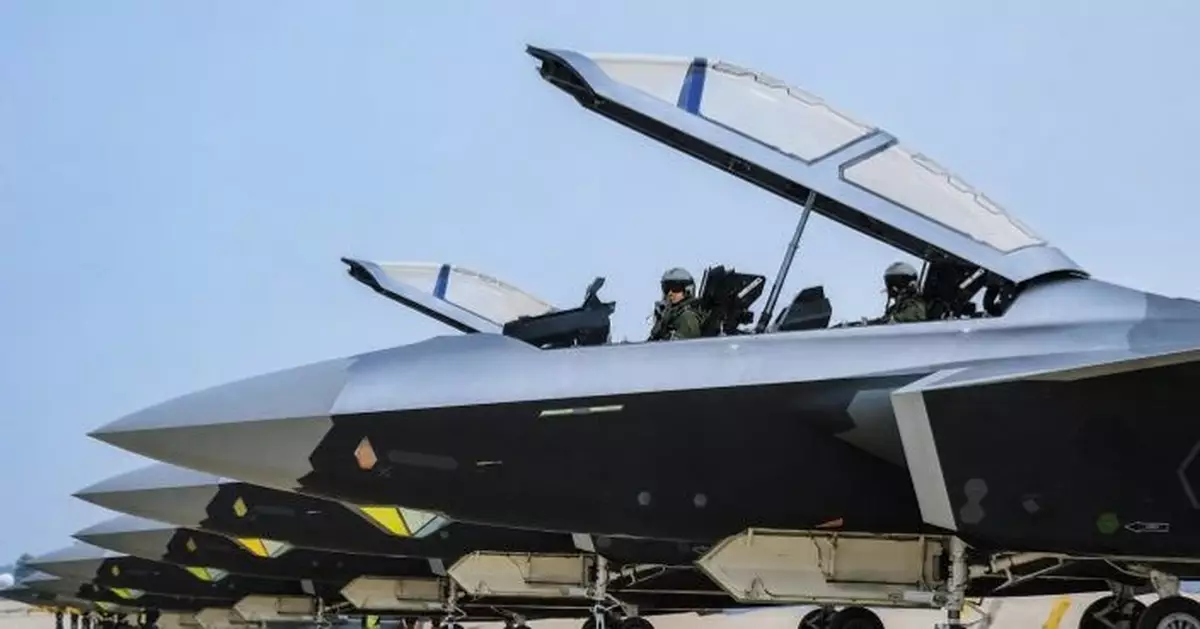
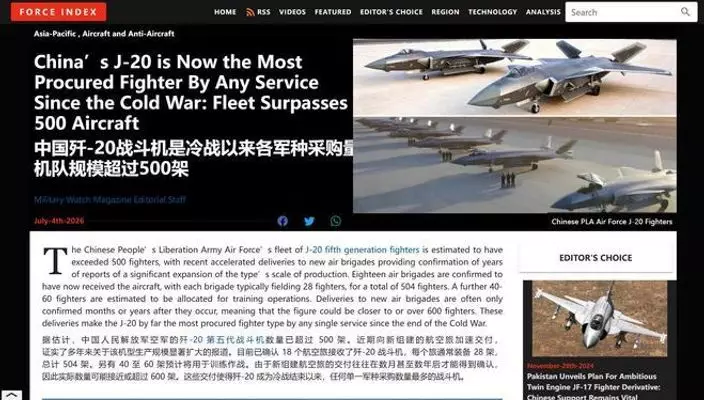
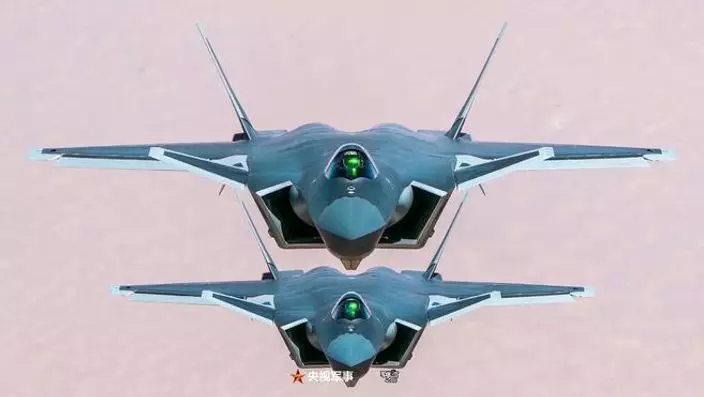
Military Watch Magazine confirms it: the PLA Air Force's fifth-generation J-20 fighter fleet has now broken past 500 aircraft. Eighteen air force brigades have received the type. At roughly 28 jets per brigade, that puts the confirmed total at 504, with another 40 to 60 aircraft in training use.

J-20 is now the largest single-country fighter jet procurement since the Cold War.

New deliveries often surface in outside reporting only months or years after the fact. That means the real number could already sit closer to 600. Either way, the milestone carries weight globally. The J-20 has become the largest single-country military fighter procurement since the Cold War ended.

Put the numbers side by side and the picture sharpens fast. Since mass production began in 2011, the US Air Force has taken delivery of roughly 430 to 450 F-35As, the land-based variant that lines up most closely with the J-20's role. Count the F-35B and F-35C variants too, and Lockheed Martin's overall delivery total does grow larger.

But that comparison hides more than it reveals. The three F-35 variants share little beyond their avionics, and each runs on a separate production line. F-35 deliveries are also scattered across more than 20 countries. Judged at the level of a single air force, the F-35A has already been overtaken. The Chinese Air Force alone now fields more J-20s than the US Air Force has F-35As.

J-20 dominates the F-35A in both total orders and delivery speed.

Look at production trends and the gap only widens. J-20 annual deliveries are now estimated at 100 to 120 aircraft. F-35A annual deliveries, by contrast, have slipped to just 24 to 40, hobbled by technical problems and cost-control struggles. The only jet that can match the J-20's pace is its own stablemate, the J-16, which has likewise delivered close to 500 units.

The F-35 program's troubles run deeper than slow output. Its critical "Technology Refresh 3" upgrade has run into severe technical bottlenecks in recent years, and that has directly disrupted production and delivery pipelines. Some newly built F-35s have reached customers in an incomplete state. Specifically, certain jets left the factory without a full active electronically scanned array (AESA) radar or the complete suite of advanced sensors.

In other words, a considerable share of these supposedly fifth-generation stealth fighters have arrived at the US Air Force, the program's primary customer, functionally unfinished. For a considerable stretch after delivery, they cannot carry out the full combat missions their design specifies. Their initial role has been forced down a notch, in most cases limited to basic flight training or restricted system testing. That falls well short of the initial operational capability expected of a mature, fully equipped fifth-generation fighter.

None of that has ever happened on the J-20 production line. Every J-20 that rolls out comes fully equipped, complete avionics suite, complete AESA radar. Not one has ever shipped as a half-finished product.

The contrast is stark. One side delivers over a hundred complete aircraft a year. The other sees shrinking deliveries, with jets sometimes leaving the factory missing components. That gap in industrial capability and program management deserves more scrutiny than the raw headline numbers.

Why has J-20 production reached such heights?

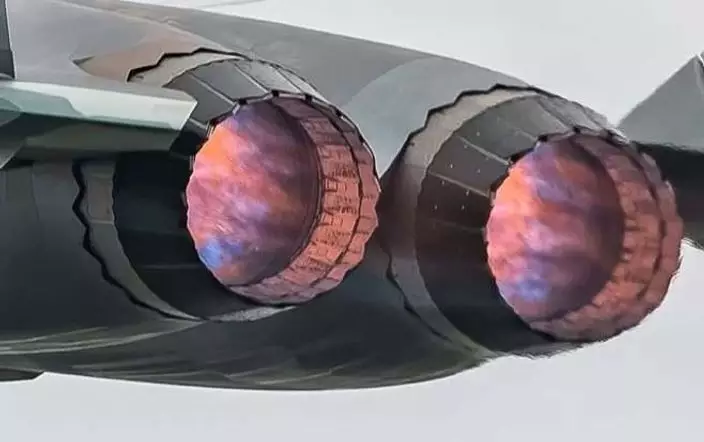
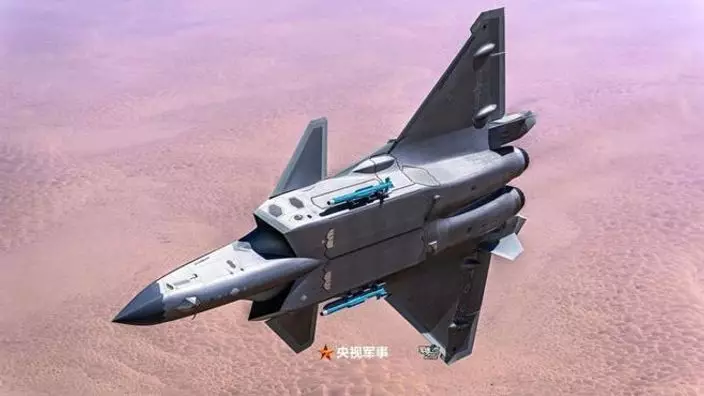
Domestic engine production cleared the biggest bottleneck first. In 2020, the J-20 switched from the Russian-made AL-31FM2 to the domestically produced WS-10C, and output saw its first wave of expansion. In December 2025, the first batch of J-20As fitted with the WS-15 engine was confirmed in test flights, delivering clear gains in power generation, maintenance needs, range and flight performance. Once propulsion stopped depending on outside suppliers, the production line could run at full speed.

Domestic engine breakthroughs unlocked the J-20's production surge.

Cost control matters just as much. Analysis cited in the report notes that the J-20's operating cost runs comparable to the fourth-generation J-11. That stands in sharp contrast to the US military, where the F-22 was retired early over prohibitive operating costs and the F-35's per-flight-hour cost remains stubbornly high, driven further up by upgrade delays and rework.

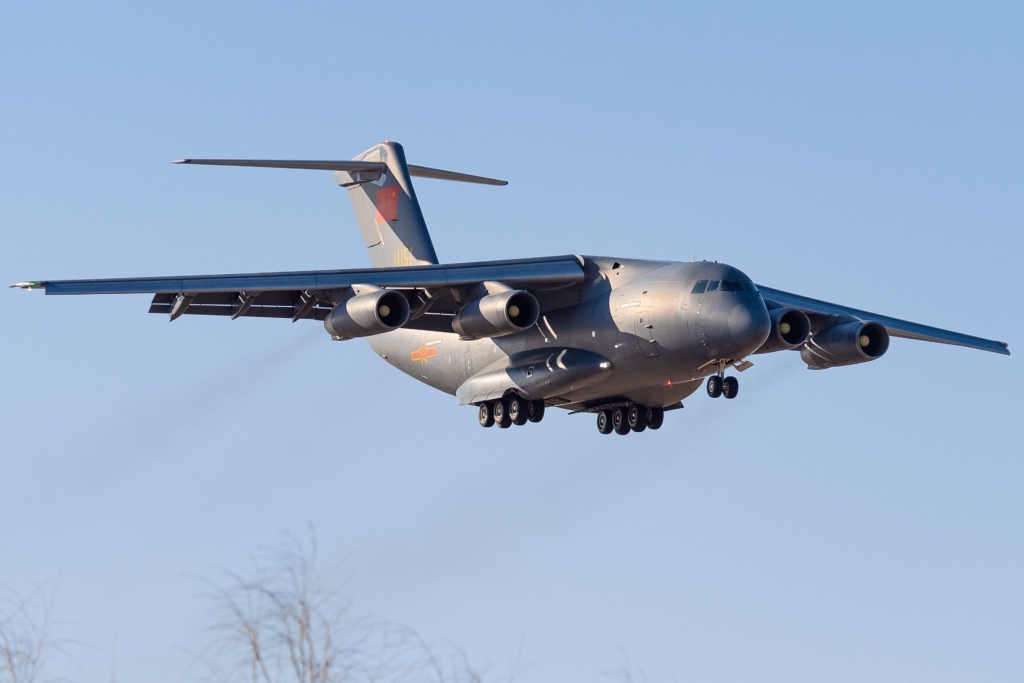
If a fifth-generation fighter can run at fourth-generation cost, procurement scale can expand dramatically. The Y-20 transport tells a similar story. After switching to the WS-20 engine, its output accelerated too, with external analysis putting active service numbers above 100, closing in on the US military's fleet of 146 C-17As within just a few years. Domestic aero-engines are unlocking production on both the large-aircraft and fighter-jet fronts at once.

Lower maintenance and operating costs made mass deployment possible.

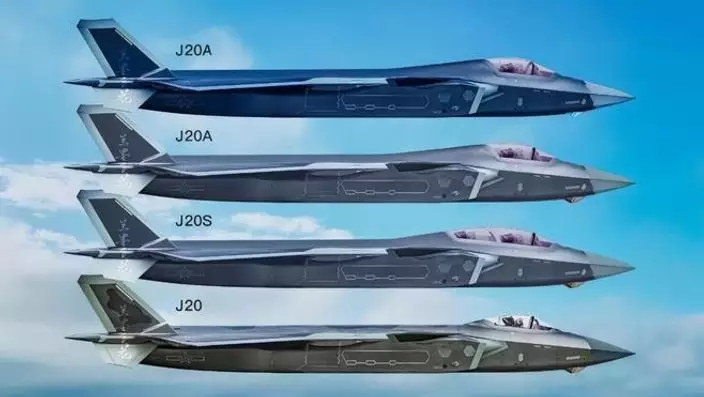
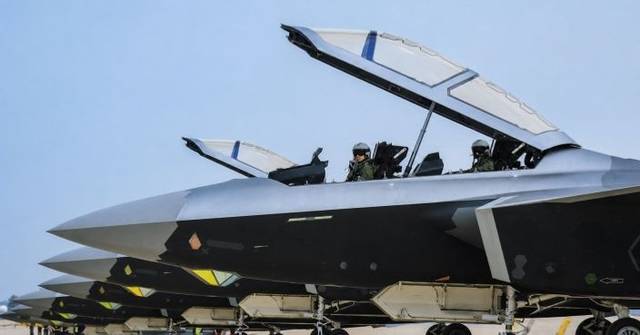
Role diversification adds a third driver. The J-20 is no longer just an air-superiority fighter. The twin-seat J-20S variant has already been unveiled, built to serve as an airborne command post and drone-control platform. A single J-20S can direct multiple GJ-11 stealth drones in coordinated operations, elevating the J-20 from an air-combat platform to an aerial combat node. That shift naturally drives demand higher.

New variants turned the J-20 from fighter jet into combat node.

A January report from the UK's Royal United Services Institute (RUSI) puts the number even higher. It estimates the Chinese Air Force will field roughly 1,000 J-20s by 2030. Set against the global picture, that figure is striking: the US Air Force's combined F-22 and F-35A fleet currently stands at only around 800.

The F-22 side of that fleet has long struggled with a mission-capable rate hovering below 60% due to maintenance issues, meaning perhaps fewer than 120 are truly ready for deployment at any given moment. The J-20 benefits from newer design standards and lower maintenance complexity. With its production line still climbing, the fleet's overall serviceability rate far outpaces the F-22's.

Training drills keep expanding the J-20's tactical role.

One more comparison stands out. At the current pace of 100 to 120 aircraft a year, the J-20 fleet could indeed surpass 1,000 around 2030. China's sixth-generation fighter is expected to enter service in the early 2030s, which means J-20 production may gradually shift toward the sixth-generation program once it peaks.

That "fifth-generation lays the groundwork, sixth-generation takes over" rhythm stands in sharp contrast to the production gap the US experienced between the F-22 and F-35. The F-22 line shut down back in 2009, and it took nearly a decade before the F-35 reached mass-delivery capability. Between the J-20 and China's sixth-generation fighter, the transition looks almost seamless.

Ten years ago, when the J-20 first took to the skies, outside observers were still asking whether it could even be built at scale. Ten years on, the answer speaks for itself: a fleet exceeding 500 aircraft, annual production above 100, and continuously refined A and S variants. China's aviation industry has made a leap over this decade that no slogan could capture as clearly.


China may soon have more J-20 stealth fighters than the USAF has F-35As

Why China's J-20s are on course to surpass the number of F-35s in service with the USAF, but not the total number of F-35s.
Aaron Spray
July 6, 2026

A-pair-of-Chengdu-J-20s-flying-1-1024x666.jpg


China’s fighter jet numbers are opaque and shrouded in secrecy, but it appears the number of PLAAF J-20s may be approaching the point at which they surpass the number of US Air Force F-35As.

As a disclaimer, China does not release inventory numbers (the US does), and it is unclear how many aircraft are lost to mishaps or are not combat-worthy (data points that the US discloses).

Around 500 J-20s now estimated in PLAAF service

In September 2025, China OSINT watcher @RupprechtDeino posted, “Hey !! J-20 serial number 63106 has arrived at the Changchun Air Show 2025… even more important, finally it is one where the construction number is visible: CB10300, aka from Batch 10 & the 300th J-20 in total!”

To view this content we will need your consent to set third party cookies.
For more detailed information, see our cookies page.


Due to Chinese secrecy, estimates are often educated guesswork, based on factors such as identified serial numbers and satellite imagery. It is not possible to confirm the serial numbers are accurate or used for messaging.

China also appears to have a de facto export ban on the J-20. This makes it more difficult to assess the capabilities of the aircraft, although it means all J-20s produced are for the PLAAF (unlike the F-35).

At the beginning of 2026, think-tank Rusi’s Justin Bronk estimated that China had 320-350 J-20s in service by the end of 2025 with an annual production rate of 120.

To view this content we will need your consent to set third party cookies.
For more detailed information, see our cookies page.


In June 2026, OSINT account @Hurin92 posted an updated estimate with @RupprechtDeino and calculated that China had around 500 J-20s in service.

Soon to be the most acquired fighter jet of any service

A recent article by the pro-Russian website, Military Watch Magazine, claims that the Chinese Chengdu J-20 is now the most-produced fighter of any service since the Cold War. However, this seems premature.

Chinese J-20 at air show


Photo: Ministry of National Defense of the People’s Republic of China


While there are multiple issues with this statement (including implied equivalence of the platforms), it is worth noting that the PLAAF has been acquiring the jet in massive numbers in recent years.

The only fighter jets that come close in terms of delivery numbers are the F-35 and Chinese J-16.

Taken together, US and Chinese fighter jet deliveries accounted for around 85% of all frontline fighter jet deliveries in 2025.

A total of 191 F-35s were delivered in 2025 to the US Air Force, US Marines, US Navy, and export air forces. This number was especially high due to lower deliveries in 2024, allowing Lockheed to clear stored aircraft refused delivery following issues with the Technology Refresh 3 update.

Lockheed has delivered over 1,300 F-35s of all variants to all customers, of which around 550-580 are estimated to have been delivered to the US Air Force. For now, this remains (marginally) above estimates of J-20 deliveries to the PLAAF.

Additionally, around 630-650 F/A-18E/F Super Hornets have been delivered to the US Navy since the type entered service in the 1990s. The final Super Hornets are on order by the Navy, and Boeing is expected to end production in 2027.

Chinese PLAAF still lacking tanker aircraft

The transformation of the Chinese PLAAF is breathtaking, but also needs some qualifications. While China is acquiring new fighter jets at a rate of around 200 per year, its total number of jets in service does not appear to have grown.

Chengdu J-20 chinese stealth fighter jet


Photo: Mike Mareen / stock.adobe.com

This is because China had many obsolete aircraft like the J-6, J-7, J-8, Q-5, etc, and others in service. These appear to have been largely withdrawn from use, and some are reported to be retrofitted as one-way attack drones/cruise missiles.

In fact, IISS Military Balance data shows PLAAF combat aircraft (fighters/multirole/ground-attack) dropping from around 2,453 in 2007 to around 2,065 in 2025.

A notable area lacking in the Chinese PLAAF (at least for now) is tanker aircraft. China is estimated to have only a couple of dozen tanker aircraft made up of Ukrainian-supplied Il-78s as well as some configured YY-20As and H-6U/DU aircraft. The USAF has around 75% of the world’s tankers depending on counting methodology.

Xian Y-20U


Photo: N509FZ / Wikimedia Commons


To compensate for the lack of tanker capacity, aircraft like the J-20 (and seemingly the J-36) are built with large internal fuel volumes. Something similar with Russia’s Flanker family.

Without tankers, the PLAAF will likely have the range to threaten the First Island Chain (e.g., Taiwan, some Japanese southern islands), but it may struggle to project airpower past that.

With the Shenyang J-35 facilities only a few years away from full rate production as well, but the 6th gen designs probably more than a decade away from IOC, much less full rate production, do you anticipate the PLAAF and PLANAF building up both 5th gen numbers to replace all the remaining but the 4.5 designs; approx. 1200-1300 fighters and fighter bombers, especially over the next 10 years?
 
With the Shenyang J-35 facilities only a few years away from full rate production as well, but the 6th gen designs probably more than a decade away from IOC, much less full rate production, do you anticipate the PLAAF and PLANAF building up both 5th gen numbers to replace all the remaining but the 4.5 designs; approx. 1200-1300 fighters and fighter bombers, especially over the next 10 years?

Just a note, you can pretty much bet that PLAAF 6th gen (at least one of them) would be reaching IOC before 2036. All the semi-reputable mouthpieces are hinting both fighters to reach some form of IOC (initial finished product) sooner than Chinese military watchers are expecting and the military watchers have been expecting mid 2030s.

However, it is pretty much a sure thing that mass production of 6th gens is years further from that. 5th gens will remain in production until then so yes approx 1200-1300 5th gens is quite accurate. I personally expect more units of 5th gens to equip PLAAF and PLANAF, far more than 2000 total by 2036.

~120x J-20 per year
~150 to 180 J-35 per year (hints and facilities for production both have been indicating much higher production rate compared to J-20 and J-35 is said to be considerably expensive)

So for J-20 that would be 500 existing + 120x10 = 1700
Lets suppose J-35 reaches peak mass production rate in 2 years and manage 150 units before peak mass production (already roughly 35 units), total J-35 would be 150 + 150x8 = 1350

Total 5th gen fleet would be approx 3050 unless 6th gen programs are faster and reach mass production sooner at which point 5th gen production slows or stops.

PLAN wants to operate something like 7 to 10 fixed wing carriers by 2040. Suppose they speed up with 004 established as the first nuclear powered super heavy carrier and once satisfied with 004, they mass produce it 2 sister ships at a time with 4 units within that one generation and then a following generation overlapping with this timeline to total 3 existing and just 2 set of sister ships to make 7 total carriers by 2040 (following gen of 004 would no doubt already be built by then), that is still a carrier wing of on average 30 J-35 if we assume that the J-15s are phased out by then. That's already approx 210 J-35s just on deck (001, 002 will carry far fewer than 004). There's usually 2 to 3 aircraft to supplement the one on deck for rotations and replacements so the carrier wing already requires between 400 and 600 J-35.

6th gen carrier fighters are either going to take much longer or are not part of this set (J-36, J-50). To convert one of these into carrier fighter would probably be another 10 years so mass production closer to 2040.
 
Just a note, you can pretty much bet that PLAAF 6th gen (at least one of them) would be reaching IOC before 2036. All the semi-reputable mouthpieces are hinting both fighters to reach some form of IOC (initial finished product) sooner than Chinese military watchers are expecting and the military watchers have been expecting mid 2030s.

However, it is pretty much a sure thing that mass production of 6th gens is years further from that. 5th gens will remain in production until then so yes approx 1200-1300 5th gens is quite accurate. I personally expect more units of 5th gens to equip PLAAF and PLANAF, far more than 2000 total by 2036.

~120x J-20 per year
~150 to 180 J-35 per year (hints and facilities for production both have been indicating much higher production rate compared to J-20 and J-35 is said to be considerably expensive)

So for J-20 that would be 500 existing + 120x10 = 1700
Lets suppose J-35 reaches peak mass production rate in 2 years and manage 150 units before peak mass production (already roughly 35 units), total J-35 would be 150 + 150x8 = 1350

Total 5th gen fleet would be approx 3050 unless 6th gen programs are faster and reach mass production sooner at which point 5th gen production slows or stops.

PLAN wants to operate something like 7 to 10 fixed wing carriers by 2040. Suppose they speed up with 004 established as the first nuclear powered super heavy carrier and once satisfied with 004, they mass produce it 2 sister ships at a time with 4 units within that one generation and then a following generation overlapping with this timeline to total 3 existing and just 2 set of sister ships to make 7 total carriers by 2040 (following gen of 004 would no doubt already be built by then), that is still a carrier wing of on average 30 J-35 if we assume that the J-15s are phased out by then. That's already approx 210 J-35s just on deck (001, 002 will carry far fewer than 004). There's usually 2 to 3 aircraft to supplement the one on deck for rotations and replacements so the carrier wing already requires between 400 and 600 J-35.

6th gen carrier fighters are either going to take much longer or are not part of this set (J-36, J-50). To convert one of these into carrier fighter would probably be another 10 years so mass production closer to 2040.
IMHO, your numbers seem very high, especially considering the cost of all the equipment, and China’s conservative approach. IMHO, perhaps 2000 5th gen fighters (probabaly ~1400 J-20 and 600 J-35) in total by 2040 seems to be more along the lines of how China trends; growth but within a doctrine of first island chain dominance.

By 2050, your numbers seem more likely, as what you describe appears to be the world class military Xi has outlined he desires. China wants to save money to be able to put it towards quickly building their 6th gen aircraft in mass starting in the late 2030s.

It was in part the overspending on the military that contributed to the fall of the Soviet Union, and one thing they hammer home in China is don’t follow the mistakes of the Soviets.
 

Users who are viewing this thread

Country Watch Latest

Latest Posts

Back
Top