China now controls unprecedented 65% of global shipbuilding orderbook

India GDP per capita is similar to that of Pakistan or Bangladeshi. Not to that of China. India should be between an under developed country or a developing country. Also, Thailand and Vietnam are mistaken categorized as developing. There is no way India should be a newly developed country as India is behind Vietnam or Thailand.

Just noticed Russia is ranked as less than India at development. No Russians poop openly. Horrible ranking and totally untrustworthy. It’s either a CIA ranking or Indian ranking.

Newly Industrialized Country (NIC) Definition​

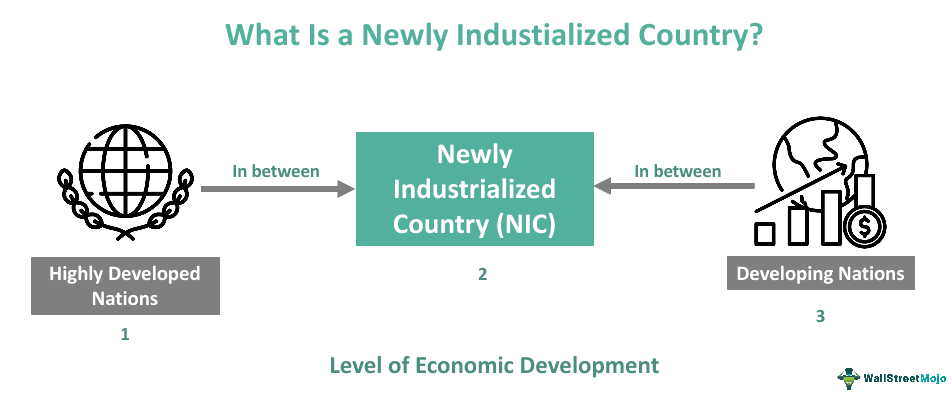
A Newly Industrialized Country (NIC) refers to a group of nations that fall between developing and advanced developed countries. The primary goal of NICs is to stimulate economic growth and advance the development of their economies. Therefore, these countries are often called "advanced developing" countries. :coffee:
Newly Industrialized Country

NICs gained prominence in the late 20th century as certain nations shifted from primarily agricultural economies to those driven by manufacturing or the service sector. This transition significantly influenced global economic growth patterns. In recent years, several Asian nations have emerged as prominent examples of NICs, showcasing rapid industrialization and economic advancement.

  • Newly Industrialized Country (NIC) consists of nations that have witnessed a shift from agricultural to manufacturing or service sector.
  • They aim to earn revenue through foreign investments and exports. The government also encourages development and schemes to boost economic growth.
  • The origin of this concept arose between the 1970s and 1980s. Initially, Asian Tigers consisting of South Korea, Hong Kong, Taiwan, and Singapore were a part of it.
  • The NICs include India, Brazil, Mexico, China, Thailand, South Africa, Taiwan, Singapore, Turkey, and Hong Kong.

Newly Industrialized Country Explained​

The newly industrialized country category consists of nations that have seen a vital transition from primary occupation to the tertiary sector. They aim to develop these nations into a more urbanized and industrialized economy. Since the 1970s, most nations have been a part of it. A few of them in the newly industrialized country list include Hong Kong, Singapore, South Korea, and Taiwan, collectively known as Asian Tigers. These nations predominantly excelled in industrialization and growth during the 1970-1980s.

As a result, these countries became highly competitive in technology and innovation, leading to a focus on boosting their GDP through exports. Additionally, workers were moved significantly from rural to urban areas to support industrial development. However, in the later stages, other nations also joined the cause.

Understanding the historical background is crucial to grasp the beginnings of this change. The roots of industrialization can be traced back to the Industrial Revolution, which many nations had already embraced. However, during the late 1700s and 1800s, British colonial rulers established colonies and exploited less developed countries, causing significant disparities. Consequently, resources were extracted from these nations, leaving them impoverished and hindering their overall growth.

Nonetheless, specific factors played a pivotal role in driving the growth of newly industrialized countries. Government intervention in the economy emerged as a crucial catalyst for economic development in NICs. Governments implemented policies encouraging business participation and amending existing regulations to facilitate growth and progress.

Characteristics​

Let us look at the characteristics of newly industrialized country growth to comprehend the concept better:

  1. NICs usually have a shift from agriculture to the manufacturing sector, which becomes a significant contributor to their GDP.
  2. These nations receive huge capital investments via FDI (Foreign Direct Investments).
  3. There is a tremendous boost in the exports sector.
  4. NICs often recover significantly, transitioning from negative GDP growth rates to positive values.
  5. Governments in NICs play an active role in promoting production and innovation.
  6. Better civic amenities like good transportation, water, and electricity are provided to the public.
  7. The laws and regulations within the economy are improvised for the betterment of society.
 
  • Haha
Reactions: ety

Newly Industrialized Country (NIC) Definition​


Newly Industrialized Country


Characteristics​

Let us look at the characteristics of newly industrialized country growth to comprehend the concept better:

  1. NICs usually have a shift from agriculture to the manufacturing sector, which becomes a significant contributor to their GDP.
  2. These nations receive huge capital investments via FDI (Foreign Direct Investments).
  3. There is a tremendous boost in the exports sector.
  4. NICs often recover significantly, transitioning from negative GDP growth rates to positive values.
  5. Governments in NICs play an active role in promoting production and innovation.
  6. Better civic amenities like good transportation, water, and electricity are provided to the public.
  7. The laws and regulations within the economy are improvised for the betterment of society.
Lol, where does India fits under these criteria, for example ?
 
Last edited:

Forecast: China is Taking Steps to Dominate Shipbuilding for Decades

PUBLISHED DEC 6, 2024 7:12 PM BY THE MARITIME EXECUTIVE
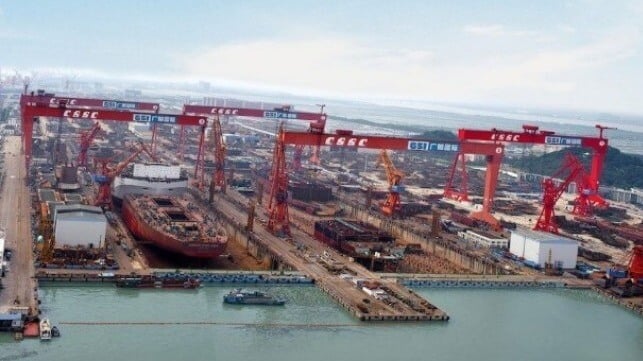
China is plotting to dominate the shipbuilding industry for decades to come says Greek shipbroking and shipping services firm Intermodal Group. In a new analysis of the shipbuilding industry, Intermodal highlights the reopening of numerous dormant shipyards and the expansion of existing facilities capacity as China moves to solidify its long-term leadership in shipbuilding.

Among the steps that the analysis points to for confirmation of the long-term strategy is shipyard reactivation. Among the notable revivals, they highlight that Jiangsu Rongsheng Heavy Industries is coming back to life after 10 years of inactivity. Rongsheng was founded in 2006 and became the largest private shipbuilder in China, churning out giant Valemaxes at its four large drydocks before a massive financial collapse forced it to cease operations in 2014. The yard is now being reactivated with Mediterranean Shipping Company (MSC) being among its first clients. Last month, it secured an order for 11,500 TEU LNG dual-fueled vessels from MSC. Other shipyards including Hengli Heavy Industry, Yangzhou Guoyu Shipbuilding, and Dalian Shipbuilding Offshore have also restarted operations.

China’s pursuit of dominance goes beyond yard reactivation the report highlights as companies including New Times Shipbuilding, Wuhu Shipyard, and Nantong Xiangyu Shipbuilding are among the yards that have expanded their production capacity.

“This growth of shipbuilding capacity is expected to absorb a part of the excess demand, reducing vessel delivery times,” notes Intermodal.

The outcome is evident with Chinese shipyards managing to capitalize on the current demand that has seen shipping lines replace aging tonnage with energy-efficient newbuilds. China has steadily increased its share of the global orderbook surging by nearly 41 percent from 3,591 vessels to 5,049 over the period between 2021 and November of this year.

China has rapidly emerged as a market leader in global shipbuilding eclipsing former market contenders including Japan and South Korea. At the same time, it has created a growing uneasiness with Western governments such as in the United States and Canada where there are repeated accusations of unfair trade practices and state subsidies for the industry from the Chinese central government.

Currently, China commands nearly 65 percent of global shipbuilding orders, a significant rise considering its less than 10 percent share in 2000. Its main competitors, however, have witnessed a steady plunge in orders. Since 2000, the combined orderbook share of Japan and South Korea has declined from 78 percent to 31 percent.

As of November, Chinese shipyards boasted an orderbook of 3,256 vessels comprising 224 million dwt, marking a 37 percent increase from 2023, while the global order book only grew by 21 percent. China’s share is up by 72 percent from 2022. China is leveraging new technologies, low labor costs, and large-scale production capabilities.

Intermodal highlights that in the realm of new contracts, Chinese shipyards remain dominant, securing 1,338 vessels totaling 103.9 million dwt, which represents 70 percent of all new contracts. The yards have captured 89 percent of containership orders, 81 percent of bulk carrier orders, and 74 percent of tanker contracts.

“China has successfully leveraged partnerships with international firms, facilitating the transfer of valuable expertise, enabling it to advance in the construction of more sophisticated vessels such as chemical tankers or gas carriers,” notes Intermodal.

The broker adds that domestic demand for both new ship construction and repair services is also a key driver for the booming shipbuilding industry in China. The domestic fleet accounts for approximately 13 percent of global tonnage.

“In the current global shipbuilding market, the robust demand for new vessels, evidenced by a steadily growing order book in the post-COVID era and rising new building prices, are expected to drive further expansion of the Chinese shipbuilding sector and maintain its leading position,” states Intermodal.

South Korea which recently has been China’s main rival has changed its strategy to focus on high-value orders ceding most containership and bulker orders to China. Instead, it looks to maintain its market position by focusing on emerging categories such as ammonia-fueled and new technologies for automation and autonomous ships.

 
Lol, where does India fits under these criteria, for example ?

the examples are given on world platform. along with the article of post#16, do google and search Indian industries, the output of a wide range of Industries of India, which it means to fulfill Home Demand only/mostly, as compared to China which face growth driven by export to OECD economies, mainly since early 90s :coffee:

with reference to post#7, we find few more articles in Post#10 listing India among "Newly Industrialised Countries", please check ☕

India and other NICs are in detail on Wikipedia as below :)
 
Last edited:

Newly Industrialized Country (NIC) Definition​


Newly Industrialized Country

NICs gained prominence in the late 20th century as certain nations shifted from primarily agricultural economies to those driven by manufacturing or the service sector. This transition significantly influenced global economic growth patterns. In recent years, several Asian nations have emerged as prominent examples of NICs, showcasing rapid industrialization and economic advancement.

  • Newly Industrialized Country (NIC) consists of nations that have witnessed a shift from agricultural to manufacturing or service sector.
  • They aim to earn revenue through foreign investments and exports. The government also encourages development and schemes to boost economic growth.
  • The origin of this concept arose between the 1970s and 1980s. Initially, Asian Tigers consisting of South Korea, Hong Kong, Taiwan, and Singapore were a part of it.
  • The NICs include India, Brazil, Mexico, China, Thailand, South Africa, Taiwan, Singapore, Turkey, and Hong Kong.

Newly Industrialized Country Explained​

The newly industrialized country category consists of nations that have seen a vital transition from primary occupation to the tertiary sector. They aim to develop these nations into a more urbanized and industrialized economy. Since the 1970s, most nations have been a part of it. A few of them in the newly industrialized country list include Hong Kong, Singapore, South Korea, and Taiwan, collectively known as Asian Tigers. These nations predominantly excelled in industrialization and growth during the 1970-1980s.

As a result, these countries became highly competitive in technology and innovation, leading to a focus on boosting their GDP through exports. Additionally, workers were moved significantly from rural to urban areas to support industrial development. However, in the later stages, other nations also joined the cause.

Understanding the historical background is crucial to grasp the beginnings of this change. The roots of industrialization can be traced back to the Industrial Revolution, which many nations had already embraced. However, during the late 1700s and 1800s, British colonial rulers established colonies and exploited less developed countries, causing significant disparities. Consequently, resources were extracted from these nations, leaving them impoverished and hindering their overall growth.

Nonetheless, specific factors played a pivotal role in driving the growth of newly industrialized countries. Government intervention in the economy emerged as a crucial catalyst for economic development in NICs. Governments implemented policies encouraging business participation and amending existing regulations to facilitate growth and progress.

Characteristics​

Let us look at the characteristics of newly industrialized country growth to comprehend the concept better:

  1. NICs usually have a shift from agriculture to the manufacturing sector, which becomes a significant contributor to their GDP.
  2. These nations receive huge capital investments via FDI (Foreign Direct Investments).
  3. There is a tremendous boost in the exports sector.
  4. NICs often recover significantly, transitioning from negative GDP growth rates to positive values.
  5. Governments in NICs play an active role in promoting production and innovation.
  6. Better civic amenities like good transportation, water, and electricity are provided to the public.
  7. The laws and regulations within the economy are improvised for the betterment of society.

India's manufacturing sector's share of the country's GDP was around 13% in 2023. This is down from 17% in 2010. The manufacturing share of Vietnam's GDP in 2023 was 24% and Malaysia 23%. And these two countries GDP per capita are much higher than that of India too, but these countries are not classified as NIC but India, lol.
 
India's manufacturing sector's share of the country's GDP was around 13% in 2023. This is down from 17% in 2010. The manufacturing share of Vietnam's GDP in 2023 was 24%, Malaysia 23 % and Thailand 25%. And all these three countries GDP per capita are much higher than that of India too, but these countries are not classified as NIC but India, lol.

Indian GDP is in many forms, ratios. the current more than 31% Middle Class of India is the main GDP ratio of India, who let it India get place in NICs.

as you mentioned, as compared to Vietnam, Malaysia, Thailand and China, India declined to invite 'smoke' for other countries since early 90s. i mean, the Manufacturing industries for 'export' and related 'smoke', India refused......

further, an example, as mentioned in post#62 of thread as below, Indian data's are of rising trend, ☕


the OECD economies are falling and its related GDP growth for exporting countries like Vietnam-China-Malaysia etc, is different than Home Demand based Manufacturing industries of India :coffee:
India never let manufacturing growth driven by Export order......
.
 
Last edited:
as you mentioned, as compared to Vietnam, Malaysia, Thailand and China, India declined to invite 'smoke' for other countries since early 90s. i mean, the Manufacturing industries for 'export' and related 'smoke', India refused......
Haha. Then, why India is dying to invite the "smoke" industries from other countries now ? That still doesn't explain that India should be included in NIC with only 13% manufacturing of GDP.
 
Haha. Then, why India is dying to invite the "smoke" industries from other countries now ? That still doesn't explain that India should be included in NIC with only 13% manufacturing of GDP.

here, mere 13%-14% of Manufacturing ratio in India's GDP on PPP at $16.0tn+, is it less? :)
check this GDP on PPP table as below...
 
Lol, only the industrialization rate of a country matters, not the only total manufacturing volume.

bro, as per in post#21, its the only 31% Middle Class of India who drive Manfacturing & Service sector of India.
more than 50% population of India is based on agriculture and they might having Per Capita income compared to agriculture countries like Nepal.....

I would say, India is "self sufficient" for Its wide range of industries with countries like Russia. India-Russia-Iran dont have to trade with US-NATO :)
.
 
Last edited:
bro, as per in post#21, its the only 31% Middle Class of India who drive Manfacturing & Service sector of India.
more than 60% population of India is based on agriculture and they might having Per Capita income compared to agriculture countries like Nepal.....

I would say, India is "self sufficient" for Its wide range of industries with countries like Russia. India-Russia-Iran dont have to trade with US-NATO :)
.

Buddy, I don't know how to say this to you

Most INDIANS ARE IDIOTS

if any country in the world had a open door immigration policy towards India, they would make their country into a Indian slum with street shitting and communal violence and the rest of it

This is more to do with the selective immigration process

If you carefully select the most educated or competent of a country with over 1.4 billion people and bring many of them over on specific educational or work visa with waiting jobs then the outcome is not a result of that countries people but more because you only selected a tiny competent and educated, motivated minority and left the rest of the 1.4 billion street shitters at home

here we find GDP on PPP per capita of India at $11,112 as compared to Agriculture countries like Nepal at $5,348 and Myanmar at $5,206 . :coffee:


here we find Middle Class of India is estimated at nearing 31% , as below in the article ☕

hence i would say, 31% Middle class of India would be having income more than $20,000+ on PPP while remaining more than 60% population of India, mostly based on agriculture, would be having per capita income close to Agriculture countries like Nepal and Myanmar, listed at $5,348 and $5,206 respectively ...... ☕

while its also true that GDP of developing countries have a large share of 'undocumented' part of GDP also. the ratio of GDP we dont document to measure true picture of Per Capita Income as in case of developing countries ☕
 
Last edited:
Buddy, I don't know how to say this to you

Most INDIANS ARE IDIOTS

if any country in the world had a open door immigration policy towards India, they would make their country into a Indian slum with street shitting and communal violence and the rest of it

This is more to do with the selective immigration process

If you carefully select the most educated or competent of a country with over 1.4 billion people and bring many of them over on specific educational or work visa with waiting jobs then the outcome is not a result of that countries people but more because you only selected a tiny competent and educated, motivated minority and left the rest of the 1.4 billion street shitters at home
Obviously "Indian Immigrants" are related to tech fields like software and medical...many through the H1B program. I'm in financial software and there are many H1B workers and we are all paid in the $200,000+ range so seeing a figure of $150,000 is not surprising. Actually it has only been in the last 10 years that Indian workers have been paid well. Previously they all worked through agencies which took a big cut of their pay.
Lol, only the industrialization rate of a country matters, not the only total manufacturing and GDP volumes.


good day sir. how you people see my last post#26?

here we see the 31% Middle Class of India having Per Capita Income at 20,000+ on PPP, close to developed countries.
while the remaining 69% population, mostly based on Agriculture, having per capita income close to Agriculture countries like Nepal-Myanmar etc, post#26....

here, its worth saying that people of India-Nepal-Myanmar based on Agriculture have more peaceful life that those who are based on Manufacturing & Serivces. how would you see this difference :coffee:
 

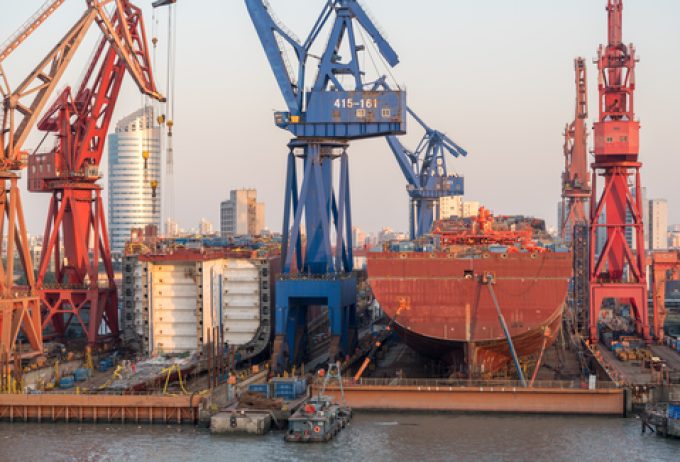
Under the super cycle, China's shipbuilding is far ahead

Wallstreetcn2024.12.08 13:41

Against the backdrop of global economic recovery and the warming of international trade, China's shipbuilding industry has ushered in a "super cycle," with new ship orders significantly increasing, expected to rise from 3,591 in 2021 to 5,049 in 2024, an increase of nearly 41%. Chinese shipyards have enhanced their global market share through expansion and resumption of operations, currently accounting for nearly 65% of the order share, a significant increase from less than 10% in 2000. Meanwhile, the market shares of traditional shipbuilding powerhouses Japan and South Korea have significantly declined, facing challenges in technology and human resources

According to news from the shipping industry network, following the gradual reopening of the global economy and the recovery of international trade in the post-pandemic era, the demand for new shipbuilding has significantly surged. This trend is reflected in global orders, with the number of new ship orders increasing from 3,591 in 2021 to 5,049 by November 2024, a growth of nearly 41%.

However, the surge in demand has also led to tight shipyard slots and extended delivery times. Chinese shipyards have seized this historic opportunity, steadily increasing their share of global orders.


Rapid Expansion of Shipbuilding Capacity

The shipbuilding industry is entering a "super cycle," and Chinese shipyards are leading the necessary expansion of shipbuilding capacity by restarting and expanding to increase new shipbuilding capabilities. Nantong Xiangyu is one of the shipyards leading this expansion trend, increasing its annual production capacity by 60% through the acquisition of Jiangsu Hongqiang. New Era Shipbuilding plans to invest 5 billion yuan to promote its intelligent manufacturing project for new energy vessels. Hengli Heavy Industry is also expanding its capacity, investing 11 billion yuan to expand its dry dock, which will double its annual shipbuilding capacity. Another large private shipbuilding company in China, Yangtze River Shipbuilding Group, has also announced investments to create a green ship manufacturing base and expand shipyard capacity to respond to the new round of prosperity in the new shipbuilding market.

Significant Increase in Market Share

To gain a deeper understanding of the market fundamentals, it is necessary to look at the evolution of orders from Chinese, Japanese, and South Korean shipyards, as well as their share of global orders.

In short, the rapid expansion of China's shipbuilding industry is attributed to improvements in technology, enhanced innovation capabilities, market opportunities from global industrial transfer, and a strong workforce. Chinese shipbuilding has become a market leader, currently accounting for nearly 65% of the total global shipbuilding orders, compared to less than 10% in 2000, achieving impressive growth.

At the same time, the order share of Japanese and South Korean shipyards has decreased from 78% to 31% during the same period. Nevertheless, traditional shipbuilding powerhouses like South Korea and Japan still possess strong competitiveness. South Korean shipyards still hold a significant proportion of high-value-added ship orders, particularly LNG vessels, while Japan's shipbuilding industry has a long history and deep foundation. However, they are faced with a harsh reality—a lack of skilled industrial workers unable to meet the surge in market demand, leading to a sharp decline in market share.

Data from Greek brokerage Intermodal shows that as of November 2024, the order volume of Chinese shipyards reached 3,256 vessels, with a total deadweight tonnage of 224 million deadweight tons, an increase of 37% compared to 2023 and 72% compared to 2022 In terms of new orders, Chinese shipyards still dominate, receiving 1,338 vessels with a total of 103.9 million deadweight tons, accounting for 70% of global orders. Notably, Chinese shipyards received 89% of global container ship orders, 81% of bulk carrier orders, and 74% of tanker contracts.

China's rise as a dominant force in the global shipbuilding industry can be attributed to several factors, including strong government support, investment in new technologies, a strong industrial workforce, and large-scale production capabilities. Additionally, the complete industrial chain is also a significant reason for the rapid rise of Chinese shipbuilding.

In other words, from an economic perspective, this is also an inevitable result of market competition, reflecting the changes in the global economic structure. In summary, those who can grasp, adapt to, and meet market demands will occupy the market.

Looking ahead, with the current strong global demand for new shipbuilding, steady growth in orders, and rising new ship prices, the Chinese shipbuilding industry will continue to expand further and maintain its leading position.

 
Box ship building in China hits new heights with 68.5% of global orders

dreamstime_xs_135524755

ID 135524755 © Steveheap | Dreamstime.com
By Charlotte Goldstone 18/12/2024

China has become the undisputed front-runner in containership building, with an orderbook, extending to 2030, nearly triple that of its main competitor, according to Alphaliner this week.
The number of box ships built in China first passed those coming out of South Korea in 2015, but, as Alphaliner noted, this was “not particularly representative since ordering activity was very low overall”.

Although South Korea accounted for more deliveries from 2017 onwards, China again took the lead in 2020 and has since asserted its dominance in the sector. According to Alphaliner data, its shipyards account for some 68.5% of the global box ship orderbook in terms of teu capacity.

South Korea sits second, at roughly one third of this, with an orderbook share of 23.3%.
In 2020, Chinese yards received 630,000 teu worth of newbuilding orders, against 380,000 teu for South Korea, with a boom in orders during Covid and the post-pandemic period, cementing this lead further.

This year, China’s yards have received an astonishing 3.61m teu of orders, as opposed to the 660,000 teu recorded in South Korea.

“Once the current boom is over, and once the orderbook will shrink, the number of fresh newbuilding contracts in Korea is expected to erode. Currently, nobody can match the price advantage that Chinese yards can offer,” said Alphaliner.

As well as offering newbuild prices that far undercut competitors, China’s yards also boast far larger capacity for orders, with many “committed to massive expansion projects that allow them to create numerous newbuilding slots for 2027 and beyond”, said the analyst.

Such projects include Times Shipyard (NTS) and Yangzijiang (YZJ), where “slots were eagerly picked up”.

The containership orderbook now extends as far as 2030, and Alphaliner added that “there are a number of ‘reported’ contracts that will likely be confirmed later and add to the full-year total”.

Preferred sourcing locations differ among the carriers, with Hapag-Lloyd, Cosco, Maersk and MSC all preferring China, according to an Alphaliner graph.

It noted that MSC had started a partnership with Hengli Group to re-boot ship construction at the former STX Dalian shipyard in China, to “build numerous large vessels”.

Meanwhile, South Korean state-controlled carrier HMM is a “staunch supporter” of domestic shipyards, while Ocean Network Express (ONE) prefers Japanese yards and Yang Ming, Wan Hai and Evergreen tend to spread their business between Taiwan, Korea and Japan.
But despite Japanese carrier ONE supporting home manufacturing, Alphaliner noted that many of its recent orders went to Korea and China.

Danish carrier Maersk also used to build ships at its own shipyard in Odense. However, this closed in 2012 and the last series of 9,700 teu containerships built there, in 2009, were later upgraded to 11,000 teu in Chinese shipyards.
 
Last edited:

China Dominates Global Containership Construction as Korean Shipyards Face Decline​

Mike Schuler
December 17, 2024

OOCL Spain

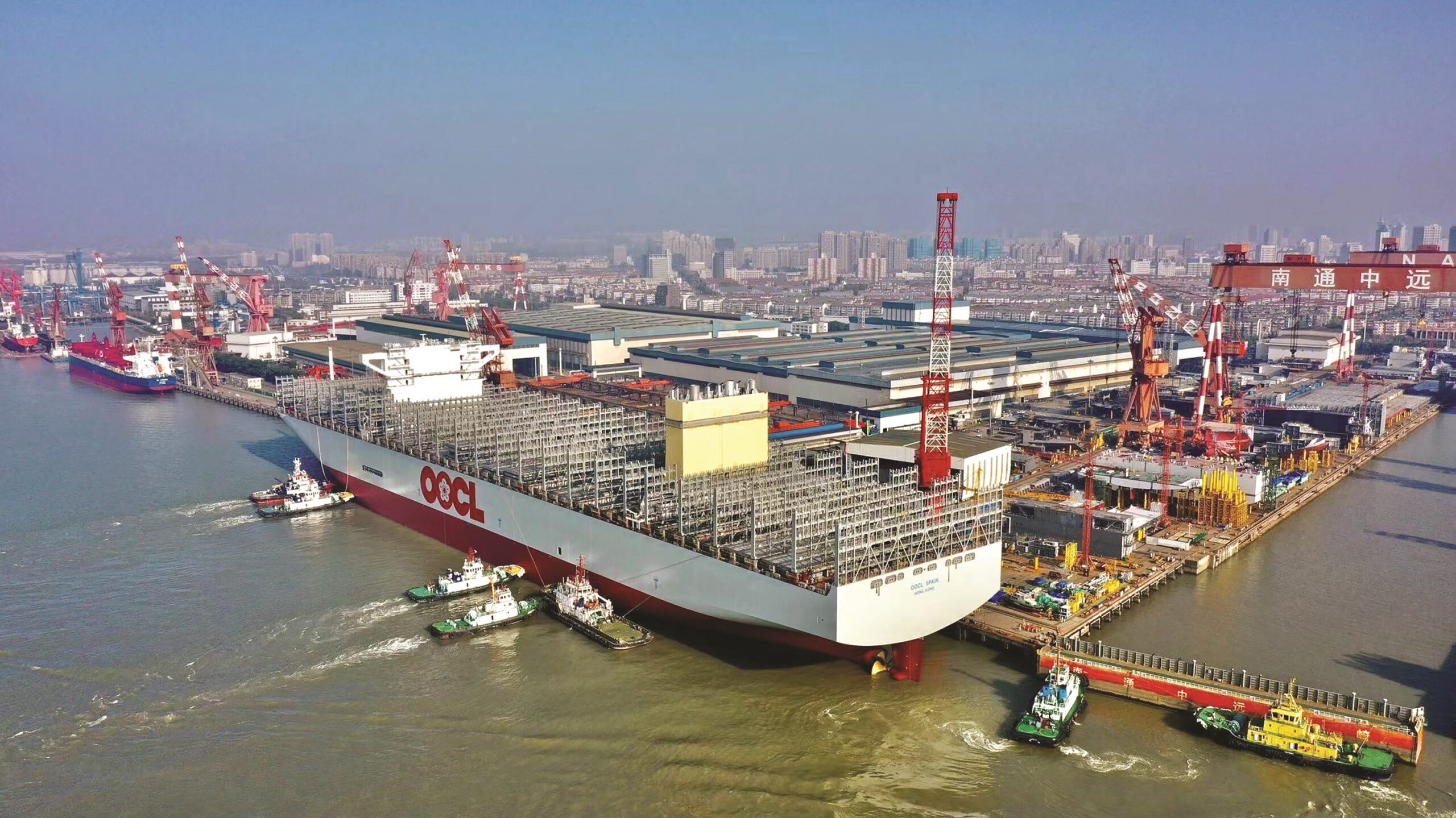
The 24,188 TEU capacity OOCL Spain pictured at the Nantong COSCO KHI Ship Engineering (NACKS) shipyard in Nantong, China. Photo courtesy OOCL

Chinese shipyards have solidified their dominance in the construction of containerships, commanding an impressive 68.5% of the global boxship orderbook capacity, according to Alphaliner.

This transformation marks a dramatic reversal from historical norms, with South Korea, the former industry leader, now holding just 23.3% of the market.

The change in rankings hasn’t been sudden. China first took the lead in 2015 with orders totaling 900,000 TEU, though those years saw relatively low overall activity.

“Currently, nobody can match the price advantage that Chinese yards can offer,” Alphaliner states, highlighting the fundamental shift in market dynamics.

The scale of China’s current dominance is particularly evident in 2024’s performance, with Chinese shipyards securing an impressive 3.61 Mteu in orders, dwarfing South Korea’s 0.66 Mteu, Alphliner figures show.

Japan remains a notable but smaller player in the sector, with yards like JMU and Imabari holding a modest 6.4% share of the containership orderbook.

Looking ahead, the industry landscape appears set for continued Chinese dominance, where strategic capacity expansion projects will create newbuilding slots extending as far as 2027 and beyond.

Although Korean yards will maintain a significant presence in building large mainline vessels, their market share continues to decline. Yet with the global orderbook at 8.68 Mteu—stretching into 2029 and even 2030—being second place still offers substantial opportunities, especially considering where other nations rank in the market.


Users who are viewing this thread

Back
Top