China now controls unprecedented 65% of global shipbuilding orderbook

Beijingwalker

VIP Member
Joined
Nov 4, 2011
Messages
92,049
Reaction score
112,969
Reputation
2,154.5
Country of Origin
Country of Residence

China now controls unprecedented 65% of global shipbuilding orderbook

Sam Chambers
December 5, 2024
fc496c3f-a687-4b1f-85e8-b41d4c6ee7fd_ceeb41ad.jpg


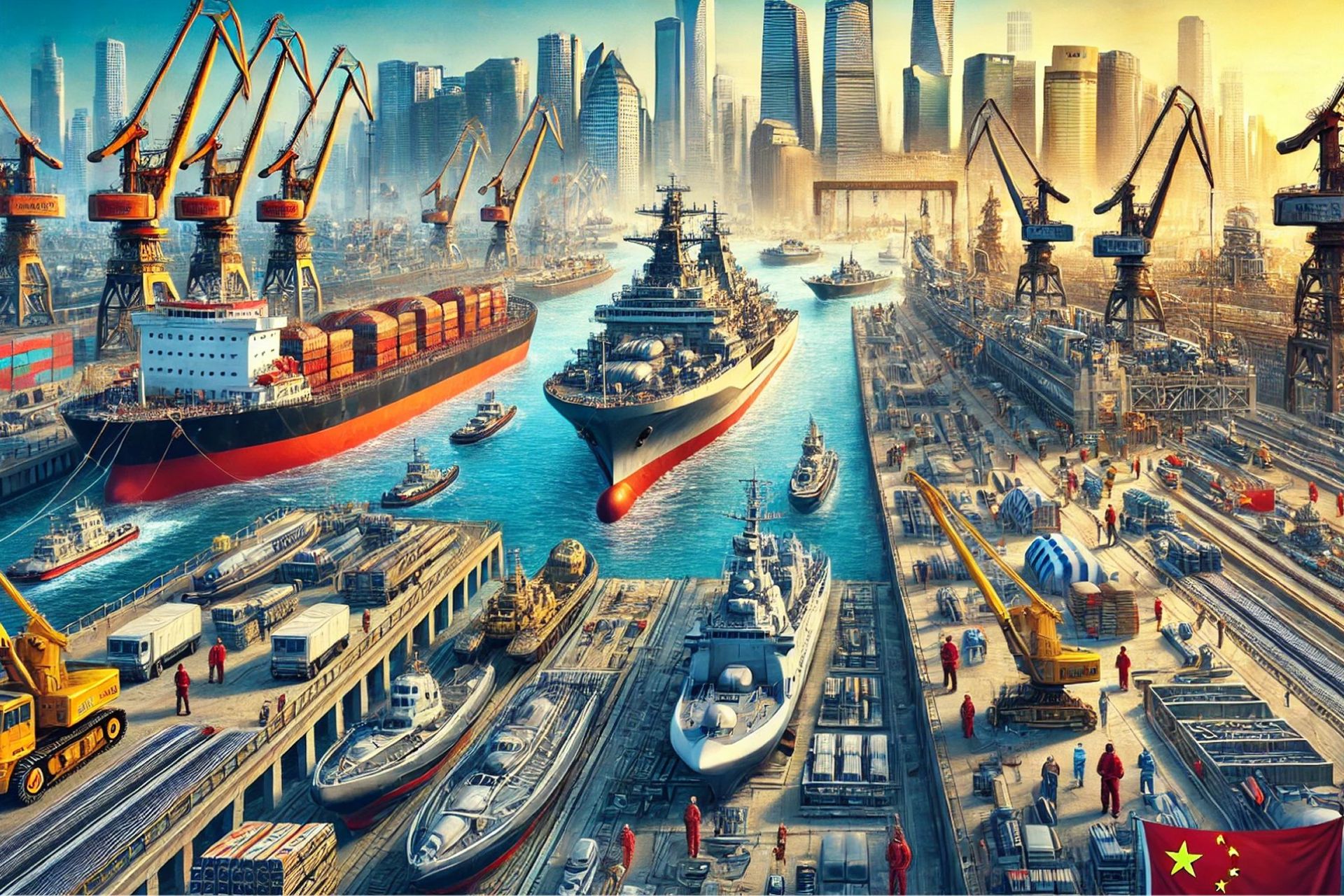
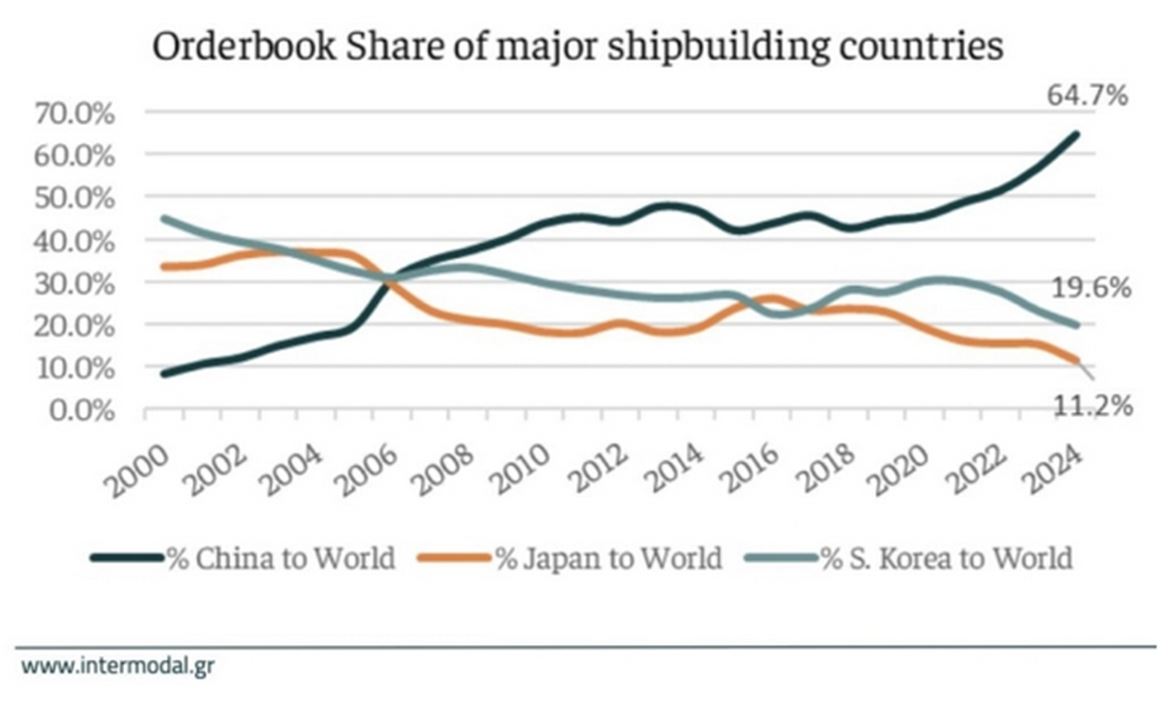
China’s combined orderbook for merchant ships has grown by a remarkable 170% this decade, stretching its lead over its nearest shipbuilding rivals dramatically.

Data from Greek broker Intermodal and Clarksons Research show how the 2020s – and 2024 in particular – have been banner years for Chinese shipyard ambitions, coming to dominate a sector like no other nation has been able to for generations.

ChinaShipbuilding-1024x623.jpg


“Through government support and public investments to its national shipbuilding ecosystem, China emerged as a market leader, commanding currently nearly 65% of global shipbuilding orders, an impressive rise considering the less than 10% share in 2000,” notes a new report from Intermodal.

Meanwhile, the combined orderbook share of Japan and South Korea has declined from 78% to 31% over the same period.

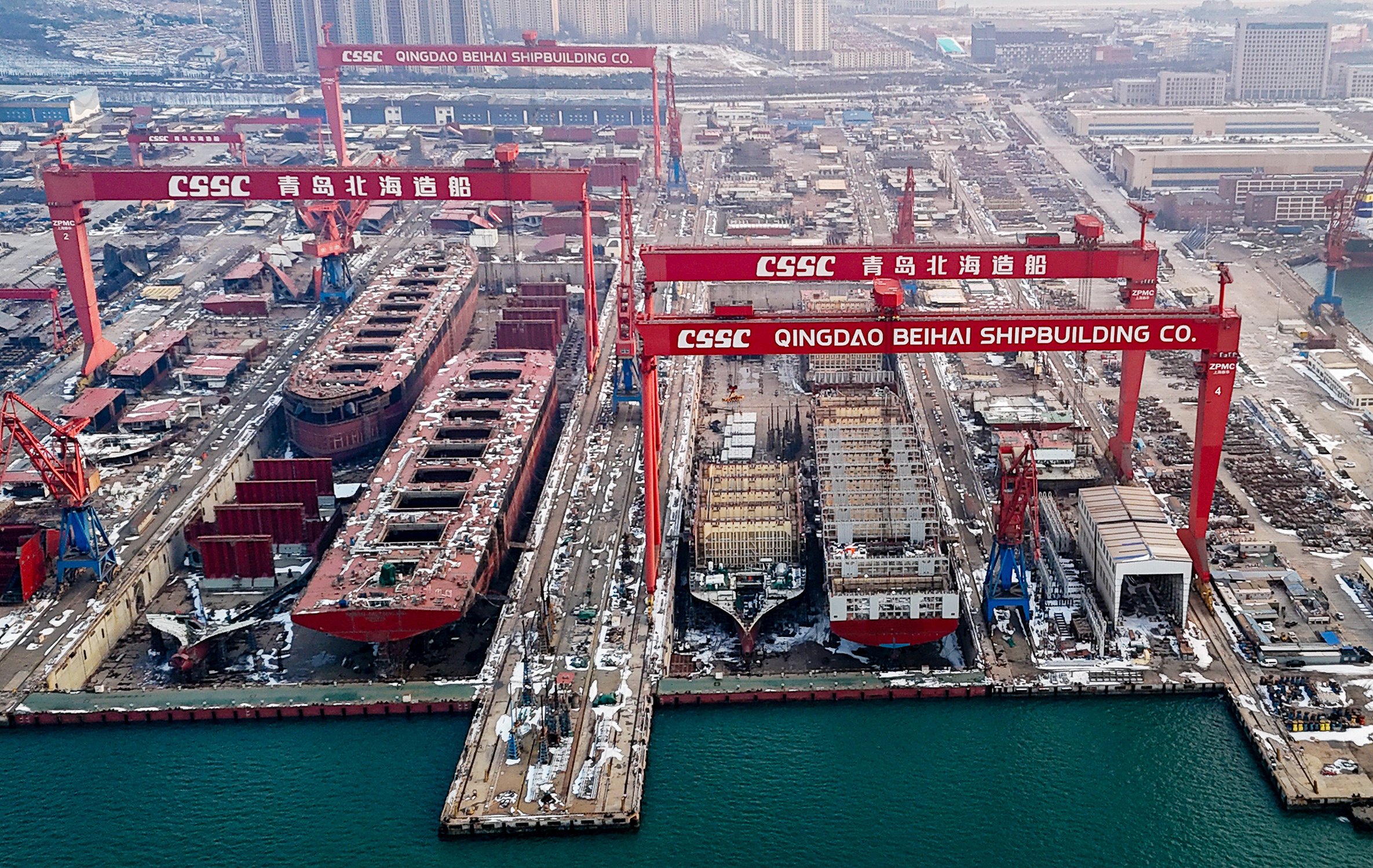
As of November 2024, the Chinese shipbuilding orderbook counts 3,256 vessels of 224m dwt total carrying capacity, marking a 37% increase from 2023 and a 72% rise from 2022, with the global orderbook increasing by 21% since 2023, according to data from Intermodal.

ChinaYards2-1024x465.jpg

ChinaYards1-1024x537.jpg
 
  • Like
Reactions: FHN
Nothing can stop China from ruling the waves.

Analysis_Exploring_relationship_between_Chinas_Naval_and_Commercial_shipbuilding_industries-76904333.jpeg

maxresdefault.jpg
 
  • Like
Reactions: FHN
China+Korea+Japan account for over 95% of the global shipbuilding capability.
 
But, India says it is going to topple Chinese shipbuilding industry soon though India has only 0.06% of global share now, bravado as in everthing else.
 
But, India says it is going to topple Chinese shipbuilding industry soon though India has only 0.06% of global share now, bravado as in everthing else.

Future of India’s Shipbuilding Industry – Challenges and Opportunities


.
=>

What does the global shipbuilding industry look like, and where is India?​


India’s nascent shipbuilding industry is poised for significant growth, attracting interest from major economies like Japan and South Korea. Union Minister of Ports, Shipping, and Waterways Sarbananda Sonowal revealed that these countries are exploring opportunities to invest in India’s shipbuilding sector. Potential collaborations could include direct investments, joint ventures, and technology sharing, reflecting the global confidence in India’s maritime potential.

The Ministry of Ports, Shipping, and Waterways aims to elevate India’s position from its current rank of 22nd in global shipbuilding to the top 10 by 2030, and the top five by 2047, as part of India’s Maritime India Vision 2030. (y)

What is shipbuilding?​

Shipbuilding refers to the construction, repair, and maintenance of vessels used for transportation, defense, and trade. It includes a range of ships, from small boats to large tankers and warships. Shipbuilding is carried out in specialised facilities called shipyards, which are equipped to handle large-scale projects and complex assembly processes.

India’s shipbuilding legacy​

India’s coastal regions, particularly Gujarat, Bengal, and Odisha, were major hubs for shipbuilding in ancient times. They facilitated trade within Southeast Asia, with Africa and West Asia. Under the British colonial era, shipyards in India, such as Mazagon Dock in Mumbai (established in 1774), primarily constructed vessels for the British navy and merchant fleets.

After independence in 1947, India began rebuilding its shipbuilding industry. Public sector enterprises such as Mazagon Dock Limited (MDL) and Cochin Shipyard Limited (CSL) played a key role in constructing ships for the Indian Navy, Coast Guard, and commercial sectors.

Size of shipbuilding industry​

The Shipbuilding Global Market Report 2024, estimates the global shipbuilding market size to grow from $207.15 billion in 2023 to $220.52 billion in 2024 at a compound annual growth rate (CAGR) of 6.5 per cent. This expansion is driven by economic growth in emerging markets, increased demand for cruise ships, growth in seaborne trade, and supportive government policies.
The report added that Asia-Pacific was the largest region in the global shipbuilding market in 2023, followed by Western Europe. Major countries involved include China, South Korea, Japan, India, Germany, USA, and others.

India’s shipbuilding market value and growth​

India’s shipbuilding industry is experiencing exponential growth. In 2022, it was valued at $90 million and is projected to reach $8,120 million by 2033, with an astounding CAGR of 60 per cent, according to Finextra Research. This growth is attributed to factors like government support, strategic location, labour cost advantages, and a focus on niche segments such as offshore support vessels and ferries.
The Ministry of Ports believes that if demand for India’s shipping market is “adequately targeted by Indian shipyards”, it may result in an opportunity to the extent of over $237 billion (Rs 20 trillion) by 2047.

Maritime India Vision 2030​

Maritime India Vision 2030 is a strategic initiative launched by the Indian government to strengthen the country’s maritime sector over the next decade. It has set a bold target to elevate India’s global ranking in shipbuilding and ship repair from over 20th place to the top 10 and an ambitious goal has been set for the top-five position, as outlined in the Amrit Kaal Vision 2047.

As of February 2023, it estimated an investments to the tune of Rs 1,00,000 to 1,25,000 crore for capacity augmentation and development of world-class infrastructure at Indian ports.

Factors affecting growth of shipbuilding industry in India​

Factors that are boosting shipbuilding industry in India, as reported by Finextra Research, are the following:
Government support: Policy initiatives such as the Scheme for Financial Assistance to Shipyards in India (SFAS) and a focus on enhancing indigenous shipbuilding capabilities are driving growth in the shipbuilding sector.
Strategic location: India's extensive coastline and proximity to major shipping routes provide a natural advantage for shipyards, helping reduce transportation costs and turnaround times.

Competitive labour costs: India offers a competitive edge with lower labour costs compared to other shipbuilding nations, making it an attractive option for international clients.

Focus on niche segments: Indian shipyards are specialising in categories like offshore support vessels, dredgers, and ferries, targeting specific market demands.

Countries leading in shipbuilding​

Currently, India holds only 0.06 per cent of the global shipbuilding market, a stark contrast to the dominance of China, South Korea, and Japan, which collectively control 85 per cent of the industry. To compete, the Indian government has announced plans to build multiple shipbuilding clusters in collaboration with coastal states.

In 2023, China, South Korea, and Japan remained at the forefront of the shipbuilding market, thanks to their advanced infrastructure and expertise. European countries such as Italy, Germany, and Finland also made notable contributions, emphasizing specialised vessels and luxury cruise ships. These dynamics highlight the economic priorities and capabilities of these nations, as well as the global demand for a variety of ships.

Here are the top 20 countries listed in terms of passenger and cargo ship exports in 2023, according to data from The Observatory of Economic Complexity and the International Trade Centre (ITC).

China- $25 billion
South Korea- $16.7 billion
Japan- $9.6 billion
Italy- $5.1 billion
Germany- $3.9 billion
United Arab Emirates- $2.5 billion
Finland- $2.2 billion
France- $2.2 billion
Denmark- $1.9 billion
Poland- $1.6 billion
Cyprus- $1.3 billion
India- $1.12 billion
Belgium- $993 million
Turkey- $658 million
Ivory Coast- $629 million
Philippines- $462 million
Marshall Islands- $439 million
Indonesia- $274 million
Croatia- $271 million
Netherlands- $249 million

India’s top shipbuilding companies​

India’s two key shipbuilders, MDL and CSL, have laid a strong foundation for the country’s maritime sector. MDL, known for its role in constructing warships for the Indian Navy and Coast Guard, has delivered over 800 vessels since its inception. CSL, the largest shipbuilder in India, specialises in constructing offshore vessels, oil tankers, and aircraft carriers, along with being the largest ship-repair facility in the country. Both companies play pivotal roles in advancing India's maritime ambitions.

 
Last edited:

Future of India’s Shipbuilding Industry – Challenges and Opportunities


.
=>

What does the global shipbuilding industry look like, and where is India?​


India’s nascent shipbuilding industry is poised for significant growth, attracting interest from major economies like Japan and South Korea. Union Minister of Ports, Shipping, and Waterways Sarbananda Sonowal revealed that these countries are exploring opportunities to invest in India’s shipbuilding sector. Potential collaborations could include direct investments, joint ventures, and technology sharing, reflecting the global confidence in India’s maritime potential.

The Ministry of Ports, Shipping, and Waterways aims to elevate India’s position from its current rank of 22nd in global shipbuilding to the top 10 by 2030, and the top five by 2047, as part of India’s Maritime India Vision 2030. (y)

What is shipbuilding?​

Shipbuilding refers to the construction, repair, and maintenance of vessels used for transportation, defense, and trade. It includes a range of ships, from small boats to large tankers and warships. Shipbuilding is carried out in specialised facilities called shipyards, which are equipped to handle large-scale projects and complex assembly processes.

India’s shipbuilding legacy​

India’s coastal regions, particularly Gujarat, Bengal, and Odisha, were major hubs for shipbuilding in ancient times. They facilitated trade within Southeast Asia, with Africa and West Asia. Under the British colonial era, shipyards in India, such as Mazagon Dock in Mumbai (established in 1774), primarily constructed vessels for the British navy and merchant fleets.

After independence in 1947, India began rebuilding its shipbuilding industry. Public sector enterprises such as Mazagon Dock Limited (MDL) and Cochin Shipyard Limited (CSL) played a key role in constructing ships for the Indian Navy, Coast Guard, and commercial sectors.

Size of shipbuilding industry​

The Shipbuilding Global Market Report 2024, estimates the global shipbuilding market size to grow from $207.15 billion in 2023 to $220.52 billion in 2024 at a compound annual growth rate (CAGR) of 6.5 per cent. This expansion is driven by economic growth in emerging markets, increased demand for cruise ships, growth in seaborne trade, and supportive government policies.
The report added that Asia-Pacific was the largest region in the global shipbuilding market in 2023, followed by Western Europe. Major countries involved include China, South Korea, Japan, India, Germany, USA, and others.

India’s shipbuilding market value and growth​

India’s shipbuilding industry is experiencing exponential growth. In 2022, it was valued at $90 million and is projected to reach $8,120 million by 2033, with an astounding CAGR of 60 per cent, according to Finextra Research. This growth is attributed to factors like government support, strategic location, labour cost advantages, and a focus on niche segments such as offshore support vessels and ferries.
The Ministry of Ports believes that if demand for India’s shipping market is “adequately targeted by Indian shipyards”, it may result in an opportunity to the extent of over $237 billion (Rs 20 trillion) by 2047.

Maritime India Vision 2030​

Maritime India Vision 2030 is a strategic initiative launched by the Indian government to strengthen the country’s maritime sector over the next decade. It has set a bold target to elevate India’s global ranking in shipbuilding and ship repair from over 20th place to the top 10 and an ambitious goal has been set for the top-five position, as outlined in the Amrit Kaal Vision 2047.

As of February 2023, it estimated an investments to the tune of Rs 1,00,000 to 1,25,000 crore for capacity augmentation and development of world-class infrastructure at Indian ports.

Factors affecting growth of shipbuilding industry in India​

Factors that are boosting shipbuilding industry in India, as reported by Finextra Research, are the following:
Government support: Policy initiatives such as the Scheme for Financial Assistance to Shipyards in India (SFAS) and a focus on enhancing indigenous shipbuilding capabilities are driving growth in the shipbuilding sector.
Strategic location: India's extensive coastline and proximity to major shipping routes provide a natural advantage for shipyards, helping reduce transportation costs and turnaround times.

Competitive labour costs: India offers a competitive edge with lower labour costs compared to other shipbuilding nations, making it an attractive option for international clients.

Focus on niche segments: Indian shipyards are specialising in categories like offshore support vessels, dredgers, and ferries, targeting specific market demands.

Countries leading in shipbuilding​

Currently, India holds only 0.06 per cent of the global shipbuilding market, a stark contrast to the dominance of China, South Korea, and Japan, which collectively control 85 per cent of the industry. To compete, the Indian government has announced plans to build multiple shipbuilding clusters in collaboration with coastal states.

In 2023, China, South Korea, and Japan remained at the forefront of the shipbuilding market, thanks to their advanced infrastructure and expertise. European countries such as Italy, Germany, and Finland also made notable contributions, emphasizing specialised vessels and luxury cruise ships. These dynamics highlight the economic priorities and capabilities of these nations, as well as the global demand for a variety of ships.

Here are the top 20 countries listed in terms of passenger and cargo ship exports in 2023, according to data from The Observatory of Economic Complexity and the International Trade Centre (ITC).

China- $25 billion
South Korea- $16.7 billion
Japan- $9.6 billion
Italy- $5.1 billion
Germany- $3.9 billion
United Arab Emirates- $2.5 billion
Finland- $2.2 billion
France- $2.2 billion
Denmark- $1.9 billion
Poland- $1.6 billion
Cyprus- $1.3 billion
India- $1.12 billion
Belgium- $993 million
Turkey- $658 million
Ivory Coast- $629 million
Philippines- $462 million
Marshall Islands- $439 million
Indonesia- $274 million
Croatia- $271 million
Netherlands- $249 million

India’s top shipbuilding companies​

India’s two key shipbuilders, MDL and CSL, have laid a strong foundation for the country’s maritime sector. MDL, known for its role in constructing warships for the Indian Navy and Coast Guard, has delivered over 800 vessels since its inception. CSL, the largest shipbuilder in India, specialises in constructing offshore vessels, oil tankers, and aircraft carriers, along with being the largest ship-repair facility in the country. Both companies play pivotal roles in advancing India's maritime ambitions.


India Imports By Category--------------------------------------------------------------------- Value-------------Year


Ships, boats, and other floating structures$3.67B2023
 
Last edited:


India Imports By Category--------------------------------------------------------------------- Value-------------Year


Ships, boats, and other floating structures$3.67B2023

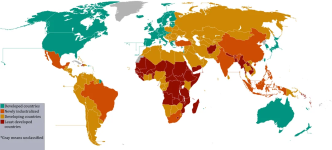
we find a map of world as below. Here India is listed among NICs, Newly Industrialised Countries, then there might be some reasons? :coffee:

=>

A map of all the developed, newly industrialized, developing, and least developed countries according to the IMF and the UN.​


1733455947831.png

To view this content we will need your consent to set third party cookies.
For more detailed information, see our cookies page.

.

=> https://en.wikipedia.org/wiki/Newly_industrialized_country#Current
 
  • Haha
Reactions: ety
we find a map of world as below. Here India is listed among NICs, Newly Industrialised Countries, then there might be some reasons? :coffee:

=>

A map of all the developed, newly industrialized, developing, and least developed countries according to the IMF and the UN.​


View attachment 86649

To view this content we will need your consent to set third party cookies.
For more detailed information, see our cookies page.

.

=> https://en.wikipedia.org/wiki/Newly_industrialized_country#Current

Lol, a funny map, everyone can make a map on the internet.
 
Last edited:
we find a map of world as below. Here India is listed among NICs, Newly Industrialised Countries, then there might be some reasons? :coffee:

=>

A map of all the developed, newly industrialized, developing, and least developed countries according to the IMF and the UN.​


View attachment 86649

To view this content we will need your consent to set third party cookies.
For more detailed information, see our cookies page.

.

=> https://en.wikipedia.org/wiki/Newly_industrialized_country#Current

I think different people have different criteria. Lol, why wouldn't Russia classified as an industrialized country compared to say India and Indonesia ?
 
Last edited:
Lol, a funny map, everyone can make a map on the internet.

along with the map published on "reddit", the post#7, a same story is found on Wikipedia as below:- :coffee:
its with other details on its whole page .....
.

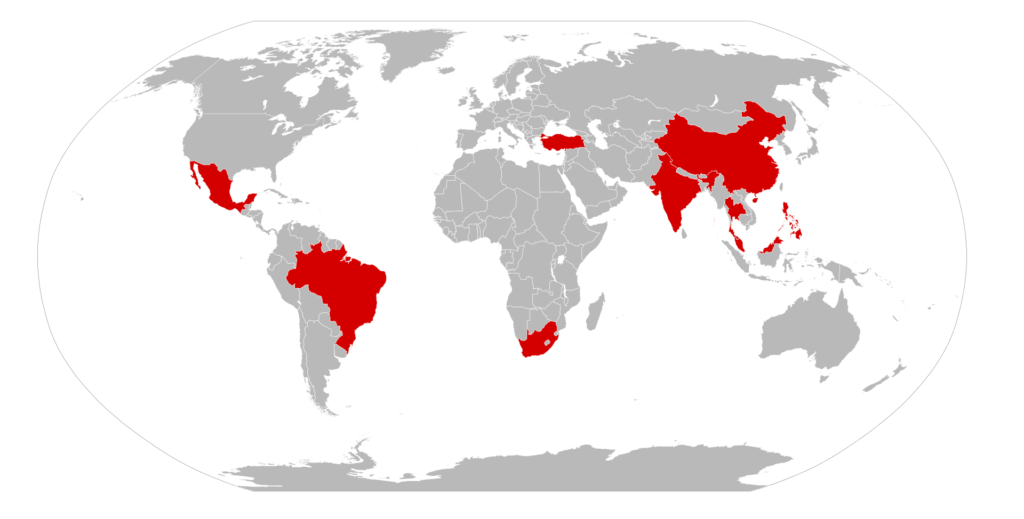
=> one more reference as below :coffee:

newly-industrialized-country-nic-1024x519[1].png

.
=> something here also ...


newly-industrialized-countries-720[1].png
 
I think different people have different criteria. Lol, why wouldn't Russia classified as an industrialized country compared to say India and Indonesia ?

i have read, it has been a demand to include Russia in NICs :)
 
along with the map published on "reddit", the post#7, a same story is found on Wikipedia as below:- :coffee:
its with other details on its whole page .....
.

=> one more reference as below :coffee:

View attachment 86650
India GDP per capita is similar to that of Pakistan or Bangladeshi. Not to that of China. India should be between an under developed country or a developing country. Also, Thailand and Vietnam are mistaken categorized as developing. There is no way India should be a newly developed country as India is behind Vietnam or Thailand.

Just noticed Russia is ranked as less than India at development. No Russians poop openly. Horrible ranking and totally untrustworthy. It’s either a CIA ranking or Indian ranking.
 
India GDP per capita is similar to that of Pakistan or Bangladeshi. Not to that of China. India should be between an under developed country or a developing country. Also, Thailand and Vietnam are mistaken categorized as developing. There is no way India should be a newly developed country as India is behind Vietnam or Thailand.

Just noticed Russia is ranked as less than India at development. No Russians poop openly. Horrible ranking and totally untrustworthy. It’s either a CIA ranking or Indian ranking.

there is a ratio of "undocumented" part of GDP which would be included to see true picture of GDP per capita of India, i think :)

here on WIkipedia table, we find GDP on PPP per capita of India at $11,112 is close to that of other NICs like Philippines at $12,080 and to Indonesia at $16,542.
while the same is true in case of Philippines and Indonesia also that we would be having a large share of 'undocumented' part of GDP on PPP similar to India :coffee:
 
Last edited:
India GDP per capita is similar to that of Pakistan or Bangladeshi. Not to that of China. India should be between an under developed country or a developing country. Also, Thailand and Vietnam are mistaken categorized as developing. There is no way India should be a newly developed country as India is behind Vietnam or Thailand.

Just noticed Russia is ranked as less than India at development. No Russians poop openly. Horrible ranking and totally untrustworthy. It’s either a CIA ranking or Indian ranking.

we find Vietnam isn't listed among NICs.
a 'total' number of NICs is listed in Wikipedia's table as below. "the current" :coffee:


The table below presents the list of countries consistently considered NICs by different authors and experts. Turkey became a founding member of the OECD in 1961 and Mexico joined in 1994. The G8+5 group is composed of the original G8 members in addition to China, India, Mexico, South Africa and Brazil. :coffee: The members of the G20 include Brazil, China, India, Indonesia, Mexico, South Africa and Turkey.
 

China holds a 65% share of global shipbuilding orders

2024 December 6 15:55

rtfimage_75278423143_imh.jpg


China’s shipbuilding industry continues to solidify its position as a global powerhouse, with the nation now commanding nearly two-thirds of the world’s shipbuilding orders. This remarkable surge is driven by significant government support and strategic investments in the sector.

Since 2020, China’s merchant ship orderbook has witnessed a staggering 170% growth, eclipsing traditional shipbuilding giants like Japan and South Korea.

Data from industry leaders Intermodal and Clarksons Research reveals that China currently holds a dominant 65% share of global shipbuilding orders, a dramatic leap from its less than 10% share in 2000.

In contrast, the combined market share of Japan and South Korea has dwindled from 78% to 31% over the same period.

As of November 2024, China's order book stands at 3,256 vessels with a total carrying capacity of 224 million deadweight tons (DWT). This represents a 37% increase from 2023 and a substantial 72% rise from 2022, far outpacing the global orderbook growth of 21% in the past year.


Users who are viewing this thread

Back
Top