China Science And Technology News

Lead scientist of China’s thorium reactor project died working on the computer​

Death of nuclear physicist Xu Hongjie came just weeks before the project he led achieved a breakthrough in fourth-generation nuclear power

552c8e5b-4820-4af5-b396-a571177c51bc_1859b595.jpg

Victoria Bela
Published: 8:00pm, 4 Nov 2025Updated: 8:15pm, 4 Nov 2025

Xu Hongjie, a nuclear physicist and pioneer of China’s thorium reactor programme, remained engaged and involved in his field until his death at the age of 70, just weeks before a breakthrough in a project he had led.

The former director of the Shanghai Institute of Applied Physics (SINAP) died in Shanghai on September 14, according to an obituary posted by the institute a day after his death; however, the details of his death were not known until the Science and Technology Daily published a memorial article on Monday.

Xu died after midnight while working from home, according to the official newspaper run by the Ministry of Science and Technology.

“Books were spread open on the desk and the mouse had fallen to the floor. On the computer screen, the lecture slides for ‘Introduction to Nuclear Science and Technology’ remained unfinished,” said the memorial.

The official time of his death was recorded as 8.15am, according to the obituary posted by the institute. It said Xu had died of an illness but no exact cause of death has been made public.

Xu had been set to deliver his first lecture of the new semester to students at ShanghaiTech University the following day.

And his death came just weeks before the project he led achieved a breakthrough in fourth-generation nuclear power. On Saturday, China announced that the thorium molten salt reactor (TMSR) project had achieved the world’s first thorium-to-uranium nuclear fuel conversion in an operational nuclear reactor using molten salt as a coolant.
Xu was the project’s chief scientist at SINAP, which is under the Chinese Academy of Sciences (CAS), and was considered the leading scientist of China’s thorium reactor programme.

“He is the kind of strategic scientist who always focuses on the forefront of world science and technology and the major needs of the country,” said Zhou Chong, director of SINAP’s reactor physics department, as quoted by Science and Technology Daily.

“After he guided us through the past six months, we have a clear understanding of the development path of the field of molten salt fluid mechanics in the next 10 to 15 years,” Zhou said.

The experimental TMSR reactor in China’s Gobi Desert in the northwestern province of Gansu is the world’s only operational molten salt reactor loaded with thorium fuel.

Molten salt reactors are fourth-generation advanced nuclear energy systems designed to achieve more sustainable and efficient nuclear power with closed fuel cycles.

They use high-temperature molten salt as a coolant instead of water, which can allow them to operate at higher temperatures and lower pressures, making them more efficient in electricity generation while eliminating the risk of high-pressure accidents.

Thorium – a radioactive element that is abundant in the Earth’s crust – is one of the potential fuel sources for these reactors. Thorium is more abundant than uranium, produces less long-lived nuclear waste and is less easily used to make nuclear weapons.

Some experts say that just one thorium-rich mine in Inner Mongolia could theoretically meet China’s energy needs for tens of thousands of years.
At a closed-door meeting at CAS on April 8, Xu said China “now leads the global frontier” in this field, according to an article in the Guangming Daily.

The US pioneered molten salt reactor technology, building a small test reactor in the 1960s. However, after initial experiments, it abandoned its research in the 1970s in favour of uranium-based systems. It left the research publicly available.

In the meetings, Xu compared the race between the US and China to develop this technology to Aesop’s fable, The Tortoise and the Hare.

“Rabbits sometimes make mistakes or grow lazy. That’s when the tortoise seizes its chance,” Xu said, stating that China had become the “successor” to this technology.

While China has taken the lead in the development of thorium molten salt reactors – one of six designs included within fourth-generation nuclear systems – the US has struggled to revive its development.
Xu, who was born in 1955, graduated from Fudan University with a doctoral degree in nuclear physics and nuclear technology in 1989.

That same year, he joined SINAP as a postdoctoral fellow and was promoted to associate researcher in 1991 and deputy director in 1995. From 2001 to 2009, he served as the institute’s director.

Between 1991 and 1992, Xu spent some time conducting collaborative research at the University of Tokyo’s Institute of Nuclear Physics.

Xu also served as the chairman and general manager of Shanghai Lianhe Rihuan Energy Technology and chairman of the Shanghai Nuclear Society.

In 1995, CAS and the Shanghai municipal government decided to construct the Shanghai Synchrotron Radiation Facility. Xu took responsibility for the project, according to the Science and Technology Daily on Monday.

Under Xu’s leadership, they reportedly built a world-leading third-generation synchrotron radiation light source, which is an advanced facility designed to produce high-brightness light beams.

In 2009, following the completion of the facility, Xu was tasked with leading a thorium reactor project to make the technology a reality, leading to the launch of the TMSR programme in 2011.

In October 2023, the experimental 2-megawatt thorium thermal reactor in the Gobi Desert achieved criticality, or a sustained nuclear chain reaction, and in June 2024, it reached full power operation.

China is constructing a larger thorium molten salt reactor, a 10-megawatt reactor expected to achieve criticality in 2030. The country has also unveiled a design for thorium-powered container ships.

According to state media, the ultimate goal of the TMSR programme is to build a 100-megawatt demonstration project and show its applicability by 2035.


Nothing surprising in China’s innovative rise

China’s innovation is not an anomalous awakening but rather the reassertion of tradition interrupted by gunboats, opium and colonialism
By RICHARD GHIASY
NOVEMBER 4, 2025

China-AI-Flag-Technology.jpg

Innovation runs deep in China's DNA. Image: Freepix

Many Western observers view China’s rapid advancement in high-tech domains such as artificial intelligence, quantum computing, electric vehicles and green energy as a surprise. Long dismissed as a copycat, China is only now being grudgingly acknowledged as an innovator throughout parts of the collective West.

Yet this framing misunderstands history. For millennia, stretching back to the Zhou and Qin and flourishing particularly under the Han, Tang, Song, and Ming dynasties, China stood at or near the global pinnacle of innovation.

What we are witnessing today is not an anomalous creative awakening enabled by global capitalism, but rather the reassertion of a Chinese tradition interrupted by gunboats, opium and colonialism.

China’s legacy of innovation, i.e., the creation and diffusion of new knowledge, technologies or systems that transform societies, is deeply woven into global civilization. In pre-industrial contexts, Chinese innovation and invention blurred more, as many advances were both new and applied, taking various forms.

These ranged from civil engineering and applied technologies to knowledge systems, although not in the form and scale of industrial innovation seen in Europe after 1750, particularly in the last century. The Industrial Revolution was indeed singular in scope and consequence, but it did not erase or negate the millennia of innovative capacity that preceded it in China.

British historian Joseph Needham demonstrated that China led the world in innovation and applied technologies for centuries, despite not undergoing an Industrial Revolution in the Western sense.

The scale and material form differ, but the principle is the same: taking knowledge and embedding it into systems that reshape economies and lives. To treat canals and clockwork as incomparable to code and chips is to miss that both were frontier technologies of their age.

The famed four great Chinese inventions—paper, printing, the compass, and gunpowder—are typical examples, but they reflect merely the most recognizable markers of a broader technological role. Chinese inventions also include football (recognized by FIFA as an early ancestor), the seismoscope, deep drilling (often >1 km for brine and natural gas), rockets, seed drills and banknotes, among many others.

Across dynasties, China made significant contributions to hydraulic engineering, textile sericulture, clockwork devices, astronomical instruments, mechanical automata and sophisticated metallurgical processes. Scholars, artisans and state agencies functioned as nodes in a knowledge network that iterated, implemented and improved inventions over centuries.

As is the case in China today, the innovation ecosystem was often integrated into governance, with governments sponsoring astronomical observatories, standardizing measurement, developing flood control systems, advancing calendrical science, and advancing metallurgy.

Beyond intellectual and technological inventions, China’s tradition of innovation also manifested in civilizational-scale engineering feats, on a scale and with a continuity rare elsewhere before the modern era. The 1,800-kilometer Grand Canal, with origins dating back to the 5th century BCE, stitched together the Yellow and Yangtze River basins, creating the backbone of China’s north–south integration.

To build it, imperial engineers mobilized vast labor forces not only to dig and dredge but also to literally cut through hills and flatten mountains to maintain a navigable gradient. These undertakings, alongside the 21,000 km Great Wall, demonstrated a mastery of hydraulic and civil engineering that reshaped landscapes to connect and protect the empire. These are examples of innovation not only in devices but in mobilization and scale.

Importing foreign techniques was never foreign to this system; China historically absorbed, adapted, improved, and then ‘exported’ innovations. More recently, China has borrowed—heavily—from Western modern innovation ecosystems, encompassing venture capital, intellectual property law and academic–industrial partnerships. These have been absolutely critical accelerators in China’s reemergence. Similarly, a popular East Asian paradigm of state-led capitalism was picked up from the Four Tigers.

The reverse, of course, also happened. European nations borrowed substantially from Chinese craftsmanship, from Dutch Delft Blue imitating Chinese porcelain to actual industrial espionage. In the 1840s, the British East India Company commissioned Robert Fortune to travel deep into China—disguised, in many cases—to smuggle out live tea plants, seeds, and processing knowledge.

His mission effectively broke China’s long-standing primacy in tea cultivation and processing knowledge, helping to birth India’s modern tea industry. These were not isolated cases; silk and metallurgical techniques were also systematically copied or imitated in Europe.

China’s creative disruption only began in the mid-19th century, with the arrival of Western gunboats, the Opium Wars, colonial treaties, internal rebellions, and political fragmentation. The institutions and capital flows that supported innovation were destroyed or severely weakened.

China’s creative momentum was displaced by the urgencies of national survival. Not all blame can be attributed to Western powers: a stagnant Qing China had grown complacent and was hindered by Confucian bureaucratic rigidity, institutional inertia and a refusal to adapt to industrial capitalism and the new world.

Today’s creative China is returning to creative capacity through new technological models and economic paradigms. The evidence is compelling. In 2025, China entered the Global Innovation Index’s Top 10 for the first time, unusual for a middle-income economy.

The scale of today’s patent activity is staggering. China accounted for roughly a quarter of all global patent submissions in 2024. Several Chinese firms and research institutions published thousands of patent families in a single year. Citation impact has risen sharply in several fields such as AI, materials, fintech and green energy, even as quality remains uneven overall.

Moreover, China is not merely active domestically: it increasingly seeks foreign patent protection, especially in domains where advanced economies also file. This pattern signals not imitation, but innovation in the highest-value fields.

It is particularly noteworthy that China has filed more patents in the field of generative AI than any other country over the past decade. Between 2014 and 2023, China filed over 38,000 patents related to generative AI, compared to “just” over 6,000 from the US. Patents do not automatically translate to products or services, but the focus on the technological frontier is clear.

Such scale demands that we change how we frame China’s innovation story. Too often, China’s technological advance is portrayed as catch-up, technology transfer, IP theft or reverse engineering. However, the data tells a different story: China’s innovation and inventiveness are reaching new heights. The country is positioned to outcompete in nearly all next-generation fields.

Yet why does surprise persist? Multiple biases are at play. First, the dominant narrative of modernization privileges the West as the origin point of progress. Non-West innovation is often framed as derivative or reactive.

As Tonio Andrade has shown in “The Gunpowder Age”, China was at the forefront of military innovation for centuries before Europe’s rise. Second, many analysts operate with 20–30-year windows, treating disruption as the norm rather than the exception. The last 150 years are interpreted as the “baseline” in this limited analysis. Third, intellectual property regimes and global norms have imposed Western definitions of innovation, which skew perceptions of what constitutes innovation and invention.

Recognizing China’s innovativeness as a restored global norm, not an aberration, has implications across multiple dimensions. Innovation always reflects its technological frontier—bronze metallurgy then, AI now. Both transformed economies and geopolitics.

Strategically, underestimating China’s creative capacity is perilous. Policies predicated on China’s status as a follower risk being outrun. In trade, tech and alliance frameworks, actors must assume China is no longer a perpetual aspirant.

In fact, we should become increasingly accustomed to China being a world-class innovator again, on a scale otherwise seen mainly in the US, and, in different ways, in Europe and Japan.

If China has always been a contributor, then global standards and norms must accommodate alternative intellectual traditions, industrial models and paths of development. The world must stop the interpretive bias that tends to center Western originality.

The question is not whether China is innovative, but how others respond. Innovations, rarely confined within borders, tend to benefit not just the few but the many. A more innovative China can contribute to the expansion of global public goods.

Surprising?The greater surprise should have been that one of the world’s oldest continuous civilizations ever came to a brief innovative halt. The world should prepare for China not as a latecomer, but as a civilizational innovator returning to form.
 
Congratulations to all my Chinese friends here. Source of inspiration to all developing countries.

Regards
 
Lead scientist of China’s thorium reactor project died working on the computer

Very interesting

Turkish particle physicist and professor ENGIN ARIK and five other scientists died in a suspicious Plane crash on november 2007

She led the founding of a national particle accelerator center as a means to utilize Thorium as an energy source

and She called Thorium the most strategic material of the 21st century
1762318538938.png

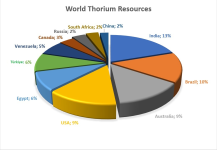
Europe doesnt have any enegy source
Turkiye's Thorium reserves can provide Europe's electricity needs for 500 years
1762318707937.png

Thorium is considered to be the cleanest fuel in nuclear power plants
 
But, Indians and Yanks on the forum for years have ridiculed Chinese as mere copycats or worse stealers of Western IP for centuries, lol, not to mention many of the sour grapes can't even make crap. They just like to turn blind eyes.
 
Amazing tech… first true human like robot in my opinion. If only its Ai is as good, it will be a family robot in future
 
We will in our life times, have automous AI robots in our homes, that line is fast fast approaching. What we are seeing, is that problems of the form factor being functional, has been mostly resolved by everyone.

China is a leader in this space for sure, and its vast industrial base will help it become the market leader. Having the core technology is one thing, being able to manufacture on mass, is something else and China is a leader in that space.

We have all become used to have Alexa agents in our homes, helping with automation(and giving up privacy for that privilege).

The next step is these robots, that will help with house hold chores, with the focus on helping elderly people at home with there basic tasks.

An uncertain future for some, who rely on manual tasks for their livelihoods, but every iteration of technology has bought with it, new opportunities, and this will do that too.
 
Robot or human? Chinese humanoid causes online stir

November. 7 2025
To view this content we will need your consent to set third party cookies.
For more detailed information, see our cookies page.

IRON, a robot unveiled by Chinese EV giant XPeng, moved so much like a human that the company had to release a video after its debut to prove that it’s in fact a machine.

01:20 • Source: CNN
 

Musk on Xpeng's Iron humanoid robot: 'Tesla and China companies will dominate the market'​

November 7th, 2025
  • "Other companies in the West are weak," Musk said.
  • Xpeng's Iron looks so real that many suspected it hid a human inside.
Musk on Xpeng's Iron humanoid robot: 'Tesla and China companies will dominate the market'
(Xpeng chairman and CEO He Xiaopeng unveiled the new Iron humanoid robot at the company's AI Day event on November 5, 2025. Image credit: Xpeng)

Xpeng's (NYSE: XPEV) next-generation Iron humanoid robot has stunned many in China, and its American rival Tesla's (NASDAQ: TSLA) CEO has taken notice.

"Not bad … Tesla and China companies will dominate the market," Elon Musk commented on Xpeng Iron in a chat, according to a report today by local media Sohu Tech.

"Other companies in the West are weak," the Tesla CEO said.

"I have great respect for China competition. So many smart, hardworking people in China," he said.

Xpeng unveiled its next-generation Iron humanoid robot at its 2025 AI Day on November 5. Unlike the first-generation model released last year, the new iteration resembles a female figure.

During the event, the Iron humanoid robot stunned audiences by performing a catwalk with natural, fluid movements and highly realistic human postures.

Its lifelike appearance led many to suspect the company had hidden a real person inside the demonstration prototype.

This suspicion quickly became a trending topic on Chinese social media, prompting Xpeng to respond.

Yesterday, Xpeng chairman and CEO He Xiaopeng shared an unedited video on Weibo proving the new Iron robot is indeed robotic.

"Tesla's robot can't walk this smoothly -- there's no way this is possible," said a social media user comment shared by Mr. He in the video.

He then demonstrated the humanoid robot's hand details and the microphone array positioned near its ears.

Xpeng aims to achieve mass production of advanced humanoid robots by the end of 2026.

2025110710363123-scaled.jpg


There are tons of people across the globe thinks there was a female actually inside, then they released videos.

To view this content we will need your consent to set third party cookies.
For more detailed information, see our cookies page.
 
There are tons of people across the globe thinks there was a female actually inside, then they released videos.

To view this content we will need your consent to set third party cookies.
For more detailed information, see our cookies page.

Americans will strongly believe there is an American in it.
 
Its a robot, I believe behind the scenes footage was leaked with reporters peeling back the "skin" to reveal electronics underneath, and it eventually walking off.
 
Its a robot, I believe behind the scenes footage was leaked with reporters peeling back the "skin" to reveal electronics underneath, and it eventually walking off.
To view this content we will need your consent to set third party cookies.
For more detailed information, see our cookies page.


To view this content we will need your consent to set third party cookies.
For more detailed information, see our cookies page.
 

Users who are viewing this thread

Back
Top