China Science And Technology News

China's reusable spaceplane returned on September 06 after 268 days of orbital flights.
To view this content we will need your consent to set third party cookies.
For more detailed information, see our cookies page.
 
Another step forward for China's #reusablerocket!The prototype of #Zhuque3 reusable rocket blasted off from #Jiuquan Satellite Launch Center on Wednesday, completing a 10km-level Vertical takeoff & vertical landing (#VTVL) flight test.(Photo:LandSpace)
To view this content we will need your consent to set third party cookies.
For more detailed information, see our cookies page.


Land Space's 10km VTVL footage
To view this content we will need your consent to set third party cookies.
For more detailed information, see our cookies page.


1726034251815.png
 
Last edited:
Official video from Landspace.


China's #Zhuque3 reusable rocket prototype has completed 10km-level #VTVLtest. Zhuque-3 is a methane and liquid oxygen-powered reusable rocket developed by a Chinese private company #LandSpace. It is expected to be ready for maiden flight in 2025.(Video: LandSpace)
To view this content we will need your consent to set third party cookies.
For more detailed information, see our cookies page.
 
Official video from Landspace.


China's #Zhuque3 reusable rocket prototype has completed 10km-level #VTVLtest. Zhuque-3 is a methane and liquid oxygen-powered reusable rocket developed by a Chinese private company #LandSpace. It is expected to be ready for maiden flight in 2025.(Video: LandSpace)
To view this content we will need your consent to set third party cookies.
For more detailed information, see our cookies page.


I think it is the first methalox engine. SpaceX was trying to develop one but failed.
 
To view this content we will need your consent to set third party cookies.
For more detailed information, see our cookies page.
 
To view this content we will need your consent to set third party cookies.
For more detailed information, see our cookies page.
 
Another VTVL rocket test from China private aerospace company.

This test end in partial failure. They plan to try again in November because they have a spare rocket.

************************************************

Deep Blue Aerospace released documentary video of the test. Throttle control unit went wrong during the touching down stage this time. Next jump planned at Nov. They will keep trying until a full success. The engine can be throttled down to 6t. via https://weibo.com/7540152734/OygUt1gtZ
To view this content we will need your consent to set third party cookies.
For more detailed information, see our cookies page.

To view this content we will need your consent to set third party cookies.
For more detailed information, see our cookies page.
 
Chinese scientists used an independently developed resistive magnet on Sunday to produce a steady magnetic field of 42.02 tesla, equivalent to over 800,000 times the Earth's magnetic field, breaking a world record set by the United States in this field in 2017.https://cctvplus.com/news/20240922/8396061.shtml#!language=1
To view this content we will need your consent to set third party cookies.
For more detailed information, see our cookies page.
 

FIRST LOOK! China Lunar Spacesuit​

To view this content we will need your consent to set third party cookies.
For more detailed information, see our cookies page.
 
#ChinaAIWatch China Telecom say AI model with 1 trillion parameters trained with Chinese chips | South China Morning Post

The Institute of AI at China Telecom, one of the country’s large state-backed telecoms operators, said in a statement on Saturday that its open-source TeleChat2-115B and a second unnamed model were trained on tens of thousands of domestically produced chips, marking a milestone amid tightening US restrictions on China’s access to advanced semiconductors, including Nvidia’s latest AI chips.
To view this content we will need your consent to set third party cookies.
For more detailed information, see our cookies page.
 
China Developed AI Model With Trillion Parameters on Own Chips - Reports

1110205255_3_0_1454_816_1920x0_80_0_0_b41bc351b27aec1aab06c3cb230578c8.png.webp

MOSCOW (Sputnik) - Chinese telecommunications giant China Telecom has developed two large AI language models using chips of its own production, one of them with 1 trillion parameters, Hong Kong-based newspaper South China Morning Post reported on Monday.

The open-source TeleChat2-115B and a second unnamed model have been tested on tens of thousands of chips of its own production, which has become an important milestone against the backdrop of tightening US restrictions on China's access to advanced semiconductors, including the latest artificial intelligence chips from Nvidia, the newspaper said.

The development was carried out by the AI research institute of China Telecom. Telechart-115B contains over 100 billion parameters, while the unnamed model has 1 trillion parameters. The number of parameters involved in the training process determines the complexity and efficiency of AI models.

In October 2022, the United States announced a series of rules restricting the export of equipment and components for the production of advanced chips to companies located in China. A year later, the US Department of Commerce issued a series of new restrictions on the export of such semiconductors. These rules changed the definition of AI chips and introduced additional licensing requirements for their shipments to more than 40 countries to avoid their resale in China.

In China, there are more than 100 LLMs (large language models) with over 1 billion parameters. They can be used in electronic information transmission, healthcare, transportation, and in any other field. In two years, the size of large language models has increased thousands of times, and the cost of computing power continues to fall. LLM technology is advancing rapidly and can handle text, language, and vision, but to achieve AGI (artificial intelligence that can think and act like a human), next-generation models must have larger, more complex, and multi-level logical thinking.

 
Chinese AI tool uncovers new viruses at the speed of a species per second: paper

From masses of data previously uploaded to databases, scientists have identified nearly 162,000 new species of RNA virus

bddbf179-c36f-48db-b429-45a9b1cba73f_ee4af87a.jpg

An artificial intelligence tool has helped scientists discover unknown virus species at an unprecedented speed from data previously uploaded to databases, according to a joint study by researchers in mainland China, Hong Kong and Australia.
The team said the discovery of nearly 162,000 new species of RNA virus in different environments – including in the atmosphere, hot springs and hydrothermal vents – highlighted their diversity and resilience in harsh conditions, while potentially offering clues to how viruses and other elemental life forms came to be.

By analysing previously unrecognised genetic sequence data in public databases, the machine learning tool identified viruses based on their sequences and hidden protein structure information that RNA viruses use for replication, identifying whether a sequence represents an RNA virus species in one second or less.

The tool uses an algorithm developed by the Alibaba Cloud Intelligence team and was developed in partnership with a team of virologists. Alibaba is the owner of the South China Morning Post.

“We developed a data-driven deep learning model that outperforms conventional methods in accuracy, efficiency and, most importantly, the breadth of virus diversity detected,” the team wrote in an article published in the peer-reviewed journal Cell on Wednesday.

They said the study was the largest virus species discovery ever published in terms of the number of species reported in a paper.

Co-lead author Shi Mang, a virologist and professor at the Sun Yat-sen University School of Medicine, said the AI tool not only accelerated virus discovery, which would be tedious and time-consuming using traditional methods, but also enabled scientists to explore the realm of previously unknown viruses.

“All the viruses discovered in this study exist in the environment and were sequenced. Our previous methods were not able to identify them, leaving them as ‘dark matter’ to scientists,” he said, referring to sequences that cannot be isolated for study or found to be related to known viruses.

“The AI tool fills this gap for us with high accuracy comparable to conventional methods in bioinformatics. It can uncover ‘dark matter’ sequences, along with those more closely related to established viral groups,” he said.

Shi said the discovery advanced future research by laying the basis for virus diversity.

“For example, the study informs us of the existence of viruses in extreme conditions, such as hot springs. This knowledge will enable scientists to develop more comprehensive descriptions of the ecology in various ecosystems,” he said.

“As for pathogenicity of viruses, we will be able to study further how viruses interact with their hosts, as well as identify the groups of viruses that can infect a particular host.”

Co-lead author Li Zhaorong, who researches computational biology in Alibaba Cloud Intelligence’s Apsara Lab, said the study showed that the deep learning algorithm could effectively perform tasks in biological exploration.

He said the team continued to update the tool with advanced AI technologies such as new pre-trained models for nucleotide and protein analysis.


“We are also re-examining classic problems in virology with a new AI and data-driven mindset, such as the structure and functions of viruses and the relationship between viruses and humans and animals,” he said.

The team said it would continue to train the model to uncover more virus diversity, and the same approach could be applied to identifying bacteria and parasites.


WeRide Unveils New Production Robotaxi GXR Leveraging 1,800 Days of Operations​

October 15, 2024 06:05 ET

To view this content we will need your consent to set third party cookies.
For more detailed information, see our cookies page.


GUANGZHOU, China, Oct. 15, 2024 (GLOBE NEWSWIRE) -- WeRide, the leading global commercial-stage company developing autonomous driving technologies from Level 2 to Level 4, has officially unveiled its latest generation of Robotaxi - GXR, the world's most spacious production Robotaxi model to date.

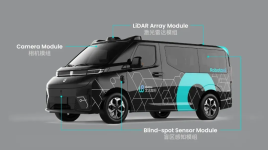
Leveraging WeRide's extensive experience of over 1,800 days in public Robotaxi operations, GXR integrates WeRide's self-developed L4-level autonomous driving hardwares and softwares, open-concept spacious designs, the new Sensor Suite 5.6, and the HPC 2.0 high-performance computing platform, easily handling peak traffic hours, mixed traffic conditions, and high-speed driving at night.

As a production Robotaxi model, WeRide GXR is equipped with a comprehensive redundancy system, including architecture, F-O steer-by-wire chassis, computing units, and braking systems, preventing single-point failures and ensuring passenger safety.

The new Sensor Suite 5.6 features an aerodynamic and compact design with over 20 sensors, including high-performance, low-cost LiDAR, high-definition high-dynamic cameras, and an RTK high-precision inertial navigation set, with 360° blind-spot-free perception and 200-meter front detection.

Spacious

WeRide GXR offers an impressive vehicle length of 5,018mm, an interior cabin height of 1,340mm, and a wheelbase of 3,100mm. It is the first to eliminate the front passenger seat, achieving the highest "space efficiency" in the Robotaxi industry.

Convenient

GXR introduces the world’s first hidden B-pillar design, allowing the front door and sliding side door to open simultaneously, reaching up to 1,831mm in width and 1,285mm in height, creating an expansive entryway for passengers. A carry-on luggage area is designated to accommodate at least one backpack and one 22-inch suitcase. Passengers can load the luggage and board the vehicle with a single door opening.

Safe

Safety is WeRide’s top priority. WeRide GXR’s cabin features soft-edged design to provide baby-level safety care. Each door has emergency exit signage, and the center console contains a stop button and a safety hammer for emergency needs.

WeRide Go App—Ride with Ease

Once GXR is open to the public, passengers can use the WeRide Go App to select the nearest pickup point and destination to start their GXR journey. GXR can easily accommodate solo business trips, family vacations and friend gatherings.

WeRide has maintained its leadership in the Robotaxi industry and expanded its footprint overseas, operating the largest Robotaxi fleet in the Middle East. WeRide GXR is the latest milestone in WeRide’s mission to enhance passenger experiences through its international operational expertise.

1728989563398.png
 
WeRide has maintained its leadership in the Robotaxi industry and expanded its footprint overseas, operating the largest Robotaxi fleet in the Middle East.

WeRide and Uber Partner to Bring Autonomous Vehicles to the Uber Platform, Beginning in the United Arab Emirates​


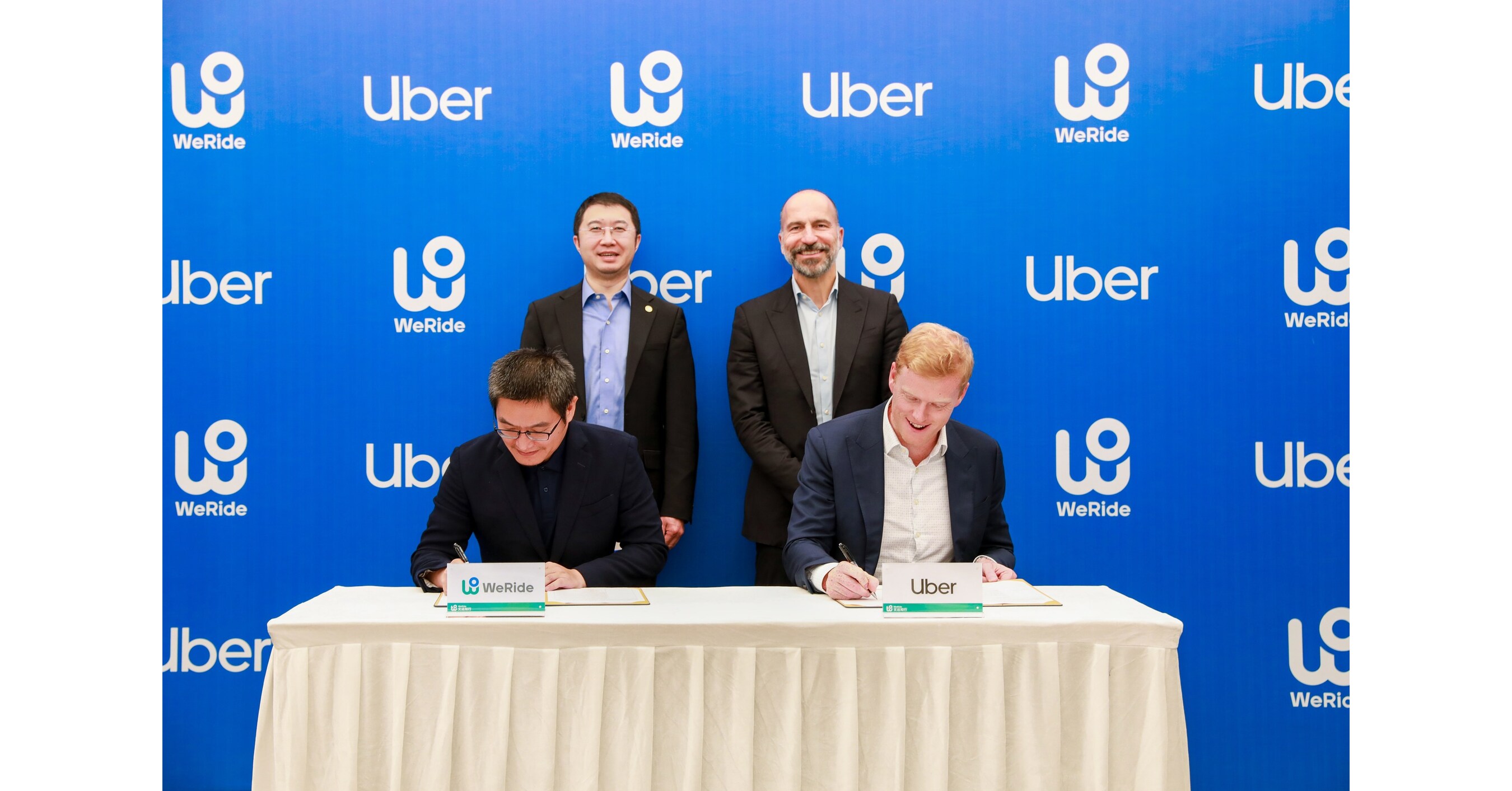
SAN FRANCISCO and GUANGZHOU, China, Sept. 25, 2024 /PRNewswire/ -- WeRide, a global leading autonomous driving technology company, and Uber Technologies, Inc. (NYSE: UBER), the world's largest mobility and delivery technology platform, today announced a strategic partnership to bring WeRide's autonomous vehicles onto the Uber platform, beginning in the United Arab Emirates.

The partnership is expected to launch first in Abu Dhabi later this year. A dedicated number of WeRide vehicles will be made available to consumers using the Uber app. After launch, when a rider requests a qualifying ride on the Uber app, they may be presented with the option to have their trip fulfilled by a WeRide autonomous vehicle. The partnership does not contemplate any launches in the United States or China.

WeRide currently operates the largest robotaxi fleet in the UAE through the TXAI app. In 2023, WeRide was granted the UAE's first national license to test and operate autonomous vehicles on public roads across the country.

Tony Han, founder and CEO of WeRide said: "We are honored to partner with Uber to continue to bring our technology to global markets. Together, we aim to combine our collective experience and expertise to deliver much needed, affordable, sustainable and safe mobility solutions to a global audience."

Dara Khosrowshahi, CEO of Uber said: "Uber is very excited to partner with WeRide. It's clear that the future of mobility will be increasingly shared, electric, and autonomous, and we look forward to working with leading AV companies like WeRide to help bring the benefits of autonomous technology to cities around the world."
 

Users who are viewing this thread

Pakistan Defence Latest

Back
Top