Navigation
Install the app
How to install the app on iOS
Follow along with the video below to see how to install our site as a web app on your home screen.
Note: This feature may not be available in some browsers.
More options
Style variation
You are using an out of date browser. It may not display this or other websites correctly.
You should upgrade or use an alternative browser.
You should upgrade or use an alternative browser.
China Science And Technology News
- Thread starter JsCh
- Start date
More options
Who Replied?


JsCh
Elite Member
- Thread starter
- #77
草根设计师-CAD
24-12-26 17:25
发布于 云南 来自 华为畅享 70 Pro
成飞六代机,主对地对海攻击,“远程作战概念”,三发布局,两个进气口在机头下两侧,一个进气口在机背,大作战半径,能攻击关岛,能覆盖南海,能拒航母3000公里外,大主机轮盖,超降时起稳重作用,大弹仓能携带大尺寸大重量攻击导弹,主翼外侧4片副翼,能同时上下偏,也能一上一下偏转……
Google Translate:
Grassroots Designer-CAD
Published on Yunnan at 17:25 on 24-12-26
From Huawei Enjoy 70 Pro
CAC(Chengdu Aircraft Corp)'s sixth-generation aircraft, mainly for ground and sea attacks, "long-range combat concept", three-engine layout, two air intakes on both sides under the nose, one air intake on the back, large combat radius, can attack Guam, can cover the South China Sea, can deter aircraft carriers 3,000 kilometers away, large main engine wheel cover, plays a stabilizing role during landing, large weapon bay can carry large-size and heavy attack missiles, 4 ailerons on the outside of the main wing, can deflect up and down at the same time, or alternately....
JsCh
Elite Member
- Thread starter
- #78
The rotating detonation rocket engine with gaseous hydrogen/oxygen propellant developed by China Aerospace Science and Technology Corporation recently completed a long-duration hot test. This test has broken through the thermal protection technology for the hydrogen-oxygen rotating detonation combustion chamber and verified the operational reliability of the hydrogen-oxygen rotating detonation engine during prolonged operation: Science and Technology Daily
Last edited:
yusheng
Registered Member
@CCTV News
#The appearance of China's new high-speed train is sci-fi style # 【 Proudly reposted! # China CR450 high-speed train sample released # 】 # China's world's fastest high-speed train unveiled # Today, the CR450 high-speed train sample was released in Beijing, marking a major breakthrough in the "CR450 Technology Innovation Project", which will greatly enhance China's railway technology innovation level and technological self-reliance ability, further consolidate and expand China's world leading advantage in high-speed rail technology.
It is reported that the CR450 high-speed train prototype has internationally leading indicators such as operating speed, energy consumption, interior noise, and braking distance. One is higher speed. The experimental speed is 450 kilometers per hour, and the operating speed is 400 kilometers per hour. After commercial operation in the future, it can further compress the distance between time and space, making passenger travel more convenient and efficient. Secondly, it is safer. The braking distance is shorter and the running stability is better. With the increase of operating speed, the braking distance is basically the same. Thirdly, it is more energy-efficient. The running resistance of the high-speed train is reduced by 22% and the weight is reduced by 10%. Fourthly, it is more comfortable. The comfort index is better, the interior noise is reduced by 2 decibels, and the passenger compartment service space is increased by 4%, which can provide diversified, convenient, and personalized services for passengers and improve the riding experience. Five is more intelligent. The fields of driving and control, intelligent driver interaction, safety monitoring, and intelligent passenger services have all been comprehensively upgraded. (CCTV reporter Zheng Liankai and Cao Dan)
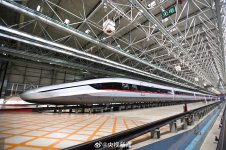
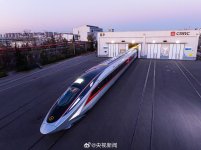
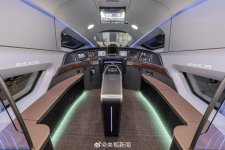
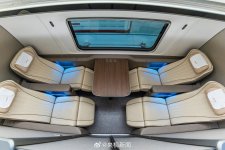
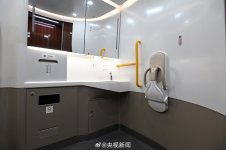
#The appearance of China's new high-speed train is sci-fi style # 【 Proudly reposted! # China CR450 high-speed train sample released # 】 # China's world's fastest high-speed train unveiled # Today, the CR450 high-speed train sample was released in Beijing, marking a major breakthrough in the "CR450 Technology Innovation Project", which will greatly enhance China's railway technology innovation level and technological self-reliance ability, further consolidate and expand China's world leading advantage in high-speed rail technology.
It is reported that the CR450 high-speed train prototype has internationally leading indicators such as operating speed, energy consumption, interior noise, and braking distance. One is higher speed. The experimental speed is 450 kilometers per hour, and the operating speed is 400 kilometers per hour. After commercial operation in the future, it can further compress the distance between time and space, making passenger travel more convenient and efficient. Secondly, it is safer. The braking distance is shorter and the running stability is better. With the increase of operating speed, the braking distance is basically the same. Thirdly, it is more energy-efficient. The running resistance of the high-speed train is reduced by 22% and the weight is reduced by 10%. Fourthly, it is more comfortable. The comfort index is better, the interior noise is reduced by 2 decibels, and the passenger compartment service space is increased by 4%, which can provide diversified, convenient, and personalized services for passengers and improve the riding experience. Five is more intelligent. The fields of driving and control, intelligent driver interaction, safety monitoring, and intelligent passenger services have all been comprehensively upgraded. (CCTV reporter Zheng Liankai and Cao Dan)
JsCh
Elite Member
- Thread starter
- #80
Unit 1 of the Zhangzhou #nuclear power plant in China's Fujian province - the first of six Hualong One (HPR1000) reactors planned at the site - has been put into commercial operation
_44128.jpg)
Zhangzhou unit 1 enters commercial operation
Unit 1 of the Zhangzhou nuclear power plant in China's Fujian province - the first of six Hualong One (HPR1000) reactors planned at the site - has been put into commercial operation, China National Nuclear Corporation has announced. ;
world-nuclear-news.org
JsCh
Elite Member
- Thread starter
- #82
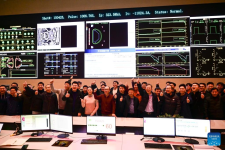
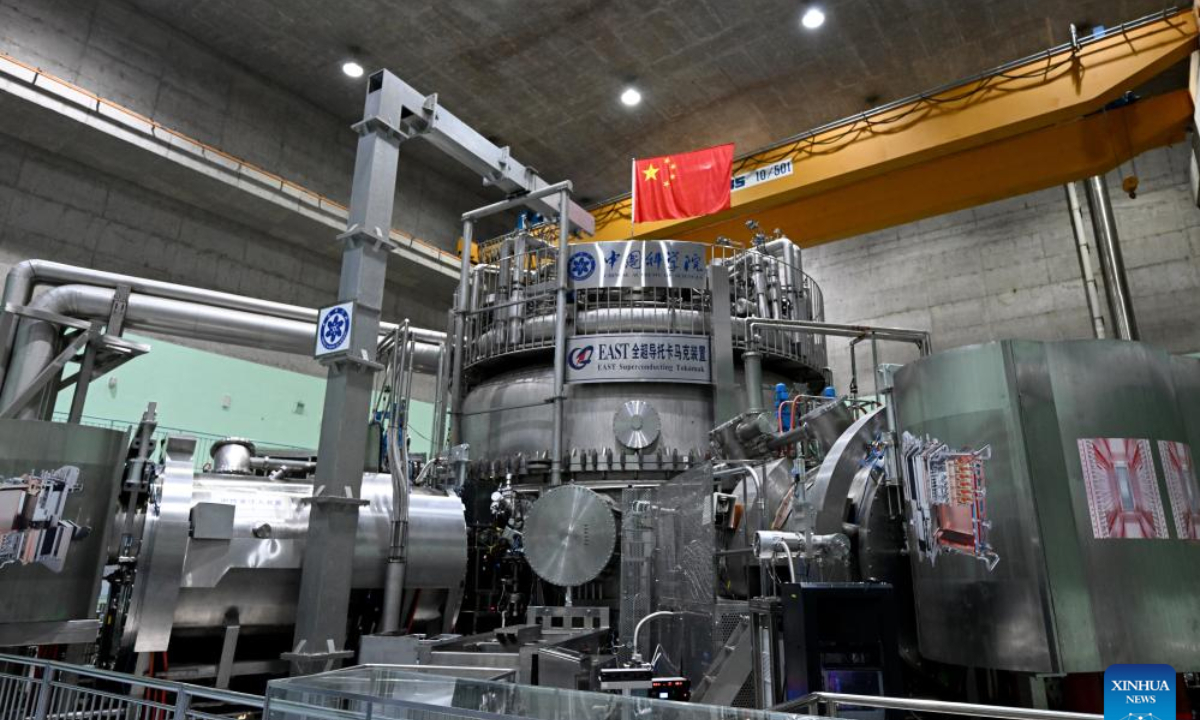
The Experimental Advanced Superconducting Tokamak, commonly known as China’s "artificial sun," set a new world record by sustaining high-confinement plasma operation for 1,066 seconds, the Global Times learned from the Chinese Academy of Sciences. The engineering design of the next-generation "artificial sun" has been completed. According to China's roadmap for magnetic confinement nuclear fusion, the goal is to build the world's first fusion demonstration power plant in the future.
JsCh
Elite Member
- Thread starter
- #83
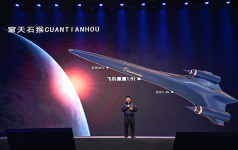
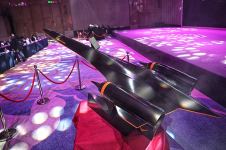
A Chinese company has unveiled a next-generation supersonic aircraft verification model and eyes its first test flight in 2026.The prototype named Cuantianhou will be 7 meters long and weigh 1.5 metric tons. Propelled by a state-of-the-art ramrotor detonation engine, which can provide a thrust of at least 4,000 newtons, it will fly at a top speed of Mach 4.2, or about 5,000 km/h, almost five times faster than a conventional jetliner.
JsCh
Elite Member
- Thread starter
- #85

Superconducting Quantum Computing Beyond 100 Qubits
A new high-performance quantum processor boasts 105 superconducting qubits and rivals Google’s acclaimed Willow processor.
 physics.aps.org
The paper ->

Beijingwalker
VIP Member
China’s Zuchongzhi 3.0 Quantum Processor ‘Outpaces’ Google Willow by Million Times
Zuchongzhi 3.0 claims to achieve results that would take classical supercomputers over 6.4 billion years.Published on March 4, 2025

Chinese researchers from the University of Science and Technology of China (USTC) have unveiled the Zuchongzhi 3.0, a superconducting quantum processor with 105 qubits, marking a significant milestone in Chinese quantum computing.
The processor operates quadrillion times faster than the world’s fastest supercomputer and one million times faster than Google’s latest Willow, as per the findings published in Physical Review Letters.
The Zuchongzhi 3.0 was tested with an 83-qubit, 32-layer random circuit sampling task, claiming to achieve results that would take classical supercomputers over 6.4 billion years to replicate.
This achievement surpasses Google’s Sycamore processor, developed in 2019, by six orders of magnitude. The research team highlighted advancements in coherence time, gate fidelities, and readout accuracy.
The processor achieves a coherence time of 72 microseconds, single-qubit gate fidelity of 99.90%, two-qubit gate fidelity of 99.62%, and readout fidelity of 99.13%. These improvements enable more complex operations and computations.
Building on previous successes with the Zuchongzhi-2 and Jiuzhang photonic systems, the team continues to push the boundaries of quantum error correction and scalability. They are researching surface codes for error correction and plan to expand integration capabilities to distances of 9 and 11.
The research team collaborated with institutions such as the Shanghai Research Center for Quantum Sciences and the Chinese Academy of Sciences.
In December last year, China also achieved a milestone in quantum computing with the launch of the ‘Tianyan-504’ superconducting quantum computer, equipped with the 504-qubit ‘Xiaohong’ chip.
The quantum computer, developed collaboratively by the China Telecom Quantum Group (CTQG), the Chinese Academy of Sciences (CAS), and QuantumCTek Co., Ltd., represented a leap in the field by surpassing the 500-qubit mark.
Beijingwalker
VIP Member
Explainer: How China's quantum leap is set to redefine future of computing
Xinhua2025-03-04 23:15:15
HEFEI, March 4 (Xinhua) -- A team of Chinese scientists on Monday unveiled Zuchongzhi 3.0, a 105-qubit superconducting quantum processor prototype with speed gains in the quadrillions over leading supercomputers for one specific task: quantum random circuit sampling.
The team's groundbreaking result has positioned China at the forefront of quantum supremacy amid rapid global tech progress.
But what does this leap mean, and how could it redefine the future of computing?
BEYOND SUPREMACY
The United States and China are both leading contributors to quantum innovation, advancing the field in parallel and driving breakthroughs that are redrawing computational frontiers.
In 2019, Google's Sycamore declared a quantum advantage over traditional supercomputers in solving a sampling task in 200 seconds, but Chinese scientists challenged that advantage in 2023, cutting the time to 17 seconds using classical chips and algorithms.
Meanwhile, China hit new quantum computing milestones with Zuchongzhi 2.0 and Jiuzhang 3.0. By 2024, Sycamore had again highlighted its quantum supremacy with expanded qubit counts.
But this week, Zuchongzhi 3.0 surpassed Sycamore's latest scores by six orders of magnitude, setting the highest benchmark for a superconducting system ever publicly reported.
Over the past 80 years, computing has reshaped our understanding of the world and daily life, but unlocking its next frontier hinges on overcoming the bottlenecks of processing power as the field approaches the physical limits of Moore's Law.
Quantum tech is broadly considered to be the front line of technology, poised to trigger a transformative breakthrough akin to that of fusion energy.
And scientists racing to embrace this future have laid out some critical milestones.
Zhu Xiaobo, the chief designer of Zuchongzhi 3.0, has outlined a three-stage roadmap for the development of practical quantum computers, the first of which has seen China and the United States showcase capabilities that surpass those of classical supercomputers, such as quantum random sampling carried out primarily through qubit scaling. But these advances remain niche demonstrations with minimal real-world impact.
In the second stage, researchers around the world are aiming to pinpoint a handful of practical quantum applications -- like quantum chemistry and drug discovery, now largely bolstered by supercomputers and AI algorithms -- within five years, translating quantum advantages into tangible productivity gains, according to Zhu.
The third stage will involve achieving universal fault-tolerant quantum computing, which requires suppressing qubit error rates to extreme lows. Given current physical qubit error rates and engineering hurdles, Zhu estimates this milestone remains about 15 years away.
Now, in early development of quantum computing, the front-runners and best technical approaches have not yet been consolidated, meaning "any country that is able to deploy quantum tech first will have a first-mover advantage," according to a report published by the Mercator Institute for China Studies last December.
LOWERING ERRORS
Zuchongzhi 3.0, a superconducting quantum processor with 105 readable qubits, has one of the highest qubit counts of any device that has demonstrated quantum supremacy.
Its world-leading fidelity metrics are its true distinction: its single-qubit gate (99.9 percent), its two-qubit gate (99.62 percent) and its readout (99.13 percent), which have earned peer recognition for what one journal reviewer referred to as "benchmarking a new superconducting quantum computer with state-of-the-art performance."
Zuchongzhi 3.0's ingenious architecture -- integrating frequency-tunable qubits, topological coupling and flip-chip bonding -- has achieved a decoherence performance surpassing that of Sycamore, in a critical advance to maintain quantum states in large-scale systems, according to Zhu.
Quantum coherence time is a measure of how long a quantum system can retain operational integrity, with a longer time enabling the execution of complex algorithms and relatively large-scale computations, Zhu said.
Despite the good performance of the existing Zuchongzhi system, Zhu recognizes that slashing quantum error rates remains a pivotal challenge to the viability of practical quantum computers. "To build a practical quantum computer, we must simultaneously scale qubit counts and reduce error rates."
Last December, Google unveiled a new quantum computer based on the Willow quantum chip that displays excellent error-correction ability.
Willow employs a scalable surface-code quantum error-correction method, which arranges qubits in a checkerboard-like lattice in a strategy that had been verified in China's Zuchongzhi 2.0 in 2022, according to Wu Yulin, a quantum scientist at the University of Science and Technology of China (USTC).
In this recent breakthrough, Google demonstrated surface-code logical qubits with code distances of 7, achieving a significant reduction in logical error rates compared to earlier implementations, according to a paper published in Nature.
Zhu's team is currently conducting surface code error-correction research at an equal level. "Our latest work remains unpublished, but internal benchmarking against Willow's published data has indicated comparable performance metrics at this stage."
Chinese scientists are planning to demonstrate their 7-code-distance error-correction strategy within months. And after they see progress, they will extend that distance to 9 and then 11, paving the way for large-scale qubit integration and control, according to Zhu.
LOOKING AHEAD
Though superconducting qubits often steal headlines when it comes to computing, the manipulation of photons for quantum computing has also seen rapid progress.
China's Jiuzhang quantum system pioneered a sampling problem type with 76 photons in 2020, and scaled that up to 113 photons with Jiuzhang 2.0 in 2021.
In 2022, Canadian startup Xanadu and the U.S. National Institute of Standards and Technology matched this strategy with up to 219 photons. China took the lead again in 2023 with Jiuzhang 3.0 by controlling 255 detected photons.
And China's Jiuzhang 4.0 prototype, designed to integrate over 2,000 photons, is poised to break quantum supremacy benchmarks and has the potential to redefine the competitive landscape of quantum computing.
While quantum scientists explore multiple technical pathways in quantum computing, they are also prioritizing the exploration of its potential to tackle high-impact scientific and engineering challenges.
"We're now in stage two, where scientists are striving to develop quantum simulators for practical applications," said Yao Xingcan, who is based at the Chinese Academy of Sciences' Innovation Academy for Quantum Information and Technology.
Yao was part of a USTC team that developed last year an ultra-cold atomic quantum simulator to address a typical model depicting the behavior of materials in a high-temperature superconductivity state. The team's work outperformed the computational capabilities of any classical computer, demonstrating quantum supremacy in solving the pivotal scientific question.
The discovery of high-temperature superconductors could lead to new possibilities for multiple practical applications, including energy storage, power transmission and new modes of transportation.
The result, according to one peer reviewer, is "an experimental tour de force" that "marks an important step forward for the field" and "could become a notable milestone for modern science and technology, and a major breakthrough."
In a column written for a Chinese audience last December, Nobel laureate Frank Wilczek said that these cutting-edge quantum tools will empower scientists to develop more sophisticated quantum technologies.
In a spiraling cycle of innovation, new aspirations will be ignited and novel realities will be forged, Wilczek said. ■
Explainer: How China's quantum leap is set to redefine future of computing
Explainer: How China's quantum leap is set to redefine future of computing-
english.news.cn
Beijingwalker
VIP Member
Beijingwalker
VIP Member
JsCh
Elite Member
- Thread starter
- #90
China’s domestically developed EUV machine, utilizing laser-induced discharge plasma (LDP) technology—distinct from the LPP approach employed by ASML—is currently undergoing testing at Huawei’s Dongguan facility. Trial production is slated for Q3 2025, mass production for 2026.
China is out competing ASML.
The laser-induced discharge plasma (LDP) EUV generation commercialization push is a DeepSeek moment for lithography that I was fearful of.
LDP is much more efficient than laser produced plasma (LPP) which ASML uses. LDP vaporizes a small quantity of tin into a cloud between two electrodes and then use high voltage to convert the tin vapor to plasma. The electrons collide with tin ions to produce the 13.5 nm EUV light. LPP requires high-energy laser and complex FPGA real time control electronics.
The LDP approach is simpler, smaller, more cost-effective and better energy efficiency.
Attached is comparison of LDP generation approach versus LPP.
China is out competing ASML.
The laser-induced discharge plasma (LDP) EUV generation commercialization push is a DeepSeek moment for lithography that I was fearful of.
LDP is much more efficient than laser produced plasma (LPP) which ASML uses. LDP vaporizes a small quantity of tin into a cloud between two electrodes and then use high voltage to convert the tin vapor to plasma. The electrons collide with tin ions to produce the 13.5 nm EUV light. LPP requires high-energy laser and complex FPGA real time control electronics.
The LDP approach is simpler, smaller, more cost-effective and better energy efficiency.
Attached is comparison of LDP generation approach versus LPP.
Users who are viewing this thread
Total: 10 (members: 0, guests: 10)
Pakistan Defence Latest
-
 Federal cabinet gives nod to imposition of emergency in KP; summary sent to president (23 Viewers)
- Latest: retaxis
-

-

-
-

Country Watch Latest
Latest Posts
-
 IMF Data: Türkiye now the world's largest Muslim-majority economy, surpassing Indonesia (8 Viewers)
- Latest: Ali_Baba
-
-

-
-
France stopped UAE to deploy its Rafales against Azeri JF-17 Block 3 in Falcons Meet 2026 war drills (22 Viewers)
- Latest: Ali_Baba