China Science And Technology News

Chinese scientists’ brain-mimicking chip ‘up to 478 times faster than Nvidia A100 GPU’


The breakthrough “opens up new possibilities for brain-computer interfaces and the diagnosis and treatment of brain diseases”, lead author of study published in Science says. Photo: Shutterstock

Holly Chik
Published: 7:30pm, 4 Jul 2026

Chinese scientists say they have developed a tiny computer chip capable of modelling complex brain structures in real time.

Chinese scientists say they have developed a tiny computer chip capable of modelling complex brain structures in real time.

According to its developers, this chip could not only transform diagnostics and treatment for conditions such as Alzheimer’s disease, but also boost the performance of brain-machine interfaces and assist surgeons.

Researchers from Peking University and the Chinese Academy of Sciences reported the breakthrough in a peer-reviewed study published in Science on Thursday, detailing a 40-nanometre memory chip with an integrated artificial neural network.

The device overcomes long-standing computational limits, enabling it to reconstruct complex brain surfaces in less than half a second – making it 50 to 478 times faster than state-of-the-art Nvidia A100 graphics processing unit (GPU) systems, according to the team.

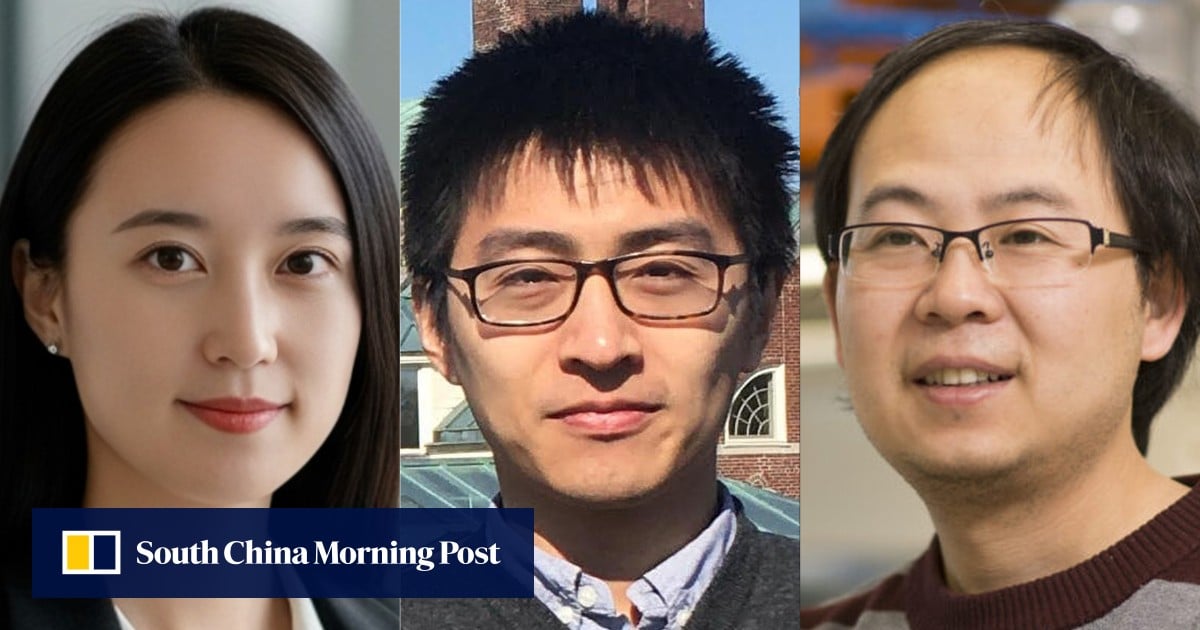
Lead author Yang Yuchao, a professor at Peking University’s school of integrated circuits and deputy dean for its school of electronic and computer engineering, told state-run Guangming Daily that the chip could accurately render the brain’s folds for medical applications.

“This breakthrough opens up new possibilities for brain-computer interfaces and the diagnosis and treatment of brain diseases,” he said. “In the future, personalised and dynamic digital brain twins will become possible.”

“It also provides a hardware foundation that can operate in real time for intraoperative neuronavigation [a navigation system for surgery], early screening for Alzheimer’s disease and personalised interventions,” Yang added.

 
China's 'artificial sun' hits new milestone,, targets 2030 for first electricity output
By Global Times
Published: Jul 05, 2026 11:05 AM

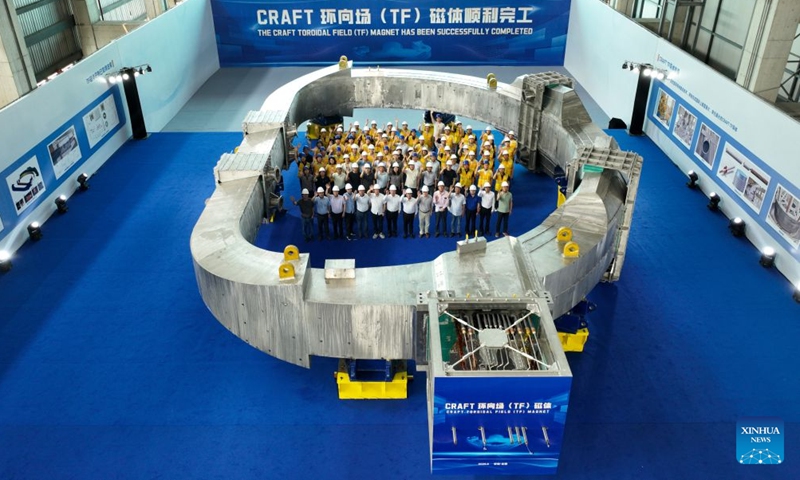
A drone photo taken on June 27, 2026 shows technicians and experts posing for group photos with the toroidal-field superconducting magnet for the fusion reactor in Hefei, east China's Anhui Province.

A drone photo taken on June 27, 2026 shows technicians and experts posing for group photos with the toroidal-field superconducting magnet for the fusion reactor in Hefei, east China's Anhui Province.

China has achieved a major milestone in its pursuit of commercial nuclear fusion, as two domestically developed superconducting magnets for a fusion reactor have passed technical acceptance and full-load testing, China Central Television (CCTV) reported. The compact fusion experimental device, for which one of the magnets is a core component, is scheduled to be completed by the end of 2027, with the goal of demonstrating the country's first nuclear-fusion-generated electricity around 2030.

The two key superconducting magnets for the fusion reactors in the Experimental Advanced Superconducting Tokamak (EAST), also known as the "artificial sun," have successfully completed development acceptance and full parameter testing, marking the full localization of all core technologies of the project, the Global Times learned from the research team on June 28.

Qin Jinggang, a deputy director of the Chinese Academy of Sciences' Institute of Plasma Physics (ASIPP), told the CCTV that when his team was assigned the project six years ago, it was given two clear objectives: improve performance and reduce costs. At the time, everything — from the engineering design to the sourcing of materials — remained uncertain.

After six years of intensive research and development, the team not only achieved significant and stable performance improvements but also localized the entire supply chain and production equipment, said Qin.

The cost of the superconducting material has also fallen sharply. A meter of the material, which once cost about 400 yuan ($56), now costs around 100 yuan, according to Qin.

More importantly, the newly tested coil represents a significant leap in scale. Compared with previous designs, it is substantially larger in terms of weight, dimensions and energy-storage capacity. The weight of a single coil has increased from 350 tons to 580 tons, paving the way for fusion devices capable of operating at much higher energy levels, said Qin.

Qin cautioned that passing the latest tests marks only "80 percent" of the journey. The remaining challenge is to install the coil in the device and verify its long-term stability and service life under demanding operating conditions.

"Only after it passes those tests can we say we have truly mastered high-temperature superconducting technology," he said.

China has steadily accelerated progress toward commercial nuclear fusion in recent years.

In January 2025, the "artificial sun" project sustained a plasma temperature of 100 million degrees Celsius for 1,066 seconds, setting a new world record.

The latest breakthrough in superconducting magnets addresses one of the most challenging bottlenecks on the path toward practical fusion power, the culmination of efforts spanning several generations of Chinese scientists since the 1980s, per CCTV.

"Nuclear fusion is undeniably one of the most difficult technologies to master," Qin said. "But after decades of progress, we are finally beginning to see light at the end of the tunnel. Our goal remains unchanged: to demonstrate the generation of our first electricity from nuclear fusion by around 2030."

 
China's 'artificial sun' hits new milestone,, targets 2030 for first electricity output
By Global Times
Published: Jul 05, 2026 11:05 AM

A drone photo taken on June 27, 2026 shows technicians and experts posing for group photos with the toroidal-field superconducting magnet for the fusion reactor in Hefei, east China's Anhui Province.'s Anhui Province.

A drone photo taken on June 27, 2026 shows technicians and experts posing for group photos with the toroidal-field superconducting magnet for the fusion reactor in Hefei, east China's Anhui Province.

China has achieved a major milestone in its pursuit of commercial nuclear fusion, as two domestically developed superconducting magnets for a fusion reactor have passed technical acceptance and full-load testing, China Central Television (CCTV) reported. The compact fusion experimental device, for which one of the magnets is a core component, is scheduled to be completed by the end of 2027, with the goal of demonstrating the country's first nuclear-fusion-generated electricity around 2030.

The two key superconducting magnets for the fusion reactors in the Experimental Advanced Superconducting Tokamak (EAST), also known as the "artificial sun," have successfully completed development acceptance and full parameter testing, marking the full localization of all core technologies of the project, the Global Times learned from the research team on June 28.

Qin Jinggang, a deputy director of the Chinese Academy of Sciences' Institute of Plasma Physics (ASIPP), told the CCTV that when his team was assigned the project six years ago, it was given two clear objectives: improve performance and reduce costs. At the time, everything — from the engineering design to the sourcing of materials — remained uncertain.

After six years of intensive research and development, the team not only achieved significant and stable performance improvements but also localized the entire supply chain and production equipment, said Qin.

The cost of the superconducting material has also fallen sharply. A meter of the material, which once cost about 400 yuan ($56), now costs around 100 yuan, according to Qin.

More importantly, the newly tested coil represents a significant leap in scale. Compared with previous designs, it is substantially larger in terms of weight, dimensions and energy-storage capacity. The weight of a single coil has increased from 350 tons to 580 tons, paving the way for fusion devices capable of operating at much higher energy levels, said Qin.

Qin cautioned that passing the latest tests marks only "80 percent" of the journey. The remaining challenge is to install the coil in the device and verify its long-term stability and service life under demanding operating conditions.

"Only after it passes those tests can we say we have truly mastered high-temperature superconducting technology," he said.

China has steadily accelerated progress toward commercial nuclear fusion in recent years.

In January 2025, the "artificial sun" project sustained a plasma temperature of 100 million degrees Celsius for 1,066 seconds, setting a new world record.

The latest breakthrough in superconducting magnets addresses one of the most challenging bottlenecks on the path toward practical fusion power, the culmination of efforts spanning several generations of Chinese scientists since the 1980s, per CCTV.

"Nuclear fusion is undeniably one of the most difficult technologies to master," Qin said. "But after decades of progress, we are finally beginning to see light at the end of the tunnel. Our goal remains unchanged: to demonstrate the generation of our first electricity from nuclear fusion by around 2030."

If realized by 2030, that be great. What is the cost ? hope it's not costing more energy to generate electricity, as the cases now ?
 
To view this content we will need your consent to set third party cookies.
For more detailed information, see our cookies page.
 
View attachment 202121
To view this content we will need your consent to set third party cookies.
For more detailed information, see our cookies page.

China's Tianwen-2 probe has successfully arrived at a distance of 20 km from the asteroid 2016HO3, enabling it to begin scientific exploration after an approximately 400-day journey of about 1 billion kilometers, the China National Space Administration (CNSA) announced on Monday.

China launched its first asteroid sample-return mission, Tianwen-2, on May 29, 2025, aiming to achieve multiple goals over a decade-long expedition: collecting samples from the near-Earth asteroid 2016HO3 and exploring the main-belt comet 311P, which is more distant than Mars.

During the approach phase, the probe acquired imagery of the asteroid.
To view this content we will need your consent to set third party cookies.
For more detailed information, see our cookies page.


Tianwen-2 had arrived. Here's asteroid Kamo'oalewa seen from 20 km away http://xinhuanet.com/20260706/eb8cbec6dfc94a0c84a24e6940334f1d/c.html

Kamo'oalewa was previously thought to be 40-100m in diameter, but this image validates the ~18 metre estimate derived from JWST observations in a paper from just a few days ago.

To view this content we will need your consent to set third party cookies.
For more detailed information, see our cookies page.
 
  • Like
Reactions: ety
About genetic phenotypes... When I went to Guangzhou in 2024, it was an eye-opener experience. Every girl I came across looked like my little sister in some way/from some angle.

I been to Shanghai and Shenzhen, nobody resembled my little sister in anyway. BUT in Guangzhou, there are thousands and thousands of my "little sister". I was shocked. I never knew my baby sister is the common phenotype in Guangzhou.

These pics I saved from some random GlobalTimes articles. Both resemble my little sister like by 99.8%

60363f9a-2a3b-4560-8a36-fe86111c1a91.jpeg531336b6-320d-4e86-811f-d4f9eb57fc91.jpeg

Do anyone of you have encountered some place(s) in China where there are hundreds if not thousands of people look like your sibling(s) in some way?
 
China航天
26-7-10 13:08
发布于 海南

#长征十号乙完成全球首次海上网系回收##长征十号乙# 【成功首飞】2026年7月10日12时15分,长征十号乙运载火箭在海南商业航天发射场发射升空,将卫星顺利送入预定轨道,火箭一二级分离约6分钟后,一子级垂直返回,在海上回收平台通过网系捕获方式成功回收,发射及一子级回收任务取得圆满成功。此次任务是我国首次成功实施运载火箭一子级可控回收,同时也是全球首次运载火箭网系回收,标志着我国在重复使用火箭技术领域取得历史性突破,将为加快提升我国进出空间能力奠定坚实基础。长征十号乙运载火箭成为我国首型成功实施回收的重复使用运载火箭。

长征十号乙运载火箭由中国航天科技集团有限公司所属中国运载火箭技术研究院抓总研制,为5米直径两级串联构型大型液体运载火箭,芯一级沿用长征十号甲运载火箭一子级状态,采用液氧煤油推进剂,芯二级采用液氧甲烷推进剂,全箭起飞推力约890吨,起飞重量约760吨,首飞箭全箭长度约63米,重复使用状态下近地轨道运载能力16吨,可满足低轨卫星互联网星座部署、大型商业卫星发射等各类任务需求,复用状态下可大幅降低发射成本,具有大运力、高性价比的优势。此次任务是继长征十号系列运载火箭低空演示验证飞行并在海上安全溅落后对重复使用火箭回收技术的进一步验证。

本次首飞任务成功验证了组合构型总体优化设计技术、大推力箱底传力技术、甲烷自生增压技术等核心关键技术,特别是成功验证了基于隔板贮箱的推进剂管理技术、发动机多次启动和高空点火、复杂力热环境适应性、高精度导航控制、海上平台网系捕获回收等多项一子级重复使用关键核心技术。

后续,长征十号乙运载火箭研制团队将持续优化火箭性能,加快重复使用火箭技术的迭代升级,预计将在今年年底前完成一子级火箭复用飞行。

Translation:

China Aerospace

July 10, 2026, 13:08
Posted from Hainan

#LongMarch10B Completes World's First Net-Based Sea Recovery #LongMarch10B

[Successful Maiden Flight] On July 10, 2026, at 12:15, the Long March 10B carrier rocket lifted off from the Hainan Commercial Spacecraft Launch Site, successfully delivering its satellite payload into the planned orbit. Approximately six minutes after the separation of the first and second stages, the first stage performed a vertical return and was successfully recovered via a net-capture system on a sea-based recovery platform; both the launch and the first-stage recovery missions were complete successes. This mission marked my country's first successful controlled recovery of a carrier rocket's first stage and the world's first net-based recovery of a carrier rocket. It signifies a historic breakthrough in my country's reusable rocket technology and lays a solid foundation for accelerating the enhancement of the nation's space access capabilities. The Long March 10B has become my country's first reusable carrier rocket to successfully undergo recovery.

The Long March 10B carrier rocket was developed under the overall leadership of the China Academy of Launch Vehicle Technology (CALT), a subsidiary of the China Aerospace Science and Technology Corporation (CASC). It is a large, liquid-propellant carrier rocket featuring a 5-meter diameter and a two-stage tandem configuration. The core first stage utilizes the same configuration as the Long March 10A, employing liquid oxygen and kerosene propellants, while the core second stage uses liquid oxygen and methane. The rocket generates a liftoff thrust of approximately 890 tons and has a liftoff weight of about 760 tons. The vehicle measures approximately 63 meters in length for its maiden flight and offers a Low Earth Orbit (LEO) payload capacity of 16 tons in reusable mode. It is capable of meeting the needs of various missions, such as deploying low-orbit satellite internet constellations and launching large commercial satellites. Reusability significantly reduces launch costs, offering the advantages of high payload capacity and cost-effectiveness. This mission serves as a further validation of reusable rocket recovery technology, following the low-altitude demonstration flight and safe sea splashdown of the Long March 10 series. This maiden flight mission successfully validated key technologies such as the overall optimization design for the combined configuration, high-thrust load transfer via the tank base, and methane autogenous pressurization. Notably, it successfully verified multiple core technologies essential for first-stage reusability, including propellant management using baffled tanks, multiple engine restarts and high-altitude ignition, adaptability to complex mechanical and thermal environments, high-precision navigation and control, and capture-and-recovery using a net system on a maritime platform.

Moving forward, the development team for the Long March-10B launch vehicle will continue to optimize the rocket's performance and accelerate the iterative upgrading of reusable rocket technologies, with a reusable flight of the first stage expected to be completed by the end of this year.

00686eaKgy1ieytfkerbrj30u011vakt.jpg
 
Last edited:
CZ-10B maiden launch & 1st stage cable catch is successful
To view this content we will need your consent to set third party cookies.
For more detailed information, see our cookies page.

1783661138938.png
 
Catching footage
To view this content we will need your consent to set third party cookies.
For more detailed information, see our cookies page.
 
Long range footage of the catch. It looks like it did some dodge / hover maneuver to protect the barge.
To view this content we will need your consent to set third party cookies.
For more detailed information, see our cookies page.
 

Nobel-Winning U.S. Chemist Will Move to China to Lead A.I. Institute​

Omar Yaghi of the University of California, Berkeley, will head an initiative to apply artificial intelligence to the discovery of new materials.

Omar Yaghi, wearing a suit with a striped red tie, poses in the lobby of a hotel with shadows of strong geometric lines cast on the walls behind him.

Omar Yaghi shared last year’s Nobel Prize in Chemistry for helping develop frameworks of chemical building blocks with vast internal surface areas, which he named metal-organic frameworks.Credit...Sophie Park for The New York Times

The New York Times
By William J. Broad
July 9, 2026

Omar Yaghi, an immigrant to the United States who shared last year’s Nobel Prize in Chemistry, has left his faculty post at the University of California, Berkeley, for one in China, where he will lead an institute using artificial intelligence to accelerate the discovery of new materials.

Dr. Yaghi’s move comes amid the Trump administration’s continuing disruptions of U.S. science funding and China’s efforts to woo international scientists with hefty budgets.

Last week, Tsinghua University in Beijing welcomed Dr. Yaghi in an appointment ceremony, calling him one of the world’s foremost chemists. The university said he saw his new post as an opportunity “not to slow down, not to repeat what has already been done, but to do science with more energy, more intensity, and more ambition than ever before.”

“China is increasing its investment in science overall, including chemistry,” said Alessandra Zimmermann, a budget analyst at the American Association for the Advancement of Science, a scientific group based in Washington, D.C. The best measures of scientific accomplishment, she added, show that China “has been outperforming the U.S. in top chemistry papers.”

Last year, three of America’s six winners of science Nobels were born outside the country. In this century, overall, the émigré fraction for U.S. Nobels in physics, chemistry and medicine now stands at 40 percent.

In an interview, Ram Seshadri, a professor of chemistry and materials science at the University of California, Santa Barbara, said Dr. Yaghi’s move to China shed light on a fast-emerging dynamic between the two nations. “They’ve overtaken us in many areas of materials science and chemistry,” he said, referring to China. “They’re willing to invest very large sums of money to attract new talent.”

A subfield of chemistry, materials science is the underlying force behind many of the innovations that define modern life, from the silicon chips in smartphones to the carbon fibers in racing bikes to the biomaterials of medical implants. By nature, it’s an interdisciplinary field that investigates the relationship between the structure of materials at an atomic or molecular scale and their macroscopic properties.

Dr. Yaghi was born in Amman, Jordan, to Palestinian refugees whose one-room home lacked electricity and running water. Early on, he became fascinated with a schoolbook’s depiction of atomic building blocks. When he was 15, his father, a butcher, sent him to the United States.

Last year, before flying to Stockholm to receive his Nobel Prize, Dr. Yaghi in an interview with The New York Times voiced concern about Mr. Trump’s immigration policies, saying that they endanger the nation’s system of universities, companies and governments that promote scientific excellence.

“I think it’s regrettable,” he said of Mr. Trump’s nationalism.

“We have to know that people coming from different backgrounds improve the level for everybody involved,” he added. “That’s an amazing story. Great thinkers can improve not only the U.S. but the world.”

Dr. Yaghi joined the University of California, Berkeley, in 2012, and while there earned many awards for his scientific advances.

He received his Nobel Prize for helping discover a world of chemistry in which molecular building blocks are assembled into structures that possess vast internal surface areas — the largest of any known substance. His porous structures can act like sponges that readily absorb, store and release gases and vapors.

He named them metal-organic frameworks. The metal atoms form an adjustable framework that can hold chemicals associated with life — carbon atoms in particular. While deeply theoretical, the frameworks are so radical, innovative and flexible in nature that materials experts and companies foresee many commercial uses for them.

The frameworks can, for instance, harvest water from desert air. In 2018, Dr. Yaghi’s students at Berkeley tested the idea in the Mojave Desert in California, finding that a small passive harvester could each day produce nearly three cups of pure, drinkable water. The device is now nearing commercialization.

In the interview with The Times, Dr. Yaghi credited the invention to his boyhood efforts to secure water for his family. The municipal pipes worked for only a few hours every week or two. That hardship, he added, shows how the diverse experiences of émigrés can lead to unexpected breakthroughs.

Dr. Yaghi has longstanding ties with Tsinghua University. In 2022, the Beijing school appointed him as an honorary professor and in that role he closely followed its work in chemistry, materials science and related disciplines.

Now, on joining Tsinghua full time, Dr. Yaghi is being named as the head of a new A.I. institute for science research that will focus on the design and synthesis of new materials.

Its underlying aim, the university said, is to “overcome the efficiency bottlenecks of traditional trial-and-error approaches” and shorten the usual cycles of discovery.


China’s monthly vehicle exports exceed 1 million for the first time, with NEVs claiming over half

Jul 10, 2026 4:37 AM CEST

e59bbee78987-56-800x450.png

BYD cars waiting to be exported. Credit: ABCmais
China’s monthly vehicle exports exceeded 1 million units for the first time in June 2026. According to the latest data released by the China Association of Automobile Manufacturers (CAAM) on July 9, China exported 1.037 million vehicles in June, marking an 11.6% increase month-on-month and a 75.1% surge year-on-year, as reported by the Chinese newspaper Economy Observer.
For the first half of 2026, China’s total vehicle exports reached 5.096 million units, a year-on-year growth of 65.3%.
This performance has far exceeded industry expectations. At the beginning of the year, CAAM had projected total exports for 2026 to reach 7.4 million units, representing a conservative growth of 4.3%. The association noted that while the domestic market has faced significant pressure with double-digit declines in sales, the export sector has provided a stable pillar of support for the industry.


Users who are viewing this thread

Pakistan Defence Latest

Back
Top