
Navigation
Install the app
How to install the app on iOS
Follow along with the video below to see how to install our site as a web app on your home screen.
Note: This feature may not be available in some browsers.
More options
Style variation
You are using an out of date browser. It may not display this or other websites correctly.
You should upgrade or use an alternative browser.
You should upgrade or use an alternative browser.
China Science And Technology News
- Thread starter JsCh
- Start date
More options
Who Replied?
Beijingwalker
VIP Member
Pocket-sized AI-powered phones take center stage at China show
Chinese smartphone makers showcase compact devices with advanced AI features as the race for smarter mobile technology acceleratesBy Hafsa Naeem Baig
Published July 19, 2026
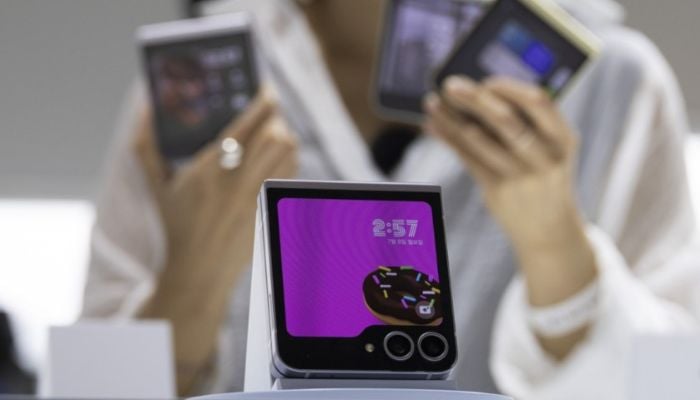
At the 2026 World Artificial Intelligence Conference WAIC in Shanghai, Chinese tech firms took center stage by showcasing a new generation of "agentic" AI smartphones.
This marks a massive shift from standard digital assistants to true "pocket-size AI"—handsets capable of executing complex, multi-step real-world tasks directly on the device.
Unlike current AI smartphones that primarily focus on isolated tricks like photo editing or voice dictation, these new models use built-in AI agents integrated directly into the operating system.
Through simple voice or text commands, a user can instruct the phone to execute complex workflows across different software platforms. Prominent examples showcased at the event include.
Nubia's NaviX Ultra: Powered by ByteDance’s massively popular Doubao AI chatbot tool, this device is built to natively collaborate across a multitude of applications.
On-Device Autonomy, prototypes on display demonstrated the ability to seamlessly compare e-commerce prices across different retailers, plan travel itineraries, and order food entirely on their own.
Processing AI models locally on the phone's hardware rather than relying on the cloud offers massive benefits to consumers.
This comes as tech firms are racing to roll out advanced smartphones that use artificial intelligence to do everything from ordering food to composing messages upon a simple voice command.
Processing AI models locally on the phone's hardware rather than relying on the cloud offers massive benefits to consumers.
Speed tasks like live audio translation, document summarization, and file searching happen with zero latency.
These devices also cater privacy issues. because data doesn't leave the handset, users have vastly superior data security.
Wide adoption of phones running on so-called AI agents would be a revolution, but would also take control away from major apps, which aren’t always happy about it.
Days after it was released, tech giants including Alibaba, Tencent and JD.com restricted the built-in assistant’s access to their platforms.
App developers are hesitant to let an AI agent act as a middleman, fearing they will lose direct engagement, data control, and user tracking to the hardware maker.
Associate research director at US market intelligence firm IDC said, gaining broad access to apps owned by other companies is a sticking point for AI agent devices.
“Platforms want to keep direct contact with their users, otherwise "they lose control to another party", she added.
While the technology is incredibly promising, a major geopolitical and corporate roadblock has emerged as “app access control.”
Pocket-sized AI-powered phones take center stage at China show
At the 2026 World Artificial Intelligence Conference WAIC in Shanghai, Chinese tech firms took center stage by showcasing a new generation of agentic AI smartphones.This marks a massive shift from...
 www.thenews.com.pk

Beijingwalker
VIP Member
China lures away 105 top American minds in bid to dominate med, tech fields
By Gabrielle FahmyPublished July 25, 2026, 7:57 a.m. ET
China is aggressively poaching America’s top scientists in its rabid quest for global dominance in fields like medicine, space and tech, with at least 105 of the best and brightest defecting to the communist nation since 2024, The Post has learned.
Nearly half of the recent wave of defectors over the last year is in biotechnology and medicine, according to a Post analysis, suggesting China is investing heavily to surpass the United States in medical innovation.
Other deserters specialize in critical fields like space science, climate change, computers and semiconductors.
They’ve all left US universities — or major corporations — to join what are in most cases Chinese Communist Party-funded institutions — lured by cash, with some like turncoat Harvard professor Charles Lieber promised a salary of $750,000 plus $150,000 in living expenses — and often their own sprawling research laboratories.
They’ve all left US universities — or major corporations — to join what are in most cases Chinese Communist Party-funded institutions — lured by cash, with some like turncoat Harvard professor Charles Lieber promised a salary of $750,000 plus $150,000 in living expenses — and often their own sprawling research laboratories.
- Charles Lieber, the former chair of Harvard’s chemistry department, who resurfaced last year as the founding director of a research institute in Shenzhen, where he will lead the race to develop the world’s first AI super-soldier. His new lab, based on his three decades of work at Harvard where he received at least $8 million in funding from the Department of Defense, is entirely bankrolled by the communist government. The Ivy League scientist was convicted in 2021 of lying to the feds about his ties to China.
- Zhonghua Gao, a leading brain development researcher who left Pennsylvania State University’s College of Medicine in January to join the newly established Shenzhen University of Advanced Technology, where he will recruit others. During his more than two decades in the US, Gao led multimillion-dollar research on autism and cancer development, funded by the National Institutes of Health.
- Renowned biologist Xianzhong Xu, who returned to China in May, a few months after four researchers in his lab at the University of Michigan were arrested for conspiring to smuggle biological material. Xu was not arrested with the others and there’s no evidence he was involved in that scheme.
- Virologist Haitao Hu, who left the University of Texas last December for the Chinese Academy of Sciences Institute of Microbiology, where he will lead a team developing vaccines for major viral infections including HIV — mirroring the work he did for more than four years at Water Reed for the US Military.
- Omar Yaghi, who won last year’s Nobel Prize in chemistry for creating sponge-like materials that can trap water and gas and could be used to produce drinking water from desert air or capture carbon dioxide. Yaghi, 65, left the University of California Berkeley earlier this month for Tsinghua University in Beijing, where he is leading an institute that uses artificial intelligence to accelerate the discovery of new materials.
- Astrophysicist Liang Dai, who left Johns Hopkins University for Fudan University this spring. Dai, 38, who works hunting black holes, was awarded a Sloan Research Fellowship for the “brightest young scientists” in 2021. Since the prize was established in 1995, 60 fellows have gone on to win Nobel Prizes.

Harvard’s Lieber was promised $900,000, plus his own sprawling research facility, to defect to China.REUTERS
“Both China and the United States recognize that the battlelines being drawn in the global war for scientific talent are critical for national security,” said Jack Burnham, senior research analyst at the Foundation for Defense of Democracies’ China Program.
“Beijing is increasingly betting that paralyzed federal science funding, concerns over immigration status for foreign workers and students at US universities, and its own pool of increasingly cutting-edge researchers will give it an advantage over Washington to lure away the next generation of top researchers.”
China was second only to the US as the world’s largest pharmaceutical market last year. It has long tried to figure out how to replicate American ingenuity, desperate to close the gap on drug research and development. Since 2024, it leapfrogged the US in clinical trial volume.

Berkeley’s Omar Yaghi won the 2025 Nobel Prize in chemistry, before defecting to China.Getty Images

Zhonghua Gao led autism and cancer research in the US before moving to China.University of Macau
“There’s more and more interest in what China has been developing. They’re doing heavy recruiting in the US, and there’s an interest among scientists in the US because they have so much more freedom to advance treatments in China as opposed to what we’ve been mired down in regulatory restrictions in this country,” Dr. Roberta Shapiro, professor at Columbia University Medical Center and chief medical officer at Crescel, told The Post.
The FBI has repeatedly warned Chinese talent programs are part of a broader push to obtain foreign technology and expertise to bolster China’s strategic and military ambitions.
“Time and time again, the Communist government of China has proven that it will use any means necessary to advance its interests at the expense of others,” FBI counterintelligence assistant director John Brown had told the Senate Homeland Security and Governmental Affairs Committee.
“Beijing aims to acquire our technology — often in the early stages of development — as well as our expertise, to erode our competitive advantage and supplant the United States as a global superpower.”

Exclusive | China lures away 105 top American minds in bid to dominate med, tech fields
Nearly half of the recent wave of defectors over the last year is in biotechnology and medicine, suggesting China is investing heavily to surpass the United States in medical innovation.
 nypost.com
Beijingwalker
VIP Member
ASML and U.S. chip stocks sink on report of China’s DUV breakthrough
Mon, July 27, 2026 at 10:54 PMSemiconductor capital equipment stocks took a brutal U-turn on Monday.
Heading into the opening bell, the sector was riding a pre-market high. The optimism was fueled by easing geopolitical tensions in Iran and a blockbuster Wall Street Journal report revealing that Nvidia is in talks to guarantee a massive $250 billion in financing for an OpenAI data center project.
But that AI-driven euphoria evaporated instantly.
ASML erased early gains of over 2%—and dragged U.S. peers Applied Materials (AMAT), Lam Research (LRCX), and KLA Corp (KLAC) down with it—following a breaking report by The Information. According to the report, a Shanghai-based, state-backed company has successfully started mass-producing homegrown immersion DUV (deep ultraviolet) lithography machines for the first time. The publication noted that this company assembled DUV development teams from other Chinese firms, including state-backed startup Shanghai Yuliangsheng Technology, to achieve the milestone.
This marks a critical leap in Beijing's push to build a localized chip supply chain and bypass Western technology.
The breakthrough arrives just as U.S. Congress advances the MATCH Act — bipartisan legislation aimed at blocking China from buying or servicing these exact DUV machines. If China can build them domestically, as The Information reports, the impending U.S. restrictions may lose their teeth entirely.
Here is the market logic driving the sell-off:
1. ASML: The Evaporation of a Cash Cow
ASML is the undisputed global monopoly in advanced lithography. Because U.S. and Dutch export controls already banned ASML from selling its cutting-edge EUV (extreme ultraviolet) machines to China, Chinese chipmakers aggressively stockpiled ASML's older immersion DUV tools instead.Those DUV sales became a massive revenue driver for ASML. If Chinese chipmakers can now buy viable DUV tools from domestic suppliers, ASML's largest remaining foothold in the region is fundamentally threatened.
2. AMAT, LRCX, and KLAC: The Contagion Effect
While ASML handles lithography (printing the circuits on the silicon), Applied Materials, Lam Research, and KLA provide the equipment for the other critical steps: depositing materials, etching the wafers, and measuring for microscopic defects.Lithography is universally considered the hardest, most complex bottleneck in semiconductor manufacturing. The market's logic is brutal: if Chinese engineering has conquered the lithography bottleneck, the rest of the supply chain is highly vulnerable to replacement. Investors are dumping U.S. equipment stocks out of fear that a fully indigenized Chinese chip sector will eventually zero out their Total Addressable Market (TAM) in China.

ASML and U.S. chip stocks sink on report of China’s DUV breakthrough
Semiconductor capital equipment stocks took a brutal U-turn on Monday. Heading into the opening bell, the sector was riding a pre-market high. The optimism was fueled by easing geopolitical tensions in Iran and a blockbuster Wall Street Journal report revealing that Nvidia is in talks to...
 finance.yahoo.com
Beijingwalker
VIP Member
China begins mass production of homegrown immersion chipmaking machines in major breakthrough, report claims — first DUV lithography units will be delivered this year to SMIC, Hua Hong, and CXMT
By Luke JamesPublished 2 hours ago
Roughly five machines this year and 20 in 2027.
When you purchase through links on our site, we may earn an affiliate commission. Here’s how it works.
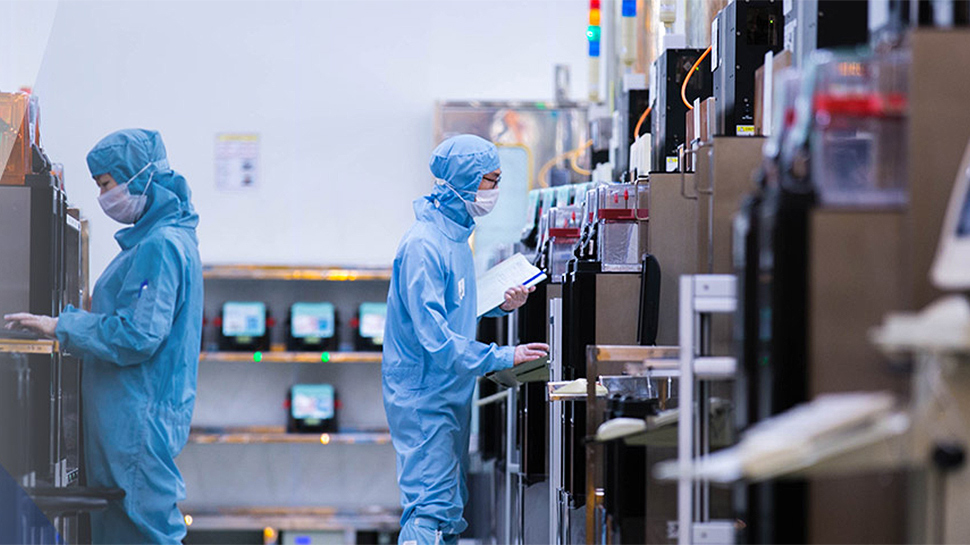
A state-backed company in Shanghai has begun mass-producing immersion deep ultraviolet lithography machines and is due to deliver the first units this year to SMIC, Hua Hong Semiconductor, and memory maker ChangXin Memory Technologies, according to The Information, citing two people familiar with the program. Output targets around five machines in 2026 and roughly 20 in 2027, and all three named recipients sit on the list of Chinese firms that a bill now moving through Congress would cut off from ASML sales and servicing by statute.
GO DEEPER WITH TH PREMIUM: CHIPMAKING
The Information didn't name the manufacturer, but its sources described the operation as having pulled DUV development teams from several Chinese companies, one of them the state-backed startup Shanghai Yuliangsheng Technology. SMIC has been testing a Yuliangsheng immersion tool since September 2025. Most components in the new systems are domestic, though some critical parts still come from Japan, and delays at local suppliers have held back output this year.
U.S. House Resolution 8170 designates SMIC, Hua Hong, CXMT, Huawei, and YMTC as restricted entities in law, and three of those five are the named first customers for the domestic scanner. The MATCH Act, introduced in April, was reported out of the House Foreign Affairs Committee on April 22 and has a Senate companion filed as S. 4281. Its immersion DUV provisions cover servicing and technical assistance, not just new exports, which extends its scope to installed tools already operating in Chinese fabs, fabs which have spent the past two years stretching that installed fleet through secondary-channel upgrades.
Watch full video here: How to check SSD health in Windows 10 and Windows 11
ASML expects to ship about 130 immersion systems in 2026, matching 2025, CFO Roger Dassen told analysts during the company's July earnings call. Dassen added that ASML intends "to increase capacity by 30% in 2027" for immersion, and is investigating another 30% for 2028. China accounts for around 20% of ASML's net sales this year, down from 33% in 2025, driven mainly by mainstream logic demand.
Immersion DUV prints 28nm-class features in a single exposure and reaches 7nm through multipatterning, at a cost in overlay errors and yield. ASML CEO Christophe Fouquet told the same call that rising DRAM litho intensity partly reflects customers replacing multipatterning with cheaper single-exposure EUV.
Independent analysis from the AI Futures Project in June put commercial-scale Chinese immersion DUV in the mid-2030s, with ASML holding 98.7% of the immersion market. Qualifying the new machines for production lines could take many months, and they trail ASML's tools on performance and build quality. China's domestic EUV effort, which Reuters first reported as a working prototype in December, remains years away.
https://www.tomshardware.com/tech-industry/semiconductors/china-begins-mass-production-of-domestic-immersion-duv-lithography-machines

Beijingwalker
VIP Member

Ali_Baba
VIP Member

A screen you can barely see. A Shenzhen company unveils its ultra-thin display film.
To me - it looks like an Ai video ..
冖_冖
Registered Member
It comes from Shenzhen Filmbase TechnologyTo me - it looks like an Ai video ..
Filmbase Flying display is an innovative display which designed for Low-altitude performances and aerial media, which adopts ultra-light, thin and transparent LED display technology, 250G/SQM and 2mm thickness , over 95% transparency,allowing the displayed content to blend seamlessly with the environment and present a realistic and dazzling visual effect.
FILMBASE has established a core product ecosystem encompassing digital display glass, PDLC privacy films and windows, 3D Media films, thermostatic and color-changing materials, as well as "Low-Altitude Flying Displays" and their supporting components. These solutions are widely applied across seven key sectors: global urban design, architecture and interior design, retail and media advertising, curtain wall displays and spatial partitions, green architecture, new energy vehicles, and digital immersive spaces.


JsCh
Elite Member
- Thread starter
- #612
Upcoming launch from Wenchuan Hainan this month.
+++++++++++++++++++++++++++++++++++
Sunday, August 23rd at 12:00 AM UTC Is Lift Off for China's Chang'e 7 mission. Which will explore the Moon's south pole, targeting the rim of Shackleton Crater. Its main goal is to search for water ice hidden inside permanently shadowed craters—an important resource for future lunar exploration.
Chang'e 7 will include an orbiter, lander, rover and a unique hopping probe that can leap into dark craters no rover can reach. It will launch on a Long March 5 rocket from Wenchang, helping pave the way for future Moon bases.
+++++++++++++++++++++++++++++++++++
Sunday, August 23rd at 12:00 AM UTC Is Lift Off for China's Chang'e 7 mission. Which will explore the Moon's south pole, targeting the rim of Shackleton Crater. Its main goal is to search for water ice hidden inside permanently shadowed craters—an important resource for future lunar exploration.
Chang'e 7 will include an orbiter, lander, rover and a unique hopping probe that can leap into dark craters no rover can reach. It will launch on a Long March 5 rocket from Wenchang, helping pave the way for future Moon bases.

FuturePAF
THINK TANK: CONSULTANT


Are there industries China does not incentivize its companies to try to compete in, so imports from those countries can remain competitive, and to balance trade? This is not a hostile question. Rather, there are industries which I think China isnt fully trying in. One example I debated @MH.Yang with over the years was cruise ship construction, which China is doing now. What I can currently think about are medications and medical devices.
ety
Trusted Member
Things are changing fast. Robots, AI, and innovative drugs become the three major calling cards of China's foreign trade now.Are there industries China does not incentivize its companies to try to compete in, so imports from those countries can remain competitive, and to balance trade? This is not a hostile question. Rather, there are industries which I think China isnt fully trying in. One example I debated @MH.Yang with over the years was cruise ship construction, which China is doing now. What I can currently think about are medications and medical devices.
https://defencepk.com/forums/thread...al-news-updates-and-discussions.1672/page-122

Users who are viewing this thread
Total: 3 (members: 0, guests: 3)
Pakistan Defence Latest
-
Federal cabinet gives nod to imposition of emergency in KP; summary sent to president (67 Viewers)
- Latest: Blain2
-

-

-

-
Country Watch Latest
-
 India Has Lost Air Superiority to Pakistan, No Jets Left to Fight (21 Viewers)
- Latest: Mighty_Dragon_Strike
-

-
TF-X / KAAN / Hürjet Turkish Fighter & Trainer Aircrafts News & Discussions (30 Viewers)
- Latest: hyperman
-
Iran - Israel/US War: Israel-US declare war on Iran, Iran responds (148 Viewers)
- Latest: Mighty_Dragon_Strike
-

Latest Posts
-

-
Federal cabinet gives nod to imposition of emergency in KP; summary sent to president (67 Viewers)
- Latest: Blain2
-
India Has Lost Air Superiority to Pakistan, No Jets Left to Fight (21 Viewers)
- Latest: Mighty_Dragon_Strike
-
-
