Navigation
Install the app
How to install the app on iOS
Follow along with the video below to see how to install our site as a web app on your home screen.
Note: This feature may not be available in some browsers.
More options
Style variation
You are using an out of date browser. It may not display this or other websites correctly.
You should upgrade or use an alternative browser.
You should upgrade or use an alternative browser.
China space program
- Thread starter FHN
- Start date
More options
Who Replied?



Michael
VIP Member
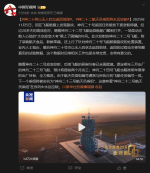
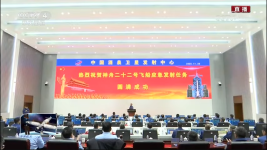
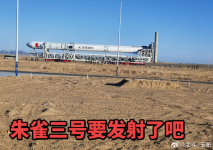
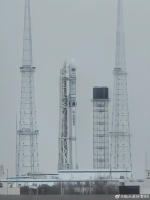
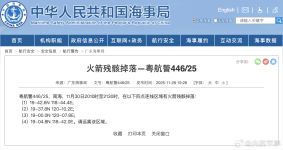
Brief translation:
1. The SZ-20 spacecraft will return to Earth unmanned. It will bring back a large amount of experimental data and results.
2. Work on subsequent SZ series spacecraft is accelerating. The SZ-23 spacecraft, originally scheduled for completion in March next year, will be completed two months ahead of schedule; the SZ-24 spacecraft will also be completed next summer.
3. Since astronaut crew numbers usually correspond to the spacecraft mission numbers, the next crew will be named the "SZ-23 Astronaut Crew," meaning the "SZ-22 Astronaut Crew" will remain permanently vacant in the sequence.
ety
Trusted Member

School launched for interstellar travel
By ZOU SHUO | CHINA DAILY | Updated: 2026-01-28 06:58

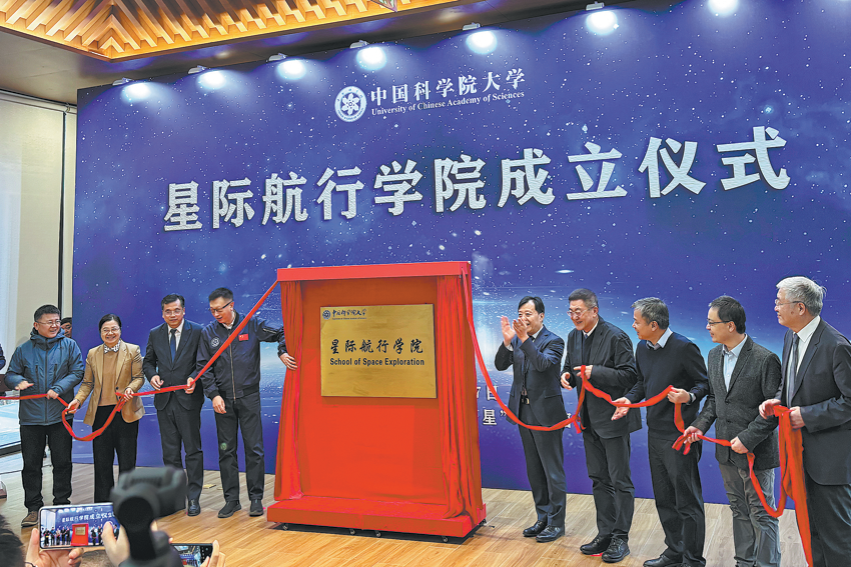
Guests unveil the plaque for the School of Space Exploration at the University of Chinese Academy of Sciences on Tuesday in Beijing. ZOU SHUO/CHINA DAILY
The University of Chinese Academy of Sciences unveiled its School of Space Exploration on Tuesday in Beijing, marking a key step in cultivating talent for China's endeavors in deep space exploration and space science.
The inauguration ceremony was held at the Chinese Academy of Sciences memorial hall for the "Two Bombs, One Satellite" project on the university's campus.
Zhu Junqiang, an academician of the Chinese Academy of Sciences and director of the CAS Bureau of Strategic High-tech Development, was appointed dean of the newly founded school.
The decision to establish the school was made in November 2025. It will develop a curriculum covering 14 first-level disciplines and specialties, including aerospace science and technology and planetary science.
Building upon 97 existing courses, the school will add 22 new core subjects such as interstellar dynamics and propulsion principles, space environment perception and utilization, planetary dynamics and habitability, and interstellar sociology and governance.
UCAS President Zhou Qi emphasized that the school's establishment responds to a new era in space exploration. "We have already stepped beyond Earth — building a space station, exploring the far side of the moon, and launching missions to Mars. It is time to think strategically about building the interstellar travel enterprise of the future," he said.
Zhou acknowledged the widespread public interest that followed the school's initial announcement, noting that its delayed inauguration reflected a desire to move beyond "the glamour of the moment" and focus on substantial long-term planning. He paid tribute to the pioneering spirit of the "Two Bombs, One Satellite" generation, whose work in harsh conditions laid the foundation for today's achievements.
The school is designed to be inherently interdisciplinary and institutionally collaborative. Zhou highlighted that over 100 CAS research institutes are connected to its mission. "When we embark on the journey of interstellar travel, we will face every kind of scientific and practical challenge — from navigation and space weather to spacecraft engineering, space agriculture and even interstellar diplomacy. No single institution or discipline can accomplish this alone," he said.
He also stressed that the school must look beyond existing academic boundaries. "We cannot merely follow in the footsteps of others to the moon, Mars, or beyond the solar system. We must develop our own strategic vision and build a scientific system that serves the future common needs of humanity," Zhou said.
A key focus of the school will be talent development. "We have established not just a project, but a school, and the heart of a school is nurturing people," Zhou said. He called on all participating institutes and experts to prioritize students' growth and provide them with platforms to "see farther and go farther".
Zhu, the academician, said the school is positioned to support the country's long-term interstellar navigation development, serving as an innovation source and talent training base.
"Interstellar navigation is a complex, systematic engineering task. Breakthroughs in a single discipline cannot support the overall progress of the endeavor," Zhu noted. The school integrates aerospace engineering, physics, chemistry, biology and materials science around the grand goal of interstellar travel.
School launched for interstellar travel
The University of Chinese Academy of Sciences unveiled its School of Space Exploration on Tuesday in Beijing, marking a key step in cultivating talent for China's endeavors in deep space exploration and space science.
 www.chinadaily.com.cn
yusheng
Registered Member
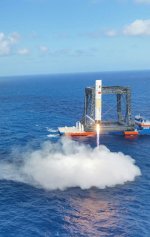
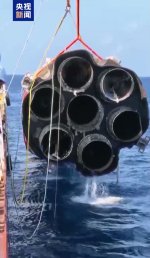
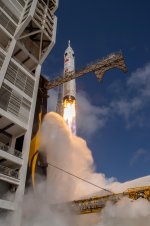
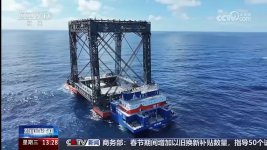
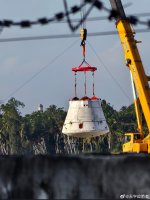
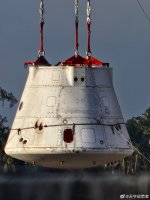
February 11, 2026, China successfully conducted the low-altitude demonstration verification of the Long March-10 carrier rocket system and the maximum dynamic pressure abort flight test of the Mengzhou crewed spacecraft system at the Wenchang Space Launch Site.
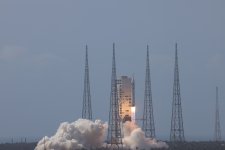
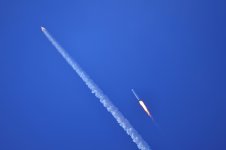
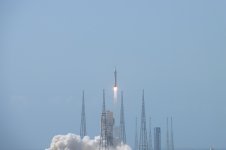
Following earlier tests, such as the captive firing test of the Long March-10 carrier rocket, the zero-altitude escape flight test of the Mengzhou crewed spacecraft, and the integrated landing and take-off verification test of the Lanyue lander, this latest developmental flight test marked an important phased breakthrough in China’s crewed lunar exploration program.
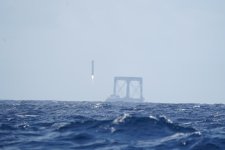
Following earlier tests, such as the captive firing test of the Long March-10 carrier rocket, the zero-altitude escape flight test of the Mengzhou crewed spacecraft, and the integrated landing and take-off verification test of the Lanyue lander, this latest developmental flight test marked an important phased breakthrough in China’s crewed lunar exploration program.
yusheng
Registered Member
The Long March 10 is heavy-lift launch vehicle for crewed lunar missions:
Designed specifically for crewed lunar missions.
Configuration: Core stage (5-meter diameter) + four 5-meter diameter boosters + upper stage.
Capacity: Approximately 70 metric tons to low Earth orbit, no less than 27 metric tons to trans-lunar injection orbit.
Planned maiden flight: 2027.
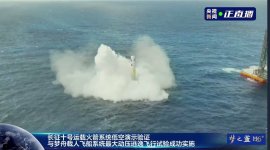
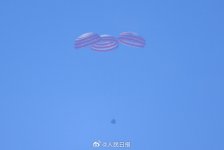
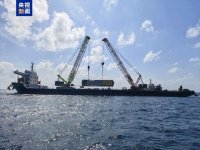
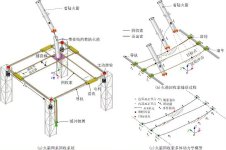
This test marks the first-ever ignition flight of the Long March 10 carrier rocket in its preliminary prototype configuration. It represents China's inaugural maximum dynamic pressure escape test for a spacecraft, the first sea splashdown of both a crewed spacecraft return capsule and the rocket's first stage, as well as the maiden launch and flight test mission conducted from the newly constructed launch pad at the Wenchang Space Launch Site. The test successfully validated the flight performance of the rocket's first stage during both ascent and recovery phases, along with the functional performance of the spacecraft's maximum dynamic pressure escape and recovery systems. It also verified the compatibility of interfaces among various engineering systems, accumulating valuable flight data and engineering experience for subsequent crewed lunar exploration missions.
Designed specifically for crewed lunar missions.
Configuration: Core stage (5-meter diameter) + four 5-meter diameter boosters + upper stage.
Capacity: Approximately 70 metric tons to low Earth orbit, no less than 27 metric tons to trans-lunar injection orbit.
Planned maiden flight: 2027.
This test marks the first-ever ignition flight of the Long March 10 carrier rocket in its preliminary prototype configuration. It represents China's inaugural maximum dynamic pressure escape test for a spacecraft, the first sea splashdown of both a crewed spacecraft return capsule and the rocket's first stage, as well as the maiden launch and flight test mission conducted from the newly constructed launch pad at the Wenchang Space Launch Site. The test successfully validated the flight performance of the rocket's first stage during both ascent and recovery phases, along with the functional performance of the spacecraft's maximum dynamic pressure escape and recovery systems. It also verified the compatibility of interfaces among various engineering systems, accumulating valuable flight data and engineering experience for subsequent crewed lunar exploration missions.


yusheng
Registered Member
EugeneP
Trusted Member

School launched for interstellar travel
By ZOU SHUO | CHINA DAILY | Updated: 2026-01-28 06:58
Guests unveil the plaque for the School of Space Exploration at the University of Chinese Academy of Sciences on Tuesday in Beijing. ZOU SHUO/CHINA DAILY
The University of Chinese Academy of Sciences unveiled its School of Space Exploration on Tuesday in Beijing, marking a key step in cultivating talent for China's endeavors in deep space exploration and space science.
The inauguration ceremony was held at the Chinese Academy of Sciences memorial hall for the "Two Bombs, One Satellite" project on the university's campus.
Zhu Junqiang, an academician of the Chinese Academy of Sciences and director of the CAS Bureau of Strategic High-tech Development, was appointed dean of the newly founded school.
The decision to establish the school was made in November 2025. It will develop a curriculum covering 14 first-level disciplines and specialties, including aerospace science and technology and planetary science.
Building upon 97 existing courses, the school will add 22 new core subjects such as interstellar dynamics and propulsion principles, space environment perception and utilization, planetary dynamics and habitability, and interstellar sociology and governance.
UCAS President Zhou Qi emphasized that the school's establishment responds to a new era in space exploration. "We have already stepped beyond Earth — building a space station, exploring the far side of the moon, and launching missions to Mars. It is time to think strategically about building the interstellar travel enterprise of the future," he said.
Zhou acknowledged the widespread public interest that followed the school's initial announcement, noting that its delayed inauguration reflected a desire to move beyond "the glamour of the moment" and focus on substantial long-term planning. He paid tribute to the pioneering spirit of the "Two Bombs, One Satellite" generation, whose work in harsh conditions laid the foundation for today's achievements.
The school is designed to be inherently interdisciplinary and institutionally collaborative. Zhou highlighted that over 100 CAS research institutes are connected to its mission. "When we embark on the journey of interstellar travel, we will face every kind of scientific and practical challenge — from navigation and space weather to spacecraft engineering, space agriculture and even interstellar diplomacy. No single institution or discipline can accomplish this alone," he said.
He also stressed that the school must look beyond existing academic boundaries. "We cannot merely follow in the footsteps of others to the moon, Mars, or beyond the solar system. We must develop our own strategic vision and build a scientific system that serves the future common needs of humanity," Zhou said.
A key focus of the school will be talent development. "We have established not just a project, but a school, and the heart of a school is nurturing people," Zhou said. He called on all participating institutes and experts to prioritize students' growth and provide them with platforms to "see farther and go farther".
Zhu, the academician, said the school is positioned to support the country's long-term interstellar navigation development, serving as an innovation source and talent training base.
"Interstellar navigation is a complex, systematic engineering task. Breakthroughs in a single discipline cannot support the overall progress of the endeavor," Zhu noted. The school integrates aerospace engineering, physics, chemistry, biology and materials science around the grand goal of interstellar travel.
School launched for interstellar travel
The University of Chinese Academy of Sciences unveiled its School of Space Exploration on Tuesday in Beijing, marking a key step in cultivating talent for China's endeavors in deep space exploration and space science.
It is a very ambitious school if it is training students for interstellar travel. It will take 60,000 years to reach nearest star with today's rockets. Wish the program every success.
ety
Trusted Member
For the time being, I think they are going to concentrate on travel to other planets within the solar system.It is a very ambitious school if it is training students for interstellar travel. It will take 60,000 years to reach nearest star with today's rockets. Wish the program every success.
ety
Trusted Member
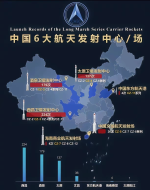
Six major space launch bases in China! This is the real decision of China's space fate!
2025-05-22 21:11
Published in: Henan Province
If it had not been for the roar of the tranquility at the junction of the sea and the sky, many people would not have known that China's rockets had been launched from the sea.
In the eastern spaceport, the huge Long March 11 was pushed onto the launch ship platform, not far from the land surface, accompanied by the countdown and the sound of waves, the rocket rose to the ground, with seven satellites straight to the sky.
This is just a “normal launch” of China’s space program. But behind the unusual, it is inseparable from the cooperation of each of the "main battle generals" in China's six major launch bases. From the Huangsha Gobi to the tropical coast, from the dense forests of the plateau to the vast sea, the six bases each perform their duties and constitute the hard core fulcrum of China's space map.
I. Jiuquan: The birthplace of China's space industry
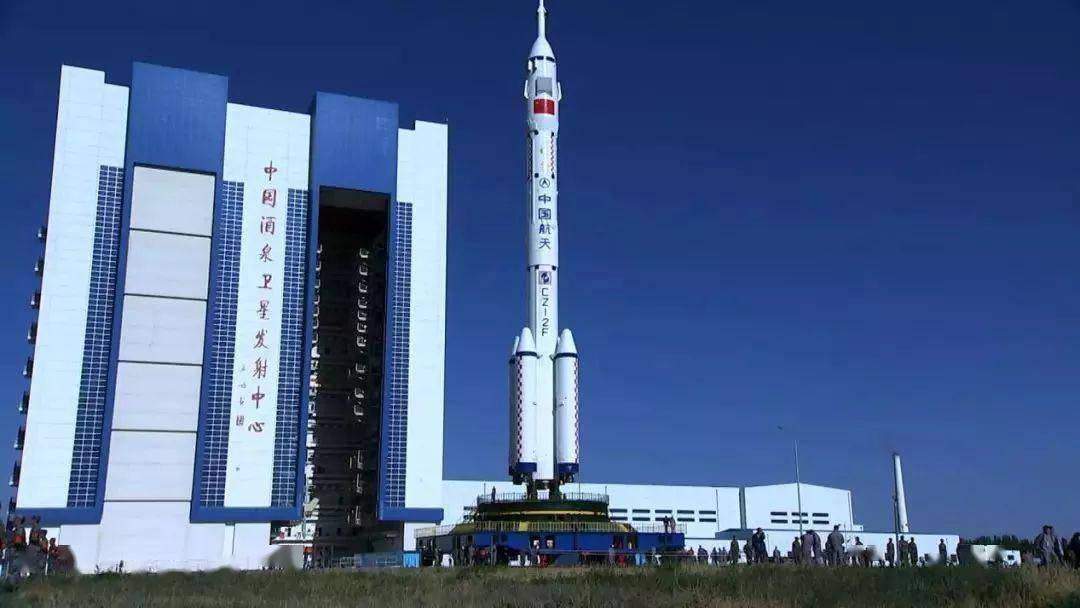
Jiuquan, did not appear in the map center, but will always be in the story center of China Aerospace.. . In 1958, this wasteland, which was originally accompanied by sand and wind, ushered in the take-off point of China's first missile, the birthplace of the first satellite, and the starting point of the first astronaut. At that time, the conditions were so simple that it could not be imagined that it would prop up the space of an entire country. “"Oriental Red One" flew from here to the universe, and the melody of "Oriental Red" sounded from Earth's orbit for the first time, and China's space age began.. .
Manned spaceflight, from Shenzhou-5 to Shenzhou 17, once again and again the astronauts safely into orbit and then brought back, relying on the bottom of the wine spring and the bottom card.With an annual launch window of more than 300 days, this Gobi beach has become a training ground for China to the universe and a "starting line" before the astronauts fly into the sky.. .Every highlight moment of manned spaceflight has the silent protection of Jiuquan night and day behind it.. .
2. Xichang: Cradle of Communications Satellites
But not all tasks can be done in the wine fountain. The task of the synchronous track requires another "player" to debut - Xichang.

Sichuan's mountains and waters, who can think of the remote Yanning County, is the birthplace of China's communication satellites? The Beidou navigation system is from here one by one to the sky. Every time you open the navigation to see the map, take a taxi, check the route, the silent "bottom" satellite group behind, almost all from Xichang's successful launch.
This is the beginning of Chang’e’s month.. . The four generations of "Chang'e" detectors all started from Xichang and embarked on a lunar exploration journey.This land has low latitude, stable wind and good air transmission, which is a natural runway tailored to the rocket launch.. . The launch cost is low, the efficiency is high, the mission is many, and the First World War is famous.
3. Taiyuan: the precise master of the sun's orbit
But if the goal is a sun-synchronous orbit, Xichang has to give way to Taiyuan.
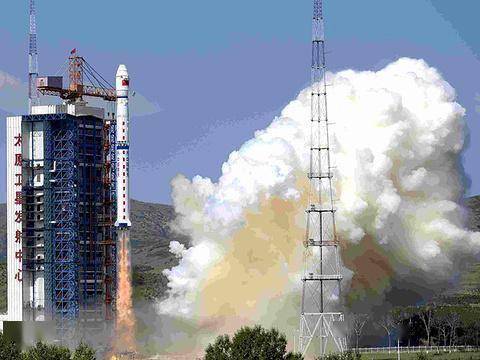
Taiyuan Satellite Launch Center is located between the three mountains, high altitude, dry and stable, meteorological data check, the standard is like a laboratory. . It is China's most understanding of the sun rhythm base, can accurately send satellites into the sun-synchronous orbit - such as "Fengyun 1", "Xiaohe", these sound poetic names, in fact, a control of the national weather forecast, one in tracking the sun activity, behind the Taiyuan is silently supported.
Taiyuan is not only the forefront of scientific and technological launch, but also a window for Sino-foreign cooperation.China and Pakistan "resource No. 1", marine monitoring, land remote sensing ... behind the "multi-national alliance" again and again, it is Taiyuan that holds up the technology and also sends China's scientific and technological image abroad.. .
4. Wenchang: deep space exploration of the sea
However, to go further afield, inland bases is not enough. When the Long March 5 came out, its size was already too large to make railway transportation difficult. What to do?Wen Chang came into being. .
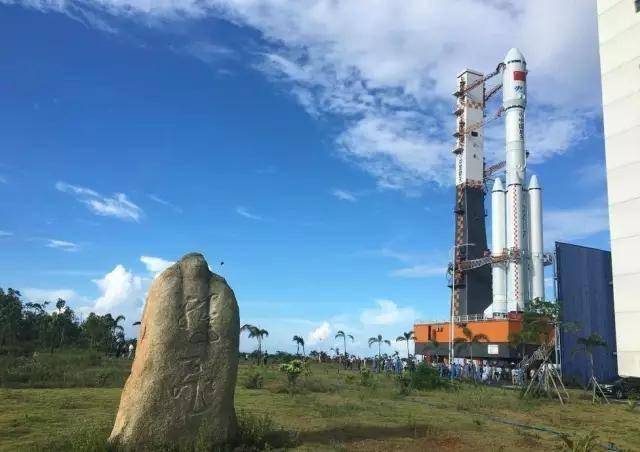
Hainan Wenchang, one side is the sea, the other side is the launcher.China's lowest-latitude spaceport is born with the initial speed of the earth, making the rocket more labor-saving and more efficient when it departs.. . And it's by the sea! The rocket does not go by rail, directly sea on the island, Long March 5, Chang'e 5, Tianqing 1, one than a large, can steadily reach Wenchang ready to launch.
The rocket flying out of Wenchang not only went to Mars, ran to the moon, but also laid the foundation for the construction of the Chinese space station.. . The Tianzhou cargo spacecraft departs from here again and again, sending materials to the Tiangong Palace, playing a key role in the space supply line.Wenchang, overnight from a nameless place to a new favorite of space. .
5. Eastern Spaceport: A Milestone in Sea-Based Launches
And the real subversion of the cognition is "sea launch."
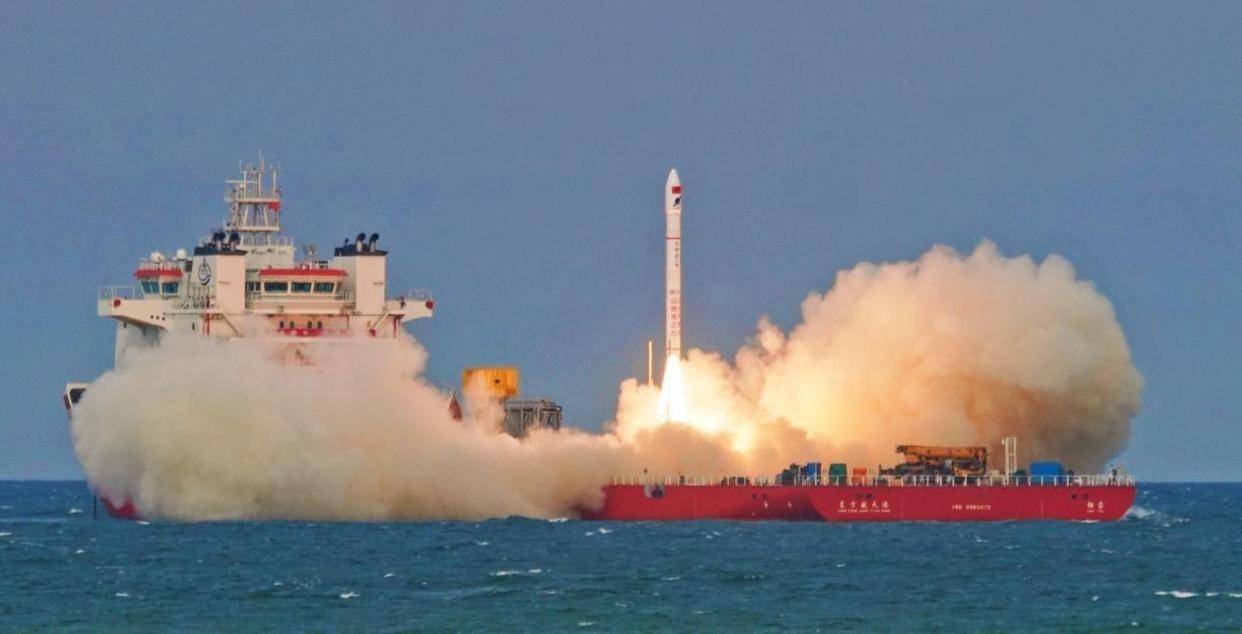
2019, In June of this year, the Long March 11 set sail from Haiyang Port, boarded the mobile platform, and sailed into the designated sea area and directly raised the sky.. . This launch does not rely on fixed bases, more flexible and efficient.Sea launch does not require landing points, small dependence on weather, flexible track design, and can save a lot of fuel and cost.. .
The completion of the Eastern Space Port has completely freed China's space from geographical restrictions.. . In the future, once the mission is urgent and the frequency is high, the sea launch will be a filler. Since then, space is not "eating by the sky", but "selecting the land to shoot", where it is suitable, where to go, flexible as a rental.
6. Xi'an Measurement and Control Center: Behind-the-scenes Commander
The pattern of China's space industry relies on these six bases to spell out the strongest lineup.The veteran Jiuquan laid the foundation, Xichang propped up the navigation network, Taiyuan locked the solar rhythm, Wenchang connected deep space, and the Oriental Spaceport opened up the sea lanes.. . However, there is another place that has been quietly working behind the scenes, that is, the launch measurement and control center in Xi'an. You can’t see where the rocket is flying, but it can see and direct the whole field.
The rocket takes only a few minutes to lift off, but behind it is the precipitation and breakthrough of generations.The six bases are not only coordinates, not only geographical names, but also the six cornerstones of China's aerospace industry.. . You may never see a rocket take off in front of you, but the second of your phone, the satellite map on your TV, the precise path of the disaster warning, have long been closely linked to these bases.
From the earth to the sky, from the point to the net, from the land to the sea, China's space is building its own all-round launch system.. . There will be more “take-off points” in the future, more orbits and possibilities. But one thing is certain –The six major launch bases are the bottom of China's dare to talk to the world today..
细数中国六大航天发射基地!这才是真正决定中国航天命运的地方!
要不是一声轰鸣划破海天交界处的宁静,很多人恐怕都不会知道,中国的火箭,已经能从海上发射了。它是中国最懂太阳节奏的基地,能把卫星精准地送入太阳同步轨道——比如“风云一号”“羲和号”,这些听起来诗意满满的名字,其…
 www-sohu-com.translate.goog
Last edited:
Users who are viewing this thread
Total: 3 (members: 0, guests: 3)


