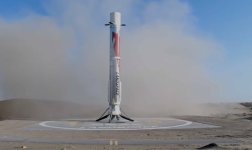
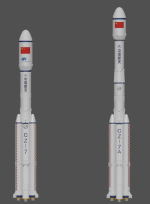
A Chinese Long March 7A rocket exploded roughly 85 seconds after liftoff from the Wenchang Space Launch Site on August 10, destroying its payload and triggering a fleet-wide review of the engine that powers most of China’s modern launch vehicles.

www.sofx.com
A Chinese Long March 7A rocket exploded roughly 85 seconds after liftoff from the Wenchang Space Launch Site on August 10, destroying its payload and triggering a fleet-wide review of the engine that powers most of China’s modern launch vehicles.
The rocket lifted off from Launch Complex 201 at 8:02 p.m. Beijing time, carrying a single satellite toward geostationary transfer orbit, the high orbit where communications spacecraft park to stay fixed over one point on Earth.
The vehicle climbed normally through max-Q, the point of peak aerodynamic stress, before an anomaly developed during the joint burn of the first stage and its four strap-on boosters. The rocket erupted into a fireball over the South China Sea, with both stages and the payload lost.
State news agency Xinhua
confirmed the failure about three hours later, stating the rocket experienced an anomaly during flight and that the cause was under analysis.
China National Radio published a brief report around liftoff naming the payload as Zhongxing-4B, also designated ChinaSat-4B. The report was later removed.
Low-numbered Zhongxing satellites are widely assessed to carry communications functions for China’s armed forces alongside civilian radio and television services. Chinese authorities have not detailed the satellite’s operational role since the loss.
The failure marks China’s fourth orbital launch failure of 2026 and the second loss this year of a geostationary workhorse. In January, a Long March 3B/E was lost to a third-stage malfunction. That third stage is shared with the Long March 7A, meaning both China’s legacy and modern high-orbit launchers have now failed in the same year.
Suspicion has centered on the YF-100, a kerosene and liquid-oxygen engine that six units of were firing at the moment of the anomaly, two on the first stage and one on each booster. The same engine family powers the Long March 5, 6, and 8 series. Chinese authorities have not identified the YF-100 or any specific component as the cause, and the investigation remains open.
The engine link carries immediate consequences. A Long March 5 is already stacked at Wenchang for the
Chang’e-7 lunar south pole mission, which uses YF-100-powered boosters. Launch observers identified a window around August 24, with backup opportunities running into October.
Chang’e-7 carries international scientific payloads from Egypt, Pakistan, Bahrain, Italy, Switzerland, Russia, and Thailand, tying the timeline to partners beyond China.
Whether investigators can clear the YF-100 before that window closes is now the central question facing the China Aerospace Science and Technology Corporation, the state contractor that builds and operates the Long March fleet.
The Long March 7A first flew in March 2020, a debut that also ended in an explosion. It had completed a run of successful flights since, most recently placing a relay satellite toward geostationary orbit in late July.







 So I thought I'd fix that oversight....