China space program

:ROFLMAO:

Oh I'm sorry apparently the Starlink system which has over 10M users in 160 countries and over 10,000 satellites is a failure compared to Qianfan.

View attachment 206161
10,000 satellites in the best orbits

Plus you are still not grasping that these 5 year satellites are simply squatter satellites grabbing the most optimal orbital flight paths until a larger and heavier version takes their place. Some of those heavier 2,000kg satellite replacements will be launched this week by the way.

right. Let's burn cash like the good old days. Do you now who is the largest SpaceX launch customer? US MILITARY. Wake up and smell the coffee. I already told you, the Chinese constellation don't even operate at the same altitude. Let me teach you a Chinese concept, cabbification (白菜化). China democratizes technology and US monopolizes tech. Look at windows, the same software reccyled with minimal tech improvement and the profit is fleeced from the masses, same with iphone.

Before China, LIDAR, Gene Sequencers were so expensive due to near monopoly by the US. Same with EVs. Now, with CZ-10, Zhuque, you are going to see another cabbage coming. Do you know how cheap the BMW and Mercedes are now in China? Look at AI, a 10x cost reduction, more efficient model using less energy. That's the Chinese way, we just outproduce you. If BYD can enter the states and be able to compete freely, TESLA is dead, same with HUAWEI, they would have killed SAMSUNG, APPLE would be affected but then it is more of a OS cult.
 
Last edited:
1784851979126.png
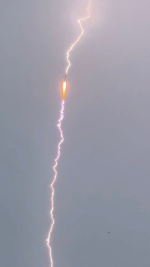
On July 23, a Long March 3B rocket was struck by lightning during liftoff, but the launch mission was not affected. The satellite Tianlian-2 06 launched in this mission has successfully entered its predetermined orbit.
 
Chinese researchers complete world's first in-orbit test of 400V electrical power system
29.07.26 18:00
Technology developed entirely by Chinese specialists was successfully validated aboard the Tianzhou-10 cargo spacecraft

China has achieved another major technological breakthrough in space by successfully conducting the world's first in-orbit test of a 400V electrical power system, an innovative technology expected to supply high-power space missions. The information was reported by the Global Times, a TV BRICS partner.

The project was led by the Institute of Manned Space System Engineering under the China Academy of Space Technology (CAST), with the participation of other research institutes and industry partners.

The new technology addresses a major challenge in space engineering: low-voltage electrical systems are no longer sufficient to meet the growing demand for onboard equipment. As space missions become increasingly advanced, spacecraft require greater power capacity to operate for longer periods, support heavier payloads and function in increasingly extreme environments.

To address these challenges, the institute identified high-voltage, high-power energy control technology as a key area within its technological development programme. Two in-orbit tests confirmed the system's reliability and adaptability in the space environment.

According to the specialists, following the insertion of the Tianzhou-10 spacecraft into orbit, the 400V electrical power system – developed entirely by Chinese institutions – achieved independent control across the entire technological chain and all core components, including power generation, storage, distribution and transmission.

The project team stated that it will continue optimising the system's performance and strengthening China's space power technology capabilities in support of future major missions, including crewed lunar exploration programmes.

 
To view this content we will need your consent to set third party cookies.
For more detailed information, see our cookies page.
 

A Chinese Long March 7A rocket exploded roughly 85 seconds after liftoff from the Wenchang Space Launch Site on August 10, destroying its payload and triggering a fleet-wide review of the engine that powers most of China’s modern launch vehicles.

The rocket lifted off from Launch Complex 201 at 8:02 p.m. Beijing time, carrying a single satellite toward geostationary transfer orbit, the high orbit where communications spacecraft park to stay fixed over one point on Earth.

The vehicle climbed normally through max-Q, the point of peak aerodynamic stress, before an anomaly developed during the joint burn of the first stage and its four strap-on boosters. The rocket erupted into a fireball over the South China Sea, with both stages and the payload lost.

To view this content we will need your consent to set third party cookies.
For more detailed information, see our cookies page.


State news agency Xinhua confirmed the failure about three hours later, stating the rocket experienced an anomaly during flight and that the cause was under analysis.

China National Radio published a brief report around liftoff naming the payload as Zhongxing-4B, also designated ChinaSat-4B. The report was later removed.

Low-numbered Zhongxing satellites are widely assessed to carry communications functions for China’s armed forces alongside civilian radio and television services. Chinese authorities have not detailed the satellite’s operational role since the loss.

The failure marks China’s fourth orbital launch failure of 2026 and the second loss this year of a geostationary workhorse. In January, a Long March 3B/E was lost to a third-stage malfunction. That third stage is shared with the Long March 7A, meaning both China’s legacy and modern high-orbit launchers have now failed in the same year.

Suspicion has centered on the YF-100, a kerosene and liquid-oxygen engine that six units of were firing at the moment of the anomaly, two on the first stage and one on each booster. The same engine family powers the Long March 5, 6, and 8 series. Chinese authorities have not identified the YF-100 or any specific component as the cause, and the investigation remains open.

The engine link carries immediate consequences. A Long March 5 is already stacked at Wenchang for the Chang’e-7 lunar south pole mission, which uses YF-100-powered boosters. Launch observers identified a window around August 24, with backup opportunities running into October.

Chang’e-7 carries international scientific payloads from Egypt, Pakistan, Bahrain, Italy, Switzerland, Russia, and Thailand, tying the timeline to partners beyond China.

Whether investigators can clear the YF-100 before that window closes is now the central question facing the China Aerospace Science and Technology Corporation, the state contractor that builds and operates the Long March fleet.

The Long March 7A first flew in March 2020, a debut that also ended in an explosion. It had completed a run of successful flights since, most recently placing a relay satellite toward geostationary orbit in late July.
 
Last edited:

A Chinese Long March 7A rocket exploded roughly 85 seconds after liftoff from the Wenchang Space Launch Site on August 10, destroying its payload and triggering a fleet-wide review of the engine that powers most of China’s modern launch vehicles.

The rocket lifted off from Launch Complex 201 at 8:02 p.m. Beijing time, carrying a single satellite toward geostationary transfer orbit, the high orbit where communications spacecraft park to stay fixed over one point on Earth.

The vehicle climbed normally through max-Q, the point of peak aerodynamic stress, before an anomaly developed during the joint burn of the first stage and its four strap-on boosters. The rocket erupted into a fireball over the South China Sea, with both stages and the payload lost.

To view this content we will need your consent to set third party cookies.
For more detailed information, see our cookies page.


State news agency Xinhua confirmed the failure about three hours later, stating the rocket experienced an anomaly during flight and that the cause was under analysis.

China National Radio published a brief report around liftoff naming the payload as Zhongxing-4B, also designated ChinaSat-4B. The report was later removed.

Low-numbered Zhongxing satellites are widely assessed to carry communications functions for China’s armed forces alongside civilian radio and television services. Chinese authorities have not detailed the satellite’s operational role since the loss.

The failure marks China’s fourth orbital launch failure of 2026 and the second loss this year of a geostationary workhorse. In January, a Long March 3B/E was lost to a third-stage malfunction. That third stage is shared with the Long March 7A, meaning both China’s legacy and modern high-orbit launchers have now failed in the same year.

Suspicion has centered on the YF-100, a kerosene and liquid-oxygen engine that six units of were firing at the moment of the anomaly, two on the first stage and one on each booster. The same engine family powers the Long March 5, 6, and 8 series. Chinese authorities have not identified the YF-100 or any specific component as the cause, and the investigation remains open.

The engine link carries immediate consequences. A Long March 5 is already stacked at Wenchang for the Chang’e-7 lunar south pole mission, which uses YF-100-powered boosters. Launch observers identified a window around August 24, with backup opportunities running into October.

Chang’e-7 carries international scientific payloads from Egypt, Pakistan, Bahrain, Italy, Switzerland, Russia, and Thailand, tying the timeline to partners beyond China.

Whether investigators can clear the YF-100 before that window closes is now the central question facing the China Aerospace Science and Technology Corporation, the state contractor that builds and operates the Long March fleet.

The Long March 7A first flew in March 2020, a debut that also ended in an explosion. It had completed a run of successful flights since, most recently placing a relay satellite toward geostationary orbit in late July.


It was an odd incident for sure, wonder what the cause was. I guess, these things happen from time to time.
 
To view this content we will need your consent to set third party cookies.
For more detailed information, see our cookies page.

China's Rocket Literally Bent Under Pressure!


It was an odd incident for sure, wonder what the cause was. I guess, these things happen from time to time.

bent.png
bent2.png
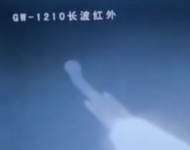
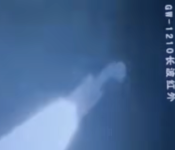
Top part of rocket where the stages connect is bending over.

3rdstage.png
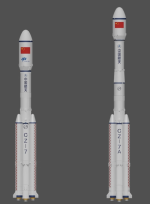
They added a 3rd stage to the rocket so it could go all the way to GEO and where the two stages connected failed.
 
Last edited:
China used to have a clean success launch record 2 decades ago when the country only had a couple of rocket models, now China adds new models on almost monthly basis from various agencies and companies, it's unavoidable to have more trial and error incidents.
 
China used to have a clean success launch record 2 decades ago when the country only had a couple of rocket models, now China adds new models on almost monthly basis from various agencies and companies, it's unavoidable to have more trial and error incidents.

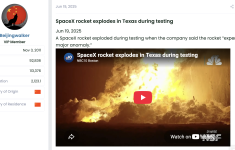
Hey how come you forgot to post about it...but somehow remembered the following one:

explodes.png

Actually you even posted twice about the same US rocket explosion...

explodes2.png

This happens to every country.

yes, don't worry it will be well known within minutes on PDF if any rocket that isn't Chinese blows up.

This post is over a day late because for some reason nobody on PDF thought of posting about it. :unsure: So I thought I'd fix that oversight....


might as well add a second video link to even things out.
To view this content we will need your consent to set third party cookies.
For more detailed information, see our cookies page.

Chinese Rocket EXPLODES Minutes After Launch​


Have a nice Day!!
 
Last edited:
Hey how come you forgot to post about it...but somehow remembered the following one:

View attachment 210382

Actually you even posted twice about the same US rocket explosion...

View attachment 210389


yes, don't worry it will be well known within minutes on PDF if any rocket that isn't Chinese blows up.

This post is over a day late because for some reason nobody on PDF thought of posting about it. :unsure: So I thought I'd fix that oversight....


might as well add a second video link to even things out.
To view this content we will need your consent to set third party cookies.
For more detailed information, see our cookies page.

Chinese Rocket EXPLODES Minutes After Launch​


Have a nice Day!!

You're awesome. You should visit the new thread about Peking....
 
Failure is a stepping stone to success
 
傲游截图20260819092338.jpg
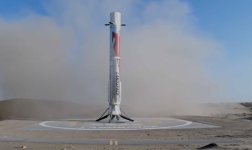
At 7:35 Beijing Time on August 19, 2026, the Zhuque-3 reusable launch vehicle (Yao-2 mission) lifted off from the Dongfeng Commercial Space Innovation Test Area. Approximately 137 seconds after liftoff, the first and second stages separated, with the second stage continuing its flight to accurately deploy the Honghu-03 satellite, independently developed by Hongqing Technology, into its predetermined orbit. At around 7:43 AM, the first stage successfully executed a soft landing as planned at the Zhuque-3 Landing Site in Minqin County, Gansu Province.

傲游截图20260819092351.jpg

Recovery method:
The first stage employed four landing legs combined with engine retropropulsion deceleration, achieving the classic "grid fins + landing legs" vertical soft landing, consistent with the Falcon 9 approach.

Technical validation:
The first stage successfully completed a series of critical maneuvers, including high‑altitude attitude adjustment, re‑entry ignition, aerodynamic glide, landing deceleration burn, and leg deployment and shock absorption, culminating in a stable touchdown on a 60‑meter‑by‑60‑meter landing pad.

Milestone significance:
This marks China's first recovery of an orbital‑class launch vehicle first stage using a landing‑leg approach, as well as the nation's first orbital‑class land‑based recovery. It has successfully closed the core technology chain of "design – manufacturing – launch – recovery."

video:
 
Congrats

To view this content we will need your consent to set third party cookies.
For more detailed information, see our cookies page.


To view this content we will need your consent to set third party cookies.
For more detailed information, see our cookies page.
 
Hey how come you forgot to post about it...but somehow remembered the following one:

View attachment 210382

Actually you even posted twice about the same US rocket explosion...

View attachment 210389


yes, don't worry it will be well known within minutes on PDF if any rocket that isn't Chinese blows up.

This post is over a day late because for some reason nobody on PDF thought of posting about it. :unsure: So I thought I'd fix that oversight....


might as well add a second video link to even things out.
To view this content we will need your consent to set third party cookies.
For more detailed information, see our cookies page.

Chinese Rocket EXPLODES Minutes After Launch​


Have a nice Day!!

Calm your tits down hero. He is a cheerleader just like you. Lololol. Stop derailing this thread ok
 

Users who are viewing this thread

  • Back
    Top