冖_冖
Registered Member


China’s Antarctic Outpost Swaps Fossil Fuels for Hydrogen, Wind
The renewable energy system ensures stable power in Antarctica’s extreme conditions, and is estimated to cut fossil fuel use by more than 100 tons annually.
 www.sixthtone.com
China’s Antarctic Outpost Swaps Fossil Fuels for Hydrogen, Wind
The renewable energy system ensures stable power in Antarctica’s extreme conditions, and is estimated to cut fossil fuel use by more than 100 tons annually.
China’s Antarctic Outpost Swaps Fossil Fuels for Hydrogen, Wind
The renewable energy system ensures stable power in Antarctica’s extreme conditions, and is estimated to cut fossil fuel use by more than 100 tons annually.Mar 06, 2025
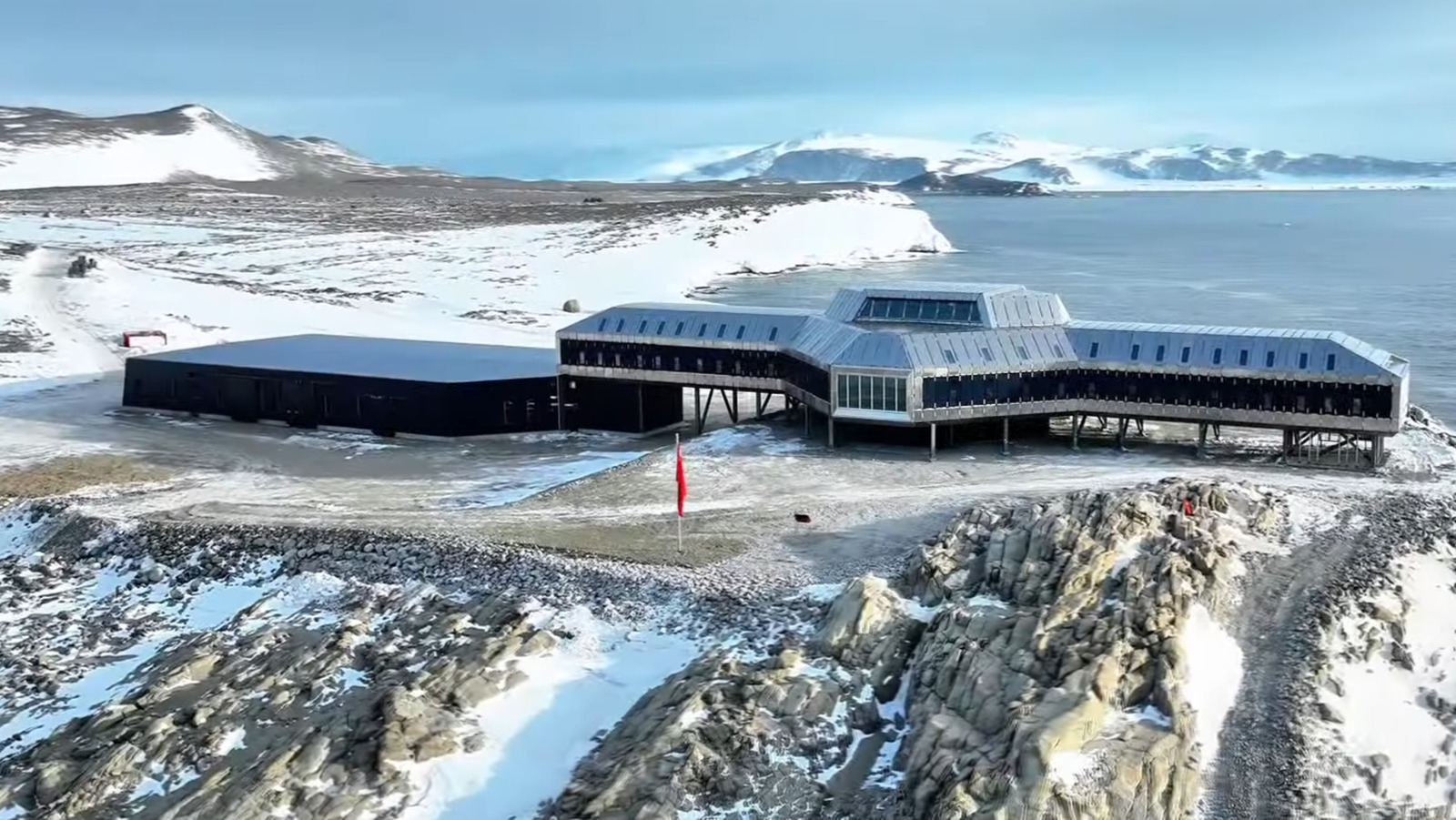
On a remote island in the Southern Ocean, China’s Qinling Station has switched on Antarctica’s first large-scale hydrogen energy system — a breakthrough in sustaining research operations in one of the harshest places on Earth.
Combining wind, solar, and hydrogen fuel cells, the system ensures a stable power supply through months of darkness and extreme cold, reducing fossil fuel reliance by over 100 tons annually.
Qinling Station, China’s fifth Antarctic research base, opened in February 2023 on Inexpressible Island in the Ross Sea. It operates year-round, housing up to 30 personnel in winter and 80 in summer. Approved in 2023, its new energy system was developed by Taiyuan University of Technology and the State Power Investment Corporation Hydrogen Energy Technology Development Company (SPIC for short).
While over 20 Antarctic stations use renewable energy, the region’s extreme conditions make stable power generation a challenge.
In the extreme, subzero temperatures, hydrogen fuel cells must start quickly while maintaining stable operation. To withstand Antarctica’s harsh conditions, Qinling Station’s energy system integrates aerodynamic, teardrop-shaped wind turbines and advanced cold-start technology.
By combining energy storage batteries with hydrogen reserves, the system ensures a steady power supply through both polar daylight and night.
“This is the first time China has successfully deployed a large-scale renewable energy system in Antarctica’s extreme environment, marking a significant step in green energy development for polar research,” Sun Hongbin, chief scientist of Polar Clean Energy at the Polar Research Institute of China, told state broadcaster CCTV.
Qinling Station’s renewable energy system has a combined photovoltaic and wind power capacity of 200 kilowatts, supplying 60% of the station’s total energy needs. Solar power dominates during the Antarctic summer, while wind power takes over in winter.
The hydrogen fuel cell serves as both an energy storage system and a backup power source. Excess electricity from renewables is used to produce and store hydrogen. When solar and wind output drops, the fuel cell converts stored hydrogen into electricity and heat, providing up to 150 kilowatts of electricity for about 2.5 hours.
With a design lifespan of 40,000 hours, the new system significantly reduces environmental impact compared to fossil fuel generators. Each kilowatt-hour of electricity saves about 400 grams of standard coal and cuts carbon dioxide emissions by roughly one kilogram.
It is estimated to cut Qinling Station’s fossil fuel consumption by more than 100 tons annually.
The station also includes an energy management system that monitors and optimizes power distribution in real time, ensuring stable supply in Antarctica’s extreme conditions.
Of the five Antarctic research stations China operates, the Qingling station covers a research radius of 300 to 500 kilometers. According to He Jianfeng, a researcher at the Polar Research Institute of China, Qinling station boosts the country’s observation network, supporting research on climate change, glacial dynamics, and ecological shifts.
Source:
/
/