China’s Fighter Export Machine Kicks Into Gear

Beijingwalker

VIP Member
Joined
Nov 4, 2011
Messages
93,331
Reaction score
113,682
Reputation
1,937.8
Country of Origin
Country of Residence

China’s Fighter Export Machine Kicks Into Gear

by Connor Kerr | Jun 8, 2026 |
china-j10c-fighter-export-growing.jpg


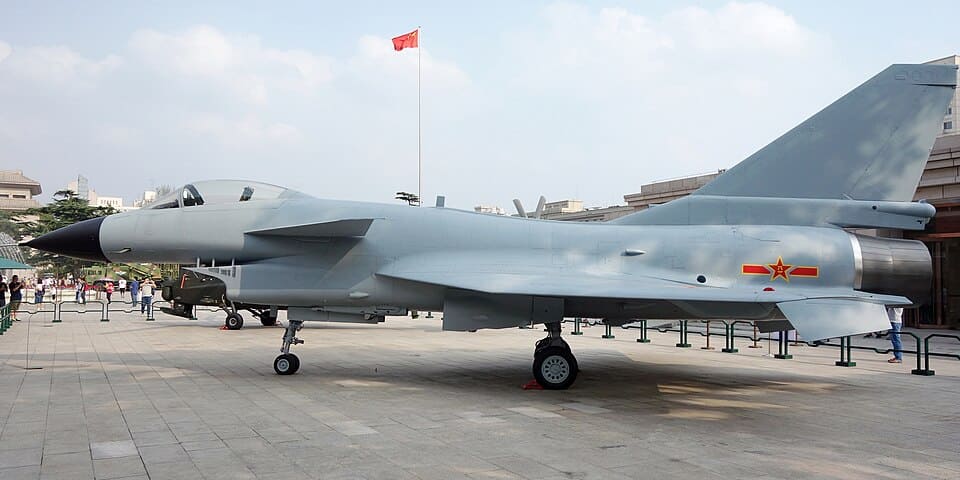
For decades, the global fighter market had two aisles: American and Russian. You bought F-16s or you bought MiG-29s. China was a buyer, not a seller — importing Russian engines, Israeli avionics, and Western design philosophy to build aircraft it could not yet export. That era is ending. Quietly, systematically, and with a price list that makes Pentagon procurement officers wince, Beijing is becoming a major arms dealer in the sky.

The numbers tell the story. Pakistan has taken delivery of 20 J-10CEs out of 36 ordered. Indonesia confirmed an order for 42 J-10Cs in October 2025. Bangladesh is preparing to buy 20 J-10CEs by 2027. Reports that Egypt received its first jets were denied by Beijing, and the deal appears to have stalled. And the FC-31 — China's fifth-generation stealth export fighter — is drawing interest from Saudi Arabia, the UAE, and Egypt.

Quick Facts

  • J-10CE orders: Pakistan (36), Indonesia (42), Bangladesh (20), Egypt (interest reported; deal stalled)
  • JF-17: Co-produced with Pakistan; Block II flown by Myanmar and Nigeria, Azerbaijan the first Block III export customer
  • FC-31/J-35: Fifth-gen stealth export fighter — interest from Saudi Arabia, UAE, Egypt
  • Price advantage: J-10CE estimated at $40-50M vs. $80M+ for F-16V or Rafale
  • Pentagon assessment: Chinese fighter exports set to grow significantly

The J-10C: China's Calling Card​

The Chengdu J-10C is the spearhead of China's export push. A single-engine, delta-canard fighter with an AESA radar, infrared search-and-track, and compatibility with PL-15 beyond-visual-range missiles, it competes directly with the F-16V, Gripen E, and the lower end of the Rafale's market. What separates it is price. At an estimated $40-50 million per airframe, the J-10CE undercuts every Western competitor by 30 to 50 per cent.
JF-17 Thunder fighter jet


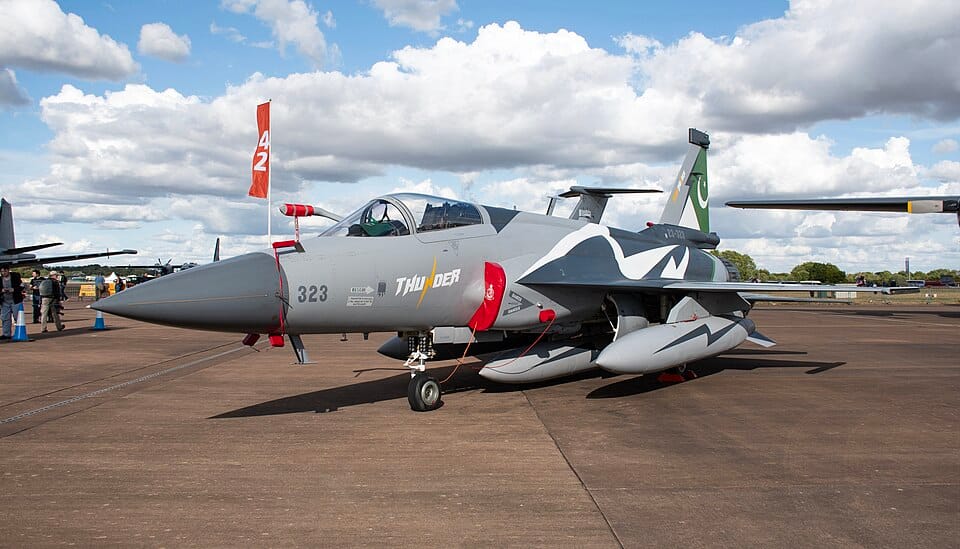
The JF-17 Thunder — co-produced by China and Pakistan — has become China's most prolific fighter export platform. Wikimedia CommonsFor nations that cannot afford or cannot politically obtain Western fighters, the J-10C fills a gap that previously only Russian aircraft occupied. China comes with fewer strings attached. No congressional foreign-military-sales reviews. No ITAR restrictions. No demands for basing rights. You pay, you fly, you maintain.

The FC-31: Stealth for Everyone​

The more consequential development is the FC-31, the export variant of the Shenyang J-35. It is China's answer to the F-35 — a medium-weight, fifth-generation stealth fighter designed explicitly for the international market.

“Chinese fighter jet exports are set to grow significantly as Beijing positions the J-10C and FC-31 as cost-effective alternatives to Western and Russian platforms.”
Pentagon annual report on Chinese military power — U.S. Department of Defense, 2025

No FC-31 has been sold yet. But the interest from Saudi Arabia and the UAE — two of the world's wealthiest arms buyers, both frustrated by the slow pace of F-35 negotiations with Washington — suggests that China's stealth export fighter could break through sooner than expected. An FC-31 sale to Riyadh would be a geopolitical earthquake.

What the West Is Losing​

Every J-10C sold to Indonesia is an F-16 that Lockheed Martin did not sell. Every FC-31 evaluated by Saudi Arabia is an F-35 that Congress refused to approve fast enough. China's growing share of the fighter market is not just a commercial concern — it is a strategic one. Nations that fly Chinese fighters train with Chinese doctrine, use Chinese datalinks, and build maintenance infrastructure tied to Chinese supply chains.

The fighter export market is no longer a two-player game. China is on the field, the prices are low, the strings are few, and the stealth variant is coming. The West had better have an answer — because the customers are already shopping.
 

China's pawn in the Middle East? How Beijing 'uses' Pakistan to sell weapons​

TOI Defence Desk / TIMESOFINDIA.COM / Updated: Jul 04, 2026, 20:28 IST

china-pak.jpg

Understanding how Pakistan helps China in its weapons trade

A profound shift is occurring in Middle Eastern security, largely out of the spotlight. Following the September 2025 strategic mutual defense pact between Pakistan and Saudi Arabia, an agreement where an attack on one is considered an attack on both, Pakistan immediately deployed JF-17 fighter jets, troops, and defense assets to the Kingdom. This deployment, triggered by a recent US-Iran Memorandum of Understanding, was not just a show of Pakistani support.

It was a live-fire demonstration of Chinese military hardware on Arabian soil.Pakistan has transformed into China's primary gateway for military expansion into the Middle East. Rather than selling weapons directly, Beijing uses Islamabad as a "white-label" promoter, leveraging Pakistan's deep ties with Gulf states to push Chinese defense systems into a region historically dominated by the West.

The gateway strategy​

China is actively using Pakistan to broker deals for the JF-17 fighter jet, HQ-9 air defense systems, and armed drones to a sprawling list of nations, including Iraq, Indonesia, Saudi Arabia, Nigeria, Morocco, Libya, Bangladesh, Sudan, and Ethiopia.Pakistan serves as a crucial middleman, shielding China from geopolitical friction. A prime example is the recent $4 billion defense deal where Pakistan supplied 16 JF-17s and training aircraft to the Libyan National Army.

This arrangement allowed China to drastically shift the military balance in Libya and expand its footprint while Pakistan absorbed the potential international backlash — critics have pointed to the arrangement potentially undermining the UN arms embargo on Libya, escalating the country's internal conflict by shifting the military balance, raising questions over the legitimacy of the LNA as a recipient, and intensifying broader geopolitical tensions in an already fragmented regional security environment.

Not every proposed deal has landed, though. One reported arrangement would have seen Pakistan supply JF-17s to Saudi Arabia in exchange for financial arrangements, including a $2 billion loan extended by Riyadh to Islamabad. That deal has not materialized, largely due to concerns over the quality of Chinese weapons, interoperability with Saudi Arabia's existing US-origin systems, and broader financial considerations.Despite aggressive promotion, Gulf states have hesitated to buy Chinese systems outright, citing those same concerns over quality, interoperability, and financing.

However, as Gulf countries reassess their security priorities and their confidence in American protection wanes, Pakistan's role as a trusted broker becomes invaluable.

The 'Threshold Alliance'​

To understand how Pakistan became this gateway, one must look at the sheer depth of its own military integration with China. A landmark USIP report characterises this not as a standard partnership, but as a "threshold alliance," meaning the material and technical conditions for joint wartime operations are already in place.

According to SIPRI, over 80% of Pakistan's arms imports between 2021 and 2024 came from China. Today, the Pakistan Air Force fields six squadrons of Chinese JF-17s and J-10s compared to just three squadrons of American F-16s — and Pakistan does still operate those American platforms, occasionally receiving US military assistance alongside its deepening Chinese ties. Furthermore, Pakistan's conventional strike missiles rely entirely on China's BeiDou navigation satellite system — the same system used by the Chinese military.

Building on this foundation: this saturation does more than arm Pakistan; it inextricably links Islamabad's logistics, maintenance, and supply chains to Beijing. Because Pakistan's military is essentially a fully integrated Chinese ecosystem, they possess the unique operational credibility to convince Gulf states that Chinese weapons are not just cheap alternatives, but viable, battle-ready platforms.

China has reinforced this narrative aggressively, leveraging extensive propaganda about the supposed success of the JF-17 and other Chinese platforms during the May 2025 conflict between India and Pakistan as a live marketing case study for the region.

The Pakistani army as the architect​

Translating hardware sales into actual regional security integration requires doctrine, and this is where the Pakistani military is quietly doing the heavy lifting. Following the appointment of Army Chief General Asim Munir in late 2022, widely viewed as backed by Beijing, his immediate visits to Riyadh and the UAE firmly placed Sino-Pakistani defense integration at the top of the Gulf's agenda.

The Pakistani army is currently fulfilling vital functions for China in the Middle East:

1. It runs intensive exercises with China (like the unscripted Shaheen air drills) and separate exercises with Saudi Arabia (like Al-Kasih). They are actively developing hybrid military protocols that blend Eastern and Western tactics, allowing Gulf forces to adopt Chinese tech without abandoning their existing command structures.

2. Under Pakistani guidance, Gulf militaries are test-flying Chinese jets. During Qatar's Zelzal-2 exercise, Pakistani pilots flew J-10Cs and JF-17s against Western systems, providing Gulf states with an unbiased assessment of Chinese capabilities.

3. Islamabad acts as an informal channel, aligning the threat perceptions of Beijing and the Gulf states regarding the Indian Ocean and the Arabian Sea.Ultimately, this weapons promotion serves a larger strategic architecture. Underpinning this alliance is the China-Pakistan Economic Corridor (CPEC) and the strategic port of Gwadar.

By securing this corridor, China gains a direct outlet to the Arabian Sea, bypassing the vulnerable US-patrolled Strait of Malacca. The Pakistani military provides the security for this infrastructure, while simultaneously facilitating Chinese naval access to the Gulf under the guise of securing trade routes.

Looking ahead, if the potential "Islamic NATO" that Pakistan and Turkey have discussed takes shape, China may see it as an augmented market for its weapons systems. And in the aftermath of the US-Iran deal, some observers speculate China could move to flood Iran with weaponry as well, further integrating its zone of interoperable countries.

What is emerging is not yet a formal "Islamic NATO," but a highly functional, interoperable security network led from the shadows by Beijing. As discussions of a potential Chinese nuclear umbrella for this emerging axis circulate, the implications are clear.

While the US focuses heavily on the Russia-China dynamic, the China-Pakistan threshold alliance is already rewriting the defense landscape of the Middle East, using Pakistani jets, Pakistani pilots, and Pakistani diplomacy to lock in Chinese hegemony over the Gulf.


China's pawn in the Middle East? How Beijing 'uses' Pakistan to sell weapons​

TOI Defence Desk / TIMESOFINDIA.COM / Updated: Jul 04, 2026, 20:28 IST

china-pak.jpg

Understanding how Pakistan helps China in its weapons trade

A profound shift is occurring in Middle Eastern security, largely out of the spotlight. Following the September 2025 strategic mutual defense pact between Pakistan and Saudi Arabia, an agreement where an attack on one is considered an attack on both, Pakistan immediately deployed JF-17 fighter jets, troops, and defense assets to the Kingdom. This deployment, triggered by a recent US-Iran Memorandum of Understanding, was not just a show of Pakistani support.

It was a live-fire demonstration of Chinese military hardware on Arabian soil.Pakistan has transformed into China's primary gateway for military expansion into the Middle East. Rather than selling weapons directly, Beijing uses Islamabad as a "white-label" promoter, leveraging Pakistan's deep ties with Gulf states to push Chinese defense systems into a region historically dominated by the West.

The gateway strategy​

China is actively using Pakistan to broker deals for the JF-17 fighter jet, HQ-9 air defense systems, and armed drones to a sprawling list of nations, including Iraq, Indonesia, Saudi Arabia, Nigeria, Morocco, Libya, Bangladesh, Sudan, and Ethiopia.Pakistan serves as a crucial middleman, shielding China from geopolitical friction. A prime example is the recent $4 billion defense deal where Pakistan supplied 16 JF-17s and training aircraft to the Libyan National Army.

This arrangement allowed China to drastically shift the military balance in Libya and expand its footprint while Pakistan absorbed the potential international backlash — critics have pointed to the arrangement potentially undermining the UN arms embargo on Libya, escalating the country's internal conflict by shifting the military balance, raising questions over the legitimacy of the LNA as a recipient, and intensifying broader geopolitical tensions in an already fragmented regional security environment.

Not every proposed deal has landed, though. One reported arrangement would have seen Pakistan supply JF-17s to Saudi Arabia in exchange for financial arrangements, including a $2 billion loan extended by Riyadh to Islamabad. That deal has not materialized, largely due to concerns over the quality of Chinese weapons, interoperability with Saudi Arabia's existing US-origin systems, and broader financial considerations.Despite aggressive promotion, Gulf states have hesitated to buy Chinese systems outright, citing those same concerns over quality, interoperability, and financing.

However, as Gulf countries reassess their security priorities and their confidence in American protection wanes, Pakistan's role as a trusted broker becomes invaluable.

The 'Threshold Alliance'​

To understand how Pakistan became this gateway, one must look at the sheer depth of its own military integration with China. A landmark USIP report characterises this not as a standard partnership, but as a "threshold alliance," meaning the material and technical conditions for joint wartime operations are already in place.

According to SIPRI, over 80% of Pakistan's arms imports between 2021 and 2024 came from China. Today, the Pakistan Air Force fields six squadrons of Chinese JF-17s and J-10s compared to just three squadrons of American F-16s — and Pakistan does still operate those American platforms, occasionally receiving US military assistance alongside its deepening Chinese ties. Furthermore, Pakistan's conventional strike missiles rely entirely on China's BeiDou navigation satellite system — the same system used by the Chinese military.

Building on this foundation: this saturation does more than arm Pakistan; it inextricably links Islamabad's logistics, maintenance, and supply chains to Beijing. Because Pakistan's military is essentially a fully integrated Chinese ecosystem, they possess the unique operational credibility to convince Gulf states that Chinese weapons are not just cheap alternatives, but viable, battle-ready platforms.

China has reinforced this narrative aggressively, leveraging extensive propaganda about the supposed success of the JF-17 and other Chinese platforms during the May 2025 conflict between India and Pakistan as a live marketing case study for the region.

The Pakistani army as the architect​

Translating hardware sales into actual regional security integration requires doctrine, and this is where the Pakistani military is quietly doing the heavy lifting. Following the appointment of Army Chief General Asim Munir in late 2022, widely viewed as backed by Beijing, his immediate visits to Riyadh and the UAE firmly placed Sino-Pakistani defense integration at the top of the Gulf's agenda.

The Pakistani army is currently fulfilling vital functions for China in the Middle East:

1. It runs intensive exercises with China (like the unscripted Shaheen air drills) and separate exercises with Saudi Arabia (like Al-Kasih). They are actively developing hybrid military protocols that blend Eastern and Western tactics, allowing Gulf forces to adopt Chinese tech without abandoning their existing command structures.

2. Under Pakistani guidance, Gulf militaries are test-flying Chinese jets. During Qatar's Zelzal-2 exercise, Pakistani pilots flew J-10Cs and JF-17s against Western systems, providing Gulf states with an unbiased assessment of Chinese capabilities.

3. Islamabad acts as an informal channel, aligning the threat perceptions of Beijing and the Gulf states regarding the Indian Ocean and the Arabian Sea.Ultimately, this weapons promotion serves a larger strategic architecture. Underpinning this alliance is the China-Pakistan Economic Corridor (CPEC) and the strategic port of Gwadar.

By securing this corridor, China gains a direct outlet to the Arabian Sea, bypassing the vulnerable US-patrolled Strait of Malacca. The Pakistani military provides the security for this infrastructure, while simultaneously facilitating Chinese naval access to the Gulf under the guise of securing trade routes.

Looking ahead, if the potential "Islamic NATO" that Pakistan and Turkey have discussed takes shape, China may see it as an augmented market for its weapons systems. And in the aftermath of the US-Iran deal, some observers speculate China could move to flood Iran with weaponry as well, further integrating its zone of interoperable countries.

What is emerging is not yet a formal "Islamic NATO," but a highly functional, interoperable security network led from the shadows by Beijing. As discussions of a potential Chinese nuclear umbrella for this emerging axis circulate, the implications are clear.

While the US focuses heavily on the Russia-China dynamic, the China-Pakistan threshold alliance is already rewriting the defense landscape of the Middle East, using Pakistani jets, Pakistani pilots, and Pakistani diplomacy to lock in Chinese hegemony over the Gulf.

These Indians won't give Pakistan any credit. Writes about how J-10CE is selling like hot cakes and doesn't say once why lol. They completely ignore the fact that their best jet fighters got shot out of the sky by Pakistan.
 

Bangladesh eyes China’s J-10CE considering its performance against Rafale: Zahed​

August 25, 2026

PM’s adviser says Bangladesh’s move towards buying Chinese fighter jets reflects its greater freedom to make independent defence decisions since August 5, 2024

J-10C.PNG


Bangladesh is moving ahead with plans to purchase Chinese J-10CE multirole fighter jets and attack helicopters as part of efforts to modernise the Bangladesh Air Force, Prime Minister’s Adviser Zahed Ur Rahman said today.

“If budget support is available this fiscal year, the purchase will go ahead. Otherwise, it will be deferred to the next budget,” he said at a regular press briefing on the government’s recent activities at the Secretariat.

Zahed said a committee had already held negotiations over the J-10CE fighter jets and attack helicopters, and a draft agreement had been prepared.

Air Force is also pursuing the purchase of different models of fourth-generation multirole combat aircraft (MRCA), fighter aircraft, attack helicopters, VIP helicopters and UAV systems.

Explaining the government’s interest in the J-10CE, Zahed referred to its reported performance in the recent India-Pakistan conflict.

“When India and Pakistan were at war, India’s Dassault Rafale was downed, and it was done by the Chinese J-10. This information is now established,” he said.

Zahed said Bangladesh had taken note of the J-10’s performance against the Rafale.

The PM’s adviser also said Chinese fighter jets were significantly less expensive than comparable European aircraft, including the Rafale and Eurofighter Typhoon.

“If we compare aircraft of similar quality, Chinese fighters are much cheaper than their European counterparts,” he said.

Zahed also spoke about Bangladesh’s ability to make independent decisions on defence and foreign policy.

“We say Bangladesh has become independent in a new way. We call it a second independence,” he said, stressing that it should not be compared with the country’s independence in 1971.

“Some people put 2024 and 1971 on a scale and make 2024 heavier. That is utter stupidity. There is no comparison with that independence,” he said.

Explaining the term “second independence”, Zahed said Bangladesh had previously been unable to make strategic decisions on foreign and defence policy based on its own interests.

Citing the J-10CE talks as an example, Zahed said Bangladesh would not have been able to consider purchasing the Chinese fighter jets before August 5, 2024.

“We may buy J-10 fighters at some point, or at least we are holding discussions and moving in that direction. This was not possible before August 5. That is why we talk about this independence,” he said.

 
Only Pakistan has bought J-10Cs and that was in 2021.

No other order confirmed to date as far as I am aware. A lot of rumours though that go nowhere.
 
Only Pakistan has bought J-10Cs and that was in 2021.

No other order confirmed to date as far as I am aware. A lot of rumours though that go nowhere.
I think Uzbekistan is flying them right now.

Pakistan shot down the Indian fighters just last year. Lots of orders coming in so it will be a couple of years before China can fulfill all these orders. Just have some patience.
 
These Indians won't give Pakistan any credit. Writes about how J-10CE is selling like hot cakes and doesn't say once why lol. They completely ignore the fact that their best jet fighters got shot out of the sky by Pakistan.

Do you HONESTLY believe that indians will admit to this reality?.....................................:ROFLMAO::ROFLMAO::ROFLMAO::ROFLMAO::ROFLMAO::ROFLMAO::ROFLMAO::ROFLMAO::ROFLMAO::ROFLMAO:
 

Users who are viewing this thread

Back
Top