Beijingwalker
VIP Member

China’s Fighter Export Machine Kicks Into Gear
by Connor Kerr | Jun 8, 2026 |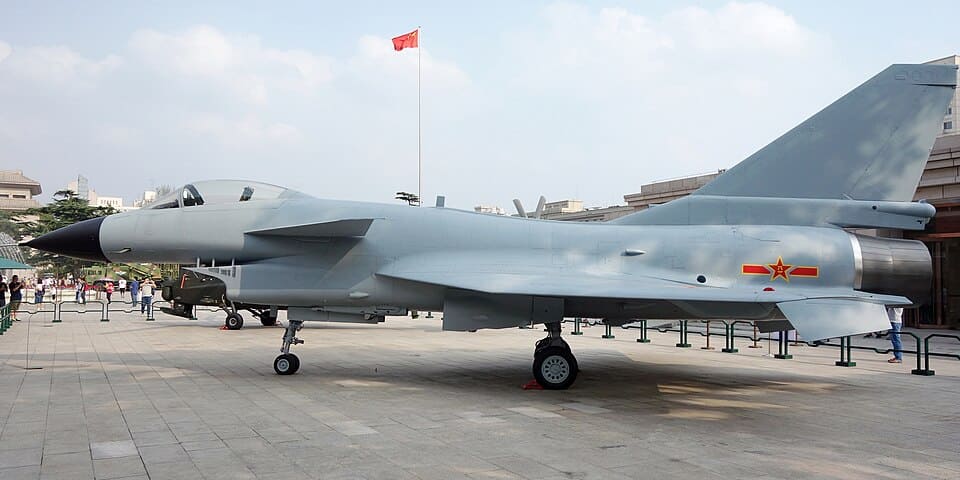
For decades, the global fighter market had two aisles: American and Russian. You bought F-16s or you bought MiG-29s. China was a buyer, not a seller — importing Russian engines, Israeli avionics, and Western design philosophy to build aircraft it could not yet export. That era is ending. Quietly, systematically, and with a price list that makes Pentagon procurement officers wince, Beijing is becoming a major arms dealer in the sky.
The numbers tell the story. Pakistan has taken delivery of 20 J-10CEs out of 36 ordered. Indonesia confirmed an order for 42 J-10Cs in October 2025. Bangladesh is preparing to buy 20 J-10CEs by 2027. Reports that Egypt received its first jets were denied by Beijing, and the deal appears to have stalled. And the FC-31 — China's fifth-generation stealth export fighter — is drawing interest from Saudi Arabia, the UAE, and Egypt.
Quick Facts
- J-10CE orders: Pakistan (36), Indonesia (42), Bangladesh (20), Egypt (interest reported; deal stalled)
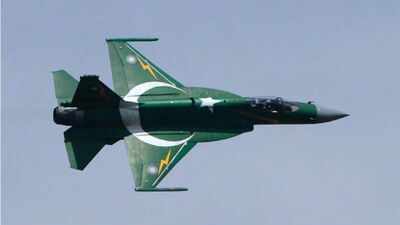
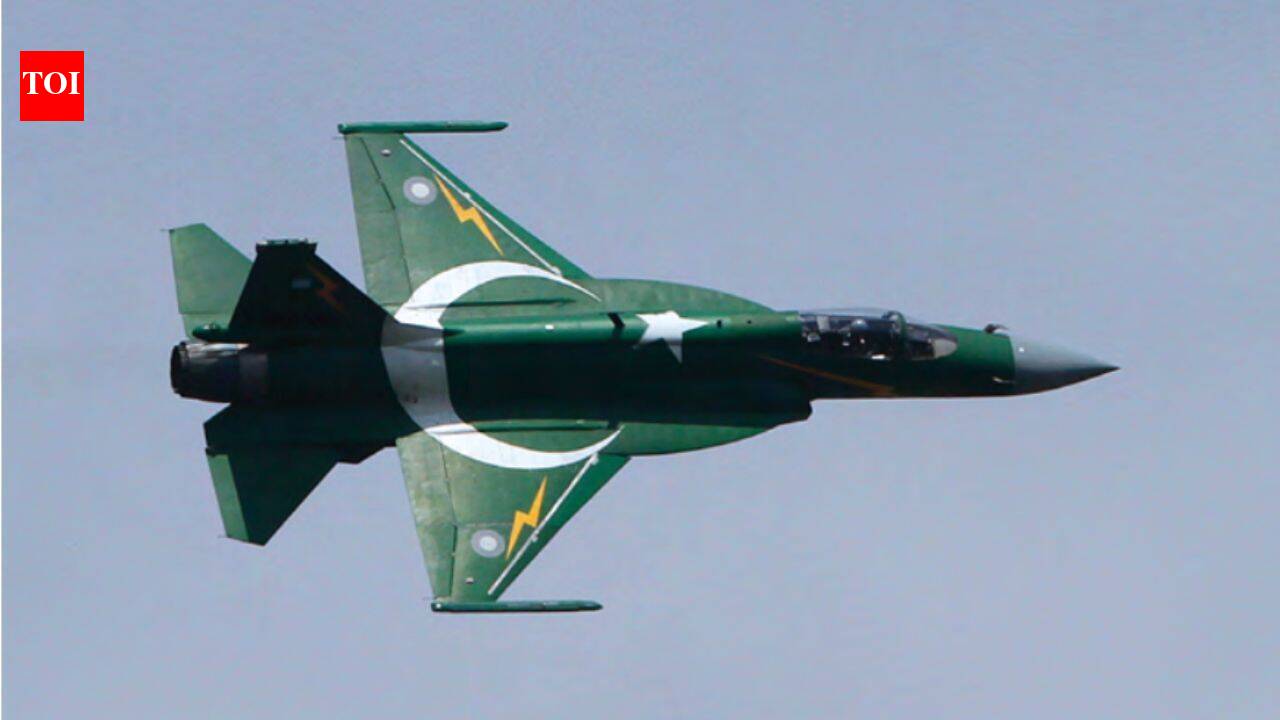
- JF-17: Co-produced with Pakistan; Block II flown by Myanmar and Nigeria, Azerbaijan the first Block III export customer
- FC-31/J-35: Fifth-gen stealth export fighter — interest from Saudi Arabia, UAE, Egypt
- Price advantage: J-10CE estimated at $40-50M vs. $80M+ for F-16V or Rafale
- Pentagon assessment: Chinese fighter exports set to grow significantly
The J-10C: China's Calling Card
The Chengdu J-10C is the spearhead of China's export push. A single-engine, delta-canard fighter with an AESA radar, infrared search-and-track, and compatibility with PL-15 beyond-visual-range missiles, it competes directly with the F-16V, Gripen E, and the lower end of the Rafale's market. What separates it is price. At an estimated $40-50 million per airframe, the J-10CE undercuts every Western competitor by 30 to 50 per cent.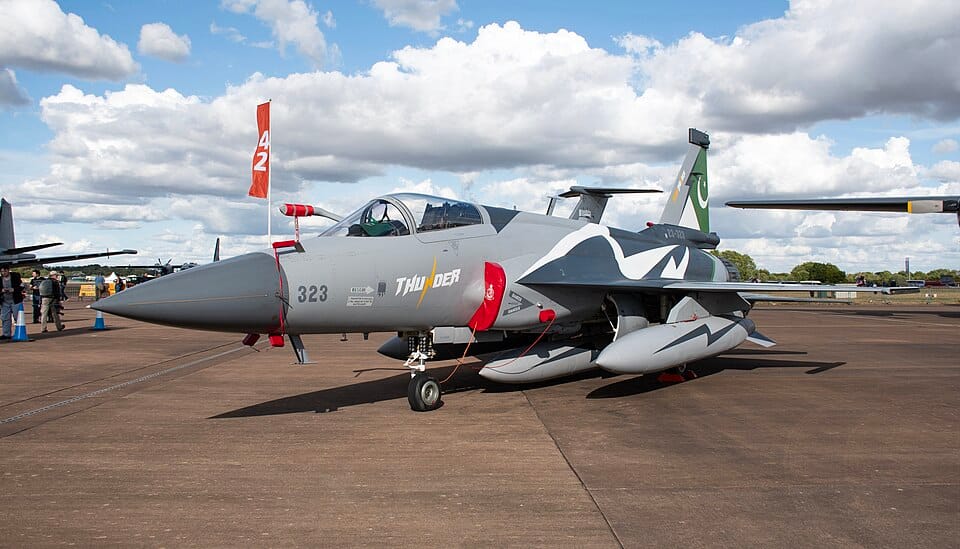
The JF-17 Thunder — co-produced by China and Pakistan — has become China's most prolific fighter export platform. Wikimedia CommonsFor nations that cannot afford or cannot politically obtain Western fighters, the J-10C fills a gap that previously only Russian aircraft occupied. China comes with fewer strings attached. No congressional foreign-military-sales reviews. No ITAR restrictions. No demands for basing rights. You pay, you fly, you maintain.
The FC-31: Stealth for Everyone
The more consequential development is the FC-31, the export variant of the Shenyang J-35. It is China's answer to the F-35 — a medium-weight, fifth-generation stealth fighter designed explicitly for the international market.“Chinese fighter jet exports are set to grow significantly as Beijing positions the J-10C and FC-31 as cost-effective alternatives to Western and Russian platforms.”
Pentagon annual report on Chinese military power — U.S. Department of Defense, 2025
No FC-31 has been sold yet. But the interest from Saudi Arabia and the UAE — two of the world's wealthiest arms buyers, both frustrated by the slow pace of F-35 negotiations with Washington — suggests that China's stealth export fighter could break through sooner than expected. An FC-31 sale to Riyadh would be a geopolitical earthquake.
What the West Is Losing
Every J-10C sold to Indonesia is an F-16 that Lockheed Martin did not sell. Every FC-31 evaluated by Saudi Arabia is an F-35 that Congress refused to approve fast enough. China's growing share of the fighter market is not just a commercial concern — it is a strategic one. Nations that fly Chinese fighters train with Chinese doctrine, use Chinese datalinks, and build maintenance infrastructure tied to Chinese supply chains.The fighter export market is no longer a two-player game. China is on the field, the prices are low, the strings are few, and the stealth variant is coming. The West had better have an answer — because the customers are already shopping.