Beijingwalker
VIP Member

China’s Overlooked Role in World War II
China was a vital, but often forgotten, member of the Allies battling Japan—two years before the official start of World War II.Christopher Klein

China's commander-in-chief Chiang Kai-shek addresses his troops during World War II, circa 1943. (Michael Ochs Archives/Getty Images)
September 03, 2025
More than two years before German tanks blitzed Poland and four years before the Japanese bombed Pearl Harbor, what some historians consider the start of World War II occurred in China in 1937. The country's eight-year war with Japan sowed the seeds for the attack on Pearl Harbor but ultimately contributed to the Allied victory in the Pacific—at an incredibly high price for the Chinese.
China-Japan Relations Before World War II
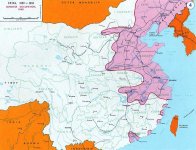
For decades after the First Sino-Japanese War in 1894-1895, China and Japan remained uneasy neighbors. With China engulfed in a civil war between Chiang Kai-shek's ruling Chinese Nationalist Party and Mao Zedong’s communist forces, the Imperial Japanese Army invaded the resource-rich region of Manchuria in northeast China in 1931 and installed a puppet governmentAn imperialistic Japan further encroached into northern China in the ensuing years as the nationalist government continued to view Mao’s communist fighters as a greater threat. Only after communist generals held Chiang captive for two weeks in December 1936 did he reluctantly agreed to an uneasy alliance with the communist forces against Japan.
As tensions with China rose, on July 7, 1937, Japanese soldiers conducted nighttime training exercises 10 miles southwest of Beijing near a stone bridge named for the 13th-century Venetian merchant Marco Polo. After Japanese Private Shimura Kikujiro failed to return to base after becoming lost in the dark following an unscheduled bathroom break, Chinese guards refused the Japanese entry to the adjacent town of Wanping to search for their missing comrade. The standoff turned violent, and what became known as the Marco Polo Bridge Incident proved the spark that ignited the Second Sino-Japanese War.
The Second Sino-Japanese War

Japanese troops entering China’s Shanxi province in 1937, during the Second Sino-Japanese War.
Ullstein bild/ullstein bild via Getty Images
Within weeks, the technologically superior Japanese forces seized Beijing. They captured the commercial hub of Shanghai in November 1937, but the fierce battle it required made it clear that China intended to mount a resolute defense.
The Imperial Japanese Army responded to the Chinese resistance with increasingly brutal atrocities, the most notorious of which occurred after it entered the Chinese nationalist capital of Nanjing (or Nanking) in December 1937. Over a six-week span, the Japanese military massacred between 200,000 and 300,000 soldiers and civilians and sexually assaulted tens of thousands of women.
As Japan pressed south and west in 1938, a Chinese defeat seemed inevitable. “They have no allies, they have no arms and they have retreated to the interior of China,” says Rana Mitter, author of Forgotten Ally: China’s World War II, 1937-1945. “Both the Chinese nationalists and the communists are on the run.”
The war, however, increasingly turned into a stalemate as Japanese forces made little progress beyond the port cities and urban areas south of Beijing. The communists in north-central China waged a guerilla war against the Japanese in Manchuria and north China, and the fragile truce with the nationalists held.
Allied Powers Begin to Support China as the War in Europe Takes Off
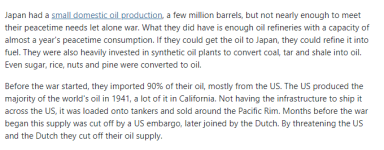
Foreign aid began to flow to China as Japan stalled. Soviet dictator Joseph Stalin saw a victorious Japan as such a threat to the USSR that he supplied arms to the Chinese nationalists, despite their battles with the communists. In 1940 and 1941, U.S. President Franklin D. Roosevelt extended credits to China to purchase military supplies and included the country in the Lend-Lease program. In August 1941, the United States further hampered Japan’s ability to fight in China by halting its trade of aircraft, oil and scrap metal, an embargo that was among the reasons why Japan attacked Pearl Harbor.Had China surrendered in 1938 as expected, World War II’s entire trajectory would have changed, according to Mitter. “The escalation that Japan had to go through in the following years because of Chinese resistance would never have happened. That means no Pearl Harbor because without the escalation of Japanese attacks on China you don’t get the desperate hunger for resources that leads ultimately to the oil embargo and President Roosevelt’s decisions in 1940 and 1941. And if you don’t have Pearl Harbor, you don’t have an Asian war that can then be joined with the European war.”
The United States and China Became Allies
After the United States and the United Kingdom joined the fight against Japan after Pearl Harbor, the flow of equipment, money and military advisors to China increased along with its global stature. Roosevelt considered China one of the world’s “four policemen” along with the Americans, British and Soviets and one of the cornerstones of a new world order that would emerge following the war.While American bombers used Chinese air bases to strike Japanese targets, the Chinese continued to shoulder the burden of the ground war as Allied attention initially stayed focused on Europe. Now faced with a wider war, the Japanese army remained bogged down in China with between 500,000 and 600,000 troops, according to Mitter, and 38 of 51 infantry divisions stationed in the country.
Japan gained ground and seized air bases during its “Ichi-Go” offensive in 1944, but China repelled two Japanese offensives in the summer of 1945. After the Soviet Union entered the war and overwhelmed Japanese positions in Manchuria and the United States dropped atomic bombs on Hiroshima and Nagasaki, Japan surrendered.
China After World War II
The war left an incredible scale of devastation. According to Mitter, historians have calculated that the war forced 100 million Chinese, approximately one-sixth of the country’s population, to become refugees in their own country, and only the Soviet Union surpassed China’s World War II death toll.“Reliable figures take it up to 12 or 14 million and in some cases as high as 20 million,” Mitter says. That count includes hundreds of thousands of deaths due to drowning, disease and starvation after the Chinese nationalist army breached massive holes in dikes holding back the Yellow River to stymie the Japanese advance in 1938. Millions others died after Chiang’s decision to seize peasant grain to feed the army exacerbated a famine in Henan Province in 1942 and 1943.
The Japanese surrender, however, did not mean the end of war in an exhausted China. The country’s civil war reignited and led to Mao’s communist revolution that toppled Chiang Kai-shek's nationalist government in 1949. As China and the United States went from friends to foes, public memory of China’s role as a member of the Allies faded on both sides of the Pacific.
“After 1949, when Mao and the communists won power in the mainland, the one thing that became pretty unacceptable, certainly at the central level, was anything positive to say about the Chiang Kai-shek regime,” Mitter says. “During the high Cold War, both the West and China had strong motivations not to revisit the story, and therefore for more than a quarter century it essentially lay in the shadows of historiography.”