Chinese assistances to Pakistan - CPEC

China-Pakistan Education, Science and Industry Symposium Marks New Phase of Cooperation​

By Liao Yifan | China Economic Net
Jan 30, 2026

BEIJING, Jan. 31, (China Economic Net) - The first China-Pakistan Symposium on Education, Science and Industrial Cooperation was held on January 20, 2026, at COMSTECH headquarters in Islamabad, marking a renewed and more integrated approach to bilateral collaboration.
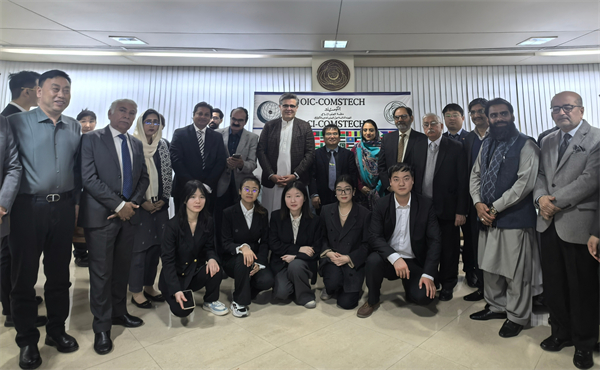
China-Pakistan Education, Science and Industry Symposium Marks New Phase of Cooperation


The meeting was chaired by Senior Professor Zhang Lixin of Northwest A&F University, Chairman of Silkroad Biohealth Agricultural Industry Alliance and Chief Scientist/Director of Shaanxi Belt and Road Joint Laboratory on Dryland Biological Resources and Green Smart Agriculture,China, and attended by Khalil Hashmi, Ambassador of Pakistan to China, who delivered the keynote address. More than 50 representatives from government agencies, universities, research institutions, and leading enterprises from both countries participated.
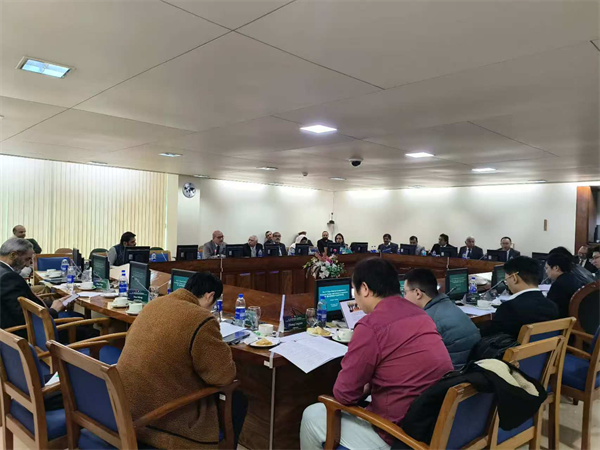
China-Pakistan Education, Science and Industry Symposium Marks New Phase of Cooperation


In his opening remarks, Professor Zhang Lixin welcomed the diverse delegation, which included representatives from Shaanxi Province, Chinese national media, faculty and students from Northwest A&F University, as well as officials from Pakistan's science and technology authorities, universities, and industry.

Discussions focused on agriculture, higher education, and industrial cooperation. Representing Pakistan's Federal Ministry of Science and Technology, Mr. Shakil Arshad outlined ongoing collaborations in space science and Traditional Chinese Medicine with Chinese universities, including Nanjing University and Xi'an Jiaotong University.
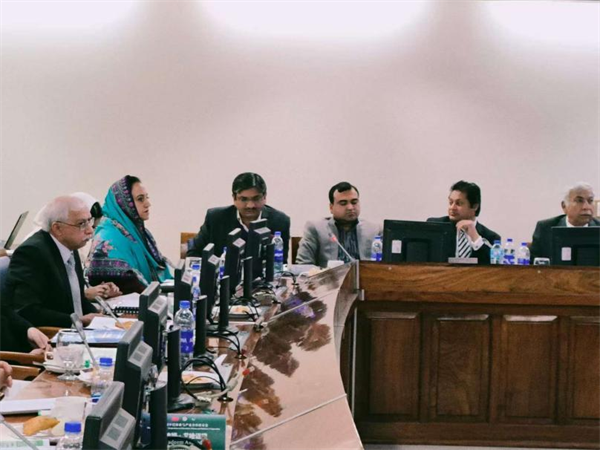
China-Pakistan Education, Science and Industry Symposium Marks New Phase of Cooperation


Agricultural experts emphasized the urgency of collaborative innovation. Professor Muhammad Azam Khan, former Director General of Pakistan's National Agriculture Research Center, noted that more than 700 crop varieties developed by the council now cover 80% of Pakistan's farmland. He called for enhanced cooperation with China in precision agriculture, smart machinery, and sesame value-chain development.

Professor Shah Nawaz Marri, Chairman of Department of Plant Breeding and Genetics, Sindh Agriculture University, announced plans to establish Pakistan's first China-Pakistan Agricultural Cooperation Center and expressed hopes to conduct joint research with China in areas such as pepper variety improvement and the exchange of germplasm resources for high-value crops.
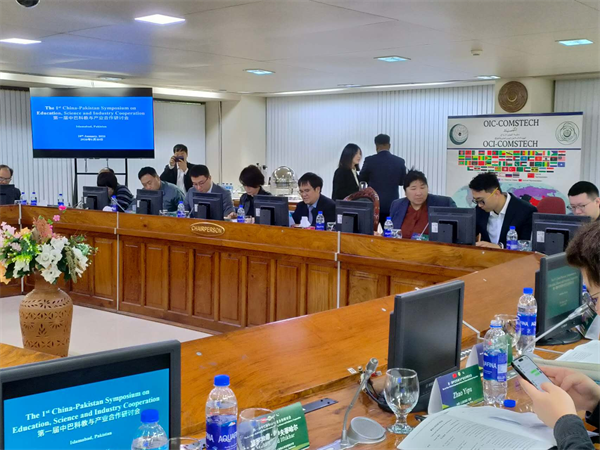
China-Pakistan Education, Science and Industry Symposium Marks New Phase of Cooperation


Business representatives outlined specific investment opportunities. Sun Lianfeng, General Manager of Baoji Haisheng Modern Agriculture, stated that the company plans to introduce high-density apple cultivation technologies to Pakistan, which could increase yields by 30% while reducing water usage by 80%. Feng Lianying, General Manager of Xianyang Kangda Modern Agriculture, confirmed that preparations are actively underway to invest in modern poultry farming facilities in Pakistan.
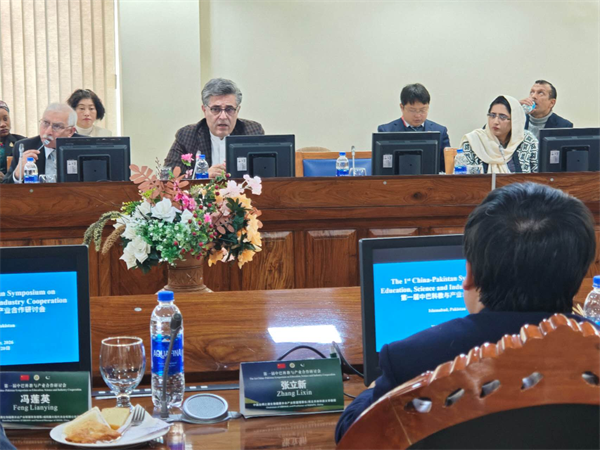
 
Educational cooperation has already yielded tangible results. More than 260 Pakistani students are currently enrolled in agriculture-related majors at Northwest A&F University, and over 510 participants have completed training programs. Last year and this year, a total of 10 Chinese Silk Road graduate students have come to Pakistan University for exchange studies, while 2 Pakistani graduate students will go to China for training in smart agricultural technology.

China-Pakistan Education, Science and Industry Symposium Marks New Phase of Cooperation


In his closing remarks, Ambassador Khalil Hashmi described agriculture as a cornerstone of high-quality development under China-Pakistan Economic Corridor, emphasizing the strong complementarity between Pakistan's resources and China's technological strengths.

He also revealed that a major international cooperation program, approved in December 2025, will provide a new platform for future collaboration.

The symposium was followed by a ten-day series of visits by the Chinese delegation across Islamabad, Lahore and other regions. Activities included participation in a Pakistan–China agriculture investment conference, site inspections of farms, food processing and poultry facilities, and meetings with research institutions such as the Pakistan Academy of Sciences and the Ayub Agricultural Research Institute.

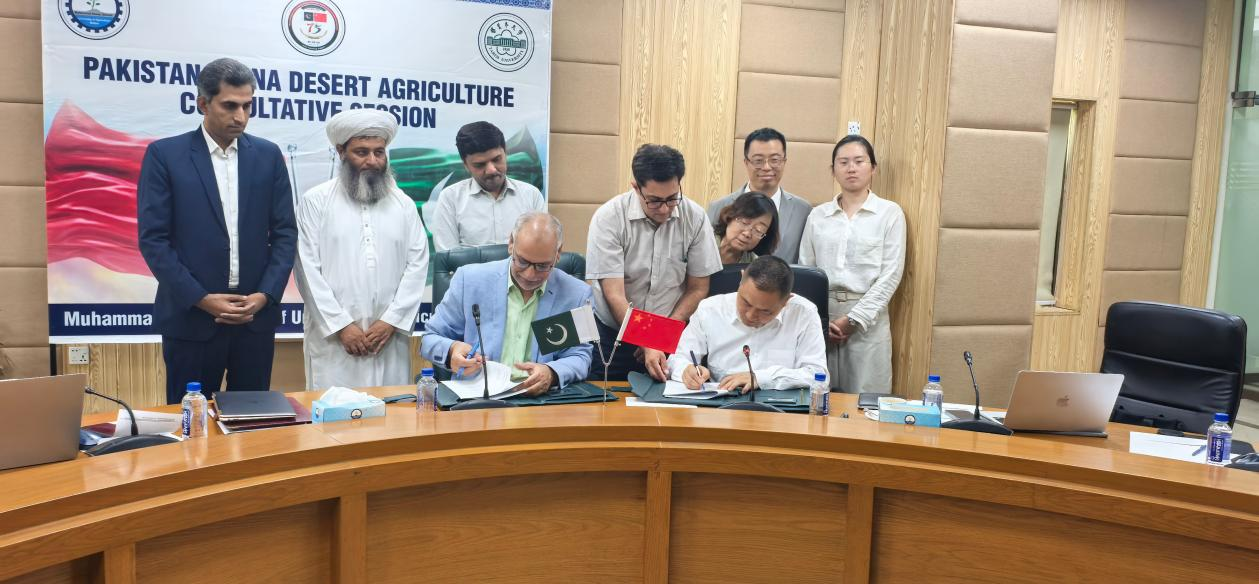
Several cooperation agreements were signed, and roadmaps were established for joint laboratories, technology transfer centers, and demonstration parks.

Together, the forum and follow-up visits transformed dialogue into practical cooperation, strengthening people-to-people ties and laying a solid foundation for a deeper China-Pakistan partnership as the two countries approach the 75th anniversary of diplomatic relations.
 

TANG signs MoU with SMW to expand digital Education and Women’s Employment in Pakistan​

By Tahir Ali | Gwadar Pro
Feb 15, 2026

In a major step toward expanding employment opportunities for women in Pakistan, TANG has signed a Memorandum of Understanding (MoU) with She Means Work (SMW), a Pakistani organization dedicated to empowering women through jobs, skills development, and entrepreneurship.

In a statement issued late Friday, TANG said, “The partnership aims to expand access to quality digital education, especially in rural and underserved areas while placing special focus on women empowerment.” “It will equip women with in-demand digital skills, improve access to employment opportunities, and support entrepreneurship,” it added.

Song Jianying, the head of TANG in Pakistan and Ms. Lubna Bhayat, founder of SMW signed the agreement.

Under the agreement, SMW will collaborate with TANG to expand access to digital learning programs nationwide. The initiative is expected to enhance skills, support career advancement, and help individuals, especially women, participate more actively in Pakistan’s growing digital economy.

SMW is a Pakistan-based organization focused on empowering women by connecting them with employment, skills training, and entrepreneurial opportunities. The organization has built a dedicated community aimed at assisting women, especially mothers returning to work, fresh graduates, and persons with disabilities, to overcome barriers to employment.

SMW provides a comprehensive ecosystem designed to support women’s professional growth. Through its job portal, it connects women with verified employment opportunities across Pakistan, helping them secure reliable and meaningful work.

The organization also runs several initiatives to promote economic empowerment. Its Ventureher program supports women entrepreneurs by providing training, business development support, and access to financing opportunities, helping women scale their businesses and achieve financial independence.
 
China and Pakistan are expanding cooperation in livestock technology and agricultural research, with new agreements signed during a recent #Chinese delegation’s visit to Pakistan, Radio Pakistan reported on Thursday, as both sides seek to deepen economic collaboration under the second phase of the China-Pakistan Economic Corridor (CPEC).

The collaboration follows a visit by Jinan Animal Husbandry Industry Craftsman College to Pakistan in January during the 2026 China-Pakistan Agriculture Investment Conference, where multiple cooperation documents were signed
 

Pakistani Academics Complete Advanced Training in China​

By Tahir Ali | Gwadar Pro
Feb 20, 2026

Pakistani Academics Complete Advanced Training in China


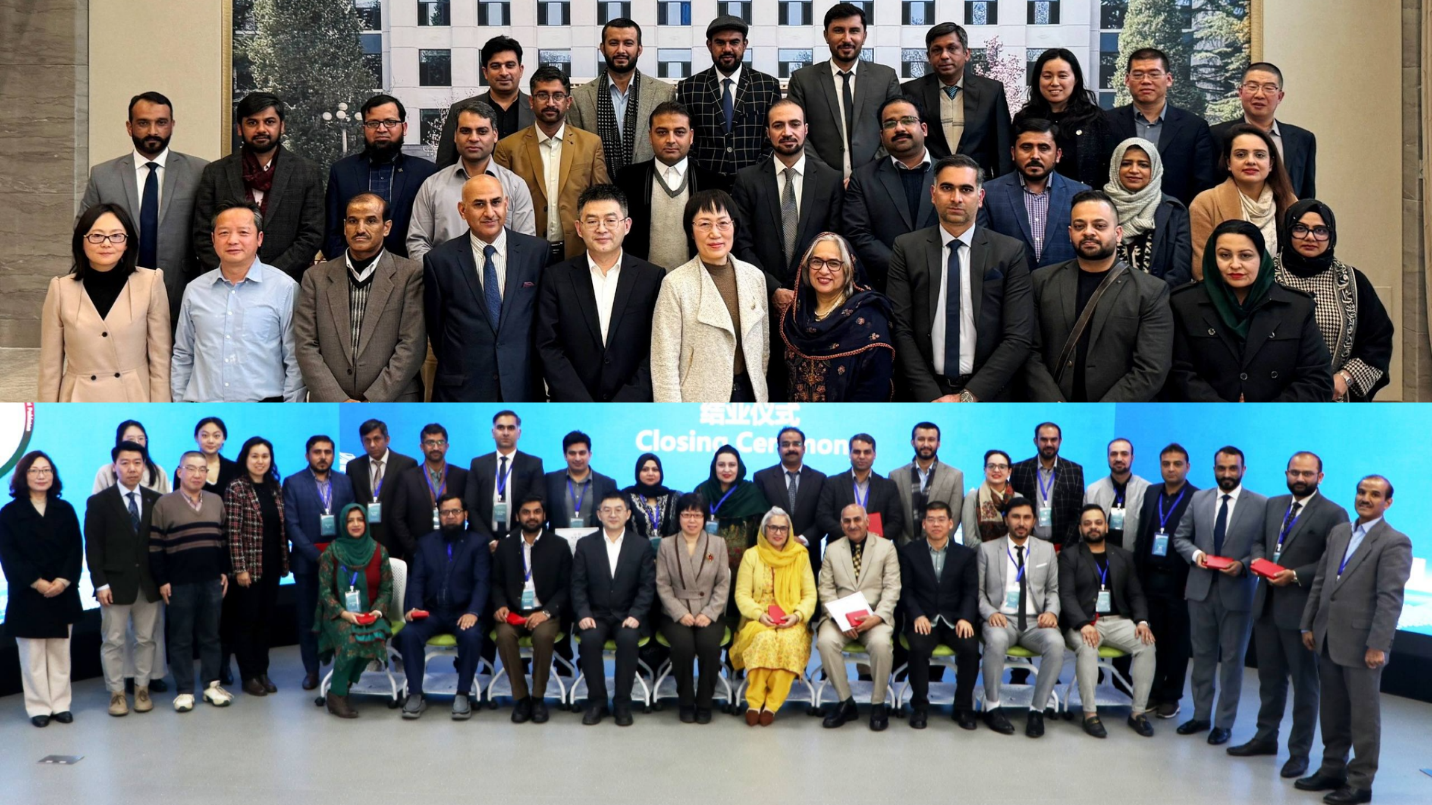
Highlights from the closing ceremony held in China. [Photos provided to Gwadar Pro]


ISLAMABAD- Pakistan’s Higher Education Commission (HEC) said Thursday that 24 senior academics from Pakistani universities have completed an advanced training program in China aimed at strengthening academic collaboration and capacity building under the China-Pakistan Economic Corridor (CPEC) Framework.

The two-week Advanced Training Programme was hosted at Tianjin Foreign Studies University under the CPEC University Consortium, a joint initiative of Pakistan’s Higher Education Commission and the China Association of Higher Education.

According to the HEC, the program focused on emerging areas including artificial intelligence-powered education, intelligent manufacturing and digital transformation in higher education. The initiative was designed to enhance academic cooperation, research partnerships and talent development between the two countries.
 

China leads Pakistan’s net FDI inflows at US$ 72.6 mln in Jan 2026​

By Tahir Ali | Gwadar Pro
Feb 20, 2026

ISLAMABAD - China remained the largest source of foreign direct investment (FDI) in Pakistan, contributing net FDI of US$ 72.6 million in January 2026, accounting for 41.9% of the country’s total net inflows of US$ 173.3 million during the month, according to State Bank of Pakistan (SBP) data released on Tuesday.

In January, Pakistan received US$ 98.8 million in inflows from China, while US$ 26.2 million was recorded as outflow, bringing net FDI from China to US$ 72.6 million.

During the first seven months from July to January in FY 2025-26, Pakistan received total FDI inflows of US$ 2,078.7 million (US$ 2.08 billion), while outflows stood at US$ 1,097.4 million (US$ 1.10 billion), resulting in net FDI of US$ 981.4 million, according to SBP data.

China remained the leading investor during this period, contributing US$ 495.5 million and accounting for 50.4% of Pakistan’s total net FDI.
 
To view this content we will need your consent to set third party cookies.
For more detailed information, see our cookies page.
 

The Pak-China partnership has evolved into one of Islamabad's most critical economic relationships


China is one of Pakistan’s largest bilateral creditors, a major investor in infrastructure and energy, and an increasingly important source of financial stability for Islamabad during periods of economic stress.

Pakistan and China celebrated the 75th anniversary of the establishment of diplomatic relations on May 21. The events held around these celebrations underscore that the relationship between the two countries is entering a new phase characterised by greater financial integration, expanding sub-national cooperation and renewed geopolitical cooperation.

What began as a strategic and political partnership has gradually evolved into one of Pakistan’s most critical economic relationships.

Today, China is one of Pakistan’s largest bilateral creditors, a major investor in infrastructure and energy, and an increasingly important source of financial stability for Islamabad during periods of economic stress.

Against this backdrop, Prime Minister Shehbaz Sharif is visiting China these days in a trip that focuses heavily on trade, industrial cooperation, financial connectivity and the future direction of the China-Pakistan Economic Corridor (CPEC).
 
The growing engagement between Pakistani provinces and Chinese regional governments highlights how bilateral ties are extending at the sub-national level

The premier would begin his tour with a business-to-business conference and meet with the Chinese leadership, including President Xi Jinping and Prime Minister Li Qiang. “The two sides will review bilateral relations, and cooperation in political, economic and strategic domains,” the spokesman said.

Many in Pakistan believe that the geopolitical turbulence in the Middle East has created fresh opportunities for closer regional economic cooperation and alternative financing arrangements centred around China.

Foreign Minister Ishaq Dar’s visit to Beijing in late March amid Islamabad’s intensified diplomatic efforts aimed at easing tensions in the Middle East also underscored the two countries’ growing role as regional diplomatic actors. It highlighted Islamabad’s interest in aligning more closely with China on regional stability and economic security issues.

In that context, the recent issuance of overwhelmingly oversubscribed three-year Panda Bond reflects both economic necessity and strategic recalibration. The initiative has allowed Islamabad to raise yuan-denominated debt directly from Chinese investors, helping diversify its external borrowing sources at a time when access to international capital markets remains constrained and costly.
 

Fauji Fertilizer inks $1.12bn project under CPEC 2.0

  • Pakistan's first coal-to-fertilizer plant will transform local coal into 717,000 tons of urea annually
May 26, 2026

Pakistan’s leading fertilizer manufacturer Fauji Fertilizer Company Limited (FFC) has signed the Front-End Engineering Design (FEED) agreement with a Chinese company, for what it termed as Pakistan’s first coal-to-fertilizer project under the China-Pakistan Economic Corridor (CPEC) 2.0 framework.

The company shared the development in a social media post on Saturday, stating that the agreement was signed with Hualu Engineering and Technology Co. Ltd in China on May 24, 2026.

“With an investment of $1.12 billion, the project is expected to produce 717,000 tons of urea annually while utilizing approximately 2.1 million tons of indigenous coal each year - strengthening fertilizer security, enabling value creation from local resources, and supporting Pakistan’s long-term industrial growth,” FFC said.
 

Key highlights of the project:


Production Capacity: Projected to produce 717,000 tons of urea annually.

Local Resource Utilization: Will consume roughly 2.1 million tons of indigenous coal per year, drastically reducing reliance on expensive imports..

Timeline: Commercial operations are slated to kick off by 2030-31...

This initiative is a massive step toward boosting domestic fertilizer availability, optimizing local resources, and easing the pressure on foreign exchange.
 

Users who are viewing this thread

Country Watch Latest

Latest Posts

Back
Top