Chinese assistances to Pakistan - CPEC

Pakistan, China agree on $7bn ML-1 financing consortium


Khaleeq Kiani
September 9, 2025

ISLAMABAD: The government announced on Monday that Pakistan and China had agreed to form a consortium of bilateral and multilateral partners to finance the $7 billion Mainline-1 (ML-1) railway project, along with a four-year action plan (2025-29) for the second phase of the China-Pakistan Economic Corridor (CPEC).

Speaking at a news conference, Planning and Development Minister Ahsan Iqbal said that during Prime Minister Shehbaz Sharif’s recent visit to China, the two sides had agreed to constitute a consortium of financiers, including the Asian Development Bank (ADB), Asian Infrastructure Investment Bank (AIIB), China and Pakistan, for the 1,700-km Karachi-Peshawar railway line.

He said China had assured financing not only for ML-1 but also for the Karakoram Highway. Negotiations with multiple financiers would be concluded within a month. He added that ML-1 and the Sukkur-Hyderabad Motorway would already have been completed, had it not been for the 2018 political change, alleging that the subsequent PTI government “destroyed the process”.
 
The minister said Pakistan and China had agreed to develop and implement a four-year action plan to build, between 2025 and 2029, a “China-Pakistan community with a shared future” with stronger political trust, closer trade ties, deeper security cooperation and stronger people-to-people links.

Agriculture modernisation and industrial development would be prioritised under CPEC’s second phase, with space for third-party participation.
 
Minister says Beijing also assured funding for Karakoram Highway

The next meeting of the Joint Cooperation Council (JCC) of CPEC will be held on Sept 26 in Beijing. Both sides also agreed to advance industrial park development in line with local needs, support enterprise investment in special economic zones (SEZs) — particularly in Karachi and Islamabad — and offer preferential policies and a supportive business environment.

Mr Iqbal said the action plan was a “solid development” of leadership-level meetings aimed at deepening strategic cooperation and advancing the shared vision of an even closer partnership in the new era between two “time-tested, friendly countries.”

The two sides agreed to make full use of the Framework Agreement on Industrial Cooperation to accelerate industrialisation, support exports and encourage Chinese firms to invest in Pakistan, including in the mining sector and building mining industrial parks.

They also agreed to promote cooperation in crop cultivation, animal husbandry, epidemic control for plants and animals, aquaculture, agro-processing, agricultural mechanisation and capacity building in seed technology and drip irrigation.

The plan includes aligning the Belt and Road Initiative (BRI) with Pakistan’s 5Es Framework, implementing both large-scale landmark projects and “small and beautiful” livelihood projects, while ensuring both high-quality development and robust security.

Published in Dawn, September 9th, 2025
 

Govt seeks Beijing’s help to restructure, reform Pakistan Agricultural Research Council


Amin Ahmed
September 23, 2025

ISLAMABAD: The government is seeking assistance from the Chinese Academy of Agricultural Sciences (CAAS) to restructure the Pakistan Agricultural Research Council (PARC) into a modern and vibrant institution capable of addressing emerging agricultural challenges and ensuring national food security.

The Chinese team shared their experience of successfully transforming CAAS nearly two decades ago and offered valuable insights into PARC’s reform process.

They identified financial constraints, limited incentives for scientists, and restricted international collaborations as key hurdles for PARC.

They stressed the need for a competitive model supported by long-term investment and stronger collaboration with the private sector and international partners.

Chinese team cites financial constraints, limited international collaboration as key hurdles for the council

Mr Hussain reiterated that reforming PARC is a national priority and assured the government’s complete support to expedite the process, and expressed confidence that with China’s partnership and Pakistan’s commitment, PARC will emerge as a strong and modern research institution capable of delivering innovative solutions, enhancing agricultural productivity and securing the country’s food future.

The Chinese delegation was led by Ms Yan, Consultant at the Department of International Cooperation of the Chinese ministry of agriculture and rural affairs.
 

Pak-China ties a pillar of stability, says Gilani

APP
September 23, 2025

ISLAMABAD: Senate Chairman Syed Yousaf Raza Gilani said on Monday that Pakistan and China’s military cooperation was a pillar of regional stability and deterrence.

The Senate chairman made these remarks at a reception hosted by the Chinese Embassy to mark the 76th anniversary of the founding of the People’s Republic of China.

Speaking on Pak-China defence cooperation, he praised Chinese fighter jets, such as the JF-17 Thunder programme and the induction of J-10C fighter jets, underscoring that Pak-China military collaboration is a cornerstone of regional stability and deterrence.

During the recent escalation between Pakistan and India, the induction of advanced Chinese fighter jets, particularly the J-10C, played a crucial role in strengthening Pakistan’s defence preparedness.

Expressing profound gratitude, he acknowledged China’s consistent support to Pakistan during testing times, including earthquakes, floods, and the COVID-19 pandemic. He said that China’s assistance, from humanitarian relief to medical supplies, symbolised the depth of brotherhood.

On economic cooperation, he hailed the China-Pakistan Economic Corridor (CPEC) as a flagship initiative and a proud chapter in the partnership.

He described Gwadar Port as a gateway of trade and prosperity, reiterating that CPEC is not just about infrastructure but also about shared dreams and prosperity for the people of both nations.
 
To view this content we will need your consent to set third party cookies.
For more detailed information, see our cookies page.
 
Key proposals presented by Ahsan Iqbal include:

10,000 PhD scholarships for Pakistani youth in Chinese universities.

Innovation centers and internships in Chinese institutions for skill development.

Adopting China’s poverty alleviation model in Pakistan’s underdeveloped districts.

Market access for Pakistan’s exports in China similar to ASEAN countries.

Establishment of export-based SEZs in Karachi and Islamabad.

Linking every corridor of CPEC Phase-II to export-driven targets.

He outlined the five new corridors under CPEC Phase-II: Growth, Innovation, Green, Livelihood, and Regional Connectivity.

Future initiatives include:

Development of a Pakistan–China Digital Silk Road with 5G, fiber networks, and data centers.

Establishment of joint AI and quantum laboratories.

Achieving 60% clean energy by 2030.

Incorporating agricultural reforms and electric vehicle projects.

Launch of a mining corridor from Chagai to Gwadar.

Border markets in Khunjerab, Torkham, and Gwadar to boost trade.

A 300 MW solar project in Gilgit-Baltistan to end prolonged load-shedding.
 

Pakistan, China launch region’s first Seismic and Geophysical Observatory in Karachi​

By Tahir Ali | Gwadar Pro
Sep 26, 2025

Pakistan, China launch region’s first Seismic and Geophysical Observatory in Karachi


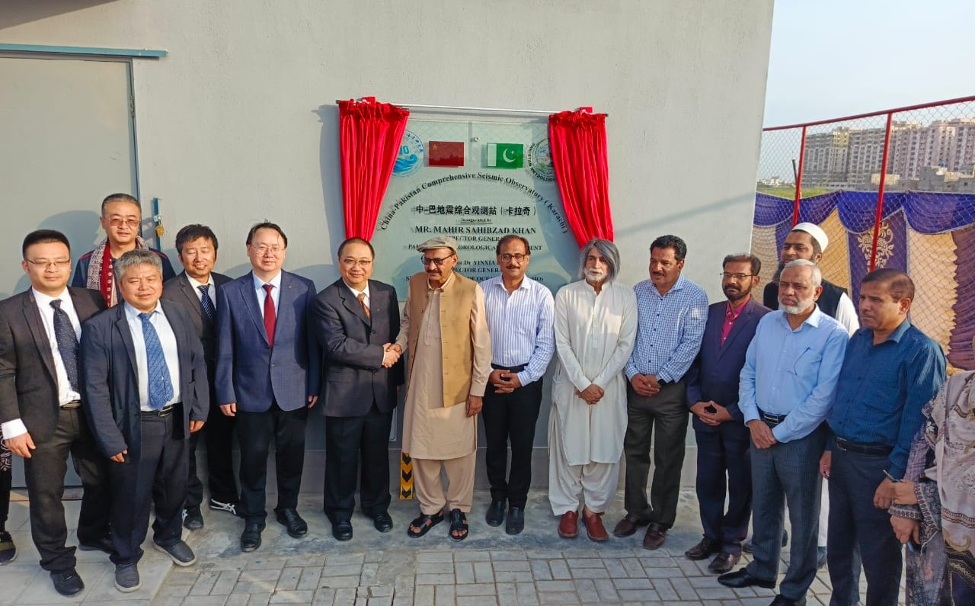
DG Mahir Sahibzad Khan inaugurates the new system alongside Chinese experts. [Photo/PMD]

KARACHI- The Pakistan Meteorological Department (PMD), in collaboration with China’s Second Institute of Oceanography (SIO), on Thursday inaugurated the China-Pakistan Comprehensive Seismic and Geophysical Observatory in Karachi — the first facility of its kind in the region.

Ameer Haider Leghari, Chief Meteorologist at PMD, told Gwadar Pro that the new station integrates three advanced functions: Global Navigation Satellite System (GNSS) observations, seismic monitoring for earthquakes, and geomagnetic measurements to study magnetic storms.

“This facility will also help us analyze energy accumulation along tectonic faults, which is vital for understanding earthquake risks in Pakistan,” Leghari said.

He explained that Pakistan has operated geomagnetic observatories in Quetta, Gilgit, and Karachi since 1952, all based on first-generation systems. “The new Karachi station represents the third generation, equipped with modern instruments and digital processing capacity,” he added.

Leghari noted that the system was costly to install due to its specialized hardware and software, crediting the Chinese government’s support for making it possible. He stressed that the facility is crucial for strengthening Pakistan’s disaster preparedness and scientific research.

Looking ahead, he emphasized that joint training programs are part of the collaboration. “In the next phase, Pakistani scientists will receive training in China to gain expertise in the latest technology and its applications,” he said.

According to PMD, the observatory will significantly enhance Pakistan’s ability to monitor earthquakes and geomagnetic disturbances while contributing to international scientific data-sharing networks that track space weather phenomena capable of disrupting communications, navigation, and power systems worldwide.
 

China agrees to fund KKH realignment​


Beijing has long been recommending Pakistan to consider settlement of existing debt

Shahbaz Rana
September 27, 2025


the committee was briefed on karakoram highway thakot raikot section realignment project but no major progress was made photo file


The committee was briefed on Karakoram Highway Thakot-Raikot section realignment project but no major progress was made. PHOTO: FILE

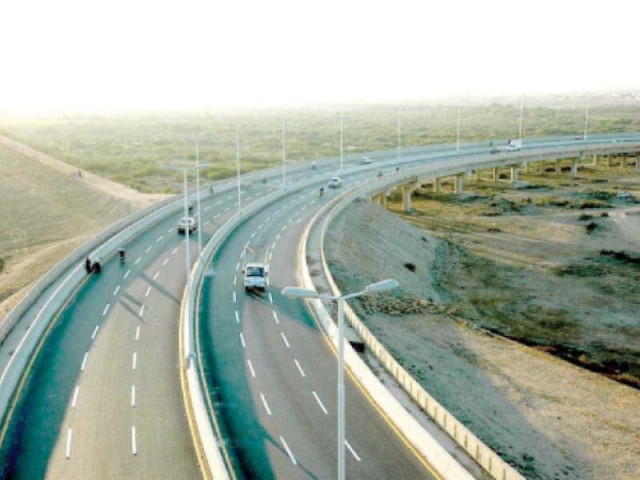
ISLAMABAD: Pakistan announced on Friday that China will provide 85% financing for the realignment of the Karakoram Highway and has also supported Islamabad's plan to seek financing from multilateral lenders for a strategically important rail link after Beijing declined to extend concessional loans.

Beijing has long been recommending Pakistan to consider settlement of existing debt and finding ways to fund new projects without accumulation of more public debt.

But despite its concerns about Pakistan's debt situation, China agreed to fund 85% of the Karakoram Highway project as a special case to keep the road link between China and Pakistan open under extreme weather conditions.

Both sides also agreed that roughly $7 billion Main Line-I project of the China-Pakistan Economic Corridor should now be financed by multilateral banks after Beijing did not extend a concessional $6 billion loan.

The discussions on the past and the future of CPEC took place during the 14th Joint Cooperation Committee (JCC) meeting that was held in Beijing. Zhou Haibing, Vice Chairman of the National Development and Reform Commission (NDRC) and Ahsan Iqbal, Minister of Planning, co-chaired the meeting.

We have agreed to start bidding on the Karakoram Highway in phases and the Chinese side confirmed 85% financing for the project, said Iqbal after the meeting while talking to The Express Tribune.

The highway needs realignment after parts of it submerged in water due to the construction of major dams. The government has approved the 241-kilometer long Thakot-Raikot section of the project at a cost of Rs576 billion or $2 billion.
 
ML-I

Iqbal said that China and Pakistan agreed to proceed with the ML-1 project through multilateral financing by the Asian Development Bank and the Asian Infrastructure Investment Bank. The ADB has already sent its team for field surveys.

Pakistan and China also agreed to advance the upgrading and reconstruction project of Pakistan's Main Line 1 (ML1) in phases on the premise of ensuring safety.

The two sides had discussed the financing terms of the ML1 project on multiple occasions, agreed to accelerate the research on the financing plan for the test section (Karachi - Hyderabad) and the subsequent consultations, and initiated the bidding and construction process after reaching an agreement on the financing plan.

"I wish to reemphasize the urgency we have agreed upon for the ML-I project and the realignment, necessitated by major hydropower dams, will preserve uninterrupted connectivity between our nations and the early implementation of both projects will yield far-reaching economic and strategic dividends for the entire region," said Iqbal in his closing remarks.
 
LTP

Both sides also discussed the second phase of CPEC to align the CPEC Five Corridors (5Cs) Growth, Innovation, Green, Openness, and Livelihood with Pakistan's URAAN (5Es) Framework, comprising Exports, E-Pakistan & Innovation, Energy & Infrastructure, Environment & Climate Change, and Equity, Ethics & Empowerment.

Iqbal said that to provide clear strategic direction, he proposed the publication of an updated CPEC Long-Term Plan within 45 days, aligning Pakistan's URAAN 5Es framework with President Xi's five corridors of CPEC 2.0.

The two sides agreed to continuously deepen the alignment between the CPEC Five Corridors with the URAAN Pakistan Framework based on 5Es.

The two sides agreed to jointly maintain the stability of the electricity price policy for energy projects under CPEC, resolve disputes through friendly consultation, and neither side shall seek to change the status quo through unilateral actions.

The Chinese side hoped that the Pakistani side would establish a circular account for electricity bill payment as soon as possible in accordance with the agreement on energy project cooperation under CPEC signed by the governments of two sides in 2014.

Acknowledging the special importance of Gilgit-Baltistan as the physical gateway of CPEC, Iqbal proposed a 300 megawatt solar project to end the region's 1820 hour daily blackouts and to transform its economy.

He also emphasized that the future of CPEC must pivot from government-to-government cooperation to business-to-business partnerships.
 
1759070241108.png

Two Chinese relief flights carrying 300 tents and 9,000 blankets for flood affectees landed at Nur Khan Air Base, Rawalpindi, on Sunday, the National Disaster Management Authority said.

The gesture underscores China’s enduring solidarity with Pakistan in times of difficulty, the disaster management agency said.

“China has once again affirmed its unwavering support and friendship with Pakistan by extending timely humanitarian assistance for the flood-affected people,” it added.
 

China, Pakistan expand TVET industrial cooperation​


By Khalid Aziz | Gwadar Pro
Sep 28, 2025

Islamabad : China and Pakistan expanded cooperation in Technical and Vocational Education and Training (TVET) sector during the China-Pakistan International TVET-Industrial Cooperation and Exchange Seminar held in Beijing on September 25.

The event, hosted by China Pakistan TVET-Industrial Centre of Excellence (CPTICE), gathered over 50 participants, including senior leadership from Pakistan’s Ministry of Federal Education and Professional Training and over 10 Chinese institutions, CPTICE said on September 26.

During the seminar, five Chinese institutions formally joined CPTICE, marking the expansion of the alliance.

The new institutions are North China University of Water Resources and Electric Power, Wuxi University of Technology, Lanzhou Resources and Environment Voc-Tech University, Shanghai Urban Construction Vocational College and Tianmen Vocational College.

In addition, five MoUs were signed with prestigious Chinese institutions in sectors like EVs, agriculture, intelligent manufacturing and infrastructure, Pakistan’s Ministry of Federal Education and Professional Training said separately.

The Ministry said that 11 Chinese institutions joined the Pakistan-China International Industrial- Academic Integration Alliance (CPIA).

Also, 8 Chinese experts were appointed for the CPIA expert bank in strategic fields including pharma, automotive and agri-engineering, marking the official establishment of the alliance’s expert database.

A Teacher Training Platform was launched to enhance Pakistan’s vocational training capacity.

This milestone strengthens bilateral collaboration, empowering Pakistan’s youth with cutting-edge skills and building a stronger Pakistan-China shared future, the Ministry concluded.
 
To view this content we will need your consent to set third party cookies.
For more detailed information, see our cookies page.
 

Users who are viewing this thread

Pakistan Defence Latest

Country Watch Latest

Latest Posts

Back
Top