Navigation
Install the app
How to install the app on iOS
Follow along with the video below to see how to install our site as a web app on your home screen.
Note: This feature may not be available in some browsers.
More options
Style variation
You are using an out of date browser. It may not display this or other websites correctly.
You should upgrade or use an alternative browser.
You should upgrade or use an alternative browser.
Chinese Economy: General News, Updates and Discussions
- Thread starter Beijingwalker
- Start date
More options
Who Replied?


Ali_Baba
VIP Member

United Kingdom should not over-estimate it's capability.
There are many many in the UK who don't realise that the empire is over, and instead get involved in things that should not involve us at all. eg Cyprus deployment of F-35s. The question is why are were deploying there, and how is it in our interests?
ety
Trusted Member
A rare scene unfolds! Trump raises prices by 40% on the spot, reaping Chinese wealth, and India begins to surrender
2026-02-09 14:14 Source: Huaguan Global
Published in: Jiangsu Province
On February 2nd local time, Trump posted a high-profile announcement on his social media platform "Real Social," officially declaring a phone conversation with Indian Prime Minister Modi, finalizing a trade and energy agreement touted as a "win-win" situation. Simultaneously, China completely halted Venezuelan oil exports to China. A global energy and geopolitical game, spearheaded by Trump, unfolded in an extremely rare manner—on one side, a hegemonic operation to extract profits from other countries at exorbitant prices; on the other, regional powers bowing to pressure and compromising. Behind this drama lies the United States' ambitious calculations to reshape the global order.
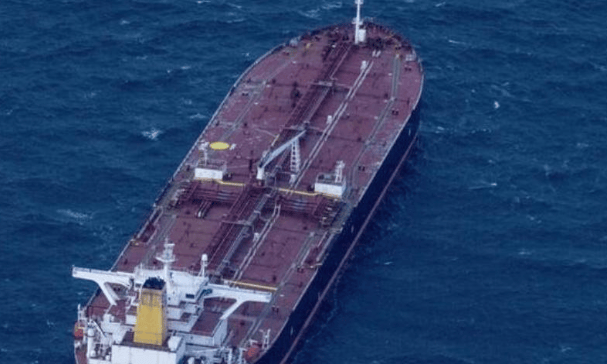
To understand this move, we need to start with Trump's actions in Latin America. Previously, the US military directly used force to abduct Maduro and unilaterally declared it would "indefinitely control" Venezuela's oil sales rights. This quasi-military intervention disregarded even basic international rules. During Maduro's rule, the price of Venezuelan crude oil exported to China remained stable at around $31 per barrel, a reasonable price negotiated equally between the two sides, bringing tangible benefits to the Venezuelan people. However, after Trump took office, his first act was to arbitrarily raise prices, directly increasing oil prices to $45 per barrel, a jump of over 40%.

The US even found a seemingly plausible excuse, claiming that oil sales to China during the Maduro era were a "fire sale of national assets," and that the US was doing this to "correct injustice" and ensure the Venezuelan people received "reasonable benefits." This sounds incredibly appealing, but it's all self-deception and lies. Currently, the US firmly controls Venezuela's oil sales rights and financial flows, with no third-party institution able to intervene or supervise. The so-called "benefits for the people" is merely a fig leaf for Trump to cover up his energy monopoly ambitions. To put it bluntly, the US wants to further tighten its grip on global oil pricing power by controlling Venezuela's energy treasure trove. Who wants to buy oil, and at what price, will all depend on the US's whims.
Not content with exploiting Venezuela, Trump's next target was China. After gaining control of Venezuela's oil, he immediately pressured China to take over these high-priced oils, even imposing harsh conditions—not only must China accept a price of $45 per barrel, but the delivery time would also be dictated by the US. This is not normal international trade; it is clearly a hegemonic extortion, a blatant attempt to seize the $60 billion in oil loans previously signed between China and Venezuela, and to make China pay for America's hegemonic operations.
What was truly applauded was China's swift and decisive response. Without hesitation, China immediately issued a ban, suspending all imports of Venezuelan oil. There were initial concerns that the import suspension would wipe out China's $60 billion loan, which was the basis of Trump's confidence that China would compromise. However, he clearly underestimated China's confidence and contingency plans. China had already perfectly filled the gap left by Venezuelan oil by increasing imports of Canadian oil. Moreover, Russian oil supplies were plentiful, especially after India reduced its purchases of Russian oil; Russia was already hoping for increased imports from China, making the Venezuelan oil shortage negligible. The $60 billion loan agreement remained legally binding. China's calm and collected approach put Trump, who had stockpiled large quantities of oil, in a passive position—if the oil couldn't be sold, it couldn't be converted into cash, and the profits for the US and its allies would become castles in the air.
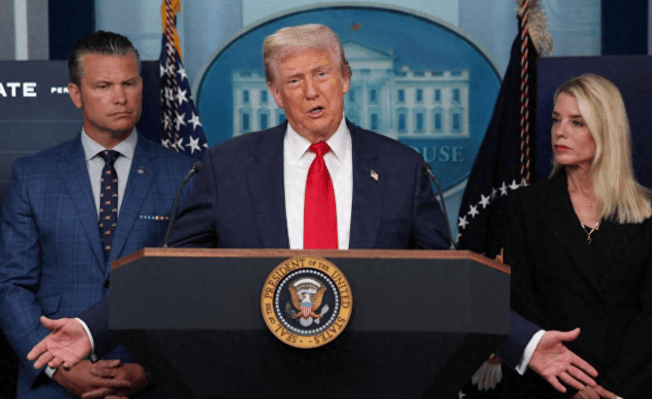
Just as China's strong countermeasures thwarted Trump's calculations, another rare scenario unfolded—India, which had been trying to balance between the US and Russia, completely surrendered. For a long time, India has relied on purchasing discounted Russian oil to lower its domestic energy costs, which greatly displeased Trump, who was eager to sever energy cooperation with Russia and weaken Russia. In July 2025, the US first imposed a 25% "reciprocal tariff" on Indian goods imported into the US, and in August, it imposed an additional 25% tariff on Indian oil purchases, bringing the total tariffs to a staggering 50%. This placed immense pressure on India's manufacturing sector, which is highly dependent on the US market.
Negotiations between the two sides began in February 2025, but after nearly six months of fruitless negotiations, Trump, growing impatient, made a threatening statement—if India did not stop buying Russian oil, he would raise tariffs from 50% to 500%. This decisive move struck at India's Achilles' heel. The Modi government had no confidence that Trump wouldn't dare to do so, and ultimately had no choice but to compromise, reaching a so-called trade agreement with the United States. According to Trump's official announcement, the United States reduced the "reciprocal tariffs" on Indian goods imported into the US from 25% to 18%, while also eliminating the additional 25% punitive tariffs. The price India paid was substantial.
India pledged to completely stop buying Russian oil and instead purchase from the United States and Venezuela. It also signed a massive $500 billion deal to buy US goods, covering energy, technology, agricultural products, and more. Furthermore, it pledged to gradually reduce tariffs and non-tariff barriers on US goods in its domestic market until they are reduced to zero. Following the agreement, Modi unusually ostentatiously thanked Trump, and the Indian Minister of Commerce and Industry busied himself boasting that the agreement would bring US technology to India, desperately creating the illusion that "India has won."
It's clear to anyone with a discerning eye that this is far from a win-win situation; it's blatant surrender and compromise from India. The $500 billion purchase commitment far exceeds India's current economic strength, and even by the next US presidential election in 2028, this promise is highly unlikely to be fulfilled. In short, it's a political signal from Modi to alleviate tariff pressure. More importantly, India cannot possibly sever its energy cooperation with Russia completely. Indo-Russian oil cooperation has long transcended simple trade; it's a crucial link in strategic mutual trust between the two countries. India relies on Russian military equipment, nuclear technology, and Russia's support on the international stage. The so-called "stopping Russian oil purchases" is merely a stopgap measure.
It is alarming that Trump's ambitions extend far beyond this. While controlling Venezuelan oil and forcing India to compromise, he is also secretly pressuring Asia-Pacific countries, attempting to relinquish China's overseas strategic hub assets. Australian Prime Minister Albanese's vow to reclaim the Port of Darwin from Chinese companies is being fueled by the United States—Darwin is Australia's closest port to Asia, where the US military has deployed forces since 2012, and now companies with US investment have clearly expressed their intention to acquire it.
The situation in Panama was strikingly similar. The Panamanian Supreme Court suddenly ruled that the contract for the Chinese-operated port was "unconstitutional and invalid." US Secretary of State Rubio immediately rejoiced, even though he had previously threatened Panama during his visit that the US would take "necessary measures" if it did not terminate its cooperation with Chinese investment. Subsequently, Panama contacted Danish shipping giant Maersk to discuss port takeover. This tactic was virtually identical to that used in Darwin, where the US, under the pretext of "national security," forced the host country to break legitimate commercial contracts, paving the way for US or allied capital to take over.
Foreign Ministry spokesperson Guo Jiakun stated as early as January 26 that China firmly opposes the interference of certain US politicians in the normal exchanges between Central American countries and China, calling the US remarks utter lies and fallacies that reflect their own ideological biases and Cold War mentality. This statement is incisive. The combination of measures taken by Trump is essentially a means to forcibly sever the globalized business network through economic coercion, political pressure, and quasi-military intervention, reorganizing it according to geopolitical camps, strengthening US global control, while simultaneously squeezing out Chinese interests and weakening Russian influence.
This battle for energy and geopolitics has only just begun. Trump's path of oil plunder will only become more and more difficult. After all, under hegemony, there is no permanent compromise, only increasing resistance.
404,您访问的页面已经不存在!
 www-sohu-com.translate.goog
Last edited:
ChineseTiger1986
Trusted Member

China's true peaceful personality has been often been interpreted as cowardice by many people around the world.

Falcon26
Trusted Member

I love that the Chinese played that Bollywood inspired song to poke fun at the Indians. They did the same thing when PAF smacked the Indian Air Force out of the air using J-10c in May 2025.
Always cracks me up when they do that.
Always cracks me up when they do that.
ChineseTiger1986
Trusted Member
I love that the Chinese played that Bollywood inspired song to poke fun at the Indians. They did the same thing when PAF smacked the Indian Air Force out of the air using J-10c in May 2025.
Always cracks me up when they do that.
Because we do believe that India is always invincible in their Bollywood movies.


Shui
Registered Member

China's true peaceful personality has been often been interpreted as cowardice by many people around the world.
The infamous Mumbai black panther?


Malcolm Reynolds
Banned

Fake news, but nevermind! Carry on.

PakistanLVR
Registered Member

The Indians have weaker grip than an average White woman

 www.hindustantimes.com
Men weaker than women in India
Ever wondered why we Indians do badly in contact sports? Well, the cat is out of the bag for the first time in 20 years. Aditya Ghosh reports.
Cookie Monster
Trusted Member
Oh look here...a "Malcolm Reynolds" says it's fake just bcuz it doesn't suit his narrative...Fake news, but nevermind! Carry on.
...let's come back to reality...start by changing ur name to Mukesh Raghav or something first bcuz there's no way u r a Malcom Reynolds.
Users who are viewing this thread
Total: 4 (members: 0, guests: 4)
Pakistan Defence Latest
-

-
 PTI Murad Saeed in Afghanistan, was 'controlling KP govt' from there: Rana Sanaullah (6 Viewers)
- Latest: Pakistanithinktank
-

-
-

Country Watch Latest
-

-

-
-

-
 DRDO successfully conducts maiden flight tests of Integrated Air Defence Weapon System (4 Viewers)
- Latest: Faceless
Latest Posts
-
-
-
 Türkiye - Azerbaijan | Strategic Partnership, Regional Alliance, Military Cooperation - News & Updates (9 Viewers)
- Latest: Ravenman
-
-