Chinese Economy: General News, Updates and Discussions


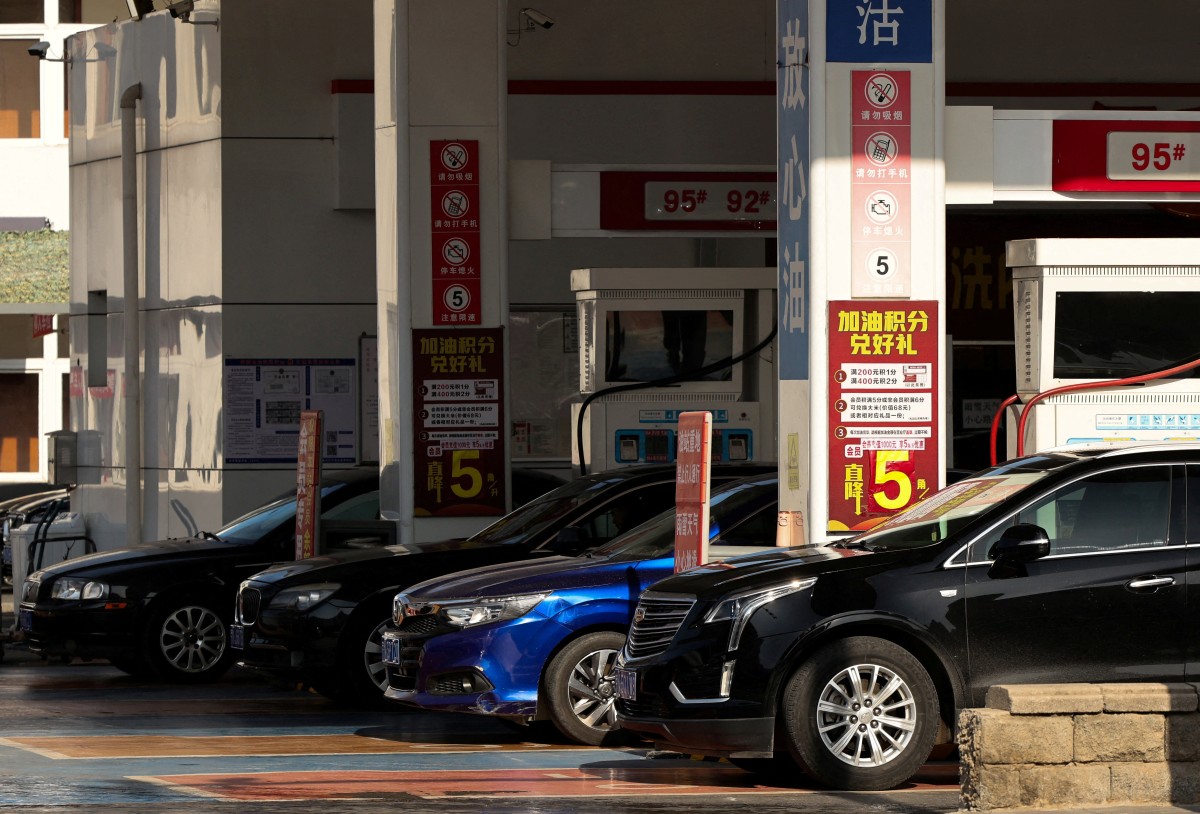
China will lower domestic retail price caps on gasoline and diesel from Friday in its second cut since the beginning of the Iran war, which has constrained global energy supplies and boosted global oil prices.

Retail gasoline and diesel ceiling prices will fall by 525 yuan (HK$607.78) and 505 yuan per metric ton respectively, state planner the National Development and Reform Commission said on Thursday.

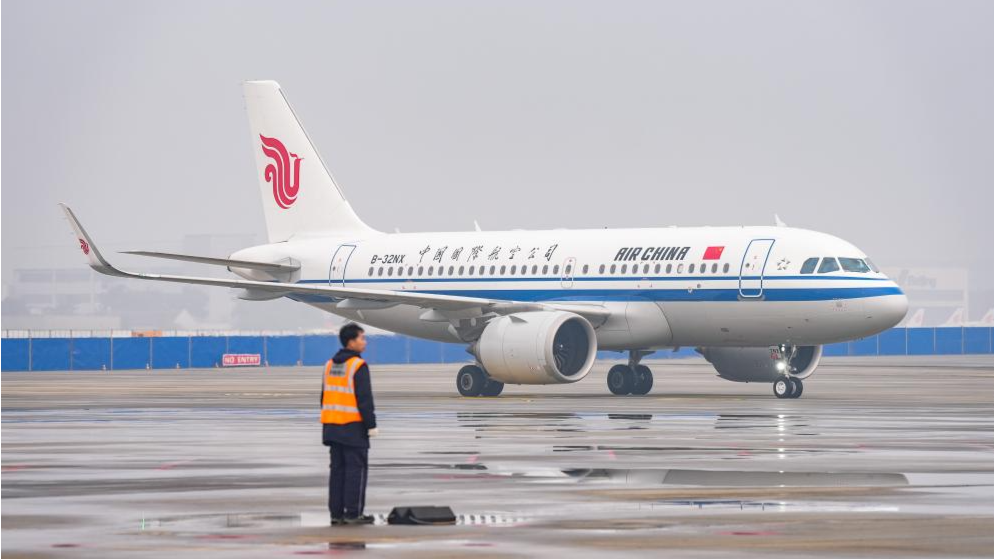
BEIJING – China's airlines will slash fuel surcharges for mainland routes on tickets sold from June 5, Air China and other airlines disclosed on Tuesday.
 
Last edited:

Digital Payment Systems: The Invisible Infrastructure​

Walk into any major Beijing, Shanghai, or Guangzhou attraction and you'll notice something remarkable: foreign visitors are seamlessly using Alipay and WeChat Pay alongside traditional cards. This wasn't accidental.

China deployed biometric systems at major entry points and standardized digital payment adoption across hospitality sectors. For a Canadian traveler booking a hotpot dinner in Chengdu or an American visitor purchasing temple admission in Xi'an, the experience is frictionless. No currency exchange lines. No confusion. Just tap and go.

This infrastructure advantage compounds across multiple touchpoints, shaping the travel experience long before visitors board their flights home.


I use Malaysian "Touch N Go" cashless payment while I was in Xian. No need to setup anything. I can use the moment I arrive in China. Heck I can even pay someone in China from Malaysia. He just need to send a picture of his QR quote.

Also the rate is very good.

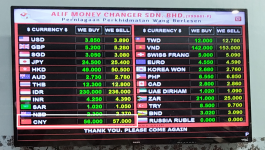
This is the exchange rate at our local money changer before I left for China
I bought some RMB just in case.
The rate is 100 CNY = 57 MYR which is 1 MYR = 1.754 CNY
1780614649130.png

The "Touch N Go" rate is 1 MYR = 1.710

1780614951440.png
 
ninja vpn is good too. Alot of branded hotels will offer free vpn for foreigners. The great firewall is meant for IT illiterate people so the West cannot spread mass propaganda. Educated people in China access VPN all the time and can make their own informed judgement on propaganda from the West.
I thought the whole point of the firewall was to prevent her citizens from being brainwashed by foreign sites. There are only two types of ppl that travel to China: Genuine tourists, and spies that know every trick known to man to hack security systems much less bypass a simple firewall. China is doing herself a disfavor by targetting those genuine tourists with her firewall policies
 

Hong Kong Rises To World No. 1 Cross-Boundary Wealth Hub

Jun 1, 2026

Hong Kong has overtaken Switzerland as the world's top cross-boundary wealth management centre, according to the latest Global Wealth Report 2026 published by the Boston Consulting Group.

Hong Kong's cross-boundary wealth rose 10.7% in 2025 to US$2.9 trillion, driven by Chinese Mainland flows and a vigorous stock market that delivered significant IPO (initial public offering) activity and strong gains in benchmark-heavy internet platforms, according to the report. It also projected that, from 2025 to 2030 the cross-boundary wealth managed by Hong Kong will grow by 9% on average annually and maintain first place globally, fully affirming Hong Kong's position as a world-leading cross-boundary wealth management centre.

Paul Chan, Financial Secretary of the Hong Kong Special Administrative Region Government (HKSARG), highlighted that China's National 15th Five-Year Plan clearly supports Hong Kong in strengthening its functions as an international asset and wealth management centre, which is also a key component of Hong Kong's 'Finance +' development strategy.

"Over the past few years, the Government has worked closely with the financial sector to continuously improve the financial infrastructure and ecosystem, expand the range of investment products and risk management tools, and deepen the connectivity with capital markets around the world.

"Leveraging the advantages of 'one country, two systems', complemented by free, open, transparent, and predictable economic policies as well as a stable and secure investment environment, and cross-market connectivity, Hong Kong is attracting more and more ultra-high-net-worth individuals and family offices to establish a presence and invest in the city," Mr Chan said.

Christopher Hui, Secretary for Financial Services and the Treasury of the HKSARG, noted that the Government had issued the Policy Statement on Developing Family Office Businesses in Hong Kong in March 2023 and has since implemented various measures to encourage family offices to operate in Hong Kong. Such initiatives, he said, include providing profits tax concession to family-owned investment holding vehicles managed by eligible single family offices and introducing the New Capital Investment Entrant Scheme.

"The Government will introduce legislative proposals into the Legislative Council next month (June 2026) to further enhance the preferential tax regimes for funds, single family offices and carried interest, so as to further enhance the competitiveness of the tax regimes, and attract more funds and family offices to set up and operate in Hong Kong," Mr Hui said.

According to a study commissioned by Invest Hong Kong and published in February 2026, there were over 3,380 single family offices operating in Hong Kong as of end-2025, representing an increase of more than 25%, over the past two years.

HK is too far I would prefer the Swiss if from Germany. If from Vietnam, I think most Vietnamese favor Singapore.
 

China and its leading performance in Travel & Tourism: Poised to Become the World’s Leading Economy in the Sector​

Date: 3 June 2026

China’s Travel & Tourism (T&T) sector is undergoing a phase of accelerated expansion, positioning it as a strong example of sustained tourism growth, and placing the country firmly on track to become the world’s leading T&T economy in the coming years if current trends continue.

According to new 2026 Economic Impact Research (EIR) data from the World Travel & Tourism Council (WTTC), sponsored by Chase Travel, Lead Research Partner, China is emerging not only as the standout performer in Asia-Pacific, but also as a leader for how to coordinated policy, innovation, and long-term investment in infrastructure can drive high-impact tourism growth at scale.

In 2025, China welcomed more than 68 million international visitors, marking a 15.5% year-on-year increase, nearly three times the global growth rate of 5.4%, while international visitor spending rose by 10.5% to $135 billion, exceeding pre-pandemic levels and significantly outperforming the global average growth of 3.2%. The country recorded an additional 9 million arrivals compared to 2024, representing the largest increase globally.

This strong performance is having a significant impact, with China’s wider T&T sector continuing to outperform regionally, expanding by 9.9% in 2025 to reach $1.8 trillion, more than double the global growth average of 4.1%. China is also playing a central role in propelling Asia-Pacific to become the fastest-growing T&T region in the world, achieving 8.1% growth.

The recovery is being driven by a combination of progressive policy reforms and technological innovation, supported by the strong strategic vision of the Government of China in positioning Travel & Tourism as a key pillar of national economic growth.

Expanded visa facilitation measures now cover more than 50 countries, offering visa-free stays of up to 30 days and extended transit stays of up to 10 days. Since 2020, arrivals from visa-exempt markets have increased fivefold, including an additional 18% growth in 2025 alone.

At the same time, China is enhancing the visitor experience through seamless travel initiatives, including the rollout of biometric systems at entry points and the widespread adoption of advanced digital payment platforms, enabling a smoother end-to-end journey for international travellers. These efforts highlight the importance of innovation and digitalisation as core enablers of tourism growth.

Investment in air connectivity and high-speed rail infrastructure is further strengthening accessibility, improving connections between major international gateways and secondary cities, and supporting a more balanced distribution of tourism flows across the country.

In parallel, large-scale development of new tourism zones, cultural attractions, and theme parks is diversifying China’s tourism offering and reinforcing its global competitiveness, underscoring the sector’s growing role as a driver of economic diversification, regional development, and job creation.

WTTC President & CEO, Gloria Guevara, presented these latest findings during her visit to China, underscoring how the country is playing a pivotal role in accelerating growth across the global T&T landscape, supported by a clear long-term commitment from the Chinese Government to the sector’s continued development.

Gloria Guevara, President & CEO of WTTC, said: “China’s recovery shows how targeted policy reforms can translate directly into stronger inbound demand and sustained growth. Continued progress in visa facilitation will be essential to sustaining this momentum. This approach, over time, could position China to become the world’s leading Travel & Tourism if they continue with this path.

China to generate one in five new global tourism jobs by 2036

Growth is set to remain strong, with a projected 5.3% increase in 2026 and an average annual growth rate of 6.5% over the next decade. By 2036, the sector is expected to nearly double in size to $3.5 trillion, underlining its long-term strategic importance.

Employment remains central to this growth story, with T&T supporting 84.6 million jobs in 2025 and expected to exceed 103 million by 2036, accounting for one in every five new tourism jobs globally during the next decade.

China is on track to reclaim its position as the world’s largest outbound travel market, with spending forecast to surge by 22.5% to nearly $280 billion in 2026, surpassing the United States. The country is also a major force in business travel, ranking second worldwide with $192 billion in spending, reinforcing its global influence across corporate segments.
 
Bye Bye Indonesia, Congo(DRC), Zimbabwe and Australia, days try to strangle the minerals supplies on Chinese EV industry are numbered and will be gone soon.

To view this content we will need your consent to set third party cookies.
For more detailed information, see our cookies page.
 

China and its leading performance in Travel & Tourism: Poised to Become the World’s Leading Economy in the Sector​

Date: 3 June 2026

China’s Travel & Tourism (T&T) sector is undergoing a phase of accelerated expansion, positioning it as a strong example of sustained tourism growth, and placing the country firmly on track to become the world’s leading T&T economy in the coming years if current trends continue.

According to new 2026 Economic Impact Research (EIR) data from the World Travel & Tourism Council (WTTC), sponsored by Chase Travel, Lead Research Partner, China is emerging not only as the standout performer in Asia-Pacific, but also as a leader for how to coordinated policy, innovation, and long-term investment in infrastructure can drive high-impact tourism growth at scale.

In 2025, China welcomed more than 68 million international visitors, marking a 15.5% year-on-year increase, nearly three times the global growth rate of 5.4%, while international visitor spending rose by 10.5% to $135 billion, exceeding pre-pandemic levels and significantly outperforming the global average growth of 3.2%. The country recorded an additional 9 million arrivals compared to 2024, representing the largest increase globally.

This strong performance is having a significant impact, with China’s wider T&T sector continuing to outperform regionally, expanding by 9.9% in 2025 to reach $1.8 trillion, more than double the global growth average of 4.1%. China is also playing a central role in propelling Asia-Pacific to become the fastest-growing T&T region in the world, achieving 8.1% growth.

The recovery is being driven by a combination of progressive policy reforms and technological innovation, supported by the strong strategic vision of the Government of China in positioning Travel & Tourism as a key pillar of national economic growth.

Expanded visa facilitation measures now cover more than 50 countries, offering visa-free stays of up to 30 days and extended transit stays of up to 10 days. Since 2020, arrivals from visa-exempt markets have increased fivefold, including an additional 18% growth in 2025 alone.

At the same time, China is enhancing the visitor experience through seamless travel initiatives, including the rollout of biometric systems at entry points and the widespread adoption of advanced digital payment platforms, enabling a smoother end-to-end journey for international travellers. These efforts highlight the importance of innovation and digitalisation as core enablers of tourism growth.

Investment in air connectivity and high-speed rail infrastructure is further strengthening accessibility, improving connections between major international gateways and secondary cities, and supporting a more balanced distribution of tourism flows across the country.

In parallel, large-scale development of new tourism zones, cultural attractions, and theme parks is diversifying China’s tourism offering and reinforcing its global competitiveness, underscoring the sector’s growing role as a driver of economic diversification, regional development, and job creation.

WTTC President & CEO, Gloria Guevara, presented these latest findings during her visit to China, underscoring how the country is playing a pivotal role in accelerating growth across the global T&T landscape, supported by a clear long-term commitment from the Chinese Government to the sector’s continued development.

Gloria Guevara, President & CEO of WTTC, said: “China’s recovery shows how targeted policy reforms can translate directly into stronger inbound demand and sustained growth. Continued progress in visa facilitation will be essential to sustaining this momentum. This approach, over time, could position China to become the world’s leading Travel & Tourism if they continue with this path.

China to generate one in five new global tourism jobs by 2036

Growth is set to remain strong, with a projected 5.3% increase in 2026 and an average annual growth rate of 6.5% over the next decade. By 2036, the sector is expected to nearly double in size to $3.5 trillion, underlining its long-term strategic importance.

Employment remains central to this growth story, with T&T supporting 84.6 million jobs in 2025 and expected to exceed 103 million by 2036, accounting for one in every five new tourism jobs globally during the next decade.

China is on track to reclaim its position as the world’s largest outbound travel market, with spending forecast to surge by 22.5% to nearly $280 billion in 2026, surpassing the United States. The country is also a major force in business travel, ranking second worldwide with $192 billion in spending, reinforcing its global influence across corporate segments.
China 10 year tourist visa price is actually quite high. Giving visa free 30 days stay is the way to go.
 
China 10 year tourist visa price is actually quite high. Giving visa free 30 days stay is the way to go.

I flew from Scotland to China in 2024

went to the Chinese embassy in Edinburgh and whole process took less than 20 mins

within 3 days I had a multiple reentry visa lasting 2 years

I went to once get a emergency British passport in Glasgow and it took a whole day
 
2 things that make foreign tourists to China stare with envy:

1. They have maple trees with much larger more plum leafs than the one on the Canadian flag. The trunk of those trees are much more nicer to look at with yellowish white barks that are naturally peeling off. When you walk below those trees in windy conditions you are met not with falling helicopter seeds but falling outer tree barks.

2. When you stand on a subway platform in the West, there is a yellow line with round bumps near the edge. I didn't know that it's to warn visually impaired people of "impending danger". China takes this concept one step further. You find those same round bumps at the end of the sidewalk before the intersection begins. But then the whole sidewalk has a line of yellow oval bumps near the middle to help visually impaired people navigate. It's like those bumps on bank notes to help visually impaired people count money. Oval elongated bumps on yellow tiles means you're "along the yellow brick road" to see the Wizard of Oz. Round bumps means impending danger. I never heard of whole sections of sidewalks let alone most if not all sidewalks in the West being visually impaired friendly!

BTW, at first I thought those special yellow tiles arranged in a straight line were meant for scooters and pedestrians should avoid walking on them. But then Deepseek gave me the correct explanation.

P.S never walk on that "lane" whilst in China. Your feet will develop blisters real fast!
 
I flew from Scotland to China in 2024

went to the Chinese embassy in Edinburgh and whole process took less than 20 mins

within 3 days I had a multiple reentry visa lasting 2 years

I went to once get a emergency British passport in Glasgow and it took a whole day
Pretty sure that kind of visa isn't free. Tour companies in the West often have to visit the Chinese embassies in their country to apply for tour visas for their clients for a steep price.
 
Pretty sure that kind of visa isn't free. Tour companies in the West often have to visit the Chinese embassies in their country to apply for tour visas for their clients for a steep price.

Cost was £140
 
2 Chinese brands that I am most impressed with and are actually economically valuable to or for China (from a foreigner's perspective):

1. Xiaomi. Their stuff is not cheap. Their products are priced like generic product + brand name tax. But it's a brand name (tax) worth paying for. All their products work as advertised and last as advertised. You're never duped into buying things that gave China a bad rep in the past (breaks down after a few uses). I'm not brand name worshiper. I don't know who their founder Lei Jun is nor do I care to look up his background or bio. I only worship things that work not brands nor people.

1. Wanda. It's a big name in Chinese cinema. But I don't care for entertainment. To me movies are a past time that have zero economic worth. Most Wanda movies are never shown in the West, and I usually pirate them otherwise. What I'm here to talk about are Wanda Malls (same brand but just not movies). Think of the cleanest, most hygienic, most upscale Chinese restaurants with the best tasting Chinese cuisine in your home country in the West. Now multiply that by the whole third floor of the mall which is at least 20 different restaurants of the same caliber each featuring their own unique cuisine. You feel like you're back home in the West when you eat on the third floor of Wanda Malls in China, because right across the street, those street front restaurants look like the cockroach infested diners in the old Chinatown's of your home country...
 
Last edited:

Users who are viewing this thread

Latest Posts

Back
Top