Chinese Economy: General News, Updates and Discussions

Mapped: Do Countries Trade More With the U.S. or China?

July 2, 2026
By Jeff Desjardins

countries-trade-more-china-or-usa.webp


Key Takeaways​

  • China is now the largest trading partner for 151 countries, or roughly 73% of the world.
  • Those countries account for $4.6 trillion in bilateral trade with China, versus $3.0 trillion for the 57 countries that trade more with the U.S.
  • The U.S. remains strongest across North America and parts of Europe, while China dominates across Asia, Africa, and much of South America.
China has overtaken the U.S. as the largest trading partner for most countries around the world, reflecting a dramatic shift in global commerce over the last two decades.

This map compares every country’s larger trading partner using 2025 bilateral trade data from the IMF’s Direction of Trade Statistics, showing where China’s trade footprint has expanded and where the U.S. still maintains stronger relationships.

Countries Trading More with China​

China’s entry into the World Trade Organization in 2001 marked the beginning of a profound shift in global trade. Since then, rapid industrialization, export growth, and deeper supply-chain integration have helped China become the largest trading partner for most countries worldwide.

In 2000, there were only 33 countries that traded more with China than the United States. Today, that number has climbed to 151.

One of the map’s biggest surprises is China’s reach beyond Asia. It is now the larger trading partner for roughly half of European countries, as well as many of South America’s largest economies, including Brazil, Argentina, Chile, and Peru.

While almost all of Africa, the Middle East, and Asia trade more with China, Israel stands out as one exception.

North America remains a stronghold for U.S. trade, though these relationships face renewed uncertainty after the USMCA deal was not renewed in its current form.

Who Trades More in Dollar Terms?​

China’s broader trade footprint also translates into larger aggregate trade volumes.

Across the countries where it is the dominant partner, bilateral trade totaled roughly $4.6 trillion in 2025, compared with $3.0 trillion for the countries that traded more with the United States.

While the U.S. has fewer partner countries, its average trade relationship is substantially larger.

 
China has moved up the value chain thanks to a few select companies.

When I bought my mom a portable Xiaomi juice blender off Aliexpress. She complained it was underpowered and didn't work. She tried to grind avocado which is probably the softest flesh vegetable there is and it didn't even work. It was only when she added some water or milk to the mix that the portable blender about the size of a large cup with rechargeable lithium battery worked as advertised. It was only recently she made me a cup of strawberry and pineapple juice blend. OMG that was the best smoothie texture I ever had even smoother than full sized blenders costing many times more and with more grinding power!

It was like in Lord of the Rings. The elves and dwarfs made lightweight and compact stuff that are even tougher than regular armor.

It felt like I was living in the future (with futuristic appliances)!

But this goes only for a few select companies. AliExpress is also loaded with junk wares made by companies with no motive but to make a quick buck selling counterfeit and imitation products.

And then there are mega companies like Huawei which so far has provided me with no value...

I shudder to think what the future will be like when China is truly high value supply chain and products. There will be tens of companies like Xiaomi to improve ppl's daily lives!
 
Last edited:

July 10, 2026

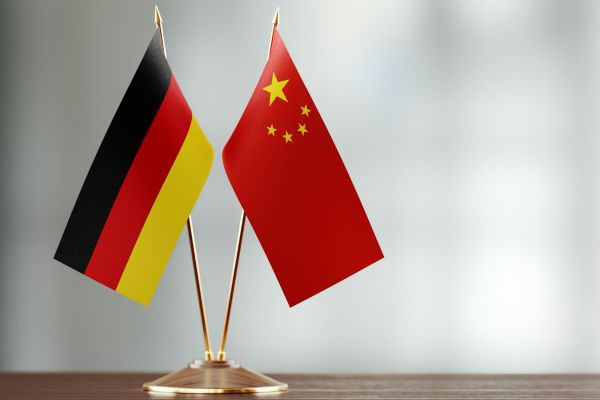
Why German issuers are turning to China’s panda bond market in 2026​

German multinationals are increasingly issuing panda bonds to access stable RMB funding, with Deutsche Bank acting as both issuer and leading underwriter

Deutsche Bank has continued to build momentum as an issuer in 2026, completing two panda bond transactions this year.


Panda bond issuance jumps 60% in H1 2026, as its rising popularity to boost yuan internationalization
 

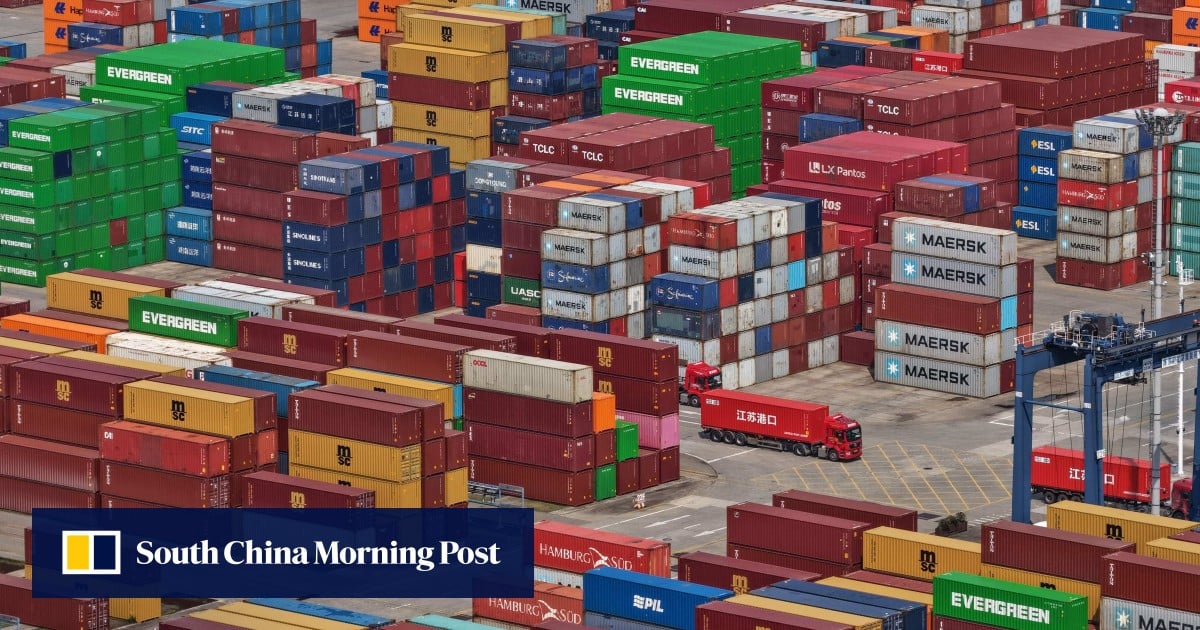
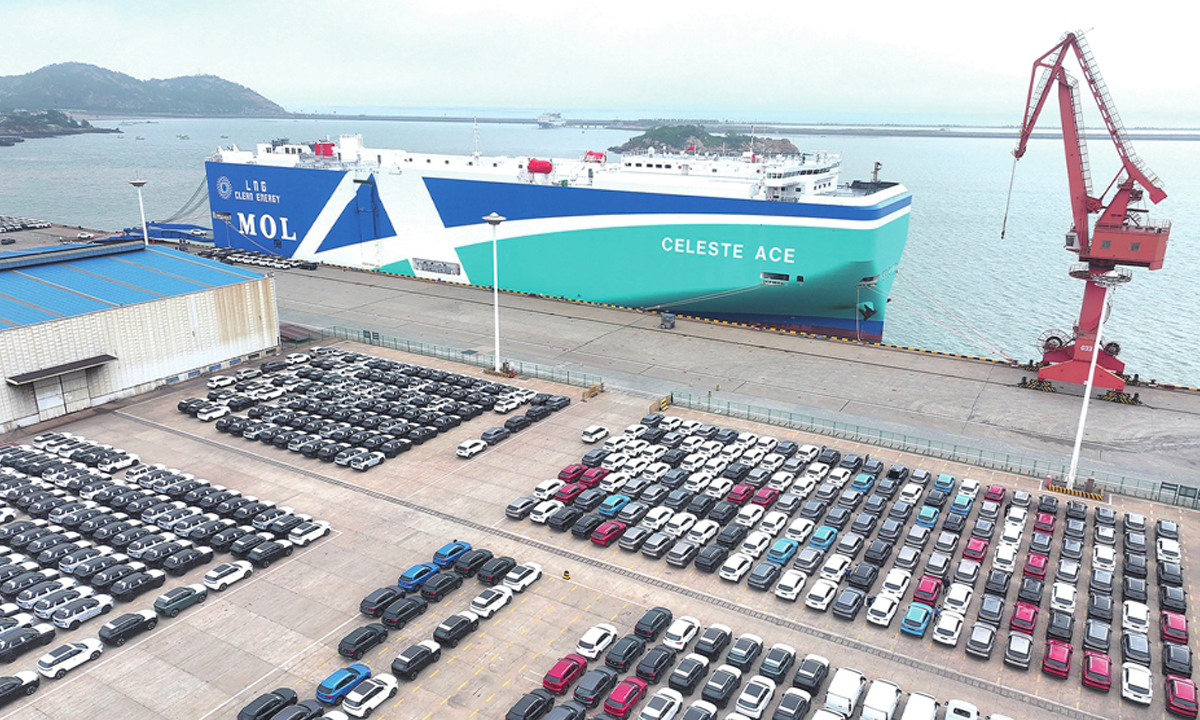
China handles one-third of global seaborne trade in 2025

chinadaily.com.cn | Updated: 2026-07-13 18:10

China handled about one-third of the world's seaborne trade in 2025, while its Chinese-owned merchant fleet remained the world's largest at 490 million deadweight tons, the Ministry of Transport said.

The figures were released as China marked its 22nd Maritime Day on Saturday, which fell on July 11, under the theme "Digital Intelligence for a Smarter Maritime Future".

China's ports handled 18.3 billion metric tons of cargo and 354 million twenty-foot equivalent units of containers last year, underscoring the shipping sector's role in supporting trade and maintaining stable industrial and supply chains.

Digital and intelligent technologies are reshaping the industry. China has put 60 automated terminals into operation, with facilities at Shanghai and Qingdao ports recording peak single-crane handling rates of more than 60 containers per hour, among the highest in the world.

The country has also made progress in digital maritime infrastructure. Nearly 20,000 kilometers of electronic navigation charts have been released nationwide, while the Yangtze River system has largely established an integrated chart network linking trunk waterways with tributaries.

China has also expanded trials of intelligent vessels. Autonomous container ships, including Zhifei, have completed fully unmanned voyages.

More than 10,000 vessels have benefited from a nationwide ship inspection recognition system, allowing operators to apply for inspections and obtain certificates locally, saving more than 150 million yuan ($22.13 million) in costs.

To mark the day, the Ministry of Transport organized a series of events in Beijing and other parts of the country, including policy releases, technology showcases, maritime forums, skills competitions and public education programs.

Regional activities also highlighted advances in smart shipping, maritime rescue and digital services. Maritime museums and passenger shipping operators launched exhibitions and themed voyages to raise public awareness of maritime culture and ocean development


Users who are viewing this thread

Pakistan Defence Latest

Latest Posts

Back
Top