Chinese Economy: General News, Updates and Discussions

China’s overall exports rise — even as shipments to US plunge 33%

By Taylor Herzlich
Published Sep. 8, 2025, 2:16 p.m. ET

China’s exports to the US plunged a whopping 33% in August – but it still managed to eke out a rise in overall exports as it pivoted to European Union nations and other trading partners.

Overall exports rose 4.4% as China switched to new markets amid President Trump’s crackdown on packages attempting to avoid tariffs.

While the slowest growth since February, it showed China’s ability to capitalize on new markets instead of eating the United States’ 55% tariff on Chinese goods – which Trump has threatened to hike as high as 200%.

Cargo ship at Qingdao Port, China.
A cargo ship loads and unloads packages at a port in Qingdao City.Costfoto/NurPhoto/Shutterstock

“Chinese exporters have been pushing for higher market share in other countries due to weak domestic demand in China,” Zhiwei Zhang, president and chief economist at Pinpoint Asset Management, said in a note.

“This ‘going abroad’ initiative likely contributed to the resilience of Chinese exports so far this year.”

The nation’s shipments to the EU, the Association of Southeast Asian Nations and Africa surged 10.4%, 22.5% and nearly 26% in August, respectively.

So far this year through August, China’s exports to the US plunged 15.5% from the same period last year. Imports dropped 11%.

Over that same period, its exports to the EU, ASEAN, Africa and Latin America soared 7.7%, 14.6%, 24.6% and nearly 6%, respectively.

The US still remains China’s largest trading partner by far, however, taking in $283 billion worth of Chinese goods this year as of August.

China’s exports to the entire 27-nation EU bloc, meanwhile, reached $541 billion over the same period.
 

China’s Exports to Africa Are Soaring as Trade to U.S. Plunges

Already this year, China’s trade surplus with Africa is nearly as big as all of 2024, a sign of how President Trump’s tariffs are reshaping the flow of goods.

Sept. 8, 2025

China has racked up a $60 billion trade surplus with Africa so far in 2025, nearly surpassing last year’s total, as Chinese companies redirect trade to the region while President Trump’s tariffs crimp the flow of goods into the United States.

Through August, China exported $141 billion worth of goods and services to Africa, while importing $81 billion, according to data released by the Chinese government on Monday. The widening trade imbalance with Africa stems from surging exports of Chinese-made batteries, solar panels, electric vehicles and industrial equipment.

The swell in exports to Africa, along with record volumes of goods sold to Southeast Asia and Latin America, underscores the resilience of Chinese manufacturers in finding new markets for the products their factories continue to churn out in enormous quantities.

China has long been the biggest trading partner for the region. But the flow of Chinese-made goods has never been more important as the trade war with the United States rages on and the growth of China’s domestic economy slows. In August, China’s exports to the United States plunged 33 percent while those to Africa grew 26 percent.

The boom in trade to Africa is apparent on the streets of Kampala, Uganda’s capital city.

In a bustling neighborhood full of electronics shops, most of the solar panels crowding the interior of nearly every storefront had one thing in common. They were made in China.

One shop owner, Mwiine Joseph, said Chinese solar panels had edged out rival offerings from Europe and India over the last decade. He estimated that nearly 99 percent of the solar brands on offer were made in China. At the end of the day, the products from China could not be beaten on price.

“I only look for cheap solar to sell if I am to compete with others in the market,” said Mr. Mwiine, 38. “This is what the Chinese are giving us.”

It was not just the solar panels. Nearly everything in the small and crowded electronics shop, from lightbulbs to generators, was also made in China.

For more than a decade, China has invested heavily in building infrastructure throughout the continent as part of its Belt and Road Initiative. The projects have deepened Beijing’s influence across Africa, creating business opportunities for Chinese companies and providing access to valuable raw materials.

This year, the Trump administration has gutted foreign aid to Africa, leaving a host of health and development initiatives in limbo. It also targeted many African countries with tariffs, including a 30 percent duty on goods from South Africa.

Biz-China-Exports-03-wzbj-articleLarge.jpg

A meeting between Kenya and China on Belt and Road cooperation in Beijing last year.Credit...Pool photo by Wu Hao

Mr. Trump initially threatened a 50 percent tariff on imports from Lesotho, forcing the textile-dependent country to declare a national state of disaster. The rate was reduced to 15 percent, which is still expected to hurt Lesotho. It was among nearly two dozen African countries that had sent certain products to the United States without any import taxes under a law passed by Congress in 2000.

As the United States pulls back from Africa, China is presenting itself as an economic counterbalance. In June, Beijing said it would waive nearly all tariffs for 53 African countries. China was sending a message: It was committed to nurturing a fruitful, mutually beneficial relationship with Africa.

Xinhua, China’s main state-run news agency, claimed in an editorial in January that China had created more than one million jobs in Africa in the last three years, while helping the region build roads, railways, bridges and ports over the previous quarter-century.

What Beijing portrays as a marriage of convenience is most apparent in the solar energy sector. Although China dominates all aspects of the industry, Chinese solar companies are struggling to survive, plagued by cutthroat competition and overproduction that has driven down prices and eroded profitability. However, plummeting prices have spurred a solar energy boom in Africa, where there is a desperate need for energy.

As a result, solar is “taking off” in Africa, according to Ember, an energy tracking group. Solar panel imports from China rose 60 percent in the last 12 months, and 20 African countries imported a record amount over that period, Ember said.

In Uganda, many Chinese solar manufacturers have established distribution offices in Kampala, allowing retailers to obtain products quickly and avoid the hassle of importing them from China.

Walter Cuccu, managing director of W. Water Works, a water and solar energy installation company, said Chinese solar companies were prevalent in Uganda and were setting up branches across the continent. He said more than eight Chinese companies had distribution centers in the city.

He said the companies were competing aggressively with one another, driving down prices. He estimated that solar panel prices had fallen 40 percent over the last 12 months.

Mr. Cuccu said European competitors were not investing in the sector in Africa like the Chinese firms.

“They will discover when it’s too late that the Chinese have already taken over,” he said.
Image

It’s not just clean energy. The surge in Chinese exports to meet Africa’s industrial needs is staggering. In the first five months of the year, steel shipments to Africa rose nearly 30 percent. Deliveries for Chinese agriculture, construction and shipbuilding machinery all rose more than 40 percent. In addition, electric motors and generator exports rose more than 50 percent, according to China’s most recent customs data.

For consumer products, the gains are equally eye-opening. Chinese exports of automobiles rose 67 percent in the first five months of 2025, including a doubling of shipments in May alone. China already dominates other key sectors: Four of Africa’s five biggest smartphone brands are Chinese, with Huawei and Xiaomi tallying the biggest market share gains this year.

For years, African leaders have expressed concern about what they perceive as a lopsided relationship with Beijing, with China devouring Africa’s natural resources while flooding the market with its manufactured goods.

The deluge of Chinese exports puts African countries in a hard spot, threatening to undermine their efforts to develop high-value industries of their own. Yet policymakers feel they must stay in China’s favor, said David Omojomolo, Africa economist for Capital Economics.

“China is really the only game in town,” he said.

 
Chinese Exports to U.S. Plunge 33 Percent Y-o-Y in August
by Katharina Buchholz,
Sep 8, 2025

Chinese exports to the U.S. dropped 33 percent year-over-year in August, the country's customs administration said Monday. The decrease is the steepest in years together with a 34-percent drop in May after the effects of the Trump administration's tariffs first showed their major impact on the trade between the two countries. At the same time, China has been selling more to the European Union and ASEAN countries, which include Indonesia, Malaysia, Thailand and Vietnam, as overall Chinese exports rose 4.4 percent year-over-year.

While the export trade from China to the U.S had some seasonal ups and downs throughout the year, this balance has now been thrown into disarray. The front-loading of Chinese imports into the U.S. in March and the crash of trade following April's introduction of tariffs is clearly visible. There was some recovery in June as the pause on additional tariffs higher than 30 percent on Chinese imports to the U.S. persists, but July and August showed more of a downwards trend once again.

Despite the struggle, the U.S. remains China's biggest export market. The nation's exporters have meanwhile pushed to grow in other markets, from the EU, to other places in Asia to Africa. China's slow domestic demand - an issue for years now - is further pushing Chinese manufacturers into overseas markets.


Infographic: Chinese Exports to U.S. Plunge 33 Percent Y-o-Y in August | Statista


Chinese Exports To ASEAN and EU Rise as U.S. Trade Falls

by Katharina Buchholz,
Sep 8, 2025

China is balancing out its trade losses with the U.S. by selling more to the EU and ASEAN countries. While the three entities previously had been comparable partners, ASEAN imports are now charging ahead, while those to the EU are up and those bound for the U.S. irregular and sinking.

The push of Chinese producers to sell more to overseas markets is an ongoing story and started even before the latest trade war between China and the U.S. as China has been struggling with low demand at home as its once booming economy has been showing signs of slowing down. The need to sell overseas became stronger with the new tariff regime though, and China has been known to push more merchandise to ASEAN nations, India and Africa as well as the European Union, another major trade partner of China, in 2025.

According to the Chinese Customs Administration, Chinese exports to the EU topped $51 billion in August, while those to ASEAN nations even topped $57 billion - a major increase for both partners. U.S. exports meanwhile fell to just $31.6 billion, a 33 percent decrease year-over-year. Nevertheless, the U.S. remains the biggest single-country export destination for Chinese goods.


Infographic: Chinese Exports To ASEAN and EU Rise as U.S. Trade Falls | Statista


Thanks to Trump's trade war on China, China's overall trade surplus goes up to new records each passing year.

8-STEPHFF-ETATS-UNIS-CHINE-TRUMP-ACIER-IMPOTS-UNION-EUROPEENNE-HD-The-Nation-180531-e153087039...jpg
 
Last edited:
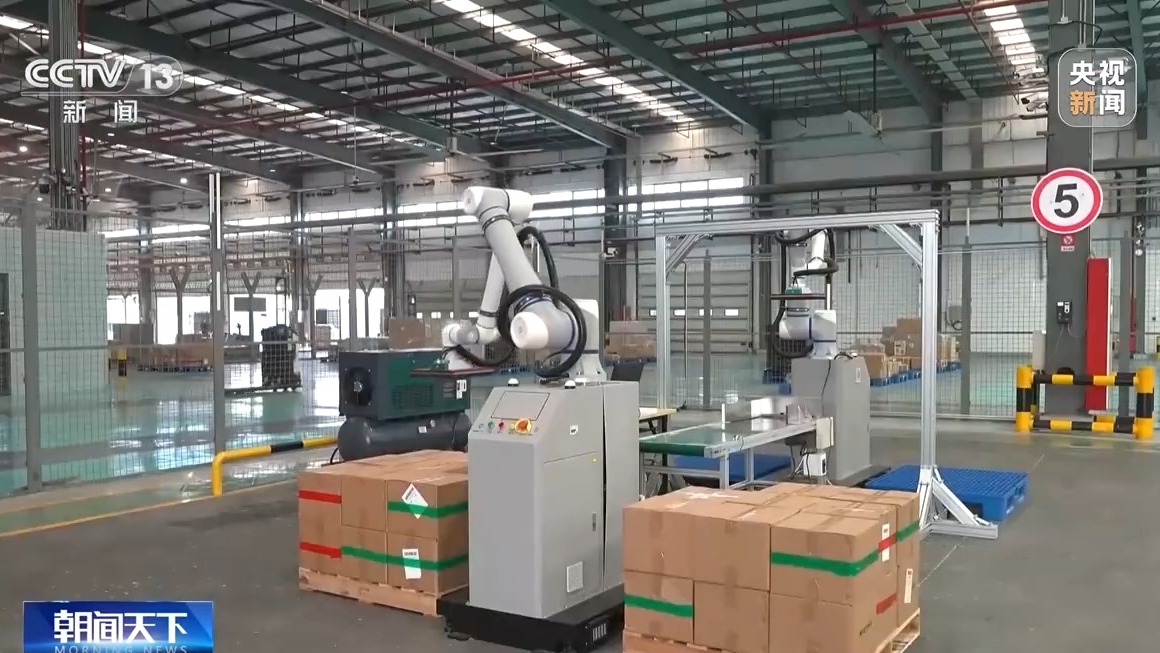
China is shifting from being ‘world’s factory’ to ‘global supply chain hub’: CFLP report

Sep 09, 2025 09:14 AM
Photo: CCTV news

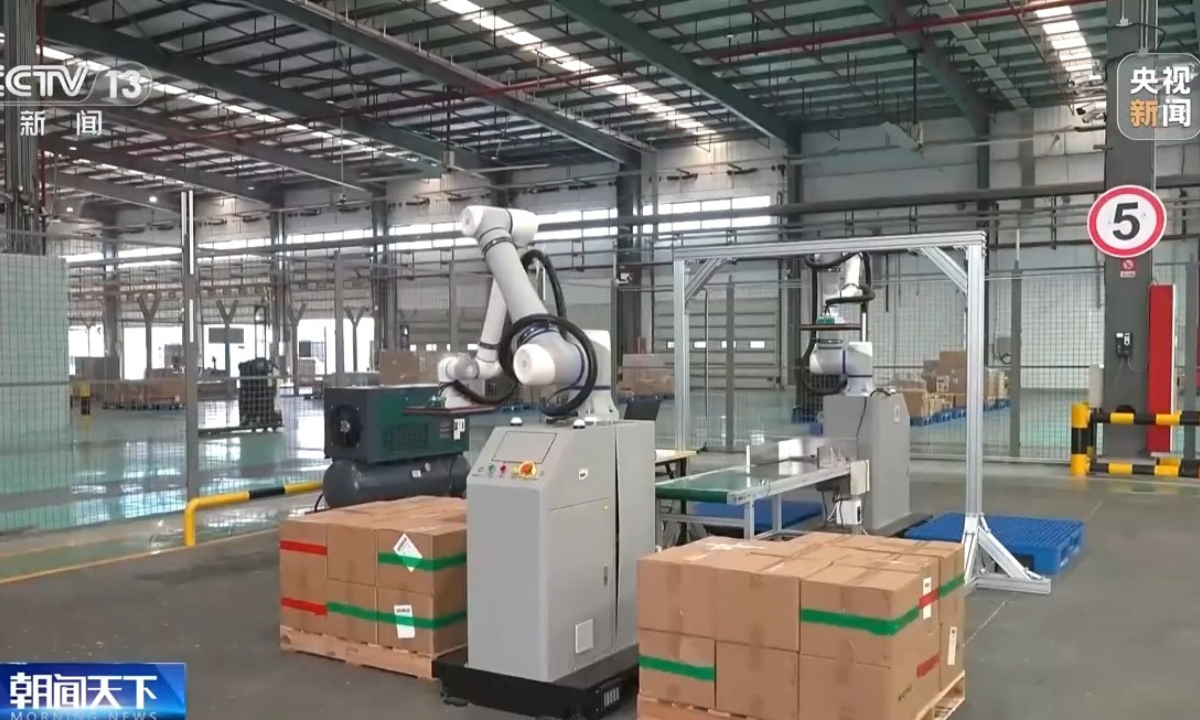
Photo: CCTV news

An industry research report said that China is shifting from being the “world’s factory” to becoming a “global supply chain hub,” as supply chains worldwide restructure amid changes in the economic landscape, rising trade protectionism in the world, and intensifying technological transformation, state broadcaster CCTV News reported on Tuesday.

The China Federation of Logistics & Purchasing (CFLP) released a report of China supply chain development from 2024 to 2025 on Tuesday. It notes that, in recent years, China has made significant strides in modern logistics and advanced manufacturing.

A total of 80 national-level advanced manufacturing clusters are now scattered across China, including high-end equipment making and new energy production chain, with high-end equipment clusters accounting for 36.25 percent, the CFLP report said.

Meanwhile, China’s supply chain digital transformation is accelerating, with emerging technologies rapidly empowering the transitioning. CFLP data show that the overall penetration rate of artificial intelligence in logistics supply chains has surpassed 37 percent, with AI penetration rate highest in a wide range of transport-optimization scenarios at 78.18 percent.

Peng Xinliang, secretary-general of the CFLP Public Procurement Branch, said “AI+Supply Chain” has become a major industrial transformation trend. AI is becoming deeply integrated into many supply chain scenarios, including new products R&D, logistics, procurement management, and supplier management, with many logistics enterprises investing heavily in AI uses, he said.

The CFLP report also noted that Chinese enterprises are currently moving from “product exports” and “capacity exports” toward a new stage of “industrial and supply chain exports,” with different manufacturing clusters cooperating starting to build overseas ecosystems.

Photo: CCTV news

Photo: CCTV news

In 2024, the cross-border e-commerce imports and exports reached 2.63 trillion yuan ($368.87 billion), up 10.8 percent year-on-year. Chinese companies have built more than 2,500 overseas warehouses with a combined floor space of more than 30 million square meters, according to the report.


China’s exports keep rising despite Trump’s tariffs

China’s shipments up 4% in August as trade with Global South makes up for protectionist losses in US
By NIGEL GREEN
SEPTEMBER 9, 2025

China-Economy-Exports.jpg
China's exports are overcoming Trump's threats. Image: X Screengrab

The real but little recognized story this week is not that China’s exports slowed – a notion which has been generating doom-laden headlines around the world – but rather that they are still growing.

Shipments abroad rose 4.4% year on year in August, the weakest pace in half a year, but still an expansion at a time when tariffs, political tensions and slowing global demand should be pulling them down.

Plenty of countries could only dream of 4% export growth in this environment. And China is achieving it under the weight of an unpredictable trade war with the United States.

That resilience is striking. Exports to the US collapsed 33% in August, the predictable consequence of Washington’s tariff hikes. Yet China’s overall trade kept expanding because exporters are selling more to the rest of the world.

Shipments to Southeast Asia surged more than 22%, while exports to the EU grew 10%. China’s trade surplus widened to over US$102 billion last month, higher than July’s $98 billion.

The pattern is unmistakable: despite losing ground in the US, China is expanding elsewhere, including in the Global South.

This isn’t simply an accident of arithmetic. Since tariffs exploded in April, exporters have been forced to reconfigure their supply chains and open new markets.

Beijing’s reliance on trade has been heavy for years, but the latest data shows how quickly the country can redirect flows when one market shuts its doors. It is doing what many thought impossible – that’s to say, growing exports while absorbing unprecedented tariff levels in its traditionally richest markets.

There are explanations beyond ingenuity, too. Last year’s strong base makes the slowdown look starker than it is.

Even so, the broader picture is more important than many headlines miss. China is using this moment to deepen ties with emerging markets, particularly in Asia.

ASEAN has already overtaken both the EU and US as China’s largest trading partner, and the August numbers show the relationship is deepening. From electronics and machinery to intermediate goods, Southeast Asia is now the key growth outlet for Chinese exports.

To be sure, some of this is rerouting, as companies redirect goods through Vietnam or Malaysia and then onto other destinations to skirt tariffs.

Yet much of it is meeting genuine underlying demand. Regional economies are integrating with China at a pace that tariffs in Washington cannot slow.

For Beijing, this shift is both economic and strategic, giving it greater influence across Asia and reducing its dependence on the US consumer market.

Europe, too, remains a destination of strength. Chinese electric vehicles and consumer electronics continue to win market share there. Europe’s policymakers may complain and threaten countermeasures, but buyers are responding to price and quality.

Chinese automakers, in particular, are rapidly reshaping the global EV industry. What looks like a challenge in Brussels is for exporters in Shanghai or Shenzhen an opportunity. For businesses and investors outside China, three signals stand out.

First, China’s export machine is far more adaptable than many foresaw. Predictions of collapse have missed the mark again as supply chains are being bent, not broken.

Second, the trade war is not destroying trade; it is changing it. Global commerce is fragmenting into multiple hubs, and Southeast Asia is one clear beneficiary. Companies that still think in terms of one-directional supply chains are behind the curve.

Third, tariffs are failing as a weapon to blunt China’s export strength. They raise costs, sow uncertainty and shift trade patterns, but they are not knocking Beijing off its trade-led growth path. Export growth of 4% may not sound spectacular, but under the current conditions, it is a demonstration of strength and resilience.

That said, the path ahead is hardly smooth. The Trump administration is moving to tighten restrictions on rerouted goods. European regulators are growing more aggressive, particularly on EVs.

Inside China, weak domestic demand and a sluggish property sector mean exports must do even more of the heavy lifting to keep the broad economy aloft.

Still, the August export numbers show that China’s producers are delivering growth while facing heavy and ever-rising obstacles. In an era defined by tariffs, protectionism and trade disputes, the fact that China’s shipments are rising at all is nothing less than remarkable.


NEW DELHI, Sept 10 (Reuters) - India is working to obtain rare-earth samples from Myanmar with the assistance of a powerful rebel group, according to four people familiar with the matter, as it seeks alternative supplies of a strategic resource tightly controlled by China.

India's Ministry of Mines asked state-owned and private firms to explore collecting and transporting samples from mines in northeastern Myanmar that are under the control of the Kachin Independence Army, three of the people said.

State-owned miner IREL and private firm Midwest Advanced Materials - which received government funding last year for the commercial manufacturing of rare-earth magnets - were among those involved in the discussions, the sources said.

New Delhi hopes to test the samples in domestic labs to ensure they contain sufficient levels of heavy rare earths that can be processed into magnets used in electronic vehicles and other advanced equipment, according to the people.

The ministry made the request - signalling a rare instance of Delhi engaging with a non-state actor - at an online meeting in July, according to two of the people. The meeting was attended by representatives from IREL, Midwest and at least one other company, one of the sources said.

The KIA has started gathering samples for India's analysis, said the fourth person, who is an official with the armed group. The rebels have also agreed to assess if bulk exports to India are possible, according to the KIA official, who like the other sources spoke on condition of anonymity to discuss sensitive matters.

Details of India's engagement with the KIA are reported by Reuters for the first time.
India's foreign and mining ministries did not respond to Reuters' questions. IREL and Midwest also did not return requests for comment.

A spokesperson for the KIA did not respond to calls and messages.

The Chipwe-Pangwa mining belt in Myanmar's Kachin state, bordering China, contains the main deposits of heavy rare earths in the war-torn Southeast Asian country.

The Chipwe-Pangwa mining belt in Myanmar's Kachin state, bordering China, contains the main deposits of heavy rare earths in the war-torn Southeast Asian country.
 

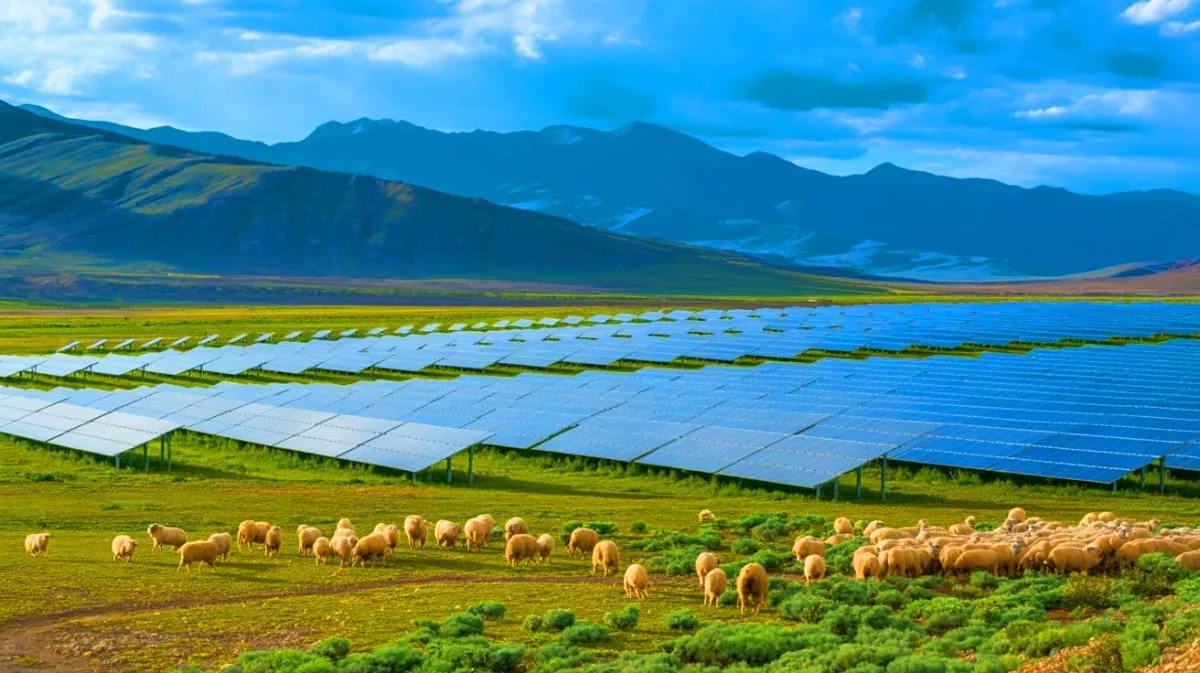
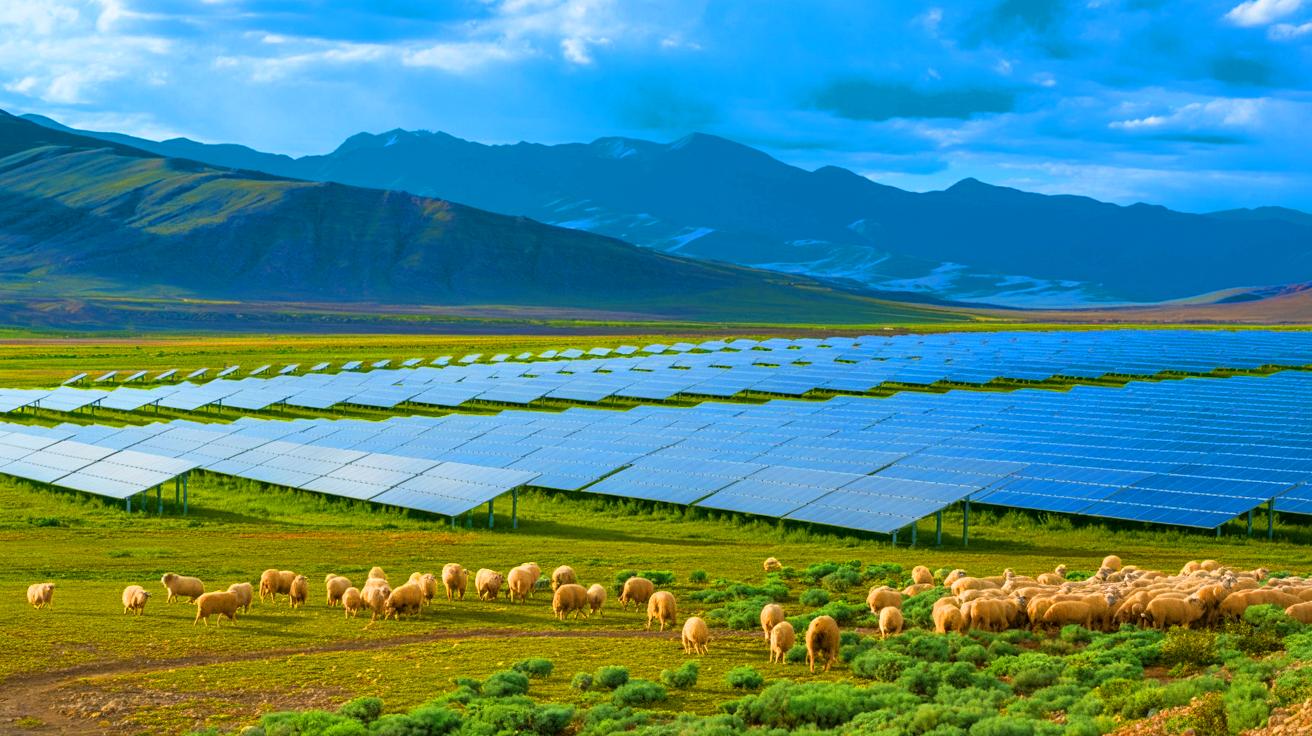
China’s 235-Square-Mile Solar Farm Creates Unexpected Ecosystem Supporting 5 Million Households and Thousands of Sheep​

In the remote stretches of northwestern China, an expansive solar farm is not only revolutionizing energy production but also transforming the local ecosystem by curbing desertification and fostering new habitats.

Gabriel Cruz09/10/2025

chinas-driest-region-transformed-7-million-solar-panels-make-it-green-but-at-what-environmental-cost-1200x673.jpg.webp

Illustration of a vast solar farm on the Tibetan Plateau transforming the arid landscape and promoting biodiversity.

IN A NUTSHELL
  • The vast solar farm in northwestern China is transforming both the landscape and the local ecosystem.
  • By reducing soil erosion and promoting plant growth, the project enhances biodiversity in the area.
  • Grazing sheep play a key role in maintaining the new grasslands and supporting the ecological balance.
  • This project exemplifies how renewable energy can simultaneously generate power and foster environmental resilience.
In the arid northwestern region of China, an ambitious solar farm is transforming both the landscape and the local ecological balance. Spanning hundreds of square miles, this vast array of photovoltaic panels not only harnesses the sun’s rays to generate electricity but also mitigates soil erosion, encourages grass growth, and attracts herds of sheep that help maintain this new ecosystem. By altering the environment in such profound ways, the solar farm is creating a ripple effect that extends beyond its immediate energy output.

Solar Energy’s Role in Desert Stabilization

In Qinghai province, a groundbreaking energy project is reshaping a landscape long defined by aridity. On 235 square miles of the Tibetan Plateau, uninterrupted rows of solar panels now constitute the world’s largest photovoltaic farm. This vast installation, set to house over seven million modules, will ultimately generate electricity for five million households. The sheer scale of this project is a testament to China’s commitment to renewable energy.

The panels act as windbreaks, curbing erosion and slowing sand encroachment. By casting shadows, they reduce soil moisture evaporation, fostering conditions conducive to the growth of grasses and small shrubs. This artificial microclimate has sparked the emergence of vegetation in a historically drought-stricken area, attracting native animal species back to the region. The interaction between solar technology and the environment here illustrates how renewable energy developments can have multifaceted impacts.

The Ecological Impact of Solar Farms

The ecological implications of the Qinghai solar farm extend far beyond energy production. By stabilizing the soil and promoting plant growth, the project enhances local biodiversity. The return of vegetation provides habitats and food sources for wildlife, which had dwindled due to long-standing desertification. In turn, these ecological changes contribute to a more balanced and resilient ecosystem.

The presence of sheep, which graze on the new grasslands, is an integral part of this ecological transformation. These animals help maintain the health of the vegetation cover, preventing overgrowth and promoting nutrient cycling. The symbiotic relationship between the solar farm and its environment underscores a broader trend in renewable energy projects that consider ecological benefits alongside their primary function of energy generation.

Challenges and Considerations in Renewable Projects

While the benefits of the Qinghai solar farm are evident, challenges remain in integrating such large-scale projects into existing landscapes. The construction and maintenance of extensive solar arrays can disrupt local ecosystems and communities if not carefully managed. Furthermore, balancing energy needs with ecological preservation requires ongoing monitoring and adaptation.

Environmental assessments and community engagement are crucial to the long-term success of renewable energy projects. By involving local stakeholders in the planning and implementation phases, developers can ensure that projects meet energy demands while respecting and enhancing the natural environment. The Qinghai solar farm serves as a model for how thoughtful planning can mitigate potential adverse effects.

The Future of Renewable Energy in Arid Regions

The success of the Qinghai solar farm highlights the potential for renewable energy projects to thrive in arid regions. As global demand for sustainable energy solutions grows, similar initiatives could be deployed in other desert areas worldwide. The combination of energy generation and ecological restoration presents a compelling case for expanding solar infrastructure in regions traditionally viewed as inhospitable.

However, the scalability of such projects will depend on technological advancements and policy support. Continued investment in research and development is essential to improve the efficiency and cost-effectiveness of solar technologies. Moreover, international collaboration can facilitate the exchange of best practices and innovations, driving the global transition toward renewable energy.

As the Qinghai solar farm continues to evolve, it poses a significant question: How can other regions harness renewable energy to simultaneously meet energy needs and foster environmental resilience? The answer may lie in the delicate balance between technology, ecology, and community involvement.


China’s export surplus suggests a shift in global trade

Sept.10 2025

5-c.jpg

Source: Discovery Alert

China’s trade surplus is projected to exceed $1.2 trillion in 2025, driven by robust export growth to markets beyond the United States, according to Bloomberg Law and Equitypandit reports.

This follows a record surplus nearing $1 trillion in 2024, underscoring China’s persistent export strength, despite underlying economic vulnerabilities, as reported by the Financial Times.

However, a sharp decline in exports to the United States has raised concerns.

Data from Reuters and the Financial Times reveals a 33% year-on-year drop in Chinese exports to the US in August 2025, reflecting a significant loss of demand from one of China’s largest trading partners.

This was further evidenced by a nearly 25% week-on-week decrease in container departures from China to the US in late August, highlighting a tangible reduction in shipping volumes.

In response, China has aggressively redirected its trade to alternative markets.

Exports to Southeast Asia surged by approximately 22-23%, while shipments to the European Union rose by 10%, with even stronger growth to Africa, according to reports from the Financial Times, Equitypandit and AP News.

Estimates from China Leadership suggest that 82% of the exports lost to the US in Q2 2025 were absorbed by markets in Asia and Europe, demonstrating China’s adaptability in redirecting trade flows.

This shift has prompted a fundamental restructuring of global shipping routes and supply chains.

Industry analysis from Container News and TRADLINX Blogs indicates that trade networks are moving away from traditional US-centric routes, creating more fragmented and complex logistics systems.

This has led to increased demand for warehouse storage, automation, regional hubs, environmentally sustainable practices, and flexible routing to accommodate these new trade patterns.

As China’s trade landscape evolves, the global logistics sector faces mounting pressure to adapt to these structural changes, with implications for supply chain efficiency and economic resilience worldwide.

 
To view this content we will need your consent to set third party cookies.
For more detailed information, see our cookies page.
 

Updated - September 10, 2025 at 08:37 PM New Delhi

China is yet to resume supplies of rare earth elements and magnets to India, crucial for products such as EVs, cell phones, speakers and head phones.

“None of our importers of rare earth magnets, including EV manufacturers, has received their supplies from China. Nor have we heard of any confirmations from Beijing on our applications getting expedited,” a source tracking the matter told businessline.
 

2025/09/10 14:39 CST

Apple announced today (10th) the launch of 4 models, naming iPhone 17, iPhone Air, iPhone 17 Pro and iPhone 17 Pro Max. A few days before the launch event, a Chinese media reporter visited the Zhengzhou Foxconn to observe the production status of the iPhone 17.

Currently, Foxconn's Zhengzhou plant is in the ramp-up phase for mass production of the iPhone 17 series. As production scale gradually expands, the demand for manpower in the plant continued to rise.

It is the largest factory in the Zhengzhou Airport Economy Zone (ZAEZ), and also Apple's largest assembly plant globally, where most high-end iPhone models are assembled. From mid-August to November each year, this plant enters its busiest period, with production lines nearly at full capacity.

iPhone 17 Blistering Pre-Order Demand In China Crashed Apple’s Official Online Store, With Various Models Currently Out Of Stock​


iPhone 17 breaks records with unprecedented pre-order volume in China​


Users who are viewing this thread

Latest Posts

Back
Top