Chinese Economy: General News, Updates and Discussions

China Reaches Global Majority on Amazon

September 25, 2025

Chinese sellers now represent 50.03% of Amazon’s global active seller base, marking the first time they’ve crossed the 50% threshold across all of Amazon’s international marketplaces. But while Chinese sellers have won the numbers game, American sellers maintain an edge in revenue generation.

The milestone reflects a decade-long trend that started with Chinese sellers accounting for just 7.1% of new registrations on Amazon.com in 2015, compared to 70.6% from the United States. By 2024, Marketplace Pulse data indicates that these figures had almost completely reversed, with Chinese sellers comprising 62.3% of new registrations, while American sellers had fallen to 26.8%.
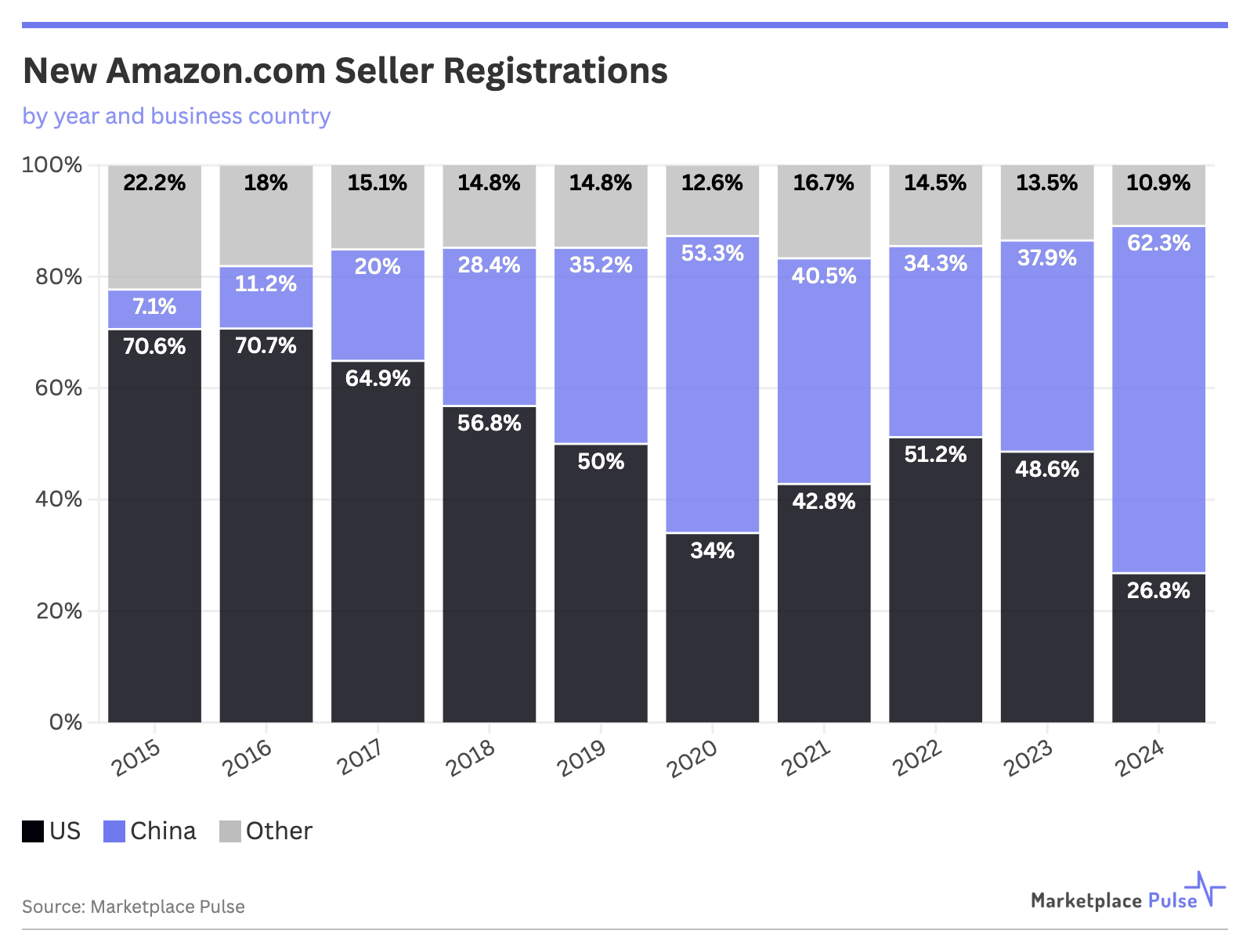
New Amazon.com Seller Registrations


This global majority extends a pattern that began in the United States, where Chinese sellers surpassed 50% market share earlier this year. Now that dominance spans Amazon’s entire international footprint, with Chinese sellers holding the largest share in every major marketplace except Japan.
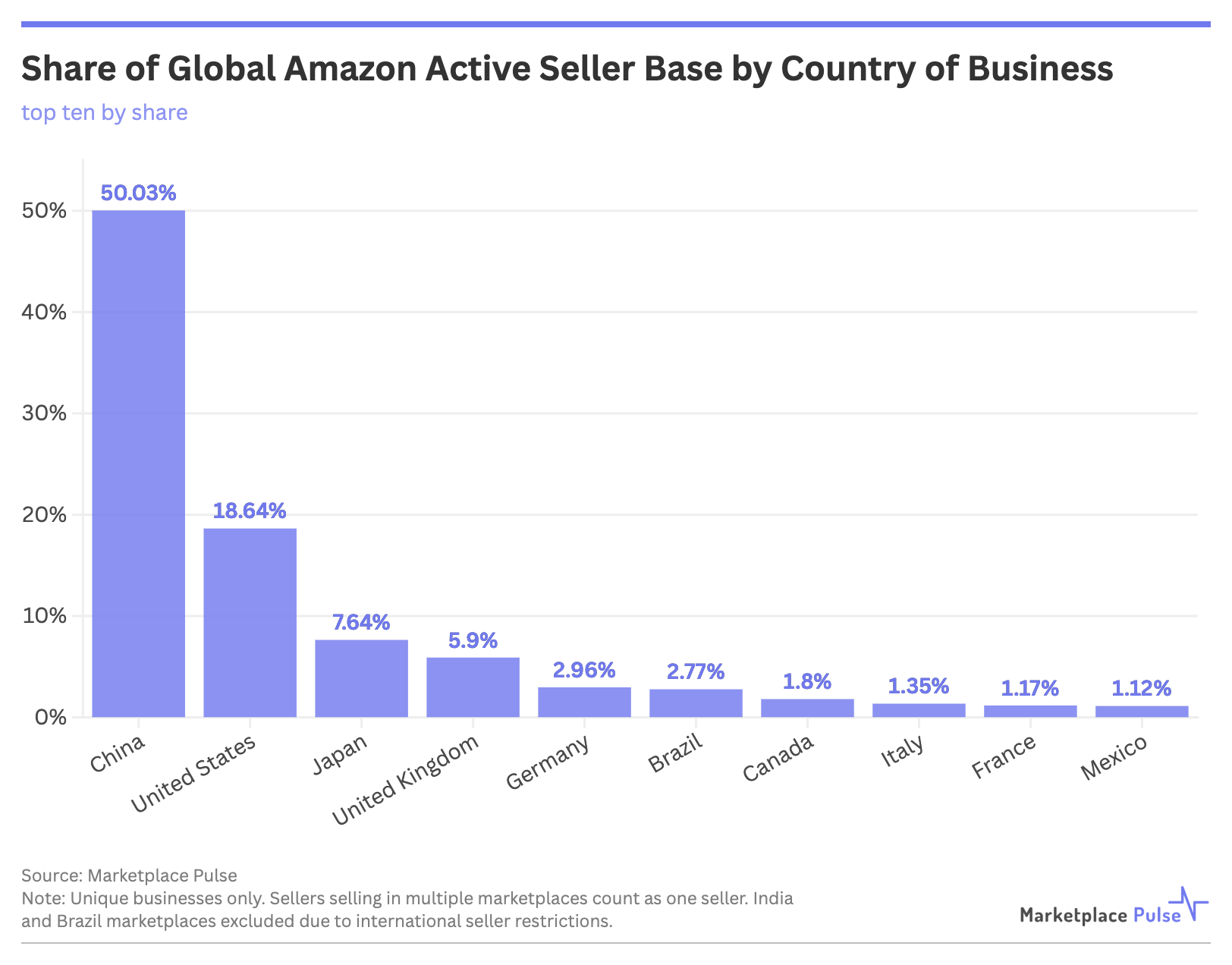
Share of Global Amazon Active Sellers by Country of Business


The growth persists despite mounting trade tensions, driven partly by how AI tooling has leveled the playing field for international sellers. Previously, Chinese sellers’ biggest weakness was creating listings and imagery that resonated with local buyers. Now, AI handles translation, optimization, and even cultural adaptation at scale. Amazon’s own recently improved AI capabilities, including Creator Studio for professional content creation, have removed barriers that once favored native speakers.

This technological democratization complements traditional Chinese advantages, including proximity to manufacturing, direct relationships with manufacturers that eliminate middlemen, and government export subsidies. The result is a seller base that can offer lower prices while maintaining its margins – a combination that has proven irresistible to price-conscious consumers globally.

As Chinese sellers achieve global majority status on the world’s largest marketplace, they’re reshaping international e-commerce norms around pricing, fulfillment, and customer expectations.

For American sellers, like other local sellers, the path forward requires acknowledging that the marketplace they once dominated has undergone a fundamental change. Yet while Chinese sellers now outnumber American ones, the economics tell a more nuanced story.

According to Marketplace Pulse estimates, US sellers account for approximately $157 billion of Amazon.com’s $305 billion in third-party GMV, compared to $132 billion for Chinese sellers. The average US seller generates $884,958 in revenue, more than double that of their Chinese counterparts at $393,557. Globally, the pattern holds – Marketplace Pulse estimates Chinese sellers capture just 39% of third-party revenue worldwide, despite a majority seller share.

While the Chinese seller share continues to increase, revenue generation retains a more balanced outlook. For that balance to continue, local sellers must continue to adapt by leveraging the same tools that have empowered Chinese sellers, improving operational efficiency to compete on cost, and finding differentiation beyond just geography that justifies premium positioning.
 

China robot army grows by 300,000 in a year, outpaces rest of world combined​

The East-Asian nation installed 300,000 robots in factories last year, becoming the largest early adopter of the technology.​

Updated: Sep 26, 2025 10:50 AM EST

image

Robotic hands working on a production line
Getty Images

China has overtaken the U.S. and the world in making and installing factory robots, according to a report released by the International Federation of Robotics on Thursday.

The East-Asian nation cemented its position as the world’s manufacturing powerhouse after installing nearly 300,000 new robots, taking its total tally to over 2 million robots working in factories.

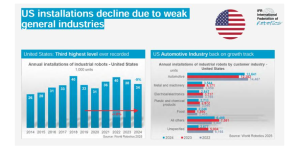
American factories installed only 34,000 robots, signaling a gigantic gap in embracing the technology.

A decade-long vision​

In 2015, Beijing unveiled the Made in China 2025 campaign with an agenda to dominate the robotics industry by reducing its reliance on imported goods.

Government policy directives and public capital played a crucial role in helping Chinese companies grow their dominance in robotics and other industries like semiconductors and artificial intelligence.

Lian Jye Su, a chief analyst at tech research firm Omdia, credited the Chinese government’s policies for providing the required support to fulfil its manufacturing ambitions.

“This is not a coincidence. It has taken many years of investment by Chinese companies,” she said, according to the report.

Industries got almost unlimited loans from state banks at very low interest rates. They also received government money, help buying foreign companies, and other support.

In 2021, the government also introduced a detailed plan to expand the use of robots as a part of its decade-long initiative.

China versus the world​

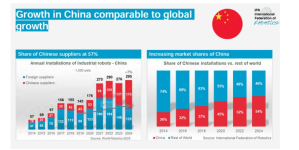
China’s focus on automation is a key part of this initiative. The report also stated that Chinese factories have installed over 150,000 robots yearly since 2017, a testament to their decade-long initiative.

Chinese factories now make up a third of all manufactured goods worldwide, more than the United States, Germany, Japan, South Korea, and Britain combined.

The number of robotic installations fell last year across the next four robot-using companies – Japan, the United States, South Korea, and Germany, compared to 2023.

Until 2024, China installed more imported robots in its factories than home-made machines. Last year, however, three-fifths of the total robots installed were manufactured in the country.

Overall, China has five times as many robots functioning in factories as the United States.

The humanoid scenario​

The federation data does not count the humanoid robots in its calculations. However, due to government support, there’s a significant rise in humanoid manufacturing in China. The country is already building an ecosystem to make specialized components for robots, such as motorized joints.

China is also locking horns with the U.S. and other nations over creating better humanoids. Unitree Robotics, based in Hangzhou, is seen as a leader in creating cheaper humanoids for the country at scale.

Unitree’s basic humanoids are priced at $6,000, and the company plans to go public by the end of 2025. They are made at a fraction of the price of Boston Dynamics’ robots, a key player in the American robotics industry.

Manpower and AI​

China has a large pool of skilled electricians and computer programmers who can install robots. Still, it has faced some shortages of installation specialists, driving salaries up to nearly $60,000 a year.

The country also has a strong AI industry focused on monitoring and improving every aspect of factory equipment performance.

Together, these strengths are helping China accelerate its automation push.


China overtakes UK in 2025 global soft power index

By George Allison
- September 27, 2025

China has overtaken the United Kingdom in the annual Brand Finance Global Soft Power Index, ranking second only to the United States, according to the company.​


The 2025 Index is based on responses from more than 170,000 people across over 100 countries, covering all 193 UN member states. The US retained the top position despite reputational decline during a divisive presidential campaign, while China moved ahead of the UK for the first time since the survey began in 2019. Japan and Germany followed in fourth and fifth place.

Soft Power is defined by Brand Finance as the ability of a nation to influence preferences and behaviours internationally through attraction or persuasion rather than coercion. Countries are scored out of 100 across 55 metrics.

The report noted that Middle Eastern nations have generally lost momentum, with the exception of the UAE, which held 10th place. El Salvador rose 35 places, making it the fastest climber. Israel, meanwhile, experienced a reputational decline linked to its hard power activities.

Konrad Jagodzinski, Place Branding Director at Brand Finance, said: “While experts previously posited that all nation brands might experience a gradual score inflation over time, the data now suggests a zero-sum game, with winners and losers. The global public’s capacity to develop familiarity with and admiration for nation brands seems finite, favouring prominent countries and those making deliberate efforts to stand out.”

David Haigh, Chairman of Brand Finance, linked China’s performance to deliberate state-backed efforts. “China has invested heavily in enhancing its Soft Power, and now we’re seeing the result as it ranks higher than the United Kingdom for the first time in the six years Brand Finance has released the Global Soft Power Index. The 2025 rankings reflect China’s sustained efforts to enhance its economic attractiveness, showcase its culture, and boost its reputation as a safe and well-governed nation. The UK needs to keep up and the establishment of the UK Soft Power Council is a step in the right direction.”
 

China robot army grows by 300,000 in a year, outpaces rest of world combined​

The East-Asian nation installed 300,000 robots in factories last year, becoming the largest early adopter of the technology.​

Updated: Sep 26, 2025 10:50 AM EST

Are there any pics of robotic defense manufacturing? May be building planes or missiles through Robots?
 
What soft power does the UK even have?

These lists are bullshit.

Japan and Korea should be above the Uk.
 

World’s most powerful flying wind turbine launched in western China​

Gigantic gliding ‘power bank’ could help communities cut off from the grid during blackouts and cement China’s leading role in green energy

1759030242119.jpeg

Gigantic gliding ‘power bank’ could help communities cut off from the grid during blackouts and cement China’s leading role in green energy

China has successfully flown the world’s largest and most powerful airborne wind turbine, a milestone that could bring cheaper, more reliable green energy and strengthen the country’s leading role in the global clean energy transition.

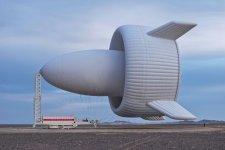
Between September 19 and 21, the airship-like S1500 – about the size of a basketball court and as tall as a 13-storey building – became the first turbine of its kind to generate one megawatt of power during a test flight at a desert site in China’s western Xinjiang region.

The trial involved assembly in desert conditions, pressure checks, and launch and retrieval in strong winds both day and night. “All planned goals were achieved,” according to Beijing-based start-up Sawes Energy Technology, one of the project’s main developers.

Dun Tianrui, the company’s CEO and chief designer, called it “a critical step towards putting the product into real-world use”. He said that further tests would be conducted in different regions and environments across the country, with mass production scehduled for 2026 and the first units expected to connect to the grid the same year.

“Our goal is to make airborne wind power a key part of affordable clean energy and contribute a Chinese solution to the world’s energy transition,” Dun said.

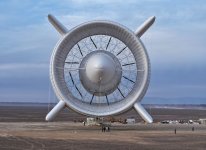
Unlike wind turbines that jut up from the ground like giant pinwheels, airborne wind turbines float on helium-filled shells that lift generators into the sky, delivering electricity back down through heavy-duty cables.
1759030081540.jpeg
The S1500 is expected to bring cheaper, more reliable green energy and strengthen China’s leading role in the global clean energy transition. Photo: Handout

By tapping into stronger, steadier winds up to thousands of metres above the surface, they avoid the need for massive steel towers, cutting material use by about 40 per cent and lowering electricity costs by 30 per cent, according to the company.

They can also be relocated quickly, making them suitable for remote or harsh environments such as deserts, islands, mining sites and disaster zones. During emergencies, the system can be deployed within hours to restore power, serving as a gigantic flying “power bank” for communities cut off from the grid.

The concept of airborne wind power has been explored since the 1970s, with trials in the United States and Europe. Today, more than 50 companies are developing such systems, and the previous record – about 300 metres (1,000 feet) high and 30 kilowatts of output – was long held by Altaeros Energies, a company spun out of MIT.

According to China’s state-run Economic Daily, the inspiration for Sawes Energy began in 2018 with a phone call between Dun and his former high school classmate, Weng Hanke.

At the time, Weng was studying atmospheric physics and remote sensing at the University of Science and Technology of China. He noticed that winds in the upper atmosphere were stronger, more stable and far more abundant than those near the ground, making them a potential source of cheaper and more reliable clean energy.

The venture began with just seven people experimenting with different approaches to get power systems off the ground. They chose a helium-filled airborne platform and refined the design with input from aerostat experts, though they were unsure it could ever be commercialised.

The turning point came in 2023, when China made high-altitude wind power a priority and the team secured tens of millions of yuan in investment.

In collaboration with researchers from Tsinghua University and the Chinese Academy of Sciences, the team overcame key challenges such as stabilising the airborne platform, developing lightweight generators, and sending high-voltage power over 1,000 metres.

In October 2024, the company’s S500 system reached 500 metres and generated 50kW, smashing MIT’s records. By January, its larger S1000 had climbed to 1,000 metres and produced more than 100kW, setting a new global benchmark for airborne wind power.

Despite the breakthroughs, experts cautioned that the technology still faced hurdles before it could be deployed at scale, according to Beijing Daily. Further research is needed to ensure safe operation in extreme weather such as typhoons and thunderstorms, and to drive costs down enough to compete with conventional power sources like coal.

The team is now working on the next generation of airborne systems, aiming to cut costs below 0.1 yuan (US$0.01) per kilowatt-hour – a target that would require advances in materials science and further optimisation of manufacturing processes, the report said.
 
Last edited:

There Are More Robots Working in China Than the Rest of the World Combined​

China has embarked on a campaign to use more robots in its factories, transforming its manufacturing industries and becoming the dominant maker.

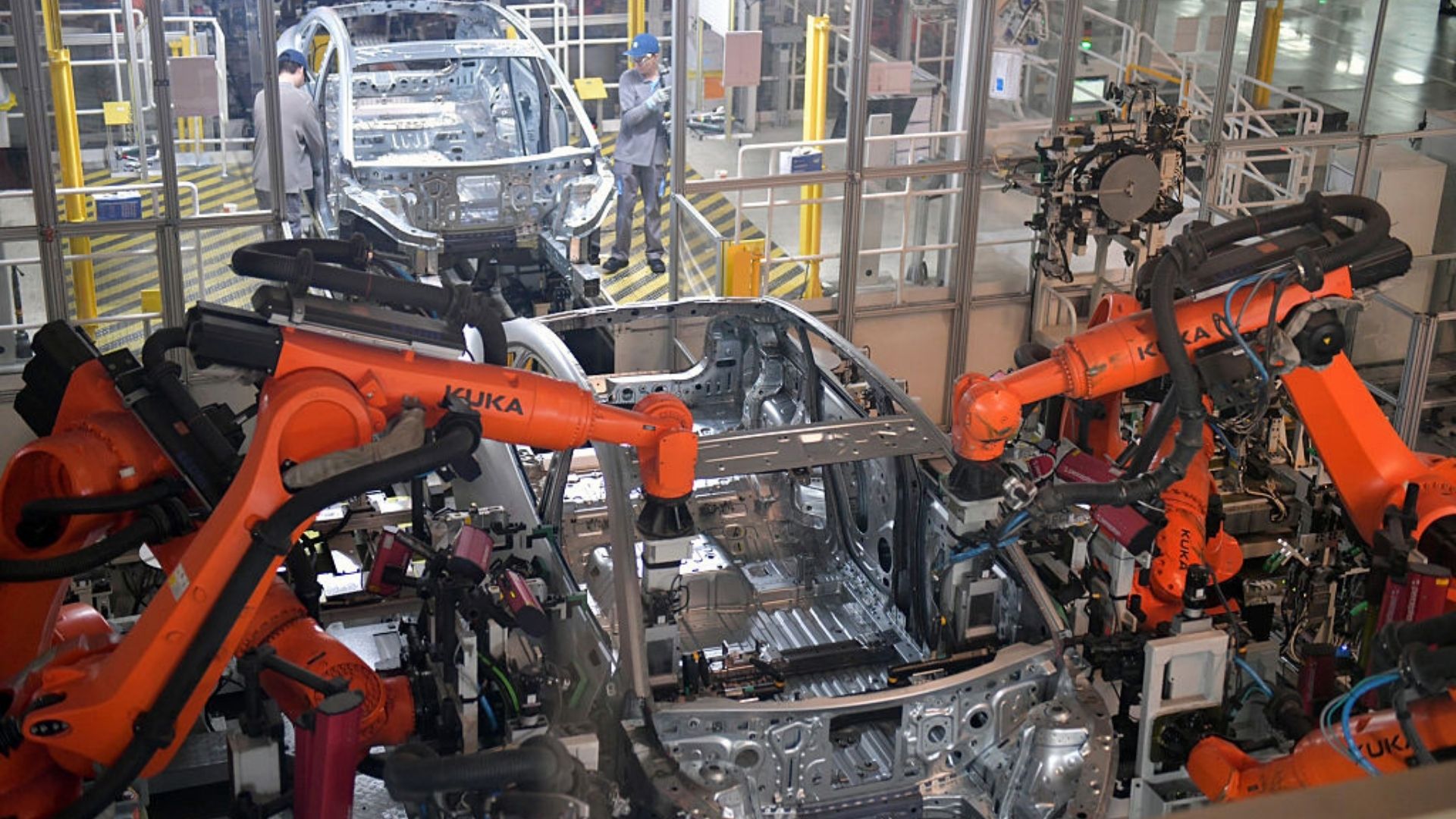
Orange robotic arms, blurry because they are in motion, surround the body of a car in a factory.

Robots at work on an auto assembly line in Hefei, China. Chinese robotics companies, like the electric vehicle and artificial intelligence industries, have benefited from a national push for growth.Credit...Qilai Shen for The New York Times

By Meaghan Tobin and Keith Bradsher
Sept. 25, 2025, 8:00 a.m. ET

China is making and installing factory robots at a far greater pace than any other country, with the United States a distant third, further strengthening China’s already dominant global role in manufacturing.

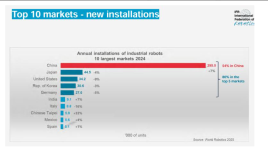
There were more than two million robots working in Chinese factories last year, according to a report released Thursday by the International Federation of Robotics, a nonprofit trade group for makers of industrial robots. Factories in China installed nearly 300,000 new robots last year, more than the rest of the world combined, the report found. American factories installed 34,000.

While Chinese factories have been using more robots, they have also gotten better at making them. The government has used public capital and policy directives to spur Chinese companies to become leaders in robotics and other advanced technologies like semiconductors and artificial intelligence.

Worldwide, robots and artificial intelligence are playing an increasingly prominent and disruptive role in manufacturing. Factory robots range from machines that weld car parts together to claws that lifts boxes onto conveyor belts. As technology helps factories become more efficient, some are making do with fewer workers and altering the roles of others.

View attachment 149453

Over the past decade, China has embarked on a broad campaign to use more robots in its factories, become a major maker of robots and combine the industry with advances in artificial intelligence.

Chinese companies have benefited from a national push that mirrors how the country’s electric vehicle and artificial intelligence industries have grown, said Lian Jye Su, a chief analyst at Omdia, a tech research firm.

“This is not a coincidence,” Mr. Su said. “It has taken many years of investment by Chinese companies.”

China’s drive for factory automation has been a key part of achieving its position as the world’s manufacturing powerhouse. Factories in China have installed more than 150,000 robots each year since 2017. At the same time, manufacturing output ballooned. By the start of this year, factories in China were making nearly a third of all manufactured goods worldwide, more than the United States, Germany, Japan, South Korea and Britain combined.

Robot installations fell last year, compared with the year before, in all four of the next largest factory robot-using countries: Japan, the United States, South Korea and Germany. Japan installed 44,000.

In 2015, Beijing made it a top priority for China to become globally competitive in robotics as part of its Made in China 2025 campaign to import fewer advanced manufactured goods.

Industries received almost unlimited access to loans from state-controlled banks at low interest rates as well as help in buying foreign competitors, direct infusions of government money and other assistance. And in 2021, the government issued a detailed national strategy for expanded deployment of robots.

“You can see how well that strategy worked out; without a strategy, a country is always at a disadvantage,” said Susanne Bieller, the general secretary of the robotics federation.

China’s share of the world’s robot manufacturing rose last year to a third of the global supply, up from a quarter in 2023, according to the federation. Japan, the previous leader, dropped to 29 percent of the world market from 38 percent the year before.

Until last year, China installed more imported robots in its factories than domestically made ones. But last year, nearly three-fifths of the robots installed in China were also made in the country.

Overall, China has five times as many robots working in its factories as the United States.
Image
In a large industrial setting, a row of low-slung wheeled vehicles sits beside several vehicles under construction.

Robotic carts at the Zeekr auto plant in Ningbo, China, haul heavy loads around the building. Credit...Qilai Shen for The New York Times

The federation’s data does not include humanoid robots, the two-legged machines that remain largely in experimental stages. But the government support has led to a boom in start-ups making humanoid robots and an ecosystem of companies that make specialized components for robots, such as motorized joints.

The humanoid robot start-up Unitree Robotics, based in the tech hot spot of Hangzhou, said earlier this month that it planned to go public by the end of the year. Unitree’s latest basic humanoid robots are priced at about $6,000 in China, a fraction of the price of robots made by the robot maker Boston Dynamics, a leading American player in the industry.

Still, Chinese companies lag foreign competitors in their ability to make some key components used in humanoid robots, including some sensors and semiconductors, said Mr. Su at Omdia.

The top versions of many components are still made in countries with longtime leads in robot manufacturing like Germany and Japan, he said.

“If you were to assemble a really top-notch humanoid robot, it would be almost completely non-China-made,” Mr. Su said. “Maybe it would have one or two Chinese components, but by and large the entire system would be very international.”

But when it comes to factory robots, China has multiple advantages. China has large numbers of skilled electricians and specialized computer programmers who can install robots. Even China has had some shortages of robot installation specialists, however, with pay surging to almost $60,000 a year.

And China has an artificial intelligence industry that is strongly focused on using the new technology to track and improve every aspect of factory equipment performance.

Companies in China “are using A.I. to swoop in and say which machines are doing great and which are a little off,” said Cameron Johnson, a supply chain consultant in Shanghai specializing in automation. Outside of China, he added, “people aren’t looking at it as a manufacturing tool, at least not yet, and not how the Chinese are.”
Bit off topic question, has Chinese manufacturing labor cost increased over the past year?
 
Unbelievable display of advance tech. The pace at which China is building Green energy fields, already crossed 1 TW through Solar, it seems as China might go 80% Green by 2045. That would save her hundreds of billion dollars in fuel costs as well as cleanse and protect the Chinese environment.

We need these solutions in Pakistan also to get off of fossil fuels.
 

China's former minister of agriculture sentenced to death with reprieve for bribery​

2025-09-28 17:43:49Ecns.cnEditor : Mo Honge

(ECNS) -- Tang Renjian, former minister of China's agriculture and rural affairs, was sentenced to death with a two-year reprieve at a court in Jilin Province on Sunday.

Tang was also deprived of political rights for life and had all his personal property confiscated as supplementary punishments, according to the Changchun Intermediate People's Court in Jilin.

Tang illegally accepted money and property, directly or through others, totaling more than 268 million yuan (about $37.6 million), the ruling said.
 

China's former agriculture minister Tang Renjian sentenced to death with reprieve for bribery​

Reuters
Sun, September 28, 2025 at 5:17 PM GMT+8

SHENZHEN, China (Reuters) -Tang Renjian, China's former Minister of Agriculture and Rural Affairs, was sentenced to death with reprieve for bribery at a court in Jilin province on Sunday, according to state-run news agency Xinhua.

Tang took bribes including cash and property worth over 268 million yuan ($37.6 million) in various positions held from 2007 to 2024, Xinhua said.

The Changchun Intermediate People's Court suspended his death sentence for two years, noting he had confessed to his crimes, it added.

China's Communist Party expelled Tang in November 2024, six months after he was placed under investigation by the anti-graft watchdog and removed from his post.

Tang's investigation was unusually swift and followed similar investigations into defence minister Li Shangfu and his predecessor Wei Fenghe.

President Xi Jinping started a campaign of purges of China's domestic security apparatus in 2020, seeking to ensure police, prosecutors and judges are "absolutely loyal, absolutely pure and absolutely reliable".

Tang was governor of the western province of Gansu from 2017 to 2020 before being named minister of agriculture and rural affairs, according to official biographies.

In January, Xi said corruption is the biggest threat to China's Communist Party and remains on the rise.

 
Watching geopolitics is kinda interesting nowadays.

American Tarriff doesn't target our 80-85% non branded generics so far but it's always better to diversify.
 
Last edited:
Same for oil. Trump wants India to stop buying Russian oil and has already put sanctions on Iranian oil and Venezuelean oil.

He wants the world to buy from his gulf cartel for petro dollars.
 

Users who are viewing this thread

Latest Posts

Back
Top