Chinese Engine Updates, News & Discussion

I remembered back in the days when Indian were cheering because they are getting a better version Su-30 compared with ours.
Hahaha, 20 years ago. Look at the gap now, we worked hard and just kept quiet. MKIs are another flying coffin in the making judging from their maintenance culture.
 

China builds air-breathing engine that could power jets and missiles past Mach 6

The prototype has been completed and experimentally verified after decades of work.

By Georgina Jedikovska
MilitaryMar 31, 2026 10:37 AM EST

China has unveiled a new type of air-breathing engine that could replace today’s turbine-ramjet systems, and reshape how future fighter jets and missiles achieve hypersonic speeds.

The so-called contra-rotary ramjet engine was developed by researchers from the Chinese Academy of Sciences (CAS). The project was led by Xu Jianzhong, PhD, a CAS academician and engineering thermophysics expert.

Designed to run continuously from a stationary start to above Mach 6, the engine aims to eliminate the need for multiple propulsion systems, which represents one of the biggest challenges in high-speed flight.

As per the team, the prototype has been completed and experimentally verified after over three decades of work. While still in development, it could significantly upgrade military and aerospace capabilities.

The researchers’ next steps include adapting it for different aircraft and conducting real-world flight tests.

“China’s development of new-principle engines would be a strategic choice to break the Western monopoly and even surpass the West,” Jianzhong told China Science Daily earlier in March 2026.

A new propulsion approach​

Conventional hypersonic propulsion relies on two different propulsion systems: a turbine engine that handles speeds up to Mach 3, and a ramjet for higher speeds. However, this dual-system concept is complex, heavy, and has operational risks.

This instability is highest during mode transitions, where airflow and combustion conditions can destabilize the system, especially during climbing or maneuvering flight. To tackle this issue, the new design boasts two sets of compressor blades rotating in opposite directions.

According to South China Morning Post (SCMP), the contra-rotary ramjet is built to function across the entire flight envelope, from takeoff to hypersonic speeds, without switching propulsion modes.

By integrating turbine and ramjet technologies, a concept dating back to the end of World War II, the scientists removed the inactive deadweight and simplified the model.

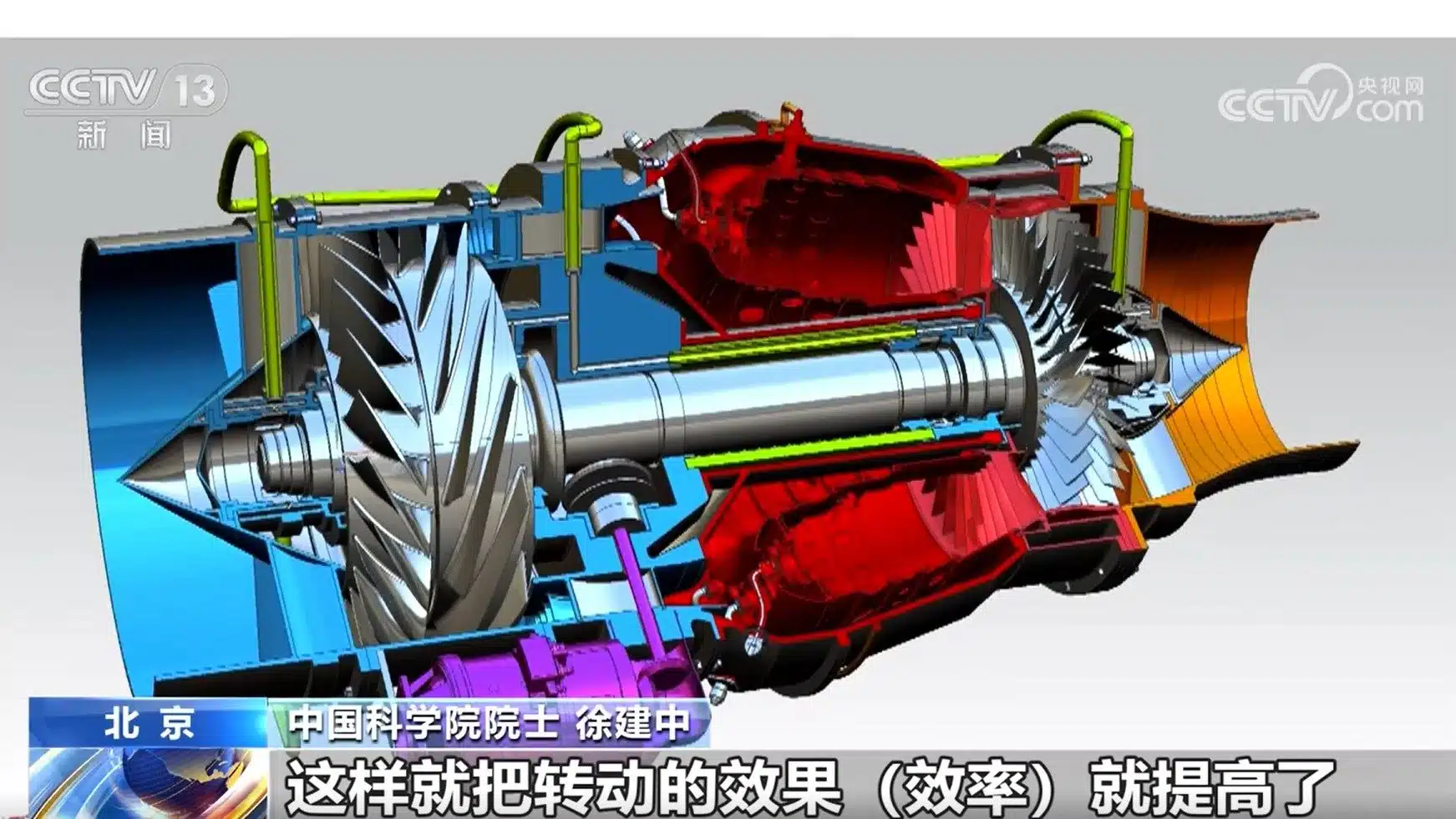
Jianzhong stated the contra-rotary compressor is the main innovation behind the system’s architecture. Because the high- and low-pressure rotors spin in opposite ways, the engine maintains relative speed and reduces absolute rotational speed, thus lowering centrifugal forces on blades and discs.

Simpler flight design​

The concept overturns the idea that shock waves must be reduced. Instead, they are harnessed for compression. This eliminates the need for guide vanes between the high- and low-pressure stages, and results in a more compact structure.

China Science Daily highlighted the innovative approach. “The booster capacity of the two-stage vanes is equivalent to that of the traditional four to six-stage ones, and both the weight and size are significantly reduced,” it stated.

The contra-rotary ram-compressor concept was outlined around 2000. The team spent years overcoming technical barriers, particularly in blade cascade design and experimental validation. By 2009, it had gained institutional support.

This is the first time ever the engine has been demonstrated in a functional unit. If adapted for real-world use, it could slash engine weight in hypersonic missiles, in addition to potentially increasing range, payload capacity, and maneuverability.

SCMP reported the development comes amid intensifying global competition in hypersonic technologies. In the US, firms like GE Aerospace and Lockheed Martin are testing rotating detonation ramjets that focus on combustion efficiency rather than airflow compression.


The Chinese Academy of Sciences presents a counter-rotating Ramjet capable of accelerating from 0 to Mach 6​


ByFabrice Wolf
April 1, 2026

Ramjet counter-rotating

https://www.meta-defense.fr/en/2026/04/01/academie-chinoise-des-science-ramjet-m6/
The Chinese Academy of Sciences (CAS) announced a few days ago the validation of a prototype Contra-Rotary Ramjet hypersonic engine capable of operating continuously from zero speed to Mach 6. Its twin-rotor design eliminates the need for guide vanes and promises a shorter and lighter machine with equivalent compression ratio, according to Dr. Xu Jianzhong, after thirty years of research.

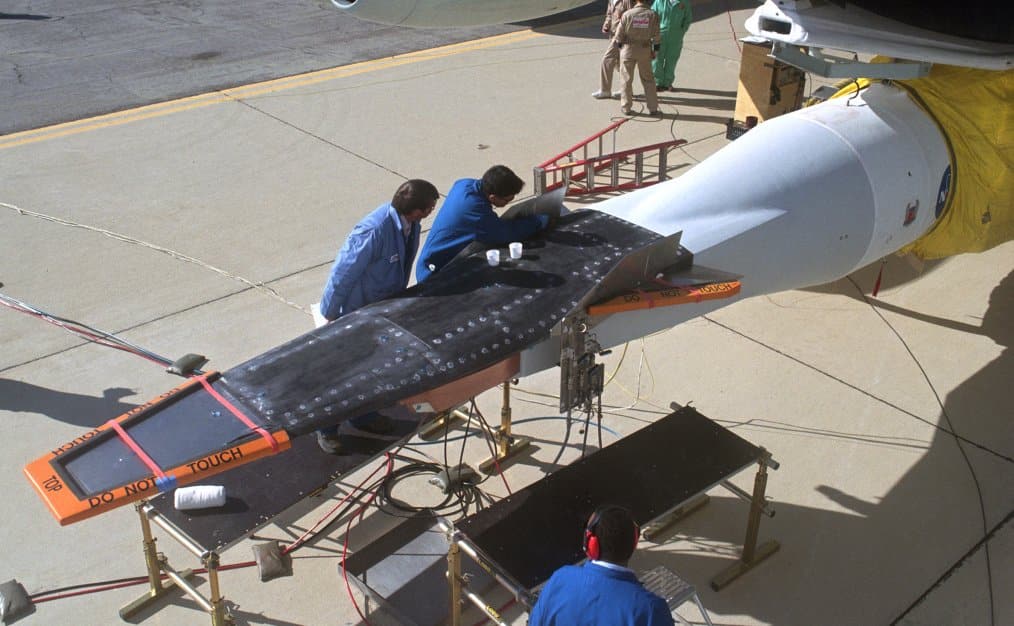
This milestone contrasts with supersonic combustion ramjets (scramjets) requiring external acceleration, as exemplified by the X-43A in 2004. Chinese developers are considering...
'éequip with missiles and, by projection, fighters of this new engine, opening the way to speeds far exceeding the Mach 3 ceiling of turbojets, to Mach 6, which raises the question of a lasting hypersonic advantage for Beijing.

The X-43A demonstrator demonstrates the initial dependence of scramjets on external acceleration​

Twenty years of testing have shown that hypersonic flight most often relies on aspirated air engines, which are difficult to implement. In 2004, NASA's X-43A, a small unmanned aircraft launched from a B-52 and then accelerated by a Pegasus rocket, reached Mach 9,6 using a scramjet. This campaign confirmed that a scramjet could not be ignited at low speeds and required prior acceleration by a rocket engine or carrier aircraft to reach the minimum ignition speed.

This constraint obviously complicates the integration of such systems and has heavily impacted the development of high supersonic (Mach 3,5 to Mach 5) and low hypersonic (Mach 5 to Mach 7) airborne systems to date. At the same time, the added value of hypersonic technology has become essential in armed forces, partly driven by Russian declarations in 2019, but also due to the renewed risk of symmetrical confrontations between major technological powers: once again, it was necessary to gain a technological advantage over a capable adversary with significant scientific resources, and the hypersonic threshold was identified as a means to achieve this.

Indeed, developments in this field have accelerated considerably in recent years. In the United States, a launch from the Space Force Station at Cape Canaveral on March 26 was associated with a hypersonic weapon test over the Atlantic. The observed characteristics have been compared to the Dark Eagle program, which uses a maneuverable glider deployed by the U.S. Army and Navy. Reports indicate a range of approximately 2,780 kilometers and speeds exceeding Mach 5 for this high-wing-effect system. The combination of the glider's maneuverability and long range complicates the interception of strikes launched from areas of wide-angle trajectory.

X-43A
DARPA X-43A demonstrator
Russia also boasts a strategic hypersonic portfolio with the Avangard hypersonic glide vehicle, launched by ballistic missile and reportedly capable of speeds of Mach 20 to 27 (unconfirmed figures). The system is believed to have been produced in only about a dozen units, limiting its use to very high-value targets, despite Moscow's often enthusiastic pronouncements in this area.

In Europe, France conducted the first test flight of the VMAX demonstrator on June 26, 2023, over Biscarrosse. This FS-1 flight was launched on a three-stage rocket carrying the French hypersonic glider for the first time. This milestone is part of a broader trajectory that includes the ASN4G hypersonic missile, successor to the supersonic ASMPA, expected to enter service from 2035 onwards. Rafale F5. Europe therefore remains in the demonstration and maturation phase before commissioning.

The Chinese Academy of Sciences approves a Contra-Rotary Ramjet operating from Mach 0 to Mach 6​

While recent architectures combine carriers, boosters, and gliders, the Chinese Academy of Sciences has announced the validation of a continuously operating, aspirated air-driven engine capable of speeds from zero to Mach 6. This prototype Contra-Rotary Ramjet Engine is designed to cover the entire subsonic to hypersonic range without any impulse, interruption, or change in propulsion. Indeed, such a leap forward was conceived to eliminate the propulsion sequences imposed by forced-ignition systems and to pave the way for single-propulsion vehicles for aeronautical and missile applications.


China creates hypersonic engine that can make planes and missiles fly more than 6 times the speed of sound with less weight, more range, and without system change.​

Written byFlavia Marinho
Published on01/04/2026 at 12:06

china-creates-hypersonic-engine-that-can-make-plan.jpeg


New hypersonic engine from China could simplify extremely fast flights and increase performance with more efficiency and less complexity

China has unveiled a new hypersonic engine capable of flying over 6 times the speed of sound, which means achieving extremely high speeds in a short time. This technology could change the way military aircraft and missiles are built in the future.

This new system draws attention because it operates from the moment the vehicle is stationary until it reaches these very high speeds, without needing to switch engines along the way. This could mean less risk of failures, less weight, and greater efficiency during flight.

The information was released by China Science Daily, a state-run Chinese scientific newspaper focused on research dissemination, which detailed the advancement after decades of development.

Hypersonic engine eliminates need for two systems and reduces risks

Today, vehicles that fly very fast use two different types of engines. One operates at lower speeds and the other kicks in when the speed increases significantly.

hypersonic engine
Interior of the innovative engine with blades spinning in opposite directions, a solution that increases stability and improves performance at extreme speeds.

This model is more complicated and can present problems, especially at the moment when the switch between one system and another occurs. This increases the risk during maneuvers or altitude changes.

The new hypersonic engine from China operates continuously, without needing this switch. This makes the system simpler and could bring more safety during flight.

Technology uses parts spinning in opposite directions to improve performance

One of the main differentiators of this engine lies in how its internal parts function. It has components that spin in opposite directions.

This movement helps reduce the effort inside the engine and improves overall functioning. As a result, the equipment can operate more stably even at extremely high speeds.

This innovation also contributes to reducing wear on parts, which can extend the engine’s lifespan and reduce failures.

New engine takes advantage of air and shock waves to function better

At high speeds, the air around the vehicle creates very strong impacts, known as shock waves, which are usually a problem.

In this new model, these impacts are utilized to the engine’s advantage. This allows it to better harness the air to operate more efficiently.

The result is a more compact, lighter, and simpler engine, without losing performance. This could also facilitate installation in different types of aircraft.

Project took more than 30 years and has already had prototype tested

The development of this engine began over three decades ago. During this time, researchers faced various challenges until reaching the current model.

Today, there is already a prototype ready and tested in a controlled environment. This shows that the technology is already functioning, although it still needs to undergo real tests in flight.

South China Morning Post, an international newspaper covering technology and Asian politics, provided details on the operation and highlighted that the engine can operate from takeoff to extremely high speeds.

New engine could increase range, load, and maneuverability

If applied in practice, this engine could bring significant improvements to aircraft and missiles.

Among the main benefits are weight reduction, increased distance traveled, and greater load capacity. Additionally, the technology could allow for more efficient maneuvers even at high speeds.

These advantages could directly impact the military and aerospace sectors, making equipment more advanced and efficient.

Global race for hypersonic technology gains strength

The development of this engine is happening amid a global race for high-speed technologies.

Other countries are also investing in similar solutions, seeking to improve performance and efficiency. This scenario shows that the area of very fast flights is expected to evolve rapidly in the coming years.

The new Chinese technology reinforces this movement and indicates that significant changes may arise soon in the sector.

The advancement of the hypersonic engine from China that exceeds 6 times the speed of sound shows that new solutions are being created to make flights faster and more efficient. The elimination of dual systems and weight reduction could completely change the current standard.

If flight tests confirm the results, this technology could mark a new phase in aviation and missile development.

 
To view this content we will need your consent to set third party cookies.
For more detailed information, see our cookies page.
 
"Che Jingang," a 14-year-old Chinese middle school student with a passion for aviation, taught himself calculus and spent six months building a fully functional turbojet engine entirely from scratch at home. Although his initial test ended in failure, he received an outpouring of encouragement from netizens across China.

The AECC proactively reached out to this young enthusiast, inviting him to tour their laboratories and arranging for professional researchers to assist him in realizing his dream of developing aero-engines!

1776257432719.png
 
CHINA CLAIMS NEW JET ENGINE CAN HIT MACH 6 WITHOUT CHANGING MODES
BY BOB SHARP APRIL 18, 2026 6:15 PM EST

The roots of the jet engine can be traced back to before World War II, and they generally still work on the same principles despite having evolved quite a bit since then. Yet there are still limitations to what they can do, including their ability to perform efficiently (or at all) as airspeed inside the engines increases to extreme speeds.

Of course, legendary aircraft like the SR71 Blackbird can reach speeds that exceed Mach 3, or over 2,000 mph. However, they can't rely on turbojet engines to reach this speed. That's because these engines become unreliable as flight speeds increase into the supersonic range. To work around this limitation, Lockheed Martin engineered a hybrid engine for the SR71 Blackbird that used a turbojet to reach speeds of around Mach 2 before switching over to "ramjet" mode. This solved the problem because ramjet engines essentially work by "raming" the air through the engine at high speed when the traditional engine could no longer function properly.

However, this was a complex and heavy solution to the high-speed problem that required the engine to switch modes. China claims its new engine replaces this complex hybrid system with a single engine that takes a plane all the way from the runway to Mach 6. Currently, the engine is at the prototype stage and has been "experimentally verified," according to the South China Morning Post.


What we know about China's new engine

The contra-rotary ramjet engine, as it's known, has been in development for 30 years, although it wasn't until 2009 that it gained institutional support. The key technology at the heart of the jet is a contra-rotary compressor system. This addresses one of the key shortcomings traditional turbojets face at high speeds: the inability to slow the incoming air down enough for the engine to work effectively and stably.

From what we know about the system, the contra-rotary ramjet engine uses low and high-pressure turbine blades spinning in opposite directions. This allows the engine to maintain relative speed regardless of airspeed. It also means that turbine rotation speeds are minimized, which reduces the incredible centrifugal forces that such blades operate under.

If this makes it past the experimental stage, then it has the potential to become one of the most powerful jet engines ever made. However, there are significant challenges still to be addressed. For one, sustained hypersonic flight generates extreme heat, and this places enormous stress on materials.


China’s DD6 single-crystal superalloy rivals US jet engine blade materials

China’s DD6 single-crystal superalloy was developed to survive the extreme heat and stress inside advanced jet engines.

image

Representative image.

Inside a jet engine, the turbine blades spin at extreme temperatures, under enormous pressure, while being continuously eroded by hot corrosive gases. Building a blade that survives those conditions reliably and keeps an engine performing at peak efficiency is one of the harder engineering problems in aerospace manufacturing.

The answer, for decades, has been single-crystal superalloys: metal components grown as one continuous crystal structure, eliminating the grain boundaries where conventional alloys tend to crack and fail. According to a report by China Media Group, only five countries — the United States, the United Kingdom, Russia, France, and China — have independently mastered the complete technology chain for manufacturing these blades, from materials development and precision casting through to operational deployment.

At the center of China’s capability is the AECC Beijing Institute of Aeronautical Materials and a superalloy called DD6.

What DD6 is and why it matters​

DD6 is a second-generation nickel-based single-crystal superalloy developed by the institute with fully independent intellectual property. Its chief engineer, Li Jiarong, said the alloy’s performance matches or exceeds that of comparable second-generation superalloys used in Europe and the United States, at a lower production cost.

“We have achieved the independent development of single-crystal turbine blade materials in China,” Li said. “Our second-generation single-crystal superalloy, DD6, offers performance that is superior to or equivalent to the second-generation single-crystal superalloys widely used in Europe and the US.”

DD6’s lower production cost has made it the most widely deployed single-crystal superalloy in China and has reduced the country’s dependence on imported strategic materials.
The blades developed at the institute have been integrated into multiple advanced aero-engines, supporting military and civil aircraft as well as helicopters.

The engineering challenge​

Single-crystal turbine blades operate at temperatures that already exceed those of ordinary steel and approach the melting point of the alloy itself. Keeping them stable under those conditions requires precise control over a nickel base alloyed with multiple elements, each with different physical and chemical properties, that must be uniformly melted, fused, and kept free of impurities.

Yue Xiaodai, a researcher at the institute, described the approach: nickel-based single-crystal superalloys use metallic nickel as the base, with alloying elements added to meet multiple performance requirements simultaneously, including high-temperature strength, creep resistance, and resistance to corrosion at operating temperatures.

Manufacturing a finished blade from that material involves more than ten major core processes, from alloy smelting and preparation through to final delivery. Each of those processes is further broken down into dozens of precise sub-steps.

A decades-long effort​

The institute has been developing single-crystal superalloys with independent intellectual property since the 1980s, producing China’s first single-crystal turbine blade and first single-crystal hollow turbine blade along the way. DD6 is the latest output of that program and currently its most widely used.

 
To view this content we will need your consent to set third party cookies.
For more detailed information, see our cookies page.
 

How China’s home-grown WS-10 engine helped make the country a modern air power​

The PLA’s first domestically developed high-thrust turbofan engine continues to play a crucial role 20 years on from its debut​


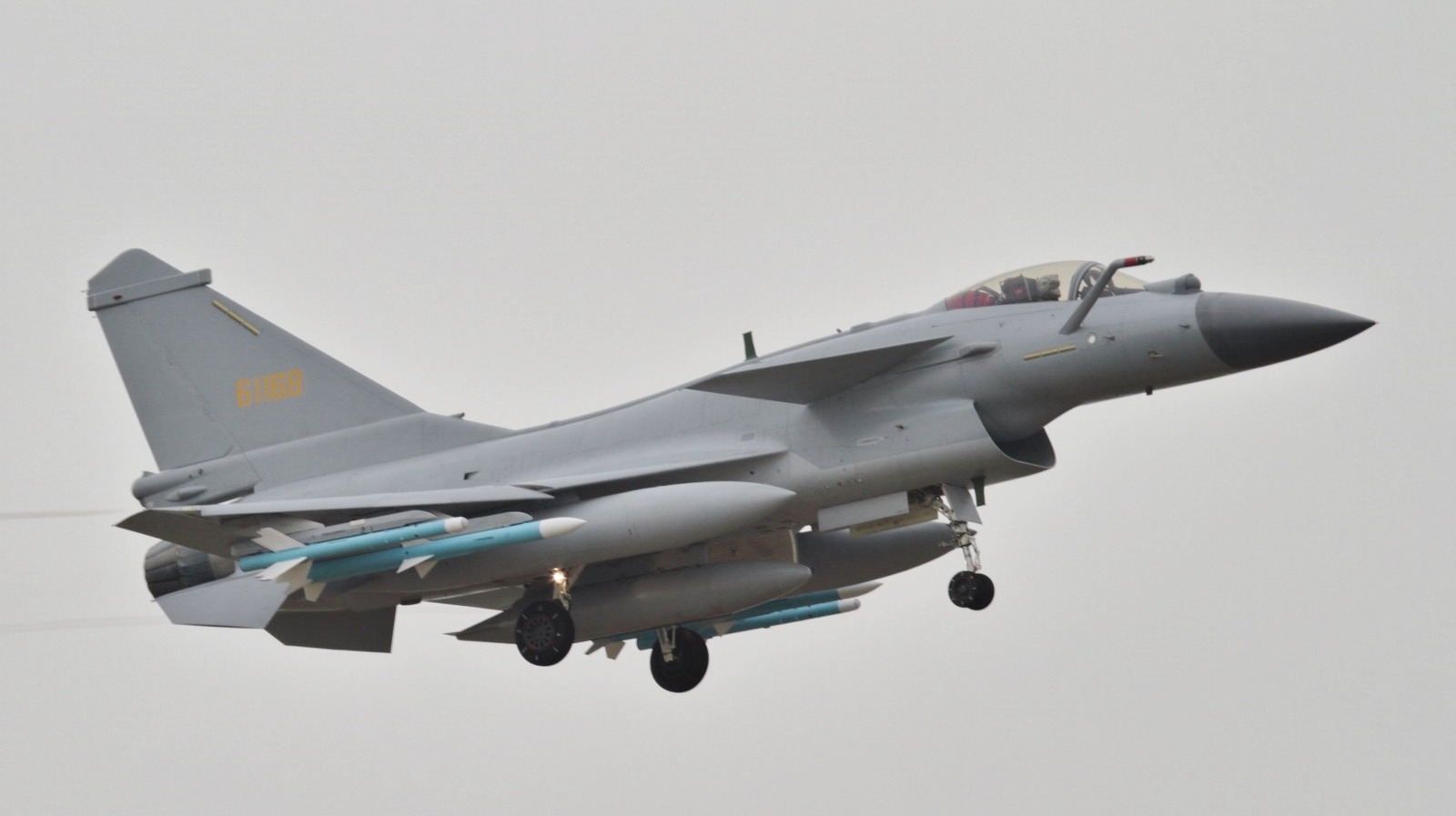
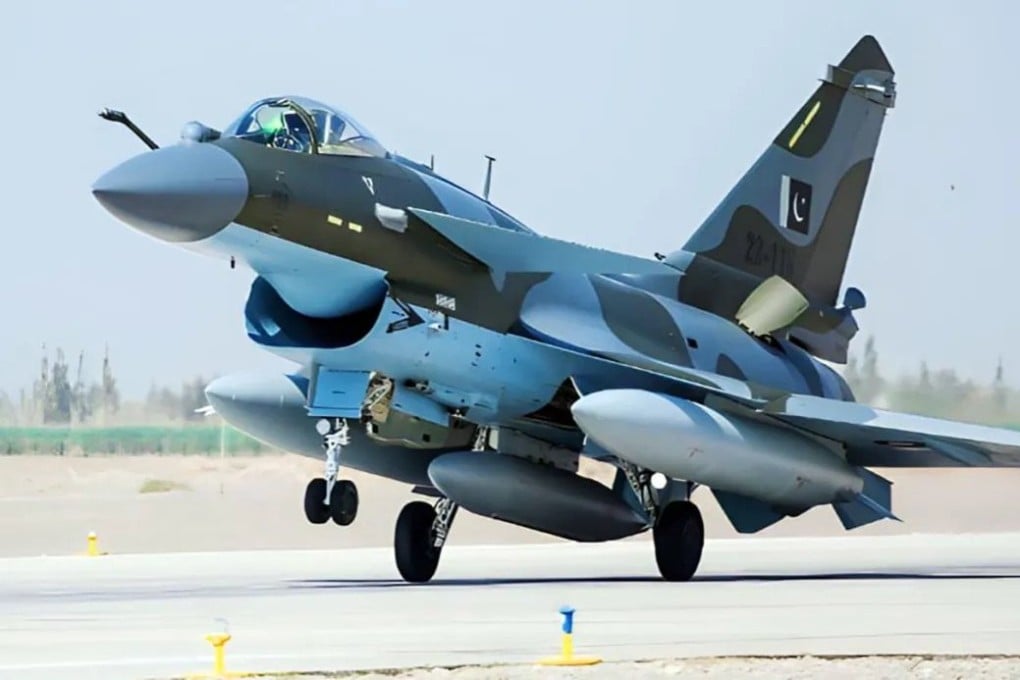
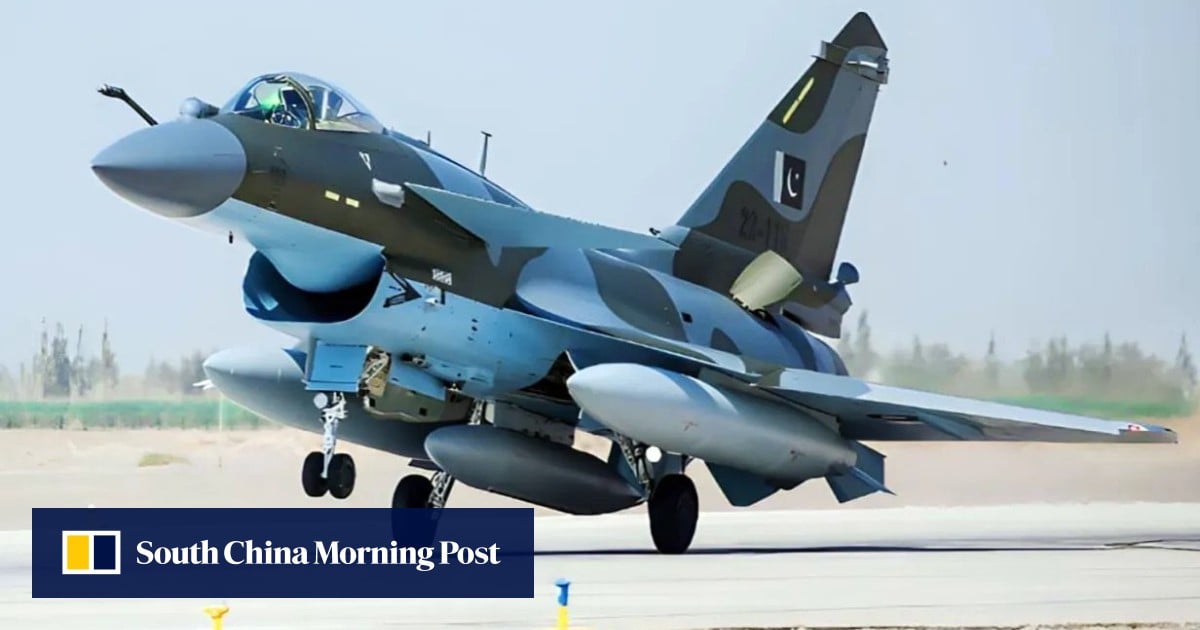
The engine has been used to power J-10 fighter jets and enabled their export to countries such as Pakistan. Photo: Handout

Liu Zhen
Published: 10:00pm, 31 May 2026

As China marks the 20th anniversary of completing its first domestically developed high-thrust turbofan engine for fighter jets, the WS-10 – Woshan-10, meaning Turbofan-10 – continues its crucial role in the People’s Liberation Army (PLA).
The WS-10 turbofan engine was code-named Taihang after the famous Chinese mountain range.

The Taihang engine family serves as the backbone of the PLA’s major active combat fighters, powering fourth-generation jets such as the J-10C, the J-11B, the air force’s J-16 and the navy’s carrier-based J-15. It has also played a vital role for variants of the fifth-generation J-20 stealth fighter.

In addition, the WS-10 drives China’s export-oriented jets, including the J-10CE.

A historic milestone for China’s aviation industry, the WS-10 series represented a major success in self-sufficiency, laying the groundwork for phasing out dependence on Russian engine imports for its frontline fighter fleet.

Before the maturation of the Taihang engine, production of China’s modern fighters – such as the J-11, J-16 and even the early J-20 – was entirely dependent upon Russia’s AL-31 production capacity and export licensing, creating a significant and dangerous supply-chain bottleneck.

The maturation of the WS-10 enables unconstrained, mass-scale production of various types of advanced fourth and fifth-generation combat aircraft.


The World May Soon Buy Chinese Engines


Jun 6, 2026

To view this content we will need your consent to set third party cookies.
For more detailed information, see our cookies page.


How China Broke the Jet Engine BarrierChina’s rise in indigenous military jet engine development — from the WS-10 Taihang to the emerging WS-15 — marks one of the most significant industrial breakthroughs by a non-Western aerospace power. But this was neither fast nor easy, and certainly not just a story of reverse engineering.
0:00 - The Heart of the Fighter Jet: Engine Importance
0:40 - Historical Dominance: US and Russian Engines
1:12 - China’s Shift: From Dependence to Independence
1:42 - The WS-10 Taihang: A Domestic Milestone
2:19 - Global Impact: Exporting the J-10C to Pakistan
2:47 - Advanced Tech: Single Crystal Turbine Blades
3:39 - Reshaping the Global Defense Market
4:06 - The Future of China’s Aerospace RevolutionJet engines are among the most complex machines ever created.

They require mastery over extreme metallurgy, single-crystal turbine blades that withstand temperatures above 1,500°C, ultra-precise aerodynamics, advanced materials science, and years of rigorous testing. Since World War II, only the United States, United Kingdom, France, and Russia managed to develop such engines independently. China is the only major latecomer to approach success at scale — after decades of setbacks.
The Real Challenge:
HeatThe biggest obstacle in jet engine development has always been heat. Engineers long described a “thermal barrier” — a point where materials fail under extreme temperatures and stress. Many nations poured billions into engine programs, only to see them collapse during turbine testing.

China’s breakthrough wasn’t copying designs — it was mastering single-crystal turbine blade technology, the heart of modern jet engines. While designs can be reverse engineered, the real challenge lies in replicating the proprietary alloys, coatings, and manufacturing processes built over generations. Turning a blueprint into a working engine required solving this metallurgical puzzle.
 

Users who are viewing this thread

Pakistan Defence Latest

Back
Top