Navigation
Install the app
How to install the app on iOS
Follow along with the video below to see how to install our site as a web app on your home screen.
Note: This feature may not be available in some browsers.
More options
Style variation
You are using an out of date browser. It may not display this or other websites correctly.
You should upgrade or use an alternative browser.
You should upgrade or use an alternative browser.
Developments in armament and military industry in the Kingdom of Morocco
- Thread starter The SC
- Start date
More options
Who Replied?


The SC
INT'L MOD
- Thread starter
- #167
The Moroccan army concludes a huge agreement to produce military drones
The recent large-scale Ukrainian attacks on the Russian capital, Moscow, witnessed a new escalation in the use of suicide drones, after a number of them were able to reach targets inside the Russian interior, which once again highlighted the challenges that air defense systems face in dealing with this type of low-cost and highly effective threats. At a time when the importance of drones on modern battlefields is increasing, Morocco announced a strategic step to enhance its capabilities in this field through a new partnership aimed at developing an advanced national industry for drones.
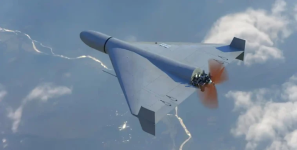
The Moroccan National Defense Administration announced the signing of a strategic agreement with the French company Harmattan AI, which was founded by a French businessman of Moroccan origins and specializes in developing self-defense systems and drones based on artificial intelligence technologies. This partnership represents part of Morocco's vision to strengthen its industrial and technological independence in the defense sector, with the start of the deployment of new generation autonomous defense capabilities starting in 2026.
According to the company's statement, cooperation with the Royal Armed Forces is not limited to providing Morocco with advanced systems, but also includes establishing industrial facilities within the Kingdom to produce drones and defensive systems, in addition to establishing a research and development center specializing in military artificial intelligence applications, as well as establishing partnerships with Moroccan universities and scientific research institutions with the aim of developing local defense solutions based on national competencies.
The CEO and co-founder of the company, Moaz Al-Maghari, stressed that the agreement reflects Morocco’s orientation towards building a sovereign defense industrial base, noting that the Kingdom has chosen to invest in strategic independence and technological sovereignty, which makes this cooperation the cornerstone of a long-term partnership in the field of advanced defense industries.
Harmattan AI is one of the companies that has experience in developing interceptor drones designed to confront drones, in addition to attack and suicide drones of various categories, including small FPV aircraft that have proven their effectiveness in modern conflicts. The company's solutions also rely on artificial intelligence technologies to detect targets, track them, and make decisions semi-autonomously, which reflects the global trend towards integrating artificial intelligence into military systems.
In conjunction with the launch of the project in Morocco, the company seeks to attract dozens of engineers and specialists in the fields of artificial intelligence, software engineering, embedded systems, project management and product development, as part of its plan to establish a factory and development center within the Kingdom, allowing for the transfer of technology and the formation of Moroccan competencies capable of contributing to the development of national defense industries.
This step comes at a time when many countries are moving to invest heavily in drone technologies, after the war in Ukraine proved that these systems have become a crucial element in military operations, whether in carrying out precision strikes, in reconnaissance missions, or even in intercepting enemy drones. The new project would give Morocco an opportunity to enhance its industrial and technological capabilities, and contribute to building a national defense system that relies on local production, innovation, and artificial intelligence.
The SC
INT'L MOD
- Thread starter
- #168
Rafale fighters and Scorpene submarines for Morocco.. What does the French Prime Minister’s visit to Morocco entail?
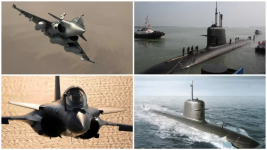
Rabat is preparing to receive a high-level French government delegation led by French Prime Minister Sebastien Le Cornu on his first foreign visit since assuming office, and accompanied by a large number of ministers, including the Ministers of Foreign Affairs and Interior, in addition to ten other ministers. This visit reflects the increasing importance that Morocco has come to occupy in French foreign policy. It also represents a major station for evaluating the path of rapprochement between the two countries after years of tension.
The visit goes beyond the protocol nature, as it will witness the holding of a high-level government meeting to discuss strategic files that include defense and security cooperation, investment, energy, migration, and artificial intelligence, in addition to the desert file, within the framework of following up on the implementation of the outcomes of the enhanced strategic partnership that was launched following the visit of French President Emmanuel Macron to Morocco in 2024. It also aims to move bilateral relations from the stage of declaring intentions to the stage of implementing agreements on the ground.
From traditional partnership to strategic alliance
Moroccan-French relations have witnessed remarkable development since Morocco's independence in 1956, as they moved from a stage of French influence to a broad political, economic, and security partnership. For decades, France was considered Morocco's first European partner in the fields of trade, investment, education, and security cooperation. Morocco also represented Paris's gateway to West Africa and an essential partner in the fight against terrorism and irregular migration.
However, these relations went through periods of tension, especially after France reduced the number of visas granted to Moroccan citizens. In recent years, Morocco has also adopted a more independent policy, focusing on diversifying its strategic partnerships with the United States, China, and the Gulf states, which has reduced its traditional dependence on France.
French President Emmanuel Macron's recognition of Morocco's sovereignty over the Moroccan Sahara represented a turning point in bilateral relations, after Paris had been trying for years to maintain a balance in its relations with both Rabat and Algeria. This transformation came in light of regional and international changes, and the decline in opportunities for French-Algerian rapprochement, which prompted France to reformulate its priorities in the region.
Anticipated defense deals
Military cooperation occupies a high position on the visit’s agenda, amid reports of advanced negotiations between the two countries regarding a number of arms deals.
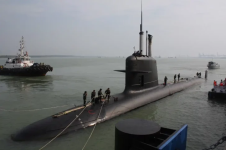
The Royal Moroccan Navy is seeking to acquire two Scorpene-class submarines produced by the French company Naval Group, in a deal that faces competition from Germany, but the growing defense relations between Rabat and Paris may give the French side an advantage. This confidence is based on previous military cooperation, which included the delivery of the multi-mission frigate “Mohamed VI” to the Moroccan Navy.
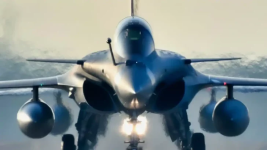
Negotiations are also underway regarding the purchase of “Rafale F4” fighters, and the deal is likely to include between 12 and 18 aircraft, as part of Morocco’s efforts to modernize its air forces, especially with the delayed delivery of American F-16 fighters, and the continuation of the arms race in North Africa, especially with Algeria’s development of its air and naval capabilities.
Despite talk about these deals, observers confirm that Morocco does not rely on France alone in the field of armaments, but rather follows a policy of diversifying its sources of arms, through cooperation with the United States, Turkey, Spain, and other countries. However, France remains an important partner thanks to its industrial expertise, geographical proximity, and the possibility of expanding cooperation in the areas of training, technology transfer, and defense industries.
Economy and energy...a partnership that goes beyond weapons
Moroccan-French relations are not limited to the military aspect, as France represents one of the most important markets for Moroccan exports, whether in agricultural products, phosphates, fertilizers, fisheries, or the automobile industry, which has become one of the most prominent industrial sectors in Morocco thanks to the Renault factories in Tangier and Stellantis in Kenitra, in addition to a wide network of automobile component factories.
The energy file also occupies an advanced position in the bilateral talks, especially with the increasing European interest in the African-Atlantic gas pipeline project, which connects Nigeria to Morocco, passing through 13 African countries before arriving in Europe.
The cost of the project is about 25 billion dollars, while its capacity reaches about 30 billion cubic meters of gas annually, which makes it one of the largest energy infrastructure projects in Africa. The project is not limited to gas transportation, but rather aims to transform Morocco into a regional energy center linking Africa to Europe, opening new markets for Nigerian gas, and enhancing European energy security in light of the geopolitical changes imposed by the war in Ukraine and tensions in the Middle East.
Observers believe that Moroccan-French relations have entered a new phase based on mutual interests more than traditional considerations. France views Morocco as a stable partner and a gateway to Africa, especially in light of its growing presence within the continent, while Morocco provides great investment opportunities in the automotive, aviation, green hydrogen, renewable energies and infrastructure sectors.
On the security level, cooperation in combating terrorism, organized crime, and irregular migration constitutes one of the most important pillars of the relationship between the two countries, while the rapprochement with Rabat gives France a more influential foothold in North and West Africa, in light of the escalation of international competition for influence within the continent.
A new stage in bilateral relations
The French Prime Minister's visit to Rabat reflects a deeper shift in the nature of relations between the two countries, as Morocco is no longer just a traditional partner of France, but has become a regional actor whose importance is increasing in the issues of security, energy, investment and African influence.
It is expected that the results of this visit will constitute an indication of the future of the Moroccan-French partnership, not only through the agreements that may be signed, but also through the consolidation of a common vision based on strategic interests and mutual respect, at a time when the North Africa and Western Mediterranean region is witnessing rapid geopolitical transformations.
The SC
INT'L MOD
- Thread starter
- #169
The United States chooses Morocco to test its latest long-range missiles
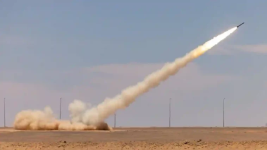
The Tan-Tan region in southern Morocco witnessed a series of military experiments carried out by the US Armed Forces to test the latest generations of long-range precision missiles, in a move that reflects the growing level of defense cooperation between Rabat and Washington.
The tests included the launch of five long-range precision munitions missiles, carried out in two stages, with the aim of evaluating the operational performance of the new system and verifying its capabilities in different field environments, in addition to measuring the accuracy of hitting and the efficiency of carrying out missions against specific targets.
These munitions are distinguished by their ability to be launched from mobile ground platforms or from air platforms, with the ability to target strategic targets at distances of more than 290 kilometers. It also allows the implementation of individual strikes or coordinated and simultaneous attacks against several targets at the same time, giving it high tactical flexibility on modern battlefields.
These tests reflect the level of the strategic partnership between the United States and Morocco, and confirm the position that the Kingdom has now enjoyed as a major defense partner in North Africa and the Sahel region, in light of the ongoing military cooperation between the two countries and the programs to modernize the Royal Armed Forces and enhance their operational readiness.
Military analysts believe that choosing Morocco to host experiments on advanced missile systems carries important strategic and political dimensions, as it reflects the confidence of the American military establishment in the logistical capabilities, infrastructure, and organizational efficiency possessed by the Moroccan army, and its ability to host highly sensitive military training and tests according to the highest standards.
The Tan-Tan region in southern Morocco witnessed a series of military experiments carried out by the US Armed Forces to test the latest generations of long-range precision missiles, in a move that reflects the growing level of defense cooperation between Rabat and Washington.
The tests included the launch of five long-range precision munitions missiles, carried out in two stages, with the aim of evaluating the operational performance of the new system and verifying its capabilities in different field environments, in addition to measuring the accuracy of hitting and the efficiency of carrying out missions against specific targets.
These munitions are distinguished by their ability to be launched from mobile ground platforms or from air platforms, with the ability to target strategic targets at distances of more than 290 kilometers. It also allows the implementation of individual strikes or coordinated and simultaneous attacks against several targets at the same time, giving it high tactical flexibility on modern battlefields.
These tests reflect the level of the strategic partnership between the United States and Morocco, and confirm the position that the Kingdom has now enjoyed as a major defense partner in North Africa and the Sahel region, in light of the ongoing military cooperation between the two countries and the programs to modernize the Royal Armed Forces and enhance their operational readiness.
Military analysts believe that choosing Morocco to host experiments on advanced missile systems carries important strategic and political dimensions, as it reflects the confidence of the American military establishment in the logistical capabilities, infrastructure, and organizational efficiency possessed by the Moroccan army, and its ability to host highly sensitive military training and tests according to the highest standards.
The SC
INT'L MOD
- Thread starter
- #172
Moroccan artillery sits on the pyramid of firepower in the region thanks to an integrated strategic arsenal that is steadily moving towards strengthening its numbers and localizing its industry through promising defense partnerships. This superiority was evident in Morocco becoming a strategic partner and field testing center for the US Department of Defense, as the Tan Tan military field witnessed exclusive tests of loitering munitions with a range of 290 km and unmanned combat systems, in preparation for testing cruise missiles with ranges between 500 and 800 km or more. This strategic partnership, in the development stages, gives Rabat priority and exclusive access to fifth-generation weapons, and paves the way towards joint manufacturing in the near future.
This advanced deterrent system is based on a precise missile network that includes American HIMARS launchers with a range of 300 km and future qualifications for ranges of up to 500 km, Chinese missile launchers with a range of 400 km, and the Israeli PULS system with a range of 300 km, in addition to the high-precision LORA ballistic missile with a range of more than 400 km. This striking force is reinforced by squadrons of strategic Harop and Harpy suicide drones capable of reaching a range of 1,000 km, in addition to Moroccan-made attack drones with a range exceeding 500 km. This integrated arsenal, with the decisive developments expected in October, constitutes a final consecration of a military reality that places Morocco at the forefront of regional strategic deterrence.
This advanced deterrent system is based on a precise missile network that includes American HIMARS launchers with a range of 300 km and future qualifications for ranges of up to 500 km, Chinese missile launchers with a range of 400 km, and the Israeli PULS system with a range of 300 km, in addition to the high-precision LORA ballistic missile with a range of more than 400 km. This striking force is reinforced by squadrons of strategic Harop and Harpy suicide drones capable of reaching a range of 1,000 km, in addition to Moroccan-made attack drones with a range exceeding 500 km. This integrated arsenal, with the decisive developments expected in October, constitutes a final consecration of a military reality that places Morocco at the forefront of regional strategic deterrence.
The SC
INT'L MOD
- Thread starter
- #173
Morocco is considering acquiring the "David Sling" air defense system
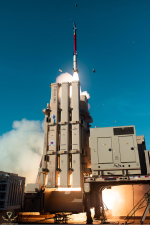
The David’s Sling system stands out as one of the most prominent options that may attract Morocco’s attention in the path of developing its air and missile defense, especially with the growing threats posed by ballistic missiles, cruise missiles, and modern air means.
The Defense website, citing recent data reported by the Israeli newspaper De Olam, stated that this comes in the context of increasing Moroccan interest in advanced Israeli defense technologies, in addition to systems, some of which have already entered the Moroccan arsenal, such as Barak MX, SPYDER, and Skylock.
The David's Sling approach is of particular importance thanks to its design to deal with a wide layer of air and missile threats, which makes it a candidate to play a pivotal role within a multi-layered Moroccan air defense.
The system is also linked to the new Sky Sonic missile developed by Rafael to confront advanced ballistic and hypersonic threats, which, if adopted in the future, opens the door to expanding interception capabilities to more complex levels.
The Israeli “De Olam” had indicated Moroccan interest in the Sky Sonic system, which was unveiled in 2023, noting that this interest does not necessarily mean the existence of an imminent deal, especially since the system is still new and has not acquired an extensive operational record. Therefore, the Moroccan move may be part of an early assessment of technologies that could shape the future of missile defense.
In parallel with ground defense, data indicate Morocco’s interest in the long-range Sky Spear air combat missile, while studying the possibility of integrating it on F-16 fighters.
David's Sling System – “The Flexible Middle Range”
The system was designed in cooperation between the Israeli company Rafael and the American Raytheon company to replace old Patriot missiles. The system aims to hunt down aircraft and fast and low-speed cruise missiles..The most important are heavy tactical ballistic missiles with ranges ranging from 40 to 300 kilometers
1. The Stunner Interceptor smart missile
- The unique nose shape (dolphin nose): If you look at pictures of the missile, you will find that its nose is twisted, resembling the head of a dolphin. This is not an aesthetic shape, but rather advanced mechanical engineering to make room for a dual seeker that works at the same time.
- Missile seekers: The nose contains two sensors; Active Radar Seeker, and next to it is an Infrared Imaging Camera (IIR).
- When the missile approaches its target, the missile's computer compares radar data and thermal camera data, giving it the ultimate ability to differentiate between a real missile and decoy balloons or foil launched by the enemy.
- Targeting method (Hit-to-Kill): The missile does not contain a traditional explosive warhead. It relies on tremendous speed and maneuvering to destroy the enemy missile through direct body-to-body collision, turning the enemy’s war mass into dust due to the resulting kinetic energy.
- Multi-Pulse Engine: It has a solid-fuel engine that ignites in spaced pulses to give it renewed acceleration at the last moments to prevent the target from escaping.
- It is the same famous radar that Morocco currently possesses to operate the Barak system. This means that if Morocco buys David’s Sling, it will not necessarily need to buy new radars. Rather, the new missiles can be integrated directly onto the same digital radar infrastructure (AESA), which is capable of tracking 1,100 air and missile targets simultaneously.
- Operational altitudes of the two Stoner missiles. The Stoner missile - David's Sling. The maximum altitude reaches 15 kilometers vertically within the atmosphere. It is designed to hit targets in the final or medium-low range.
- The technical difference between the Patriot PAC3 missiles is that it relies on a radar seeker only, which can be more jammed than the Stunner missile. As for the Stunner missile, it relies on a dual hybrid seeker (active radar + IIR thermal imaging camera) inside the twisted “dolphin nose.” The missile sees the target with radar and visually with heat at the same time, making it impossible for an enemy aircraft or missile to deceive it with heat balloons or electronic jamming.
- Flexibility of the horizontal range (The Interception Envelope): The Patriot: Its missiles are designed for a specific defensive range (the aircraft version has a long range, and the PAC-3 ballistic missile version has a short range, not exceeding 60 km). As for David’s Sling, it has a very flexible and wide horizontal range that starts from 40 km and reaches up to 300 km thanks to its multi-pulse engine. This flexible range allows the missile to pursue cruise missiles and fighters from much greater distances than the Patriot missiles intended for missile interception.
- Maneuvering method (Steering & Agility): Patriot (PAC-3): It relies on very precise and small propulsion motors in the front and sides of the missile called (Attitude Control Motors) to adjust its course in the last seconds to collide with the moving target. David’s Sling: It has a unique asymmetric aerodynamic design with highly mobile guidance fins and a three-pulse motor that gives it a speed of up to Mach 7.5, which gives it the ability to “drift and maneuver.” "Sharp" in the air exceeds the Patriot's flexibility when facing targets that violently change course.
- Economic cost of launch: The Patriot missile (PAC-3 MSE): Very expensive, as the cost of one missile is about 3.5 to 4 million US dollars. David’s Sling missile (Stunner): Thanks to its smart engineering, Israel and America were able to reduce the cost so that the price of one missile reached about 700,000 to 1 million dollars.
- The problem with the Israeli missiles is the compensatory and production capacity. The Israeli systems depend on joint production with America and American components. In contrast to the technological complexity of Israel’s missiles, quantitative production is difficult. For example, the Stunner missile (David’s Sling): This missile is a completely joint project between the Israeli company Rafael and the giant American company Raytheon (RTX). Manufacturing of components is divided between the two countries. The American company Raytheon produces sensitive steering electronics, driving systems, and rear drivetrains (booster) in its factories in the United States.
- Systems missiles
- Python-5 and Derby Er missiles
- They are Israeli-designed missiles produced by Rafael, but they rely on advanced electronic chips, microchips, digital processors, and composite materials imported directly from the American market.
- Morocco needs to create a large reserve of missiles in peacetime because Israel possesses very advanced technological production lines, but they are designed according to the concept of “smart, low-intensity production” and not mass production similar to Russian or Chinese factories. This is expensive, or relying on other short- and medium-range systems from other countries besides Israel. but the Moroccan interest is based on transfer of technology and local production.
The SC
INT'L MOD
- Thread starter
- #174
A report on the Israeli weapons purchased and evaluated by Morocco
Rafael in Morocco: Spike, Spyder, and the Delilah Cruise Missile Under Negotiation
Rafael Advanced Defense Systems is the smallest of the three Israeli primes in Morocco by disclosed contract value — but the pending Delilah cruise-missile negotiation could shift that. Spike anti-tank missiles under Ministry of National Defense contract. Spyder short-range air defense selected in March 2023. Sky Sonic and Sky Spear derivatives under evaluation. The Rafael-Morocco book is the pipeline story, not the delivery story.
The Rafael position in Morocco is quieter than IAI's or Elbit's. That reflects Rafael's global export posture, not a lack of engagement — Rafael tends to run pre-contract negotiations in longer cycles, with formal announcements clustered around delivery rather than signing. The Morocco pipeline is deeper than the disclosure record suggests.
Rafael's core business lines that touch Morocco:
- Precision-guided munitions — Spike family, Sea Breaker, Delilah
- Air defense — Iron Dome (David's Sling and Sky Sonic derivatives for export)
- Naval systems — undisclosed exports to Moroccan naval procurement
- Advanced defense-tech — Sky Spear and next-generation offensive systems under evaluation
Two structural pressures point that way:
- Delilah local content — the Defense Industry Europe reporting from July 2023 explicitly flagged local-production language in the negotiation. Delilah is not a simple assembly product; substantive Moroccan production content would require a Rafael or Rafael-JV factory presence.
- Spike LR2 co-production — Rafael already runs Spike co-production partnerships in Germany, India, and Poland. Morocco's Ministry of National Defense has publicly stated interest in a similar arrangement.
If either the Delilah deal closes with local-content language or the Spike co-production question moves forward, Rafael's Moroccan manufacturing footprint arrives on similar terms to Elbit's Casablanca sites. That would complete the three-prime industrial-participation triangle — IAI, Elbit, and Rafael all with working factories in Morocco.
Rafael in Morocco is the pipeline story, not the delivery story. The disclosed book is smaller than IAI's or Elbit's, but the pending negotiations are structurally material:
- Spike — confirmed baseline
- Spyder — confirmed 2023, delivery in progress
- Sky Sonic and Sky Spear — under formal evaluation
- Delilah — under active negotiation with local-production language
- Iron Beam — natural future export candidate
If Delilah closes, Rafael's Morocco book roughly doubles overnight. If Sky Sonic follows, the position expands into strategic-tier air defense. If Iron Beam matures for export, Rafael becomes a candidate for Moroccan counter-drone modernization.
The Israel-Morocco corridor was described in our master coverage as the largest defense flow of the entire Abraham Accords. As of today, IAI is the dominant prime. As of 2027, that ranking may look different.
Rafael runs slow. Rafael runs deep. Rafael's Morocco book will keep growing regardless of which single deal closes next — because the underlying strategic driver, Algeria's Iskander-E and Morocco's Western Sahara operations, keeps producing new procurement questions that Rafael's product family is uniquely positioned to answer.
That is why Rafael is the Morocco prime worth watching over the next 24 months. The current disclosure record understates the pipeline.
The SC
INT'L MOD
- Thread starter
- #175
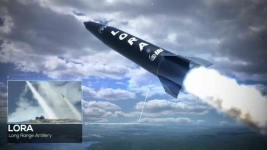
The Israeli newspaper Globes revealed that the Moroccan army is considering integrating Israel's long-range LORA missiles with the American HIMARS rocket artillery systems that the kingdom intends to acquire.
Globes quoted the defense website ZM as saying that Israel Aerospace Industries (IAI) plans to showcase the LORA system at the upcoming Marrakech Air Show next month. The newspaper indicated that this presence could pave the way for discussions on integrating LORA capabilities with the HIMARS systems in the Royal Moroccan Armed Forces.
The LORA missile is classified as a long-range weapon, with a declared range of approximately 400–500 kilometers and an accuracy of less than 10 meters, according to the system's specifications. If this option is pursued, its integration would give Morocco a firepower exceeding the 300-kilometer range associated with the HIMARS missiles available in the American launch systems, according to Globes.
The newspaper noted that LORA missiles had been used in practice before, including by Azerbaijan during the Nagorno-Karabakh war in 2020.
According to data reported by Globes, citing ZM, IAI's participation in the Marrakesh exhibition focuses on local and industrial cooperation, knowledge exchange and technology transfer, which may open the way for deals that also include strengthening local industrial and technological capabilities.
Talk of Morocco's potential interest in the Israeli LORA missile comes at a time when the Moroccan HIMARS deal has entered a more concrete implementation phase. A US Army document revealed that 10 HIMARS launchers designated for Morocco are included in the 2027 fiscal year logistics support program, part of a deal approved by Washington in 2023 that encompasses up to 18 launchers.
Meanwhile, Israel Aerospace Industries (IAI) confirmed its participation in the Marrakech Air Show, scheduled for October 7-10, 2026, where it will showcase the LORA long-range precision strike system, along with several of its other air and defense systems. The company also announced that its participation includes exploring opportunities for local cooperation, industrial partnerships, and technology transfer.
The timing of these developments lends particular significance to the report published by Globes.


The SC
INT'L MOD
- Thread starter
- #177
US-Israeli-Moroccan statement: Agreement to increase diplomatic representation between Morocco and Israel to ambassadors
Take the Palestinian ambassador to the Tindouf camps, who personally supports secession and the armed movement of the Polisario militias, and this before normalization in the first place..
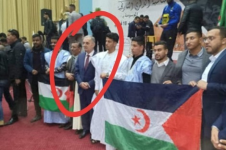
This case of the Palestinian ambassador to Algeria, the Foreign Ministry, the Presidency, and the Palestinian ambassador to Morocco disavowed his statements.
Quite simply, the Algerian state embraces the separatists on its land, arms them, and supports them diplomatically, militarily and politically for the simple reason of weakening and dividing its Arab Muslim neighbor Morocco..because it did not claim its true historical lands that France seized from it yet and annexed to present-day Algeria... Morocco did not find a way out except through a tripartite Moroccan-American-Israeli agreement, which Morocco recognizes as Israel and establishes economic and political relations with it in exchange for American-Israeli recognition of Moroccan Sahara and its support in the Security Council and the United Nations, and an acceleration in closing this file permanently. As for me, I am against the crimes committed against our Palestinian brothers..
The SC
INT'L MOD
- Thread starter
- #178
Morocco is considering acquiring 400 South Korean K2 Black Panther tanks to strengthen its armored forces
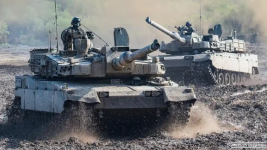
According to specialized reports, Morocco is considering acquiring up to 400 K2 tanks. However, this matter is still in the evaluation and feasibility study phase, and no contract or delivery schedule has yet been announced.
This interest comes as the Royal Moroccan Armed Forces seek to modernize their armored fleet, which includes a mix of American M1 Abrams tanks, along with older platforms such as the M60, M48, T-72, and VT-1A tanks. This presents challenges in terms of maintenance, supply, training, and standardizing operational systems.
The K2 Black Panther features a 120mm gun, an automated loading system that allows for operation by a crew of only three, an advanced fire control system, and high mobility thanks to a 1,500-horsepower engine and a sophisticated hydropneumatic suspension system.
Other reports indicate that Moroccan interest may also extend to the K2ME variant, designed for operation in hot and arid environments. The possibility of technology transfer and local maintenance services is also being explored, although these details have not yet been officially confirmed.
The K2, if the potential deal goes through, is seen not as a direct replacement for Morocco’s Abrams tanks, but rather as a modern platform that could help replace older tanks and restructure the tank fleet around a smaller number of platforms that are more operational and sustainable.
This also comes within the context of broader Moroccan interest in the South Korean defense industry. In April 2025, Moroccan Minister of Industry and Trade, Riadh Mezouar, visited Seoul and met with South Korean Minister of Trade, Industry and Energy, Ahn Duk-gyon, and other officials. The South Korean government officially confirmed that the talks focused on industrial, trade, and investment cooperation, at a time when Hyundai Rotem had secured a contract worth approximately $1.5 billion to supply trains to Morocco’s National Railways Office.
Specialized reports during the same period spoke of potential Moroccan interest in other Korean defense systems, including the Cheongung/KM-SAM air defense system and the K9 self-propelled howitzer, in addition to the KSS-III submarines. This suggests that interest in Seoul may extend beyond the K2 tank to building a broader defense and industrial partnership.
The potential Moroccan interest in the K2 tank does not appear to be isolated from a wider trend of strengthening defense and industrial cooperation with South Korea. Recent reports have revealed negotiations between Rabat and Seoul regarding a memorandum of understanding for defense cooperation, coinciding with major Korean companies seeking to expand their presence in the Moroccan market. This opens the door to a partnership that goes beyond the sale of a single weapons system to broader industrial and technological cooperation.
If Moroccan interest in the K2 progresses to the purchase stage, the Korean tank is unlikely to be a direct replacement for the Abrams family, which forms the modern backbone of the Moroccan armored forces. Rather, it could be used to modernize units that still rely on older platforms. This gives Morocco the potential to build a more modern armored force while retaining its American Abrams capabilities within other units.
The K2’s significance is further highlighted by the composition of Morocco’s tank fleet, which includes American Abrams tanks alongside M60, T-72, and VT-1A tanks. This diversity means varying sources of spare parts, training, and maintenance. Therefore, introducing a large number of K2s may be part of a gradual replacement process for older tanks, rather than simply adding a new model to the fleet.
Thus, the K2 Black Panther represents a potential option under consideration by Morocco, not yet a confirmed deal. Should this consideration develop into an actual procurement program, it could represent a significant expansion of the Moroccan-Korean defense partnership, providing Rabat with an additional source of armaments alongside its traditional partners in the United States and Europe.
The SC
INT'L MOD
- Thread starter
- #179
A Moroccan company develops a suicide march with a range of 2,000 kilometers
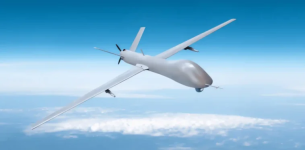
Moroccan company Ballistic Defense Systems announced the completion of the first prototype of an autonomous drone. The company says it is designed to operate over long distances without relying on GPS signals, a move aimed at addressing one of the most significant vulnerabilities facing drones and guided systems in electronic warfare environments.
Fahd Laamoumi, co-founder and CEO of Ballistic Defense, stated that the first prototype is now complete and announced the release of a demonstration video. He explained that the project stemmed from the need to develop a system capable of continuing to operate even if satellite signals are jammed or electronically spoofed.
According to Laamoumi, the drone uses an independent navigation system that does not require GPS. It reads the terrain below and compares it to free global elevation maps, allowing it to determine its location and continue its flight path autonomously. All processing is done onboard using a small, integrated computer, along with commercially available sensors.
The system isn't limited to autonomous navigation; Al-Amoumi says the aircraft relies on a multi-agent system powered by artificial intelligence. Upon approaching the target area, a second AI agent takes over target acquisition, before a third agent handles the final, high-precision approach phase.
Thus, the company describes the model as an aerial robot capable of autonomously performing a series of operations, from navigation and environmental awareness to decision-making and mission execution.
Al-Amoumi noted that the prototype was developed in less than 18 months at a cost of less than $1.15 million. He added that the navigation system's performance, according to the company's assessment, compares favorably with the best research published by leading American and European universities in this field.
The company says that one of the design objectives is to enable the system to be mass-produced at a significantly lower cost than similar systems, which could pave the way for the development of autonomous drones that do not rely primarily on space-based navigation infrastructure.
Al-Amoumi emphasized that the project is a Moroccan product in terms of development, engineering, programming, manufacturing, and testing. He pointed out that all stages of the work were carried out within Morocco by Moroccan engineers, without relying on external sources, and that the Kingdom retains the knowledge, data, and intellectual property associated with the project.
Al-Amoumi also praised the support provided by the Ministry of Industry and the Innovation Support Fund for the project, considering the development of this system to be part of a broader trend toward building national capabilities in defense industries and mastering technologies of strategic importance. The company reveals that the current prototype represents only the first phase of the program, with plans to conduct live testing in real-world conditions, along with developing a new generation of airframe and expanding the team.
This project comes amid growing global interest in drones capable of operating in environments with heavy jamming of satellite navigation signals. Alternative navigation technologies and AI-powered autonomy are becoming increasingly important for unmanned systems, especially when GPS signals become susceptible to jamming or spoofing.
According to the company, this drone represents the first version of a system that it believes could later evolve into a family of autonomous aerial systems, focusing on reducing costs, increasing autonomy, and enabling operation in environments lacking traditional navigation signals.
Engineer Fahad Al-Amoumi, co-founder and managing director of BDS, stated that the aircraft has a range of up to 2,000 kilometers. He explained that its development focuses on operating independently of GPS, allowing it to continue navigating in environments where satellite signals are jammed or spoofed.
According to the company, the model relies on autonomous navigation and onboard data processing technologies, employing artificial intelligence in the target acquisition, identification, and final approach phases.
Users who are viewing this thread
Total: 1 (members: 0, guests: 1)
Pakistan Defence Latest


Country Watch Latest
-
-
 Iran - Israel/US War: Israel-US declare war on Iran, Iran responds (68 Viewers)
- Latest: Persian Gulf
-
Trump orders military base mass shooter to be executed by firing squad (2 Viewers)
- Latest: j_hungary
-
-
Latest Posts
-
-

-
-
Iran - Israel/US War: Israel-US declare war on Iran, Iran responds (68 Viewers)
- Latest: Persian Gulf
-