Aircraft engine maker targets breakthroughs
New models to help tap into general aviation market, low-altitude economy
2026-03-09 09:13
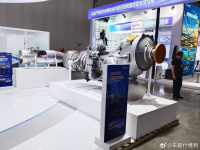
Aero Engine Corp of China, the nation's leading maker of aircraft engines, will continue tapping the general aviation market this year, planning to advance certification and flight tests for several new products, according to a senior expert.
Shan Xiaoming, chief designer at the AECC Hunan Aviation Powerplant Research Institute in Zhuzhou, Hunan province, said the company aims to achieve new breakthroughs in the general aviation market in 2026.
"Two of our major models designed for the general aviation sector — the AEP100 turboprop engine and the AES20 turboshaft engine — have entered the airworthiness certification phase," Shan said. "We hope they can receive the type certificate from the civil aviation authority before the end of this year."
Meanwhile, several other new types, including turboprop, turboshaft and hybrid-electric motors, will conduct maiden flights this year and be displayed to the public at airshows, she told China Daily in an exclusive interview in Beijing.
Looking ahead to the 15th Five-Year Plan period (2026-30), Shan said AECC will develop "high-quality, low-cost and comprehensively competitive" propulsion products for general aviation aircraft to meet the needs of the low-altitude economy.
"The company will speed up the promotion and application of mature engine types such as the WZ-16 and AES100, continue to lower product costs and develop new variants," she said.
AECC will also accelerate research and development of new models for green, unmanned and smart aircraft, while advancing the design and certification of hybrid-electric and all-electric propulsion systems. Shan said the company hopes these systems will enter the market by 2030.
Shan is a deputy to the 14th National People's Congress and is attending the annual plenary session of the country's top legislature.
General aviation refers to civil aviation operations other than scheduled air services. Common general aviation activities include pilot training, charter flights, sightseeing tours, air medical services, aerial mapping and surveying, maritime inspection and crop dusting.
Aircraft used for general aviation are typically small fixed-wing planes, lightweight helicopters and large drones.
Ten years ago, general aviation had already become one of the central government's priority industries.
In recent years, as the low-altitude economy has emerged as a highly anticipated new sector, general aviation has regained momentum. Local governments and companies across the country are racing to gain a foothold in the sector, generating strong demand for general aviation equipment.
To seize these opportunities, AECC has invested significant resources in developing engines for general aviation aircraft and has achieved solid results, Shan said.
In 2025, the company secured 91 firm orders for general aviation engines and delivered 177 units.
During a major industry expo in Zhuhai, Guangdong province, in November, AECC signed cooperation and order agreements with 17 customers, with a total contract value exceeding 1 billion yuan ($145 million), according to Shan.
Aero Engine Corp of China, the nation's leading maker of aircraft engines, will continue tapping the general aviation market this year, planning to advance certification and flight tests for several new products, according to a senior expert.

www.chinadaily.com.cn







 Pak Ship Collides With Indian Navy Unit, Delhi Summons Islamabad's Envoy (17 Viewers)
 Iran - Israel/US War: Israel-US declare war on Iran, Iran responds (118 Viewers)

