Chinese Missile Development News

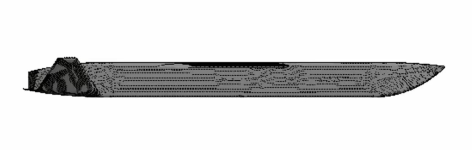
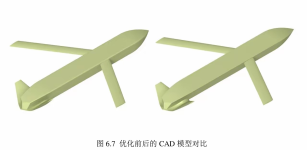
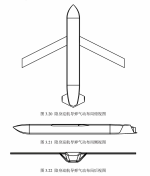
A new type of stealth cruise missile has been revealed in a specialized Chinese academic paper.

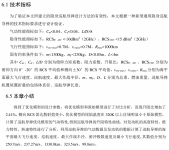
Missile Length: <4 m
Missile Dimensions: (Folded) Width <0.85 m; Thickness = 0.35 m
Weight: <1,300 kg
Maximum Level Flight Speed: 250.7 m/s
Cruise Speed: 237.27 m/s
Range: 1,330 km

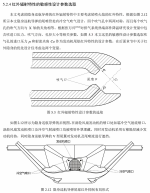
This type of cruise missile features specifically optimized stealth characteristics; its engine exhaust nozzle incorporates a cold-air injection design to further reduce the infrared signature of its exhaust plume.

Speculation: This is a stealth cruise missile designed specifically to accommodate the Internal Weapons Bay (IWB) characteristics of the J-20, J-35A, and other stealth fighter aircraft.
1777951120588.png
1777951165594.png
1777951175028.png
1777951137849.png
1777951146051.png
 

Xi’s J-20 Jets Get Deadlier With New PL-16 Missiles, Threaten To Destroy US’ Air Dominance?​

To view this content we will need your consent to set third party cookies.
For more detailed information, see our cookies page.
 
@Michael
dont you think the PLARF has quite less inventory, as in terms of numbers of missile?
The PLARF has only about more or less3500 missiles , which in my view is quite small for a service with that big of a budget and strong hold?
Iranians seem to have more , but we can argue on the complexity of the missiles and dependence on other things .
Can you explain like how are they not more , or are they but just hiding in some place for years.
More like in depth analysis. also plz dont try to spin the wheel and answer way of the topic.
I had read around 2-3 reports by CASI and other long time ago , they had similar numbers.
 
@Michael
dont you think the PLARF has quite less inventory, as in terms of numbers of missile?
The PLARF has only about more or less3500 missiles , which in my view is quite small for a service with that big of a budget and strong hold?
Iranians seem to have more , but we can argue on the complexity of the missiles and dependence on other things .
Can you explain like how are they not more , or are they but just hiding in some place for years.
More like in depth analysis. also plz dont try to spin the wheel and answer way of the topic.
I had read around 2-3 reports by CASI and other long time ago , they had similar numbers.
Your viewpoint has serious problems.

You can try answering this question first:

How many Iranian missiles do you think are roughly equivalent in terms of the combat effectiveness and deterrent power of one DF-5C missile against an adversary?

* A little-known fact:
The country with the most submarines in the world is not the United States, not Russia, not China... but North Korea!
 
Last edited:
Your viewpoint has serious problems.

You can try answering this question first:

How many Iranian missiles do you think are roughly equivalent in terms of the combat effectiveness and deterrent power of one DF-5C missile against an adversary?

* A little-known fact:
The country with the most submarines in the world is not the United States, not Russia, not China... but North Korea!
you are back with your old plays man.
I have already said in my earlier comment that "Iranians seem to have a larger inventory , but we can argue the complexity,size and other things"

Iranians seem to have quite a lot of SRBMs , which the chinese do too (persumably more technologically superior) but i my asking was the size of inventory.

WHAT DO YOU THINK? Are these enough? , considering how many "enemies" the chinese have . and each of them have thier own ABM sheilds. and ISAR/ISTAR.

PLARF will use a part of its inventory in the taiwan straights initial attacks (correct me if i am wrong about wether the army 1st artillery will be used or not) , then how will it sustain the larger and longer attacks that will go on for days .

Is their a strategy on how the PLARF will try to have the maximize efficiency with its missiles? as in saving up inventory? , does it have any storage sites from where the figures dont come out?

Or any paper i can read , A chinese origin one would be better (if its translated into english)
 
you are back with your old plays man.
I have already said in my earlier comment that "Iranians seem to have a larger inventory , but we can argue the complexity,size and other things"

Iranians seem to have quite a lot of SRBMs , which the chinese do too (persumably more technologically superior) but i my asking was the size of inventory.

WHAT DO YOU THINK? Are these enough? , considering how many "enemies" the chinese have . and each of them have thier own ABM sheilds. and ISAR/ISTAR.

PLARF will use a part of its inventory in the taiwan straights initial attacks (correct me if i am wrong about wether the army 1st artillery will be used or not) , then how will it sustain the larger and longer attacks that will go on for days .

Is their a strategy on how the PLARF will try to have the maximize efficiency with its missiles? as in saving up inventory? , does it have any storage sites from where the figures dont come out?

Or any paper i can read , A chinese origin one would be better (if its translated into english)
US is planning to increase its (conventional) missile inventory to around 60,000.

Lesson from Iran war.
 
US is planning to increase its (conventional) missile inventory to around 60,000.

Lesson from Iran war.
People tend to underestimate the Capability of the US to produce weapons . The countries that are coming up with their unique and revolutionary ideas , have taking inspiration from things the US did in the 50s 60s and afterwards.


It will take a lil time , but US wont just back out of taiwan straight without putting a massive fight. Its gonna be a thing to watch.
 
People tend to underestimate the Capability of the US to produce weapons . The countries that are coming up with their unique and revolutionary ideas , have taking inspiration from things the US did in the 50s 60s and afterwards.


It will take a lil time , but US wont just back out of taiwan straight without putting a massive fight. Its gonna be a thing to watch.
Talking of unique idea. Around half of this expansion will come from low cost (swarming) missiles developed by the likes of L3 Harris, Anduril, etc.

To view this content we will need your consent to set third party cookies.
For more detailed information, see our cookies page.
 
you are back with your old plays man.
I have already said in my earlier comment that "Iranians seem to have a larger inventory , but we can argue the complexity,size and other things"

Iranians seem to have quite a lot of SRBMs , which the chinese do too (persumably more technologically superior) but i my asking was the size of inventory.

WHAT DO YOU THINK? Are these enough? , considering how many "enemies" the chinese have . and each of them have thier own ABM sheilds. and ISAR/ISTAR.

PLARF will use a part of its inventory in the taiwan straights initial attacks (correct me if i am wrong about wether the army 1st artillery will be used or not) , then how will it sustain the larger and longer attacks that will go on for days .

Is their a strategy on how the PLARF will try to have the maximize efficiency with its missiles? as in saving up inventory? , does it have any storage sites from where the figures dont come out?

Or any paper i can read , A chinese origin one would be better (if its translated into english)
1. You first used the scale of Iran's missiles to draw an analogy to the scale of the PLARF. I'm just telling you, this analogy is meaningless. In terms of actual strike capability and strategic deterrence, all of Iran's missiles combined don't even equal the capability of a single ICBM brigade-level unit of the PLARF.

2. The PLARF's true capabilities are top secret within the PLA. The figures you can obtain are all wild guesses from Western media. No matter how much I know, it's meaningless. You won't get any answers you're looking for.

3. Currently, China's strike force distribution has been adjusted. Conventional strike missions within a 1000km range have been completely transferred to the Army, Navy, and Air Force. The PLARF retains only its special target strike support capability (this capability is continuously being transferred to conventional forces).

In simpler terms, many of Iran's missile strike capabilities have been transferred to other strike methods within the PLA, and the PLARF is no longer needed to carry out strike missions. The PLARF's functional positioning is primarily strategic at the strategic level, with operational-level support, and it is not responsible for tactical strike missions.

You may not have noticed, but when carrying out strike missions, using missiles is the least cost-effective method if other means can reach the target.
 
Last edited:
1. You first used the scale of Iran's missiles to draw an analogy to the scale of the PLARF. I'm just telling you, this analogy is meaningless. In terms of actual strike capability and strategic deterrence, all of Iran's missiles combined don't even equal the capability of a single ICBM brigade-level unit of the PLARF.

2. The PLARF's true capabilities are top secret within the PLA. The figures you can obtain are all wild guesses from Western media. No matter how much I know, it's meaningless. You won't get any answers you're looking for.

3. Currently, China's strike force distribution has been adjusted. Conventional strike missions within a 1000km range have been completely transferred to the Army, Navy, and Air Force. The PLARF retains only its special target strike support capability (this capability is continuously being transferred to conventional forces).

In simpler terms, many of Iran's missile strike capabilities have been transferred to other strike methods within the PLA, and the PLARF is no longer needed to carry out strike missions. The PLARF's functional positioning is primarily strategic at the strategic level, with operational-level support, and it is not responsible for tactical strike missions.
so basically , PLARF has turned itself to the strategic level threats .
 
so basically , PLARF has turned itself to the strategic level threats .
PLARF was originally positioned at the strategic level. Early Chinese missiles were primarily nuclear-powered.

With technological advancements, many of China's short- and medium-range missiles have had their warheads modified to conventional and special-purpose (non-nuclear) warheads. These missiles were long controlled by PLARF.

Now, PLAGF's long-range rocket artillery system is developing rapidly, and many munitions have reached the capability level of PLARF's short-range missiles. Simultaneously, many special-purpose warheads have emerged. Therefore, these missions are gradually shifting from PLARF to PLAGF.

PLARF is returning to its original role.

Regarding the number of missiles in PLARF, the information I have is that their number has never been a fixed figure; it has always been dynamically changing. Simply put, today it might have 2,000 missiles, and a few days later it might have 6,000. These figures are all "correct."
 

Users who are viewing this thread

Pakistan Defence Latest

Country Watch Latest

Latest Posts

Back
Top