Chinese Naval Platform & PLAN discussions

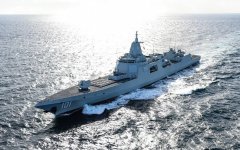
Chinese Type 055 circles Australia and New Zealand​

maxresdefault.jpg
 
Type 055 makes Arleigh Burke look like a toy.
 
To view this content we will need your consent to set third party cookies.
For more detailed information, see our cookies page.
 
To view this content we will need your consent to set third party cookies.
For more detailed information, see our cookies page.

1747610333616.jpeg
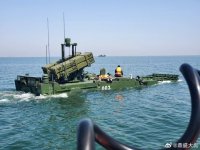
HJ-10 ATGM launcher based on the Type 05 amphibious tank
 
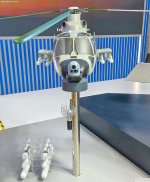
Z-9ME.jpg
The latest image (May 2025) indicated that an improved version of Z-9F dubbed Z-9ME has been proposed for export. It features a new dipping sonar, a large surface search radar mounted in front the nose cone with an EO turret installed on top of it. The new radar might be based on the one onboard the Z-20F ASW helicopter. Z-9ME is also capable of carrying up to 4 depth charges, YJ-9E ASMs and ASW torpedoes under the stub wings. Z-9ME appears similar to Eurocopter AS565MB ASW helicopter.
- Last Updated 5/21/25
 
To view this content we will need your consent to set third party cookies.
For more detailed information, see our cookies page.
 

One Chinese shipyard outbuilt entire US industry since WWII in one year

Source: The Wall Street Journal
30 May 2025 15:48

China’s industrial boom is reshaping global military power, as US defense production capacity falls far behind in key areas.

664a2c1b-23e9-4942-8f8a-eea45e22a11e.jpg
The United States is falling behind in the global race to build and sustain war-fighting capability, according to a detailed report by The Wall Street Journal.

While US administrations have long recognized the dual threat posed by China’s military growth and economic dominance, America’s own defense manufacturing capacity has withered.

China, by contrast, has emerged as the world’s most formidable military-industrial engine, outproducing, outbuilding, and outscaling its strategic rival.

Modern warfare is increasingly shaped by industrial throughput. As The Wall Street Journal highlights, conflicts like the war in Ukraine reveal that success hinges not only on tactics or technology but on the ability to manufacture drones, artillery shells, armored vehicles, and logistics support at scale.

In the 1940s, the US overwhelmed its enemies by producing faster and more efficiently than anyone else.

Today, it can no longer match the pace of wartime output that once defined its global dominance.

US trailing China’s shipbuilding, naval output​

One of the starkest indicators of the growing imbalance is in naval shipbuilding. According to data cited by The Wall Street Journal, a single Chinese shipbuilder in 2024 produced more commercial tonnage than the entire US shipbuilding industry has since the end of World War II.

In a related news piece, Arnav Rao argues in The Atlantic that America’s decline in maritime capacity has become a critical national security vulnerability. Once a dominant shipbuilding and sea power, the United States now constructs just 0.13% of the world’s large vessels and owns virtually none of the commercial fleet responsible for transporting its imports and military supplies, despite relying on ocean shipping for over 80% of its international trade by weight.

Neglect, deregulation take toll​


The United States is falling behind in the global race to build and sustain war-fighting capability, according to a detailed report by The Wall Street Journal.

While US administrations have long recognized the dual threat posed by China’s military growth and economic dominance, America’s own defense manufacturing capacity has withered.

China, by contrast, has emerged as the world’s most formidable military-industrial engine, outproducing, outbuilding, and outscaling its strategic rival.

Modern warfare is increasingly shaped by industrial throughput. As The Wall Street Journal highlights, conflicts like the war in Ukraine reveal that success hinges not only on tactics or technology but on the ability to manufacture drones, artillery shells, armored vehicles, and logistics support at scale.

In the 1940s, the US overwhelmed its enemies by producing faster and more efficiently than anyone else.

Today, it can no longer match the pace of wartime output that once defined its global dominance.

US trailing China’s shipbuilding, naval output​

One of the starkest indicators of the growing imbalance is in naval shipbuilding. According to data cited by The Wall Street Journal, a single Chinese shipbuilder in 2024 produced more commercial tonnage than the entire US shipbuilding industry has since the end of World War II.

In a related news piece, Arnav Rao argues in The Atlantic that America’s decline in maritime capacity has become a critical national security vulnerability. Once a dominant shipbuilding and sea power, the United States now constructs just 0.13% of the world’s large vessels and owns virtually none of the commercial fleet responsible for transporting its imports and military supplies, despite relying on ocean shipping for over 80% of its international trade by weight.

Neglect, deregulation take toll​

According to The Atlantic, this erosion stems from decades of policy neglect and deregulation, which allowed foreign competitors, especially China, which now commands 60% of new shipbuilding orders and boasts more than 200 times the US shipbuilding capacity, to seize control of nearly every link in the maritime supply chain.

That scale gives China a massive edge, not only in global shipping but also in the ability to surge military production in the event of conflict. Since 2000, China has constructed more than twice as many naval vessels as the United States, positioning itself for maritime supremacy.

Unlike the United States, China has civilian manufacturers that can be easily redirected to arms production, making it uniquely flexible in wartime.

The Wall Street Journal reports that many Chinese factories are already outfitted with 5G private networks and industrial robotics that link designers, production lines, and frontline feedback in real-time. This gives China the ability to iterate and scale weapons systems with a speed and efficiency that the US currently lacks.

Logistics: China’s maritime labor force dwarfs America’s​

Military effectiveness depends not only on weapons but on sustaining operations, fuel, spare parts, rations, and transport. In this realm, China again leads. As The Wall Street Journal notes, the US has fewer than 10,000 active commercial sailors, a number so low it’s no longer officially tracked.

By comparison, China’s maritime logistics force includes nearly 200 times more merchant mariners, supported by a global fleet of ships that can rapidly supply distant theaters.

China’s dominance is not limited to factories and ships. It also controls the world’s supply of critical raw materials, including rare earth elements essential for missiles, fighter jets, submarines, and advanced electronic systems.

Despite years of US attempts to diversify away from Chinese sources, The Wall Street Journal emphasizes that Beijing has maintained and even expanded its control over global mineral processing, giving it the upper hand in a prolonged conflict.

The US would need a WWII-style industrial mobilization​

If the US were drawn into a major war, it would need to reorient its economy and workforce in a way not seen since World War II.

The Wall Street Journal warns that America would face the monumental challenge of reactivating mothballed manufacturing, retraining labor, and rebuilding a fragmented supply chain.

China, in contrast, is already poised for such a shift, with a manufacturing workforce, automation infrastructure, and command economy ready to mobilize on demand.

Though American military platforms remain technologically advanced, The Wall Street Journal makes it clear that industrial speed and capacity may prove more decisive in modern conflict than innovation alone. In a war of attrition, the ability to build faster, replace losses, and sustain logistics will define success.

Without a serious revival of its military-industrial base, the US may find itself outproduced and outmaneuvered by a rival that is not only armed but industrially ready for war.
 
Now it's time for Chinese Nuclear Submarine Fleet to dwarf the US' by 3-to-1.
 
Americans spent 40 years investing and outsourcing to China, which meant transferring jobs and knowledge, and now whine about China turning into a global power outmatching America. What did they expect that Chinese would be content making cheap shoes and clothes forever ?

I remember early 2000's working in a company that had begun outsourcing IT to India, and the VP mentioned that India would not be content to just be a cheap IT outsourcer forever. So for India , Americans recognized or believed that the outsourcing would eventually turn it into an economic power, but not for China!
 

One Chinese shipyard outbuilt entire US industry since WWII in one year

Source: The Wall Street Journal
30 May 2025 15:48

China’s industrial boom is reshaping global military power, as US defense production capacity falls far behind in key areas.

View attachment 124784
The United States is falling behind in the global race to build and sustain war-fighting capability, according to a detailed report by The Wall Street Journal.

While US administrations have long recognized the dual threat posed by China’s military growth and economic dominance, America’s own defense manufacturing capacity has withered.

China, by contrast, has emerged as the world’s most formidable military-industrial engine, outproducing, outbuilding, and outscaling its strategic rival.

Modern warfare is increasingly shaped by industrial throughput. As The Wall Street Journal highlights, conflicts like the war in Ukraine reveal that success hinges not only on tactics or technology but on the ability to manufacture drones, artillery shells, armored vehicles, and logistics support at scale.

In the 1940s, the US overwhelmed its enemies by producing faster and more efficiently than anyone else.

Today, it can no longer match the pace of wartime output that once defined its global dominance.

US trailing China’s shipbuilding, naval output​

One of the starkest indicators of the growing imbalance is in naval shipbuilding. According to data cited by The Wall Street Journal, a single Chinese shipbuilder in 2024 produced more commercial tonnage than the entire US shipbuilding industry has since the end of World War II.

In a related news piece, Arnav Rao argues in The Atlantic that America’s decline in maritime capacity has become a critical national security vulnerability. Once a dominant shipbuilding and sea power, the United States now constructs just 0.13% of the world’s large vessels and owns virtually none of the commercial fleet responsible for transporting its imports and military supplies, despite relying on ocean shipping for over 80% of its international trade by weight.

Neglect, deregulation take toll​


The United States is falling behind in the global race to build and sustain war-fighting capability, according to a detailed report by The Wall Street Journal.

While US administrations have long recognized the dual threat posed by China’s military growth and economic dominance, America’s own defense manufacturing capacity has withered.

China, by contrast, has emerged as the world’s most formidable military-industrial engine, outproducing, outbuilding, and outscaling its strategic rival.

Modern warfare is increasingly shaped by industrial throughput. As The Wall Street Journal highlights, conflicts like the war in Ukraine reveal that success hinges not only on tactics or technology but on the ability to manufacture drones, artillery shells, armored vehicles, and logistics support at scale.

In the 1940s, the US overwhelmed its enemies by producing faster and more efficiently than anyone else.

Today, it can no longer match the pace of wartime output that once defined its global dominance.

US trailing China’s shipbuilding, naval output​

One of the starkest indicators of the growing imbalance is in naval shipbuilding. According to data cited by The Wall Street Journal, a single Chinese shipbuilder in 2024 produced more commercial tonnage than the entire US shipbuilding industry has since the end of World War II.

In a related news piece, Arnav Rao argues in The Atlantic that America’s decline in maritime capacity has become a critical national security vulnerability. Once a dominant shipbuilding and sea power, the United States now constructs just 0.13% of the world’s large vessels and owns virtually none of the commercial fleet responsible for transporting its imports and military supplies, despite relying on ocean shipping for over 80% of its international trade by weight.

Neglect, deregulation take toll​

According to The Atlantic, this erosion stems from decades of policy neglect and deregulation, which allowed foreign competitors, especially China, which now commands 60% of new shipbuilding orders and boasts more than 200 times the US shipbuilding capacity, to seize control of nearly every link in the maritime supply chain.

That scale gives China a massive edge, not only in global shipping but also in the ability to surge military production in the event of conflict. Since 2000, China has constructed more than twice as many naval vessels as the United States, positioning itself for maritime supremacy.

Unlike the United States, China has civilian manufacturers that can be easily redirected to arms production, making it uniquely flexible in wartime.

The Wall Street Journal reports that many Chinese factories are already outfitted with 5G private networks and industrial robotics that link designers, production lines, and frontline feedback in real-time. This gives China the ability to iterate and scale weapons systems with a speed and efficiency that the US currently lacks.

Logistics: China’s maritime labor force dwarfs America’s​

Military effectiveness depends not only on weapons but on sustaining operations, fuel, spare parts, rations, and transport. In this realm, China again leads. As The Wall Street Journal notes, the US has fewer than 10,000 active commercial sailors, a number so low it’s no longer officially tracked.

By comparison, China’s maritime logistics force includes nearly 200 times more merchant mariners, supported by a global fleet of ships that can rapidly supply distant theaters.

China’s dominance is not limited to factories and ships. It also controls the world’s supply of critical raw materials, including rare earth elements essential for missiles, fighter jets, submarines, and advanced electronic systems.

Despite years of US attempts to diversify away from Chinese sources, The Wall Street Journal emphasizes that Beijing has maintained and even expanded its control over global mineral processing, giving it the upper hand in a prolonged conflict.

The US would need a WWII-style industrial mobilization​

If the US were drawn into a major war, it would need to reorient its economy and workforce in a way not seen since World War II.

The Wall Street Journal warns that America would face the monumental challenge of reactivating mothballed manufacturing, retraining labor, and rebuilding a fragmented supply chain.

China, in contrast, is already poised for such a shift, with a manufacturing workforce, automation infrastructure, and command economy ready to mobilize on demand.

Though American military platforms remain technologically advanced, The Wall Street Journal makes it clear that industrial speed and capacity may prove more decisive in modern conflict than innovation alone. In a war of attrition, the ability to build faster, replace losses, and sustain logistics will define success.

Without a serious revival of its military-industrial base, the US may find itself outproduced and outmaneuvered by a rival that is not only armed but industrially ready for war.
However, doesn't this just imply the US has already built and deployed everything it needs and China has or is catching up now?
 
However, doesn't this just imply the US has already built and deployed everything it needs and China has or is catching up now?
No, it means it lost capability that they used to have, spelling big trouble for its future, UK experienced the same deindustrialisation process before US emerged on the global stage.
 

How China Went from 19th-Century Subjugation to Global Superpower​

To view this content we will need your consent to set third party cookies.
For more detailed information, see our cookies page.


May 11, 2025
China is one of the world's oldest civilizations. It has been a great power in the past and aspires to become a global superpower in the future. Today’s China it is still grappling with traumas that go back to the 19th century.

Back then China sold silk, tea and porcelain to the British Empire, but hardly bought any British goods. To balance its trade with China, the British smuggled Indian opium into Chinese ports, which immediately increased demand for the drug and brought detrimental effects to the Chinese economy and the population.

The Emperor's protests did not prevent the British Empire from forcing through the legalization of opium in China after waging two wars. Japan also surprised and devastated the country in what is known as the Century of Humiliation. From then until today, China has focused on steering its destiny and disarming its rivals.
 

Users who are viewing this thread

Latest Posts

Back
Top