China’s Z-20 ‘Tactical Assault’ Chopper Spotted In Tianjin Ahead Of Exposition; Designer Claims Edge Over U.S. Black Hawks
October 15, 2025
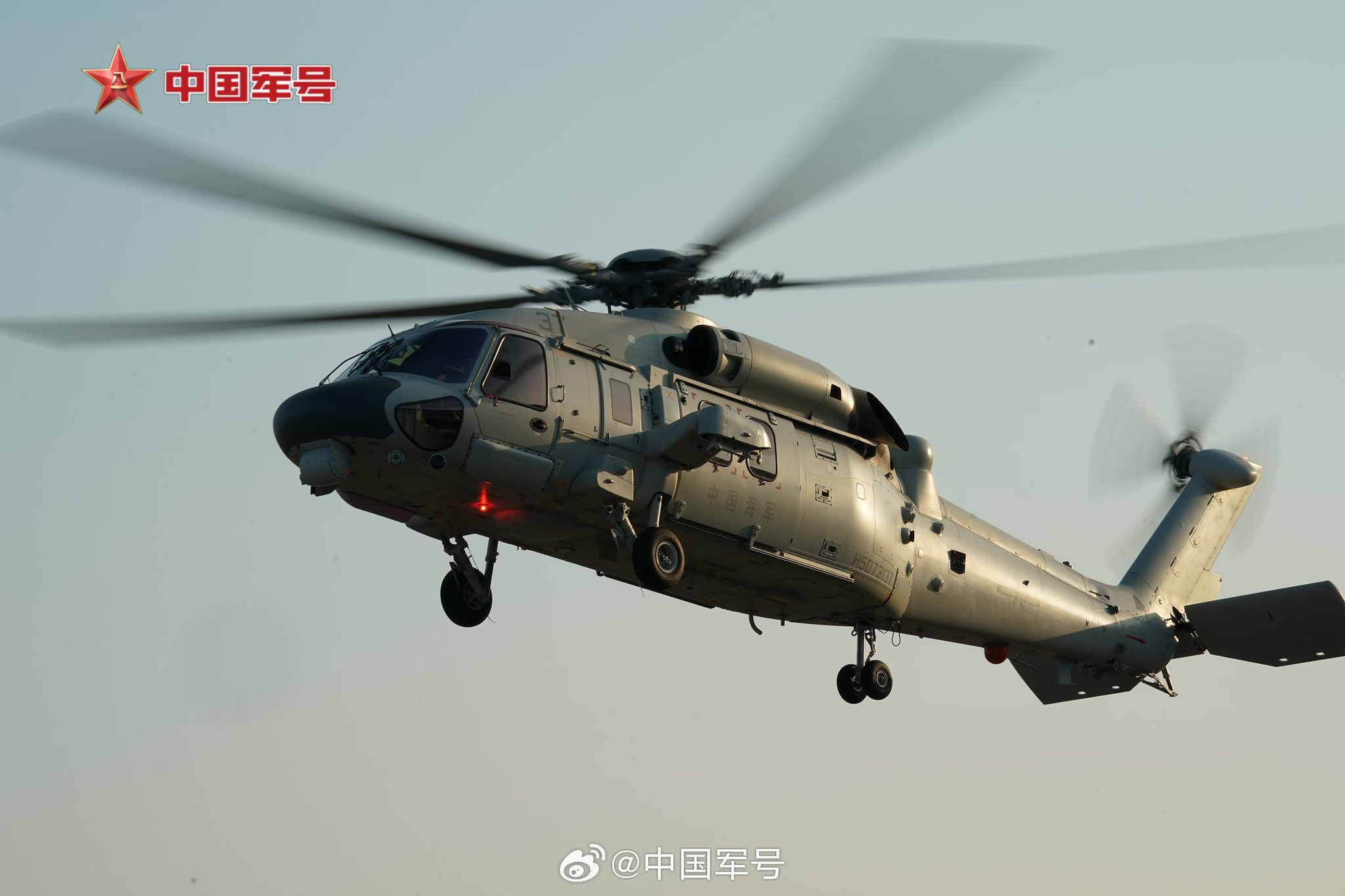
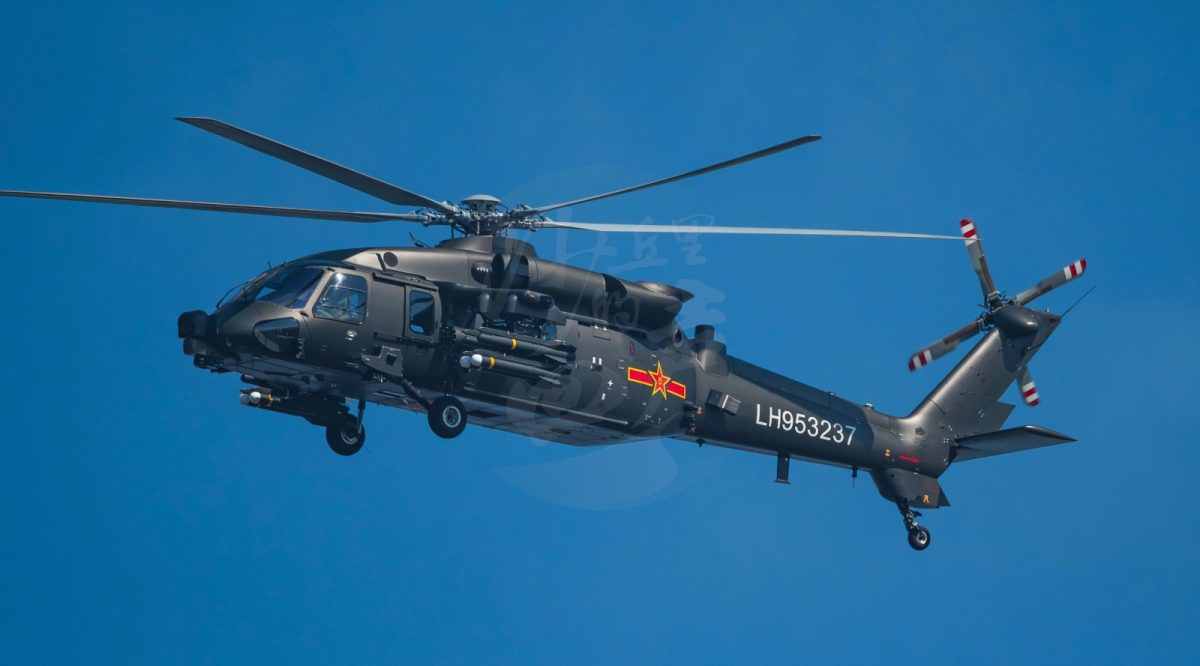
China’s Z-20T attack helicopter, believed to be an answer to the US UH-60 Black Hawk, was seen in Tianjin for the 7th China Helicopter Exposition that is set to kick off on October 16.
Multiple types of Chinese PLA Army helicopters arrived in China’s Tianjin Municipality on October 12 to participate in the 7th China Helicopter Exposition. These include the Z-10 attack helicopter, the Z-20 utility helicopter, and the Z-20T assault helicopter, which is making its
debut at the event.
The expo is being co-hosted by the Aviation Industry Corporation of China (AVIC) and the People’s Liberation Army (PLA) forces.
The Z-20T was unveiled at the September 3 Victory Day Parade, where seven of these attack helicopters formed a triangular aerial flag-bearing echelon. It will now be showcased at the expo that runs through October 19 and is anticipated to make its first formal flight at the helicopter exposition event.
The Z-20T is the latest addition to the Z-20 helicopter series. The new helicopter is based on the baseline Z-20 and has transport and fire assault capabilities, as noted by China Military Bugle, the official press account of the Chinese armed forces.
The “T” designation in the name of the chopper stands for “Tactical Assault.”
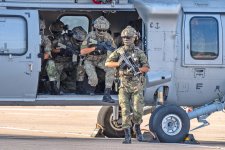
The Z-20T variant enhances the base Z-20’s transport capabilities with offensive weaponry, making it suitable not only for air assault but also for close air support, special operations, and fire suppression during troop insertions.
It is not a dedicated attack helicopter like the Z-10 but rather a hybrid “gunship transport” that supports airborne insertions in contested environments, as per reports in the state media.
Earlier, Chinese pilot Zhang Jiayang told
Global Times that this new variant includes a set of small wings that can carry a variety of weaponry, including a host of anti-tank guided missiles (ATGMs) like the KD-10, among other potent and lethal munitions. According to China Military Bugle, the Z-20T also has a targeting and observation system in the nose that can supply information to enable accurate strikes.
The assault variant emerged in the early 2020s as part of the Z-20 family’s expansion into specialized roles. It was first teased in concept models around 2021 and later featured in reports by 2024.
More recently, in March 2025, reports in the state broadcaster CCTV indicated that it had entered active service with PLA Ground Forces (PLAGF) units and was undergoing high-intensity training for special operations.
A Z-20T assault helicopter carrying a PL-90 AAM (Via X)
The Z-20T is optimized for China’s diverse terrains, from Tibetan plateaus to maritime operations. Earlier this month, a Z-20T assault helicopter was seen carrying a PL-90 air-to-air missile, as pointed out by PLA observers, including Andreas Rupprecht.
The Z-20T excels in air assault, special operations, reconnaissance, rescue, anti-terrorism, psychological operations, battlefield infiltration, rapid personnel deployment/extraction under fire, and close air support.
The modularity of the Z-20T would allow quick switches between armed strikes and transport modes, with enhanced situational awareness from Electro Optic or Infrared sensors and avionics. The Z-20T focuses on ground-based PLA Army tasks. The high-altitude performance and defensive suites aboard the chopper make it resilient in contested environments.
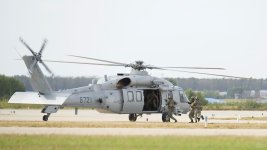
Notably, the Z-20 family, including the T variant, is positioned as China’s indigenous response to the US Sikorsky UH-60. Developed by the Harbin Aircraft Industry Group since 2006, it shares a similar design, size, layout, and performance capabilities with the Black Hawk, including a maximum takeoff weight of around 10 tons and multi-role functions.
The Z-20T is optimized for attack and fire support missions, similar to the armed variants of the US Black Hawk.
Z-20J shipborne helicopter (Via X)
In November last year, Beijing unveiled the Z-20J, a navalized version of the Z-20. The helicopter is specifically for shipboard operations, capable of rapid deployment in both offensive and defensive maritime missions.
Since the Z-20J can be fitted with guns, rockets, and air-to-ground missiles to provide efficient fire support against land targets, it is considered crucial for amphibious maritime operations. The Z-20J is a multipurpose aircraft capable of conducting search and rescue missions and aerial transport.
While both Z-20J and the Z-20T are armed variants of the chopper, they are designed for different mission sets, with Z-20J being a naval variant, whereas the ‘T’ variant is a specialized assault aircraft operated by the ground forces.
The Uncanny Resemblance Between Z-20 & UH-60
The Z-20T stems from the broader Z-20 program, which began in 2006 as China’s “10-ton helicopter project” to create an indigenous medium-lift utility helicopter capable of high-altitude operations in mountainous regions. The baseline Z-20’s first flight occurred on December 23, 2013, and it entered service on October 1, 2019.
There have been talks about potential upgrades for Z-20 for some time, and Beijing has already churned out different variants for specific roles.
While the Z-20 is believed to be a Black Hawk analog, China has been accused of reverse engineering the American chopper to develop the Z-20, as reported by the EurAsian Times on several occasions.
China is alleged to have accessed the technology when the helicopter was deployed to and left behind in Pakistan, during Operation Neptune Spear, which was conducted to hunt down Al Qaeda terrorist Osama Bin Laden.
On May 2, 2011, the US military deployed customized versions of Black Hawks to conceal their radar and infrared signatures during its operation to attack Osama Bin Laden’s compound in Abbottabad, Pakistan.
Unfortunately, one of these choppers crashed during the mission.
The US military quickly destroyed it with explosives before leaving the area, but the tail of the helicopter was later recovered by the Pakistani authorities.
Soon after the raid, allegations surfaced that Pakistan had allowed Chinese engineers to
examine the wreckage of the stealth Black Hawk. According to reports, Chinese officials were permitted to take photographs and samples of the components used in the stealthy Black Hawk. While this could not be independently verified, there is an uncanny resemblance between the Z-20 and the UH-60.
When China displayed the stealth variant of the Z-20 for the first time, some analysts surmised that it had a ‘trapezoidal airframe,’ similar to “the earliest US stealth Hawk studies”.
The allegation was also based on the fact that Pakistan had seized the tail of the downed stealth Black Hawk, which demonstrated considerable use of composite materials to reduce noise, weight, and radar signatures. These claims have been dismissed by the Chinese state media.
Islamabad returned the wreckage after three weeks of intense diplomacy.
Despite their similarities, there is a clear distinction between the two in some aspects, including their cockpit, tail layouts, and rotor designs. The Z-20 has five rotors, compared to the Black Hawk’s four, and it now appears that the Chinese helicopter is also equipped with a satellite communications array. On its part, Beijing claims the Z-20 has proven its mettle as a strong helicopter since its maiden flight.
Z-20’s chief designer, Deng Jinghui, was earlier quoted as saying: “The Z-20 is a fourth-generation helicopter with many technologies the Black Hawk does not have, including a fly-by-wire (FBW) flight control system, which is a typical characteristic to make a helicopter ranking among the fourth generation.”
Separately, Chen Guang, vice general manager of AVICOPTER, the helicopter branch of the Aviation Industry Corporation of China (AVIC), had earlier stressed advanced features (and differences with the Black Hawk) like active noise and vibration control, an indigenous turboshaft engine that can support flight in high altitude, low oxygen environments, low noise rotor design, and aerodynamic rotor shapes that are considered advanced even in Western aviation industry circles.
That said, China’s operation of new, specialised variants of Z-20 demonstrates that its aviation capability is undergoing a significant expansion.
China’s Z-20T attack helicopter, believed to be an answer to the US UH-60 Black Hawk, was seen in Tianjin for the 7th China Helicopter Exposition that is set to kick off on October 16. Multiple types of Chinese PLA Army helicopters arrived in China’s Tianjin Municipality on October 12 to...

www.eurasiantimes.com