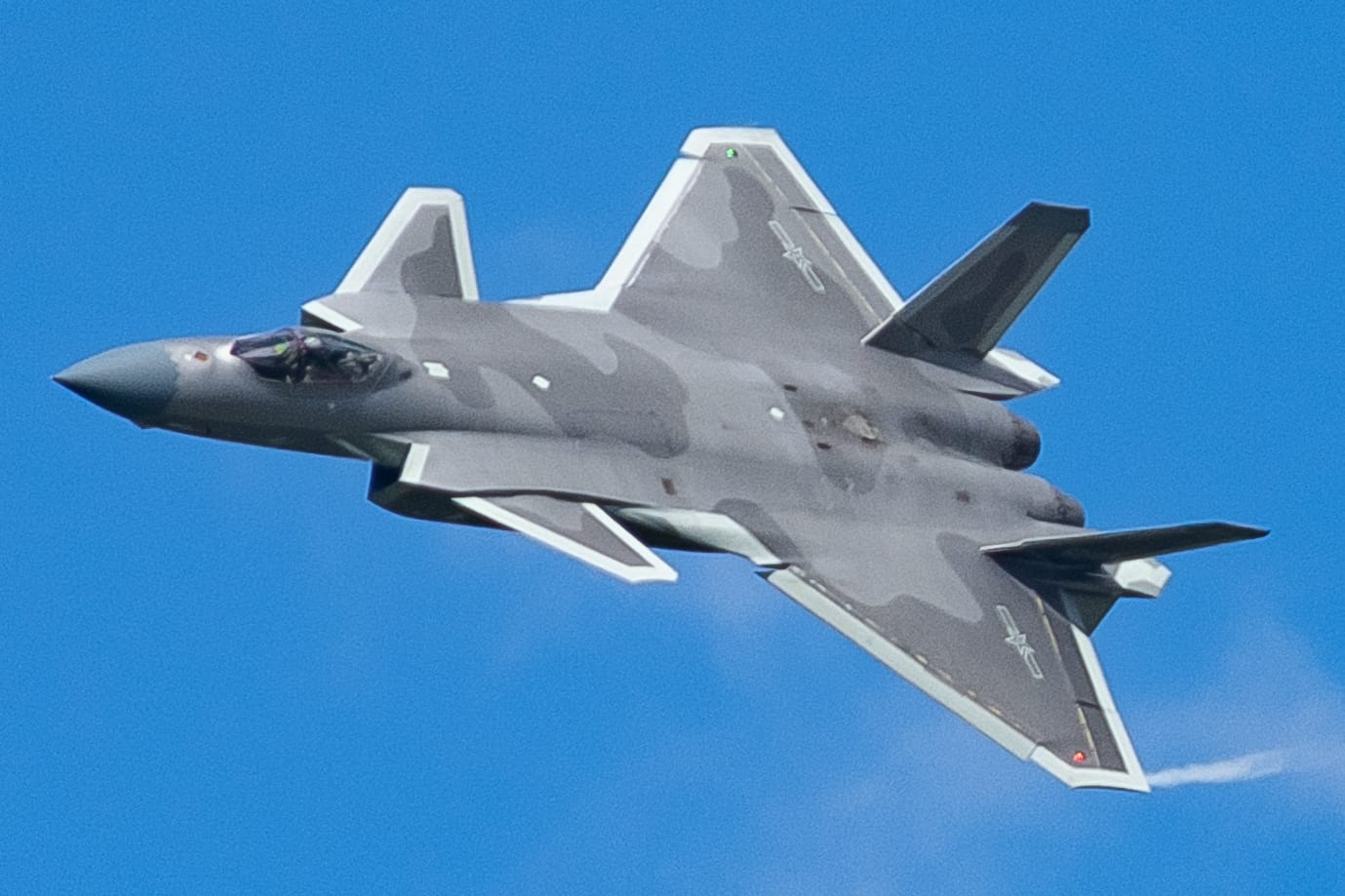
Chinese PLAAF News

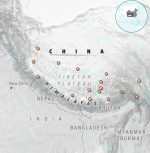
China’s High-Altitude Fortress: 16 New PLAAF Air Bases on the India-Tibet Border Signal Strategic Air and Missile Dominance Over the Himalayas

Satellite imagery reveals China’s construction of at least 16 high-altitude PLAAF air bases above 14,000 feet, enabling stealth fighters, HALE drones and ballistic missiles to project decisive power across the India-Tibet frontier.​


China’s High-Altitude Fortress: 16 New PLAAF Air Bases on the India-Tibet Border Signal Strategic Air and Missile Dominance Over the Himalayas

Satellite imagery reveals China’s construction of at least 16 high-altitude PLAAF air bases above 14,000 feet, enabling stealth fighters, HALE drones and ballistic missiles to project decisive power across the India-Tibet frontier.​


Only to be expected when India joined various anti-China western alliances to act against China. The China/India border has transitioned from a benign border for India, into one it has to actively devote resources to. Another strategic masterstroke by Modi, and one Pakistan will be great full for!

1786875400379.png

You ony have to look at how close those bases are to New Delhi to see how many new problems India has created for itself with its folly.
 
  • Like
Reactions: ety
Only to be expected when India joined various anti-China western alliances to act against China. The China/India border has transitioned from a benign border for India, into one it has to actively devote resources to. Another strategic masterstroke by Modi, and one Pakistan will be great full for!

View attachment 210884

You ony have to look at how close those bases are to New Delhi to see how many new problems India has created for itself with its folly.
India asked for it. It has repeatedly provoked China on the borders many times in the past decade. China tried to be amicable and compromising to India on the border issue but to no avail. India wouldn't compromise at all but keep building up forces on the borders. Indians think India has regional superiority of forces in the Himalayas region since Tibet is sparsely populated by Chinese. So, they think India has the upper hand. Now, Chinese attitude and strategic thinking of India on the borders has changed. In few words, China will not trust India again easily eventhough there is a small thaw in the relation recently because of Trump.
 
Last edited:
PLA Air Force trains with Belarus, Thailand, Egypt in three regions, displaying strategic reach beyond homeland defense: expert
By Liang Rui
Global Times

Published: Aug 20, 2026 09:18 PM

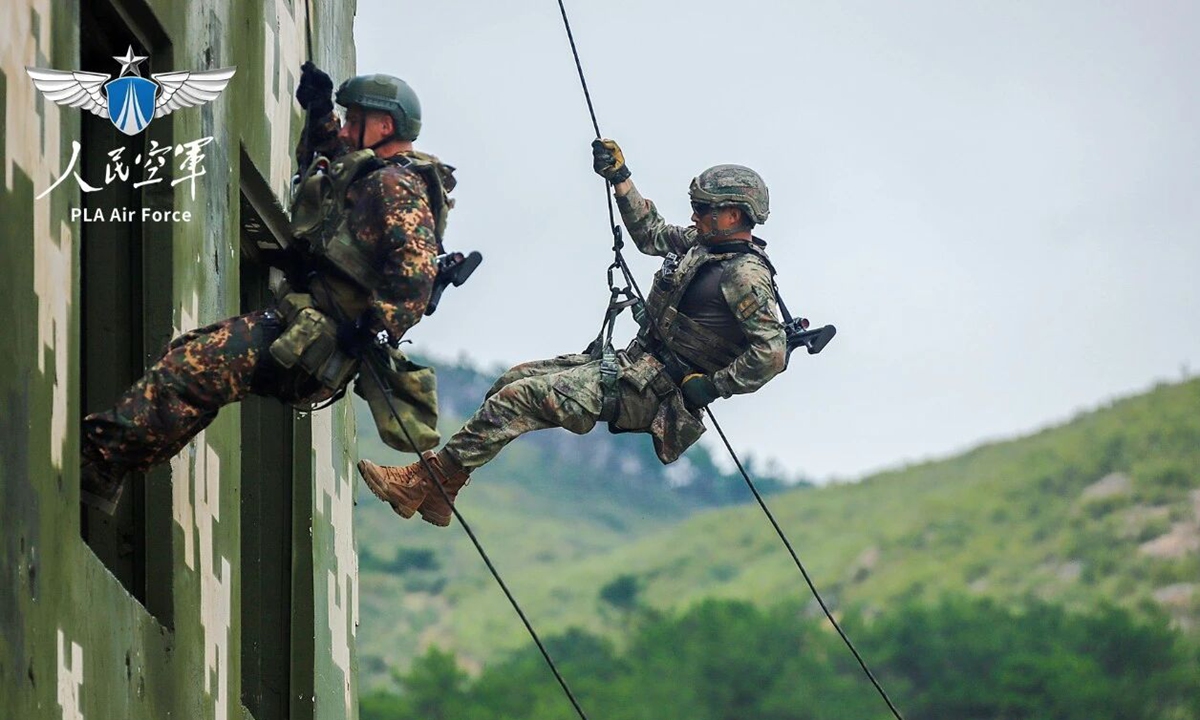
Airmen take part in the China-Belarus Swift Eagle 2026 joint training at an air force base in China in August 2026. Photo: PLA Air Force

Airmen take part in the China-Belarus Swift Eagle 2026 joint training at an air force base in China in August 2026. Photo: PLA Air Force

In August, the Chinese People's Liberation Army (PLA) Air Force is actively conducting joint training with three countries - Belarus, Thailand and Egypt - across three distant regions, with some training content and footage already released by official sources.

A Chinese military affairs expert said the simultaneous execution of different exercises in three countries demonstrates the PLA Air Force's strategic capabilities, extending beyond homeland deployment to overseas missions.

The PLA Air Force announced on Thursday that the China-Belarus Swift Eagle 2026 airborne joint training, which opened at a PLA Air Force training center on August 12, entered its comprehensive exercise phase on Wednesday.

Earlier, participating troops from both sides had completed basic training and coordinated refinement at the training center, laying a solid foundation for the exercise upgrade, said the PLA Air Force.

During the earlier training phase, Chinese and Belarusian troops were organized into mixed groups, learning from each other and conducting specialized drills on designated subjects. Between missions, the two sides also organized friendly sports activities, including football and tug-of-war matches, along with other cultural exchange events.

As planned, the next phase will feature full-element comprehensive drills in a combat-realistic setting, focusing on honing joint command and coordinated operational capabilities, deepening practical military cooperation, and jointly enhancing the ability to conduct joint counter-terrorism missions, said the PLA Air Force.

This marks the fourth iteration of the "Swift Eagle" series joint training between China and Belarus. Details on the equipment deployed by both sides have not yet been disclosed.

Wang Ya'nan, editor-in-chief of the Beijing-based Aerospace Knowledge magazine, told the Global Times that Belarus is likely to follow its traditional practices, focusing on low-altitude small-scale airborne operations, possibly using Il-76 large transport aircraft, while China might deploy Y-9 or Y-20 transport aircraft for low-altitude delivery.

The joint training is not a one-way learning exercise, but rather a process of building a cooperative foundation and familiarizing both sides with each other's operational habits in the counter-terrorism domain, Wang Ya'nan said.

Shortly before the China-Belarus drill entered its new phase, Senior Colonel Chen Xi, spokesperson for China's Ministry of National Defense, announced on August 14 that from mid-August to early September, the Chinese and Egyptian air forces would hold the Eagles of Civilization 2026 joint training in Egypt.

The training will focus on subjects such as air combat tactics, air superiority operations, and combat search and rescue, and will include force employment drills. As the second iteration of its kind, the joint training will further enhance mutual trust and traditional friendship, deepen substantive cooperation between the Chinese and Egyptian militaries, and contribute to regional peace and stability, Chen said.

In May 2025, Ministry of National Defense spokesperson Senior Colonel Zhang Xiaogang briefed that from April 17 to May 4 of that year, the air forces of China and Egypt held the first "Eagles of Civilization 2025" joint training at an Egyptian air force base.

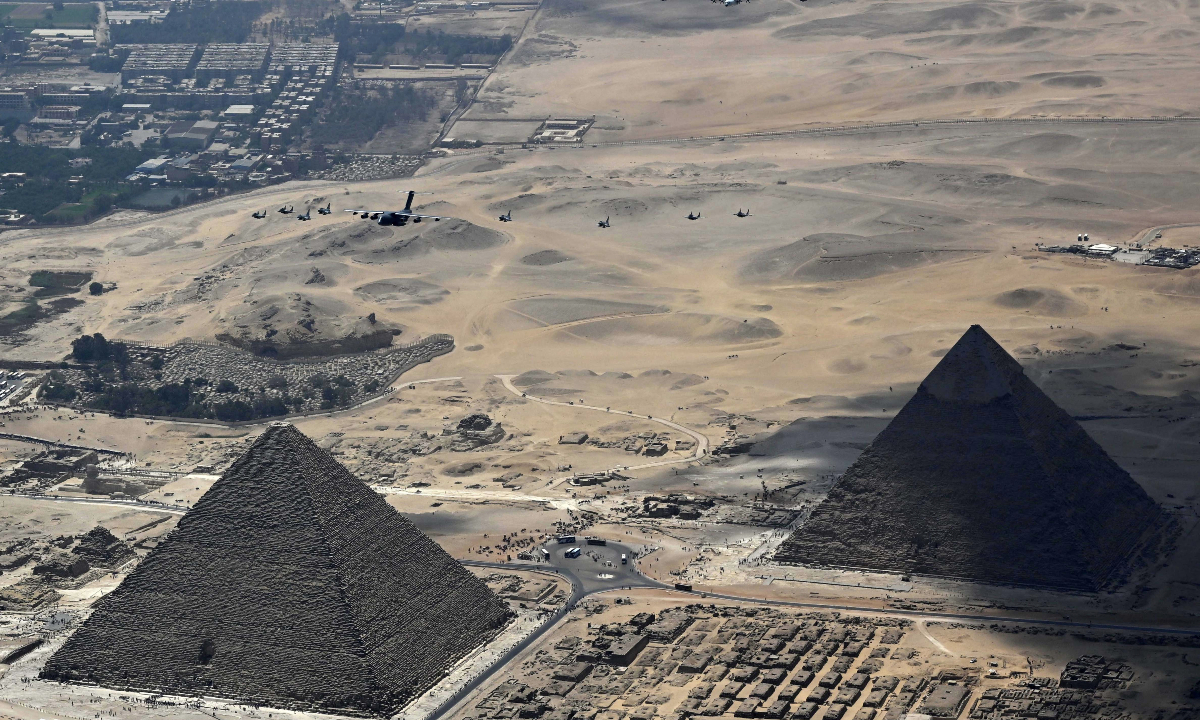
Some of the main warplanes participating in the China-Egypt Eagles of Civilization 2025 joint air force exercise form formation and fly over the Pyramids at very low altitudes in Cairo, Egypt on May 1, 2025. Photo: Courtesy of the Chinese People's Liberation Army (PLA) Air Force

Some of the main warplanes participating in the China-Egypt "Eagles of Civilization 2025" joint air force exercise form formation and fly over the Pyramids at very low altitudes in Cairo, Egypt on May 1, 2025. Photo: Courtesy of the Chinese People's Liberation Army (PLA) Air Force

The Chinese Air Force dispatched J-10C, KJ-500 and YY-20 aircraft to participate in the training. This was the first time that China sent force packages to Africa for joint training, during which the two sides conducted drills on such subjects as air superiority operations, suppression of enemy air defenses (SEAD), battlefield search and rescue, and mixed grouping. Discussions and exchanges on training models, air combat tactics and aerial refueling were also held, Zhang said.

Wang Yunfei, a Chinese military affairs expert, told the Global Times on Thursday that China and Egypt enjoy good military relations, and their joint exercise further enhanced mutual understanding and friendship.

The two countries' air forces share some similar training methods and tactics, and the joint exercise could pave the way for potential equipment cooperation in the future, Wang Yunfei said, noting that the Egyptian side will get an opportunity to closely observe the Chinese warplanes' capabilities.

Wang Yunfei also mentioned that, as flying to Egypt is a long-distance flight, such maneuvers could boost the PLA Air Force's long-distance combat capabilities and adaptability to diverse environments in different regions.

Meanwhile, the Chinese and Thai militaries are holding the Falcon Strike 2026 joint air force training in Thailand in August.

The Chinese side will send multiple types of aircraft and units, including ground-based air defense forces. The two sides will train on subjects such as joint air defense and humanitarian assistance and disaster relief. The training marks the ninth of its kind between the two air forces and is aimed at further deepening the traditional friendship and practical cooperation between China and Thailand, Senior Colonel Jiang Bin, a spokesperson for the Ministry of National Defense, said on July 30.

According to a video posted by state broadcaster CCTV on August 13, China's Y-20 transport aircraft, J-10C fighter jets and J-10S fighter-trainers, and JAS 39 Gripen fighter jets and Alpha Jet light attack/trainer aircraft from Thailand participated in the drill.

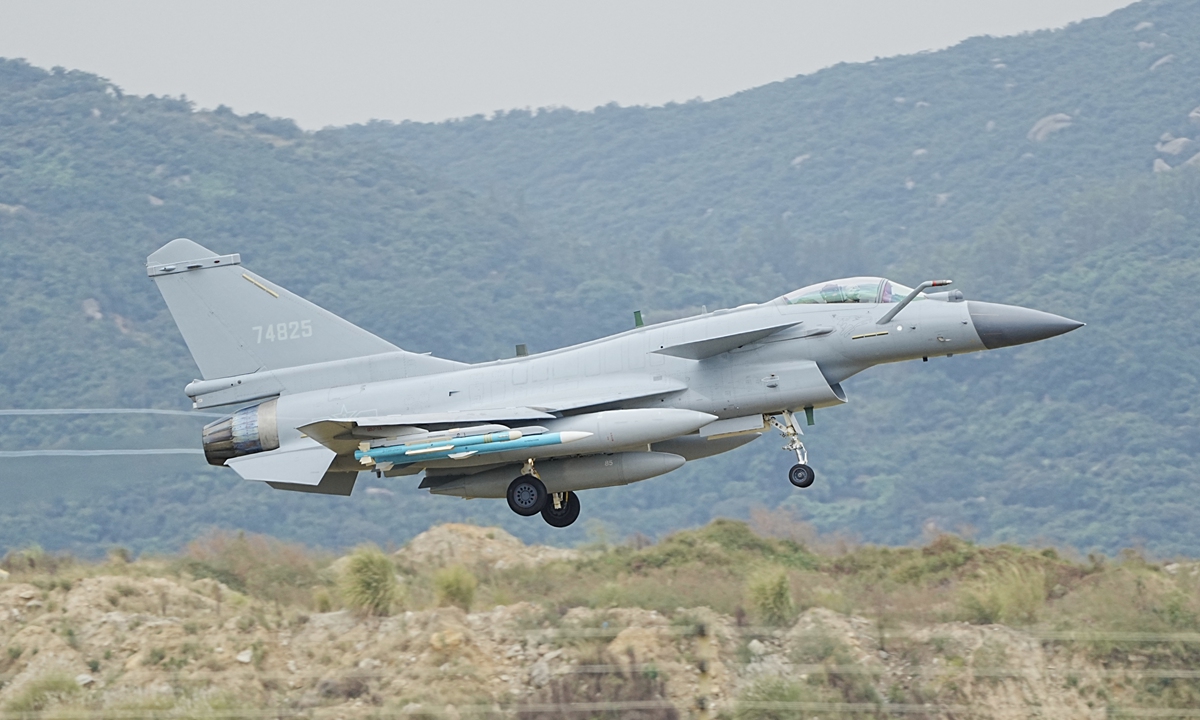
A J-10C fighter jet  Photo: VCG

A J-10C fighter jet Photo: VCG

According to Wang Ya'nan, the simultaneous execution of different exercises in three countries demonstrates the PLA Air Force's strategic reach. The ability to conduct concurrent joint training with Belarus in China, Thailand in Southeast Asia and Egypt in Africa reflects the PLA Air Force's growing capacity for global engagement and rapid deployment.

The Zhisheng (Victory) documentary series released around Army Day also showcased the PLA Air Force's capabilities.

Footage revealed the systematic application of three types of UAVs providing intelligence support to the PLA Army, Navy and Rocket Force, with the GJ-3A armed reconnaissance drone making its first public appearance. The footage also showed an H-6N bomber carrying a large missile under its fuselage, which a Chinese expert said could be a powerful air-launched ballistic missile capable of conducting anti-ship or ground-strike missions. Some reports identified the large missile as the nuclear-capable JL-1.

The PLA Air Force is building a modern force that is versatile, agile and capable of operating across domains, ready to safeguard China's national interests and contribute to regional peace, Wang Ya'nan noted.
 

J-16 fighter jets and KJ-500 early warning aircraft spotted in Karachi! They are about to travel to Egypt for joint military exercises.


20:50 2026/08/20 China Times News Network
Zhang Weixiang


The J-16D electronic warfare aircraft on display at the 2024 Zhuhai Airshow. (Photo: ShutterStock)

The J-16D electronic warfare aircraft on display at the 2024 Zhuhai Airshow. (Photo: ShutterStock)


The People's Liberation Army Air Force dispatched J-16 multi-role fighter jets to Egypt today (20th) to participate in the "Eagles of Civilization-2026" bilateral air force joint training exercise. This is the second time the joint training exercise has been held and the second overseas deployment of J-16 fighter jets.


According to reports from China.com and social media platforms, Chen Xi, spokesperson for the Chinese Ministry of National Defense, announced at a press conference on the 14th that the air forces of China and Egypt will hold the "Civilization Eagle-2026" joint training exercise in Egypt from mid-August to early September. The key subjects will include air combat tactics, air superiority operations, combat search and rescue, and force deployment drills. This is the second time the two sides have held a joint training exercise under the same name, following "Civilization Eagle-2025" in 2025. The aim is to enhance mutual trust, deepen practical cooperation, and jointly safeguard regional peace and stability.


Public intelligence sources and photos and videos released by aviation enthusiasts on the 20th show that at least six J-16 fighter jets have arrived at Karachi International Airport in Pakistan and are preparing to continue their journey to Egypt. Accompanying them are Y-20 transport aircraft and KJ-500 early warning aircraft, among other support aircraft.


This marks the second time that the J-16 fighter jet has left mainland China to carry out a mission. In the past, it had only appeared in exercises in Pakistan. This is also the first time that this type of aircraft has participated in joint training exercises between China and Egypt.


According to The Diplomat's report on the "Eagle of Civilization" exercise held for the first time in 2025, China mainly dispatched J-10C/J-10S fighter jets, KJ-500 early warning aircraft, Y-20/YU-20 tanker aircraft, and helicopters to conduct aerial combat, aerial refueling, and battlefield search and rescue exercises with Egyptian Air Force aircraft such as MiG-29s. They even flew over the Giza Pyramids.


This time, the J-16, a heavy fighter jet with a larger payload and superior radar performance, was used as the main force, highlighting the upgraded level of cooperation and the enhanced demonstration capabilities of both sides.


The J-16 is a twin-seat, twin-engine multi-role fighter jet developed by Shenyang Aircraft Corporation based on the Su-27/Su-30 series. It possesses strong air-to-air and air-to-ground strike capabilities and is currently one of the main aircraft types of the People's Liberation Army Air Force.


This deployment to Egypt via Pakistan highlights the improvement of the Chinese Air Force's long-range airlift and overseas joint training capabilities, and also reflects the deepening trend of Sino-Egyptian military relations in recent years. The exercise is still ongoing, and neither side has officially released details of the participating aircraft or specific training exercises; further developments warrant continued attention.


Chengdu’s Building Boom: China Is on Track for 400 Stealth Fighters a Year

por Connor Kerr | 30 de mayo de 2026 |

If you want to know what a country is really planning, don't read the press releases. Look at the parking lots.

That's been the quiet refrain among open-source defence analysts for two years now, as a small army of nerds armed with commercial satellite subscriptions has been watching a particular cluster of buildings on the outskirts of Chengdu, Sichuan — the home of Aviation Industry Corporation of China's fifth-generation fighter line. What started as a curious set of new hangars in 2023 has become, by 2026, the largest stealth fighter assembly complex on the planet. And the parking lots are full.

According to satellite imagery now circulating through Defence Security Asia, Meta-Defense.fr, and Flight Global, the combined Chengdu and Shenyang production complexes are on track to spit out something on the order of 400 advanced fighter aircraft per year by 2027. That is more combat aircraft than Lockheed Martin and Boeing's military divisions, combined, produce annually. By 2030, the People's Liberation Army Air Force could be flying a thousand fifth-generation stealth jets.

Datos rápidos
Primary fighters:
Chengdu J-20 (5th-gen heavy), Shenyang J-35 / J-35A (5th-gen medium), Shenyang J-16 (4.5-gen multirole)
Chengdu plant expansion since 2021: ~278,700 sqm of new floor space (Defence Security Asia / satellite imagery)
Active J-20 lines: Five parallel assembly lines observed
Estimated J-20 output 2025: ~100-120 airframes (RUSI / Flight Global)
Target by 2027: ~400 advanced fighters/year (J-20 + J-35 + J-16 combined)
Stated goal by 2030: 1,000 fifth-generation fighters in PLAAF service

The Picture That Started the Noise​

What the satellites actually show, if you scroll through the imagery, is a startlingly mundane industrial scene. New assembly halls. A widened apron. Long rows of finished J-20 airframes lined up wingtip-to-wingtip awaiting flight test or transfer. None of it is particularly sexy. None of it is leaking. The Chinese state has not held a press conference. They simply built the buildings, and the buildings show up on a commercial Earth-observation pass every few weeks.

The Chengdu plant — where the twin-engine, long-range J-20 stealth fighter is built — has added roughly 278,700 square metres of manufacturing floor space since 2021. That is a footprint comparable to a large American auto plant, and larger than the entire Lockheed Martin F-35 Final Assembly and Check-Out facility in Fort Worth. Analysts counting hangars and apron positions in successive satellite passes have identified five parallel J-20 production lines running simultaneously inside the complex.

Up at Shenyang, where the J-35 is built — China's smaller, medium-weight stealth fighter, the rough equivalent in role to the F-35 — another roughly 370,000 square metres of new factory space and a 3,660-metre runway have appeared on imagery. The conclusion that Western analysts have arrived at, more or less in unison, is that China is no longer in the prototyping phase of its fifth-generation programme. It is in the high-rate production phase. Both jets, simultaneously.

Shenyang J-35 stealth fighter
The Shenyang J-35 is China’s second fifth-gen fighter — a medium-weight stealth jet entering serial production alongside the heavier J-20. Photo: Wikimedia Commons.

100 Stealth Fighters a Year, and Climbing​

Putting numbers on a Chinese defence programme is always a slightly speculative exercise. The PLAAF does not publish acceptance figures the way the US Air Force does, so analysts work backwards: from serial numbers spotted on the tarmac at airshows, from delivery photos that leak onto Weibo before the censors catch them, from the size of the unit deliveries to specific air brigades, and increasingly, from the satellite-derived count of completed airframes parked outside the factory.

The numbers analysts are now converging on for 2025 J-20 production are roughly 100 to 120 aircraft. The Royal United Services Institute's higher figure of 120 is at the top of the range; Flight Global and Aviation A2Z's reporting clusters around 100. Either way, that is a number that has the people who watch this industry doing slightly stunned arithmetic — because as recently as 2022, the same analysts were estimating J-20 production at around 40 aircraft per year.

The German aerospace analyst Andreas Rupprecht, who has spent more than a decade tracking PLAAF inventory by patiently piecing together serial numbers and unit photos, recently flagged a J-20 from the 19th Air Brigade with the serial 63106 — which he assessed to be the 300th J-20 airframe built. The J-20 has been in PLAAF service since 2017. In other words, China has gone from first IOC to 300 airframes in under a decade — and the next 300 will arrive in roughly three years.

Five active J-20 production lines is a configuration open-source analysts say they have never previously seen at Chengdu — and the scale of the floor space added since 2021 suggests AVIC is configuring for sustained mass production, not a temporary surge.
Assessment based on commercial satellite imagery — Defence Security Asia / Flight Global

Add the J-35, Add the J-16, Get to 400​

Even 100 J-20s a year is not, on its own, what gets you to the headline-grabbing figure of 400 advanced fighters per year. That total comes from stacking the J-20 output on top of the J-35 line at Shenyang and the J-16 line — also at Shenyang — which builds China's heavily upgraded 4.5-generation Flanker derivative, broadly comparable in role to a late-model F-15EX.

The J-35A, the air force variant, entered PLAAF service in 2025. On 1 May 2026, AVIC publicly rolled out the export variant — the J-35AE — with the corporate logo of AVIC rather than the PLAAF roundel on the tail, signalling its dedicated export status. Pakistan is widely reported as the launch export customer for as many as 40 aircraft, which would be the first export sale of a Chinese stealth fighter in history. The unveiling and the export deal are both substantial pieces of evidence that Shenyang is now confident it can supply both PLAAF demand and foreign demand from the same line.

Stack everything together — five J-20 lines at Chengdu, the new J-35 lines at Shenyang, plus continuing J-16 production at the same Shenyang complex — and the Meta-Defense.fr analysis that lands at "roughly 400 advanced fighters per year by 2027" stops sounding like clickbait and starts sounding like arithmetic.

Qué significa​

For context: the entire US Air Force F-35A production rate, across all customers, runs at roughly 156 jets per year. The F-15EX line tops out at maybe 24. American annual stealth fighter production peaked, in the F-22 era, at around 24 aircraft. The current US fifth-generation production rate, for the F-35A alone, is somewhere around 70 to 80 jets for the US services. Even the most bullish 6th-gen procurement plan does not get the US back into the 200-jets-per-year range any time this decade.

None of this means China's fifth-gen jets are better than America's. The J-20's WS-15 engine programme has been a long, slow trudge. The J-35 is still proving itself. The sortie generation rates, the maintenance hours, the pilot training pipeline — these are the unsexy variables that determine actual combat power, and in those metrics, the US still leads. But raw airframe production is the input. And the Chinese are now producing fifth-gen airframes at roughly three times the US rate, and accelerating. By 2030, if the satellite imagery and the analyst consensus hold, the PLAAF will operate more fifth-generation fighters than the entire NATO alliance combined.

The picture from orbit, in other words, is no longer a question. It's an answer.

 
PLA Southern Theater Command conducts readiness patrols at China’s Huangyan Dao in South China Sea with JL-10 jet carrying live missiles

By Guo Yuandan and Liang Rui
Published: Sep 02, 2026 08:34 PM

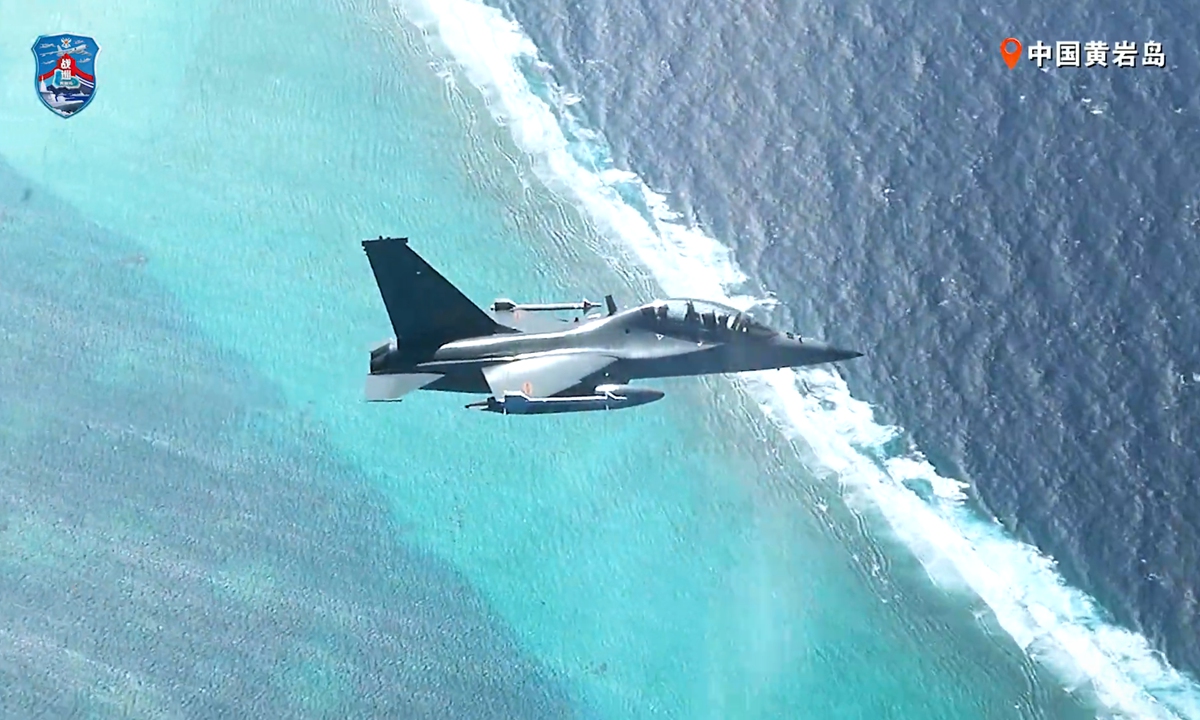
A JL-10 advanced trainer jet carrying live missiles flies over Huangyan Dao. Photo: Screenshot from the video of PLA Southern Theater Command Wechat account

A JL-10 advanced trainer jet carrying live missiles Photo: Screenshot from the video of PLA Southern Theater Command Wechat account

Naval and air units of the Chinese People's Liberation Army (PLA) Southern Theater Command (STC) conducted readiness patrols in the territorial sea and airspace of China's Huangyan Dao and its surrounding areas on Wednesday, according to the STC's WeChat account. The JL-10 advanced trainer jet appeared multiple times in the footage, carrying live missiles.

Huangyan Dao is China's inherent territory. Since August, STC forces have strengthened readiness patrols in the territorial sea and airspace of Huangyan Dao and its surrounding areas. Such patrols are aimed at further enhancing control of relevant sea areas and airspace and serve as an effective countermeasure to cope with all sorts of rights-violation and provocative acts. STC forces will resolutely safeguard China's sovereignty and security and firmly uphold peace and stability in the South China Sea, the post said.

In video footage released by the STC, Chinese military pilots were heard warning Philippine aircraft pilots: "You have approached China's Huangyan Dao territorial airspace. To avoid misunderstandings and miscalculations, leave immediately." The warning continued: "Philippine aircraft, you have intruded into the territorial airspace of China's Huangyan Dao. Leave immediately, leave immediately. Otherwise, we will take measures."

One notable highlight in the footage is the "Readiness patrols at Huangyan Dao" thematic logo displayed prominently at the top of the video. An anonymous military affairs expert told the Global Times that the logo serves as an official "visual statement," a symbolic design signaling to the outside world, particularly in response to Philippine infringements and provocations that this is Chinese territory, and the PLA has absolute control over it.

Besides that, footage showed multiple PLA aircraft and naval vessels, including the JL-10 advanced trainer jet, Type 052C destroyer, Type 054A frigate, Type 071 amphibious dock landing ship and H-6K bomber.

The JL-10 appeared multiple times in the footage, and was seen carrying live missiles.

This seemingly "downgraded" aircraft choice precisely reflects China's strategic restraint and sense of responsibility as a responsible major power, the anonymous expert said.

In response to the Philippines' provocative tactics, using slow-speed turboprop small aircraft such as the C-208 and NC-212 to edge into airspace and exploit Western media coverage for publicity, China sent the JL-10, which excels at low-altitude, low-speed operations and can maintain stable long-duration formation flight and evidence collection, to conduct close-in surveillance and bilingual warning and expulsion. The footage shows the JL-10 carrying live munitions during this mission, yet the operation remained strictly within the low-intensity control framework, without active escalation or premature engagement. This demonstrates that China has the capability to exercise restraint, the patience to maintain stability, and the will to hold its bottom line on the Huangyan Dao, the anonymous expert said.

At the end of the video, a closing message reads: "Sixteen years after graduation, my instructor and I patrol Huangyan Dao together." "Instructors and cadets training side by side in combat-oriented drills reflects the passing of the torch from one generation to the next in the PLA's cultivation of aviation talent," said the expert.

Zhang Xuefeng, a Chinese military affairs expert, told the Global Times that based on the dialogue in the STC's video, the JL-10 was flown by a flight instructor, likely either from a PLA academy or a flight training base. Having instructors participate in actual interception missions with combat units helps them gain real-world combat experience. This hands-on experience will allow them to better enhance trainees' combat awareness and training standards in future instruction.

China's resolve to safeguard its territorial sovereignty and maritime rights is unwavering. China will resolutely thwart any attempts to stir up trouble at sea with external support or provoke tensions, and will steadfastly maintain peace and stability in the South China Sea, Chinese Defense Ministry spokesperson Zhang Xiaogang said at an August press conference.


Users who are viewing this thread

Pakistan Defence Latest

Latest Posts

Back
Top