PLA Air Force trains with Belarus, Thailand, Egypt in three regions, displaying strategic reach beyond homeland defense: expert
By Liang Rui
Global Times
Published: Aug 20, 2026 09:18 PM
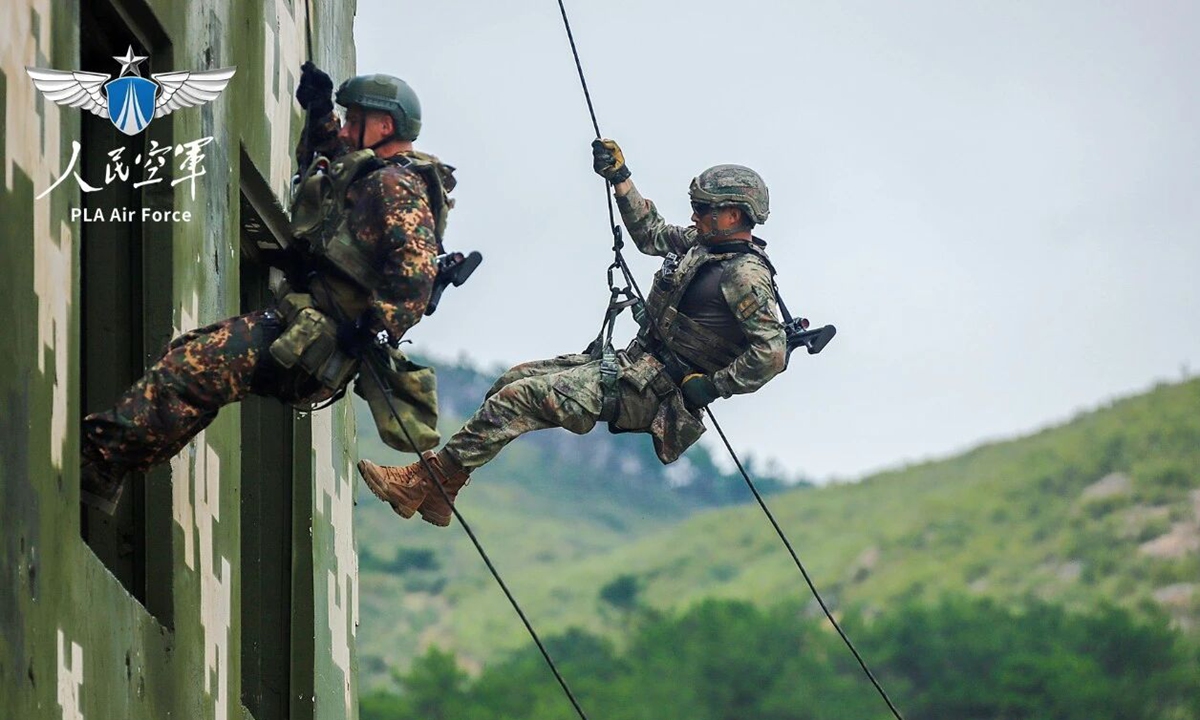
Airmen take part in the China-Belarus Swift Eagle 2026 joint training at an air force base in China in August 2026. Photo: PLA Air Force
In August, the Chinese People's Liberation Army (PLA) Air Force is actively conducting joint training with three countries - Belarus, Thailand and Egypt - across three distant regions, with some training content and footage already released by official sources.
A Chinese military affairs expert said the simultaneous execution of different exercises in three countries demonstrates the PLA Air Force's strategic capabilities, extending beyond homeland deployment to overseas missions.
The PLA Air Force announced on Thursday that the China-Belarus Swift Eagle 2026 airborne joint training, which opened at a PLA Air Force training center on August 12, entered its comprehensive exercise phase on Wednesday.
Earlier, participating troops from both sides had completed basic training and coordinated refinement at the training center, laying a solid foundation for the exercise upgrade, said the PLA Air Force.
During the earlier training phase, Chinese and Belarusian troops were organized into mixed groups, learning from each other and conducting specialized drills on designated subjects. Between missions, the two sides also organized friendly sports activities, including football and tug-of-war matches, along with other cultural exchange events.
As planned, the next phase will feature full-element comprehensive drills in a combat-realistic setting, focusing on honing joint command and coordinated operational capabilities, deepening practical military cooperation, and jointly enhancing the ability to conduct joint counter-terrorism missions, said the PLA Air Force.
This marks the fourth iteration of the "Swift Eagle" series joint training between China and Belarus. Details on the equipment deployed by both sides have not yet been disclosed.
Wang Ya'nan, editor-in-chief of the Beijing-based Aerospace Knowledge magazine, told the Global Times that Belarus is likely to follow its traditional practices, focusing on low-altitude small-scale airborne operations, possibly using Il-76 large transport aircraft, while China might deploy Y-9 or Y-20 transport aircraft for low-altitude delivery.
The joint training is not a one-way learning exercise, but rather a process of building a cooperative foundation and familiarizing both sides with each other's operational habits in the counter-terrorism domain, Wang Ya'nan said.
Shortly before the China-Belarus drill entered its new phase, Senior Colonel Chen Xi, spokesperson for China's Ministry of National Defense, announced on August 14 that from mid-August to early September, the Chinese and Egyptian air forces would hold the Eagles of Civilization 2026 joint training in Egypt.
The training will focus on subjects such as air combat tactics, air superiority operations, and combat search and rescue, and will include force employment drills. As the second iteration of its kind, the joint training will further enhance mutual trust and traditional friendship, deepen substantive cooperation between the Chinese and Egyptian militaries, and contribute to regional peace and stability, Chen said.
In May 2025, Ministry of National Defense spokesperson Senior Colonel Zhang Xiaogang briefed that from April 17 to May 4 of that year, the air forces of China and Egypt held the first "Eagles of Civilization 2025" joint training at an Egyptian air force base.
Some of the main warplanes participating in the China-Egypt "Eagles of Civilization 2025" joint air force exercise form formation and fly over the Pyramids at very low altitudes in Cairo, Egypt on May 1, 2025. Photo: Courtesy of the Chinese People's Liberation Army (PLA) Air Force
The Chinese Air Force dispatched J-10C, KJ-500 and YY-20 aircraft to participate in the training. This was the first time that China sent force packages to Africa for joint training, during which the two sides conducted drills on such subjects as air superiority operations, suppression of enemy air defenses (SEAD), battlefield search and rescue, and mixed grouping. Discussions and exchanges on training models, air combat tactics and aerial refueling were also held, Zhang said.
Wang Yunfei, a Chinese military affairs expert, told the Global Times on Thursday that China and Egypt enjoy good military relations, and their joint exercise further enhanced mutual understanding and friendship.
The two countries' air forces share some similar training methods and tactics, and the joint exercise could pave the way for potential equipment cooperation in the future, Wang Yunfei said, noting that the Egyptian side will get an opportunity to closely observe the Chinese warplanes' capabilities.
Wang Yunfei also mentioned that, as flying to Egypt is a long-distance flight, such maneuvers could boost the PLA Air Force's long-distance combat capabilities and adaptability to diverse environments in different regions.
Meanwhile, the Chinese and Thai militaries are holding the Falcon Strike 2026 joint air force training in Thailand in August.
The Chinese side will send multiple types of aircraft and units, including ground-based air defense forces. The two sides will train on subjects such as joint air defense and humanitarian assistance and disaster relief. The training marks the ninth of its kind between the two air forces and is aimed at further deepening the traditional friendship and practical cooperation between China and Thailand, Senior Colonel Jiang Bin, a spokesperson for the Ministry of National Defense, said on July 30.
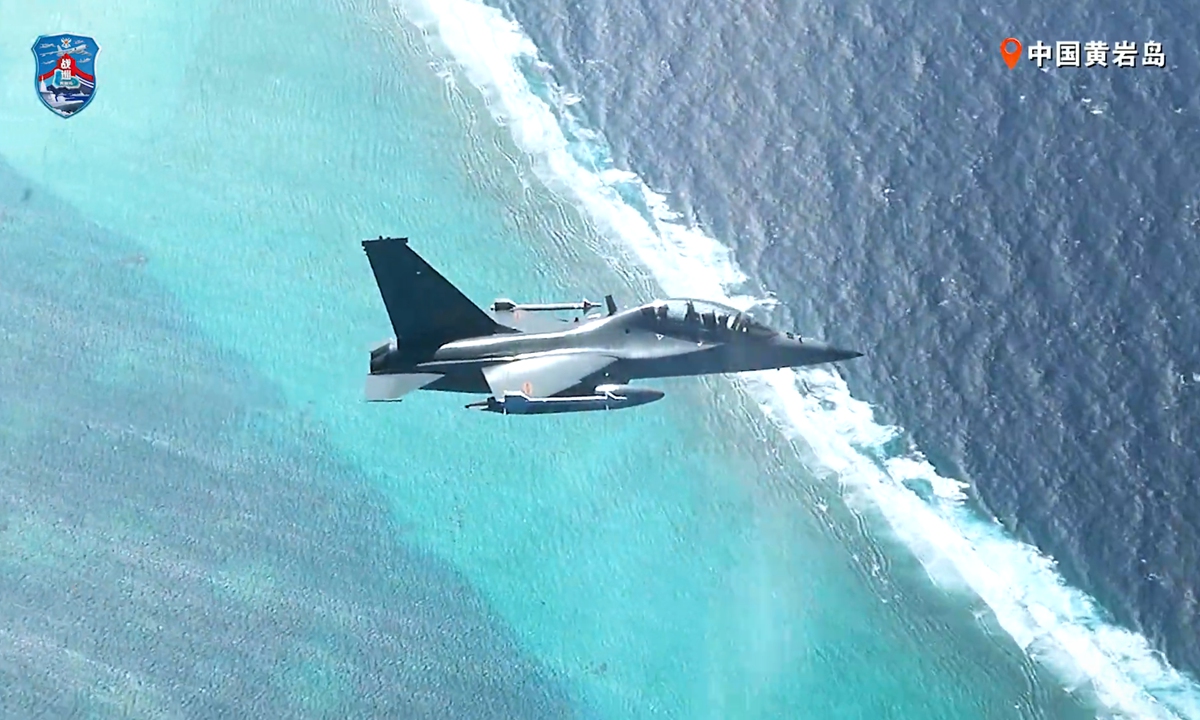
According to a video posted by state broadcaster CCTV on August 13, China's Y-20 transport aircraft, J-10C fighter jets and J-10S fighter-trainers, and JAS 39 Gripen fighter jets and Alpha Jet light attack/trainer aircraft from Thailand participated in the drill.
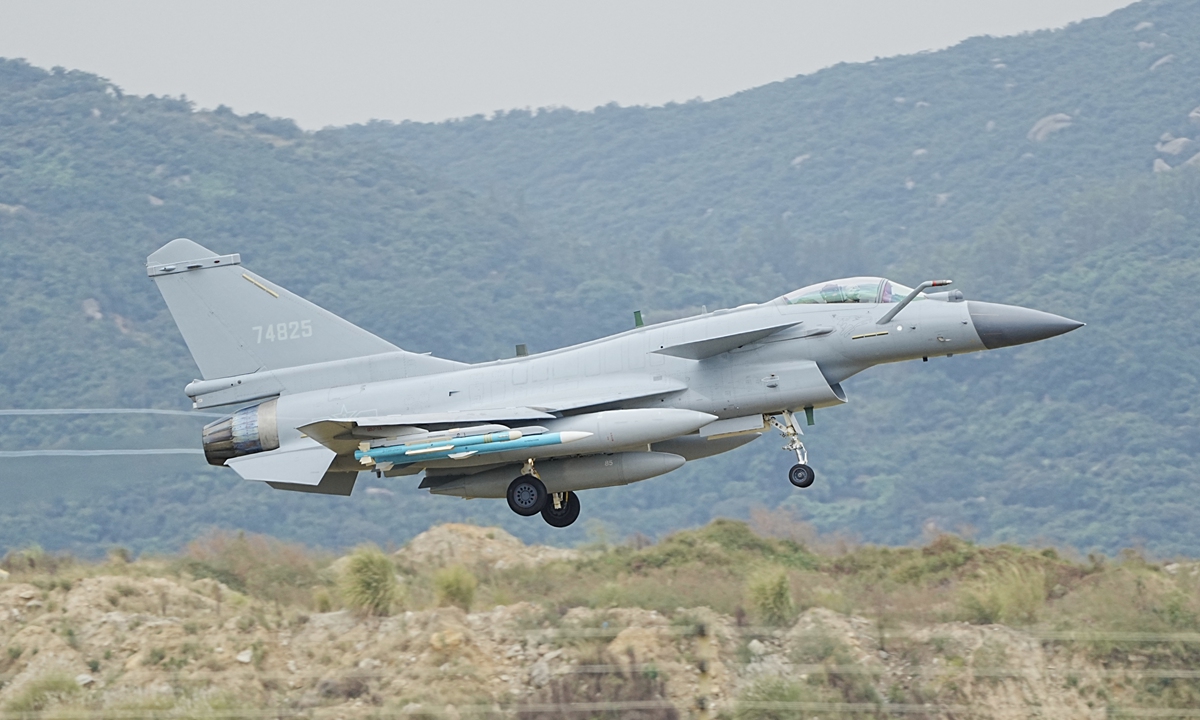
A J-10C fighter jet Photo: VCG
According to Wang Ya'nan, the simultaneous execution of different exercises in three countries demonstrates the PLA Air Force's strategic reach. The ability to conduct concurrent joint training with Belarus in China, Thailand in Southeast Asia and Egypt in Africa reflects the PLA Air Force's growing capacity for global engagement and rapid deployment.
The Zhisheng (Victory) documentary series released around Army Day also showcased the PLA Air Force's capabilities.
Footage revealed the systematic application of three types of UAVs providing intelligence support to the PLA Army, Navy and Rocket Force, with the GJ-3A armed reconnaissance drone making its first public appearance. The footage also showed an H-6N bomber carrying a large missile under its fuselage, which a Chinese expert said could be a powerful air-launched ballistic missile capable of conducting anti-ship or ground-strike missions. Some reports identified the large missile as the nuclear-capable JL-1.
The PLA Air Force is building a modern force that is versatile, agile and capable of operating across domains, ready to safeguard China's national interests and contribute to regional peace, Wang Ya'nan noted.


 defencesecurityasia.com