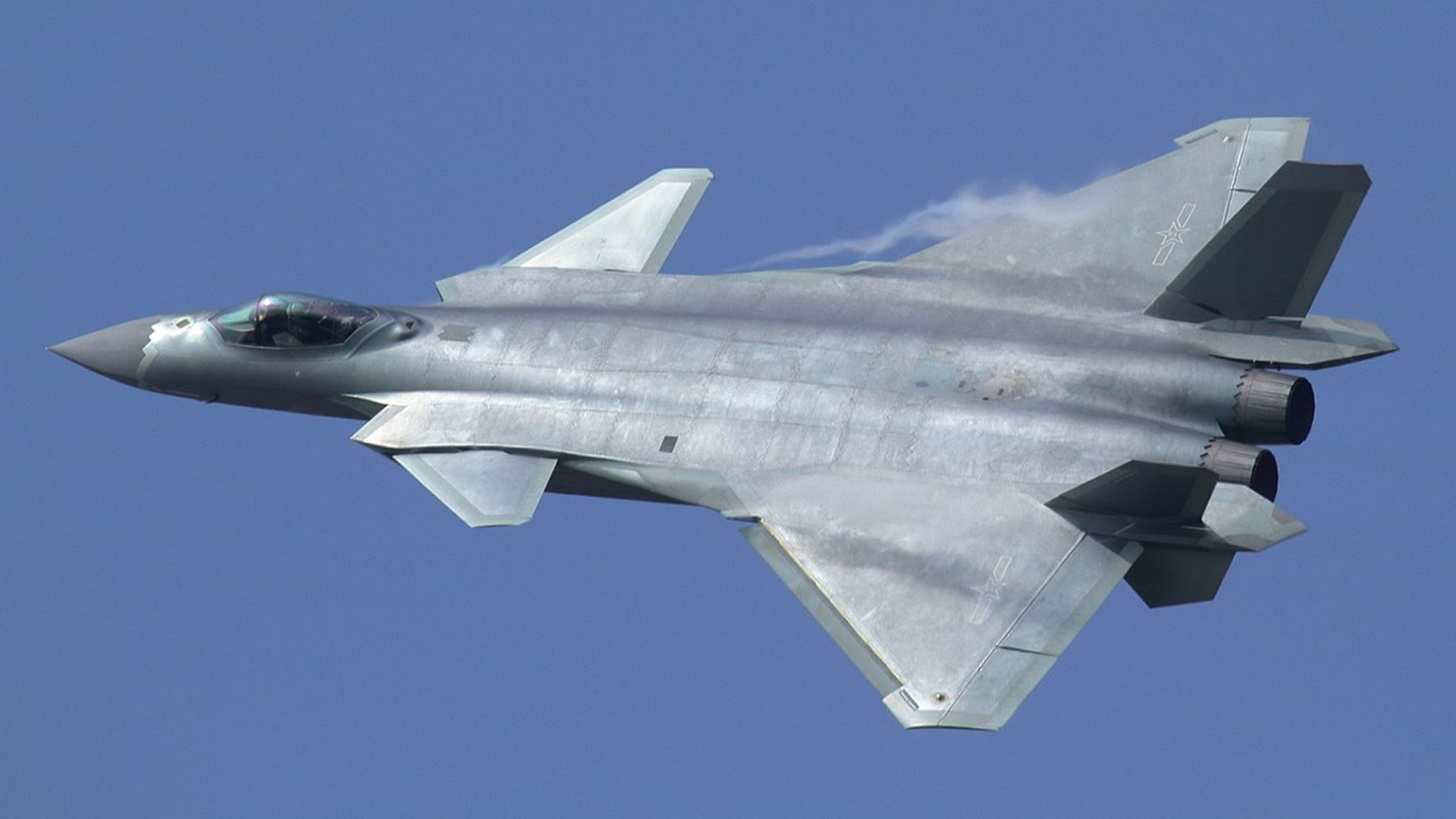
Chinese SAC - FC-31/J-35 5th Gen Stealth Aircraft

Some posters implying PAF may get a few test J-35s in 2026 were heavily mocked on this forum. I think they may have a small chance of being right.
I would love to see the reaction from the Indian, they will jumping up and down tagging all drdo hal and modijeet and calling them babus.
 

China’s First J-35A Fighter Jet for Local Air Force Takes Off in 2026

January 7, 2026

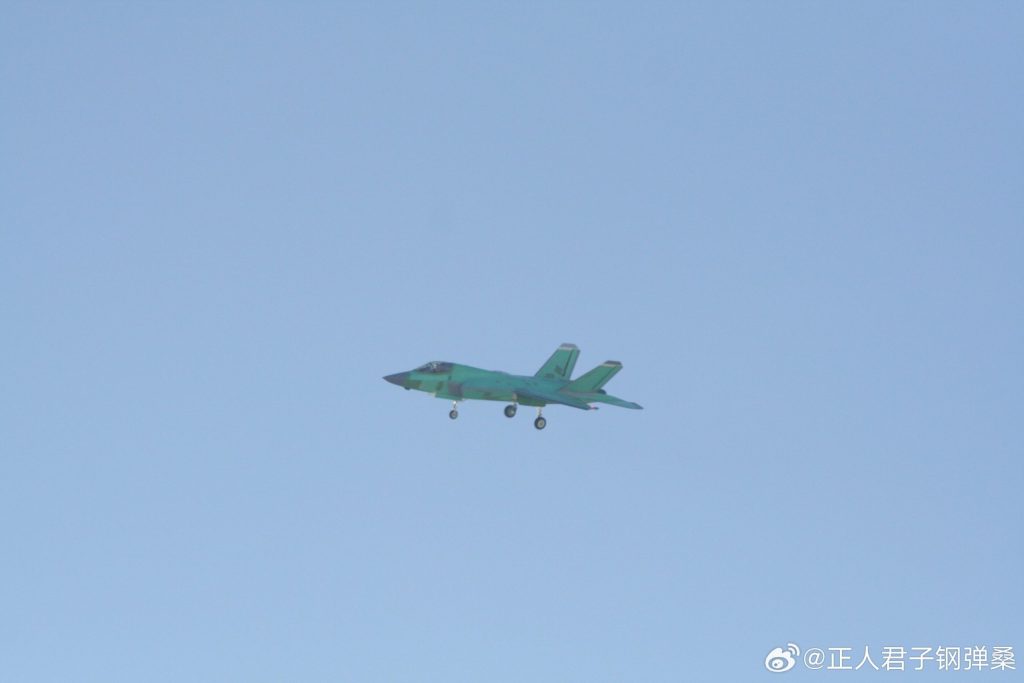
j-35a-allegedly-also-maiden-flight-at-sac-20260106-zheng-ren-jun-zi-gang-dan-sang-1-jpg.170392

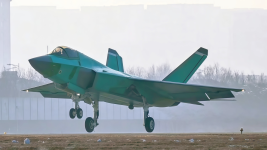
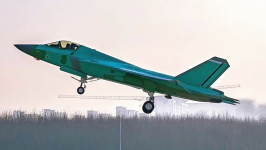
Chinese aircraft manufacturer Shenyang Aircraft Corporation (SAC) has conducted the first flight of a J-35A fighter jet intended for the Chinese Air Force in 2026.

Photos of the aircraft were published by Chinese military aviation observer Ruprecht_A on the X platform.

Local aviation spotters recorded the aircraft in its Chinese Air Force configuration during a test flight over the territory of the manufacturer’s airfield.

The main visual difference between the carrier-based version of the fighter and the land-based variant lies in the nose landing gear. The naval version uses a twin-wheel configuration integrated with catapult launch components, enabling interaction with a carrier’s catapult system.

The land-based version is equipped with a single-wheel nose landing gear and lacks the equipment required for catapult-assisted launches.

The J-35 family is viewed as a complementary platform to heavier stealth aircraft, notably the J-20, and as a partial replacement for the carrier-based J-15 fighters.

The J-35 is expected to become a mass-produced multirole combat aircraft capable of a wide range of missions for both the Chinese Air Force and Navy, and is projected to serve as a mainstay fighter into the 2040s and 2050s.

The aircraft evolved from the earlier FC-31 (Project 310), an export-oriented stealth fighter featuring a conventional twin-engine layout and two swept vertical stabilizers resembling those of the US F-35.

The first reports on the development of the aircraft emerged in 2018, when initial concept images were released.

The first J-35 flight prototype, bearing tail number 350001/3501, made its maiden flight on October 29, 2021, and was powered by Chinese WS-21(H) engines.

One of the J-35 fighter jets at SAC’s production facility. Photo credits: CCTV
Initially, the aircraft was reported to have been developed for China’s new Type 003 aircraft carrier, but satellite imagery from 2021-2024 indicated preparations for testing on both the Fujian and Liaoning carriers.

At the same time, a land-based variant of the aircraft has been produced to meet the requirements of the Chinese Air Force.

The aircraft entered service in 2025.

 
Chinese aircraft manufacturer hosts first flights of 2026 for J-35 stealth fighter jet, others
By Liu Xuanzun and Liang Rui
Published: Jan 07, 2026 06:03 PM
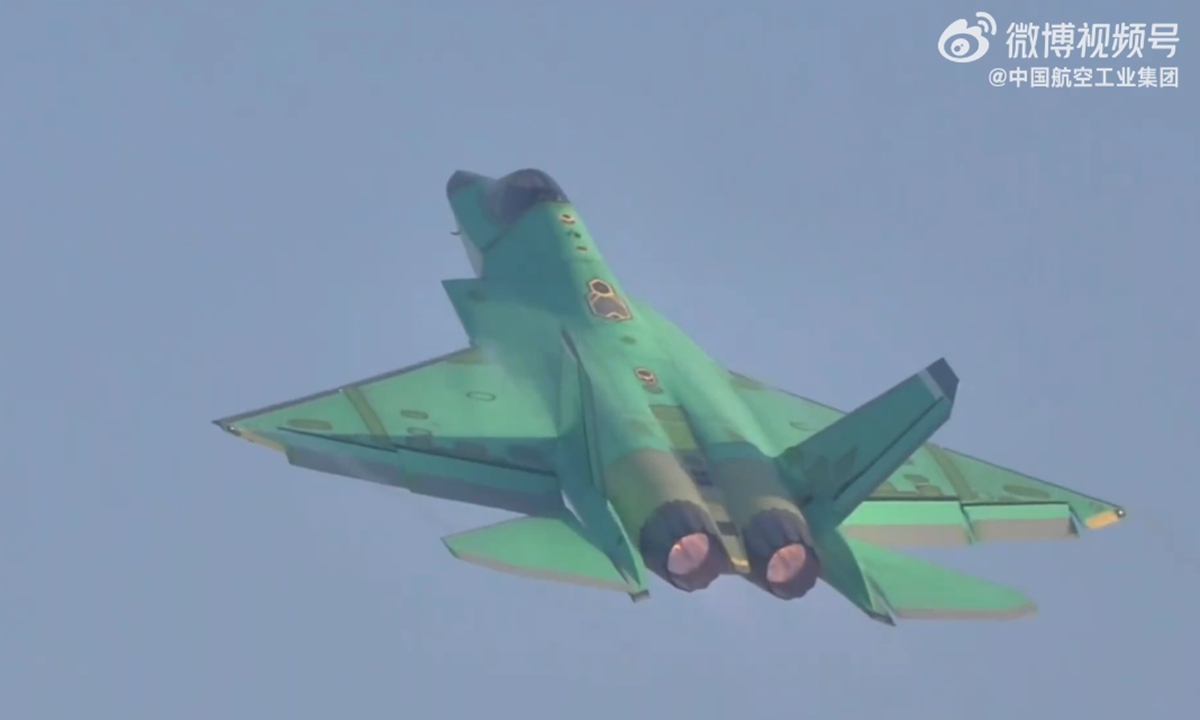
An unpainted J-35 stealth fighter jet takes off at an airfield of the Shenyang Aircraft Corporation under the Aviation Industry Corporation of China (AVIC) in Shenyang, Northeast China's Liaoning Province on January 6, 2026. Photo: Screenshot from the official Weibo account of AVIC

An unpainted J-35 stealth fighter jet takes off at an airfield of the Shenyang Aircraft Corporation under the Aviation Industry Corporation of China (AVIC) in Shenyang, Northeast China's Liaoning Province on January 6, 2026. Photo: Screenshot from the official Weibo account of AVIC

China's top aircraft manufacturer, the Aviation Industry Corporation of China (AVIC), on Wednesday announced that it had hosted first flights of the new year for the J-35 carrier-based stealth fighter jet among other types of aircraft, accompanied by photos and a video. An expert said the move demonstrated China's confidence in its warplane production capabilities.

AVIC revealed in Weibo posts on Wednesday that a J-35 conducted its maiden flight of the new year on Tuesday at the AVIC Shenyang Aircraft Corporation in Shenyang, Northeast China's Liaoning Province.

The J-35 carrier-based stealth fighter jet has drawn widespread attention since making its debut at China's V-Day military parade in Beijing on September 3, 2025. Compared with its Air Force counterpart, the J-35A, the J-35, the naval variant, is specifically designed for aircraft carrier operations.

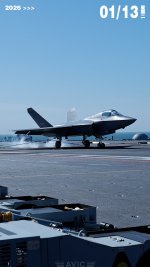
The J-35 was among the three types of aircraft that the Chinese People's Liberation Army (PLA) Navy announced on September 22, 2025 had completed initial catapult-assisted takeoff and arrested landing training aboard the Fujian, China's first electromagnetic catapult-equipped aircraft carrier. The Fujian later entered service with the PLA Navy on November 5.

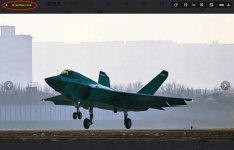
Attached to the latest AVIC post, two photos and a video clip showed an unpainted J-35, coated in a green primer, lifting off from an airfield.

This was not the first time an unpainted J-35 had appeared in an official report. On October 5, 2025, China Central Television released footage showing unpainted J-35 and J-35A aircraft under construction at hangars of AVIC Shenyang Aircraft Corporation.

Wang Ya'nan, chief editor of the Beijing-based Aerospace Knowledge magazine, told the Global Times on Wednesday that the green primer indicates the J-35 has not yet been painted with tactical coating, meaning the aircraft is newly manufactured. The latest flight was likely a factory or pre-delivery test flight conducted before the aircraft is handed over to the PLA Navy, after which it would receive full tactical coatings.

AVIC also announced on Wednesday that two test aircraft took off from Yanliang Airfield in Xi'an, Northwest China's Shaanxi Province on Sunday, marking the launch of the year's first scientific research test flight mission. The company did not disclose the aircraft types or release imagery.

According to AVIC, other aircraft that have made their first flights of 2026 included the AG600 amphibious aircraft and multiple helicopter models produced by AVIC Harbin Aircraft Industry Group Co Ltd and AVIC Changhe Aircraft Industries Group.

Wang said that the Chinese aviation industry's concentrated release of information on aircraft development and production reflects a higher level of openness and signals growing confidence.

Now that advanced aircraft such as the J-35 have already been unveiled in previous events, it is natural that the public is seeing more details of the aircraft's production process, Wang said.

Wang Yongqing, the chief designer of multiple types of aircraft as well as the chief expert of the Shenyang Aircraft Design and Research Institute under AVIC, told the Global Times in an exclusive interview in June last year that the J-35 series, developed with an "air-sea twin configuration" approach and a "one aircraft, multiple variants" concept, is expected to enter large-scale production in the future, with the aircraft acting as a "point guard" in systematic combat operations and delivering outstanding performance.


China’s J-35 jet maker flexes production muscle, pledging to double output in 5 years​

New video shows stealth fighter on the runway at SAC in Liaoning as state media says factory will be part of ‘Shenyang Aerospace City’​


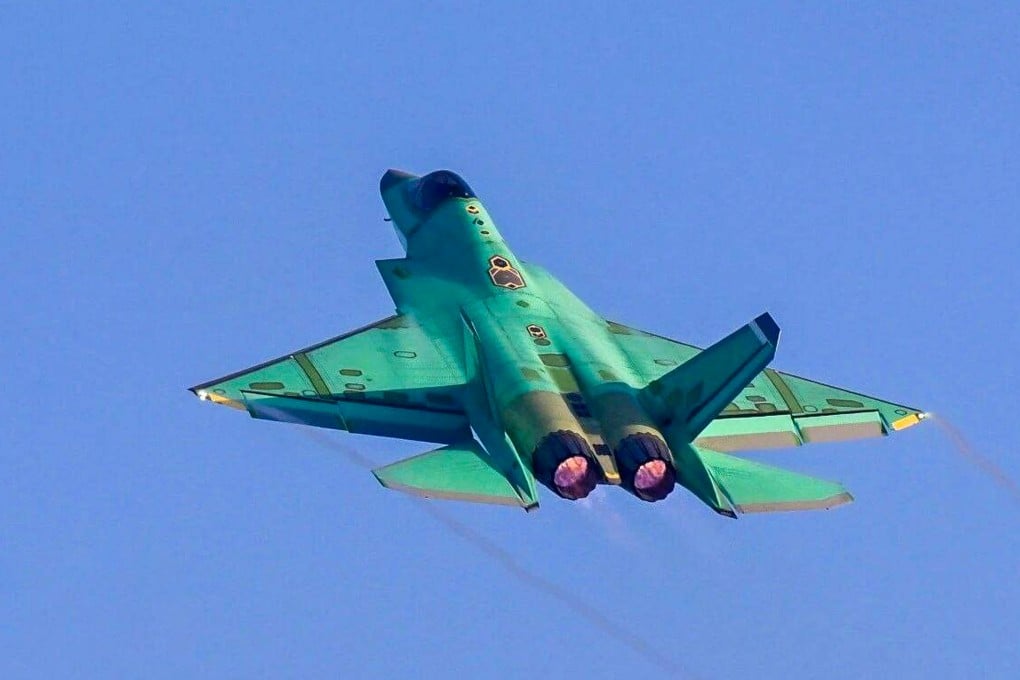
A J-35 fighter is shown at SAC’s airfield in Liaoning province, according to a video released by the manufacturer on Tuesday. Photo: Handout

Amber Wangin Beijing
Published: 6:00pm, 9 Jan 2026

A Chinese defence giant has flexed its production muscle early in the new year by releasing a video of its star product, the J-35 stealth fighter, and pledging to double its warplane production over the next three to five years.

On Tuesday, a green-coated J-35 fighter roared down the runway at the Shenyang Aircraft Corporation (SAC) airfield in China’s northern Liaoning province, making its first flight of the year, according to a video released by the manufacturer, a subsidiary of Aviation Industry Corporation of China (AVIC), on the same day.

In separate images, SAC displayed two green-primed J-35 fighters parked at the airfield. They appeared to be fresh off the production line, lacking the tactical grey coating found on in-service aircraft.

maxresdefault.jpg


The display appeared to showcase the steady production pace of the fifth-generation fighter following its official commissioning by the Chinese military last year.

According to a Liaoning Daily report on December 26, by the end of June last year, the main assembly plant at SAC’s new factory complex was completed, and product assembly officially had begun.

It is expected that the new factory will enter mass production this year. The report said that over the next three to five years, the factory would evolve into a production base with an “intelligent manufacturing and full chain” support system, doubling its total production capacity.

The SAC factory appears to be the same as one previously reported. In August 2023, a company notice said SAC planned to invest 8.6 billion yuan (US$1.2 billion) to build a new production site covering 4.2 sq km (1.6 square miles).

The report on December 26 said the new SAC factory was part of an entire “Shenyang Aerospace City” planned to cover 79.2 sq km, roughly the area of Hong Kong Island.

 
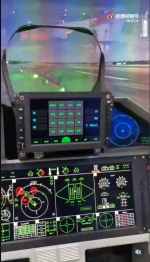
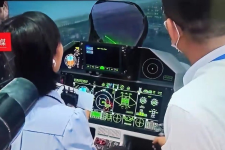
Posting this incase no one has seen what the cockpit of the J35 looks like. This video is from 2021 so things may have changed/improved etc.

To view this content we will need your consent to set third party cookies.
For more detailed information, see our cookies page.


1768047615923.png

1768047599997.png
 

China ready to move its J-35 stealth fighter jet into mass production: Report​

China’s J-35 stealth fighter is moving into mass production as Beijing scales its aerospace industry.

By Christopher McFadden
MilitaryJan 10, 2026 10:36 AM EST

New footage suggests that China might be close to mass-producing advanced stealth fighter jets, not just prototyping them as previously believed. What’s more, this appears to mean China’s latest fifth-generation stealth fighter, the J-35, rather than its older, more well-known J-20.

This has been prompted by the release of images and videos of the J-35 sporting a green coating. According to analysts, the color means that the jets are newly built and are still being tested.

These aircraft haven’t received their final paint because the design may still change, and it’s cheaper and easier to inspect in primer. Therefore, seeing multiple green aircraft together strongly suggests serial (repeat) production, not one-off prototypes.

To this end, it would appear that China’s J-35 could well be ready for mass production and is no longer to be considered experimental.

Mass-producing stealth​

Developed by China’s Shenyang Aircraft Corporation (SAC), a subsidiary of Aviation Industry Corporation of China (AVIC), the company has also pledged to double its overall warplane production over the next three to five years.

The SAC is the product of over 8.6 billion yuan ($1.2bn) by Beijing, and the factory alone covers a reported area of 1.62 square miles (4.2 square-kilometers). According to reports, the SAC will be part of a much larger “Shenyang Aerospace City” spanning ~79 km² (roughly Hong Kong Island).

The fact that China’s desire to rapidly increase capacity mirrors that of the US with its F-35 production has also not gone unnoticed.

Another interesting point is that the J-35 isn’t just an air force jet. It has a naval version designed for carriers and so is likely destined to operate from China’s most advanced aircraft carrier, the Fujian.

This ship is China’s first entirely domestically-produced carrier and comes, it is claimed, with working electromagnetic catapults, like US supercarriers. Interestingly, prototypes of the J-35 have already taken off via catapult and performed arrested landings on the carrier.

That means it’s operationally credible, not theoretical, and gives China a stealth carrier air wing, something only the US Navy currently fields at scale.

A warning to the West​

It is also important to note that China typically keeps advanced war machine production under wraps. Showing off jets on runways and multiple units together in one place appears to be intentional messaging from Beijing.
Looking at the bigger picture, China appears to want the world to know that it can now (it claims) match the US in terms of aircraft development and production.

This, it would appear, is intentionally to show the US that a future war between them would be determined not just by who has the best kit. But also, which side can absorb and replace losses the fastest.

For Taiwan, this is also potentially bad news as the jhe J-35 is optimized for regional power projection. Carrier-based stealth jets, like the J-35, could complicate Taiwan’s air-defence planning

This pairs with increasing PLA drills and pressure operations

In short, China isn’t just building a stealth fighter anymore. It’s demonstrating that it can mass-produce fifth-generation jets and sustain a modern air war, especially at sea.

 
Alright, let’s fire up a thrilling topic: what will the final iteration of the J-35, or its export variant the FC-31, end up being?


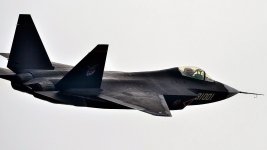
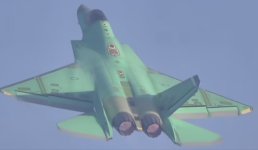
As we all know, the current FC-31/J-35 is still not in its full-up configuration, simply because the WS-19 turbofan engine is still undergoing testing. In the early trial stages of the FC-31, it was fitted with large vertical stabilizers similar to those on the F-22. Later on, though, these were modified into smaller tails—much like the F-35’s design—thanks to adjustments made for its air intake system and carrier-based operational requirements.


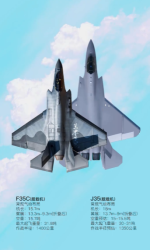
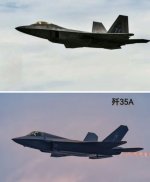
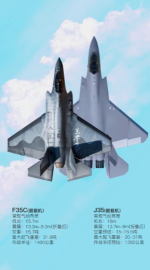
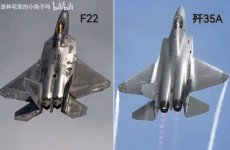
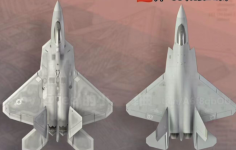
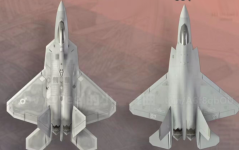
A lot of folks view the FC-31/J-35 as a platform directly pitted against the F-35. But when you look at its dimensions, engine count, and overall exterior profile, the FC-31/J-35 actually has far more in common with the F-22.


I can already hear the pushback here—about the air intake and engine nozzle differences. The F-22 adopted the caret inlet purely due to the technological limitations of its development era, while the FC-31/J-35 uses a diverterless supersonic inlet (DSI). This DSI design not only optimizes speed adaptability in specific flight envelopes but also enhances stealth performance significantly.


On the engine nozzle front, the current FC-31/J-35 does not yet deploy the full-up variant of the WS-19. Some might argue that China lacks thrust vectoring technology—but let’s not overlook the J-10B, which showcased its 3D thrust vectoring engine (a WS-10 variant) at a previous Zhuhai Airshow. That demonstration alone was proof that China has mastered this critical tech. What’s more, the newly revealed sixth-gen fighter, the J-50, also features China’s indigenous 2D thrust vectoring engine.


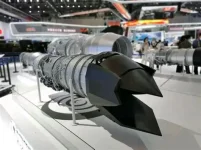
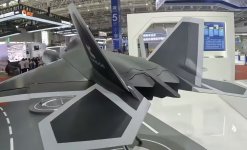
Skeptics might still claim that China has no plans to equip the J-35/FC-31 with a 2D thrust vectoring nozzle—but here’s the game-changer: at the 2022 Zhuhai Airshow, AVIC publicly displayed a full-up prototype of the WS-19, complete with a 2D thrust vectoring nozzle. Right next to it sat a demonstration airframe; judging from its air intake and vertical stabilizers, this was unmistakably an FC-31/J-35, not an F-22.


If this exhibition model is a preview of the future full-up FC-31/J-35, then outfitting it with a 2D thrust vectoring engine would essentially turn it into an F-22 equivalent—not an F-35 equivalent—one that boasts superior avionics, enhanced stealth, a more advanced radar system, cutting-edge missile armament, and the aerodynamic edge of a DSI inlet.
 

Attachments

  • QQ20260120-000851.png
    QQ20260120-000851.png
    217 KB · Views: 8
  • OIP (6).webp
    OIP (6).webp
    17.4 KB · Views: 9
  • FC-31-01.jpg
    FC-31-01.jpg
    117 KB · Views: 9
  • B687732B9F96923909EF30E8DF78E215.jpg
    B687732B9F96923909EF30E8DF78E215.jpg
    50.9 KB · Views: 9
  • 1DFEEA630B3B8913B2E1571B4CEF7046.jpg
    1DFEEA630B3B8913B2E1571B4CEF7046.jpg
    102.7 KB · Views: 8
Alright, let’s fire up a thrilling topic: what will the final iteration of the J-35, or its export variant the FC-31, end up being?


As we all know, the current FC-31/J-35 is still not in its full-up configuration, simply because the WS-19 turbofan engine is still undergoing testing. In the early trial stages of the FC-31, it was fitted with large vertical stabilizers similar to those on the F-22. Later on, though, these were modified into smaller tails—much like the F-35’s design—thanks to adjustments made for its air intake system and carrier-based operational requirements.


A lot of folks view the FC-31/J-35 as a platform directly pitted against the F-35. But when you look at its dimensions, engine count, and overall exterior profile, the FC-31/J-35 actually has far more in common with the F-22.


I can already hear the pushback here—about the air intake and engine nozzle differences. The F-22 adopted the caret inlet purely due to the technological limitations of its development era, while the FC-31/J-35 uses a diverterless supersonic inlet (DSI). This DSI design not only optimizes speed adaptability in specific flight envelopes but also enhances stealth performance significantly.


On the engine nozzle front, the current FC-31/J-35 does not yet deploy the full-up variant of the WS-19. Some might argue that China lacks thrust vectoring technology—but let’s not overlook the J-10B, which showcased its 3D thrust vectoring engine (a WS-10 variant) at a previous Zhuhai Airshow. That demonstration alone was proof that China has mastered this critical tech. What’s more, the newly revealed sixth-gen fighter, the J-50, also features China’s indigenous 2D thrust vectoring engine.


Skeptics might still claim that China has no plans to equip the J-35/FC-31 with a 2D thrust vectoring nozzle—but here’s the game-changer: at the 2022 Zhuhai Airshow, AVIC publicly displayed a full-up prototype of the WS-19, complete with a 2D thrust vectoring nozzle. Right next to it sat a demonstration airframe; judging from its air intake and vertical stabilizers, this was unmistakably an FC-31/J-35, not an F-22.


If this exhibition model is a preview of the future full-up FC-31/J-35, then outfitting it with a 2D thrust vectoring engine would essentially turn it into an F-22 equivalent—not an F-35 equivalent—one that boasts superior avionics, enhanced stealth, a more advanced radar system, cutting-edge missile armament, and the aerodynamic edge of a DSI inlet.
I 35 will give F 22 and F 35 a run for their money....no ifs and buts about it .
 
Alright, let’s fire up a thrilling topic: what will the final iteration of the J-35, or its export variant the FC-31, end up being?


As we all know, the current FC-31/J-35 is still not in its full-up configuration, simply because the WS-19 turbofan engine is still undergoing testing. In the early trial stages of the FC-31, it was fitted with large vertical stabilizers similar to those on the F-22. Later on, though, these were modified into smaller tails—much like the F-35’s design—thanks to adjustments made for its air intake system and carrier-based operational requirements.


A lot of folks view the FC-31/J-35 as a platform directly pitted against the F-35. But when you look at its dimensions, engine count, and overall exterior profile, the FC-31/J-35 actually has far more in common with the F-22.


I can already hear the pushback here—about the air intake and engine nozzle differences. The F-22 adopted the caret inlet purely due to the technological limitations of its development era, while the FC-31/J-35 uses a diverterless supersonic inlet (DSI). This DSI design not only optimizes speed adaptability in specific flight envelopes but also enhances stealth performance significantly.


On the engine nozzle front, the current FC-31/J-35 does not yet deploy the full-up variant of the WS-19. Some might argue that China lacks thrust vectoring technology—but let’s not overlook the J-10B, which showcased its 3D thrust vectoring engine (a WS-10 variant) at a previous Zhuhai Airshow. That demonstration alone was proof that China has mastered this critical tech. What’s more, the newly revealed sixth-gen fighter, the J-50, also features China’s indigenous 2D thrust vectoring engine.


Skeptics might still claim that China has no plans to equip the J-35/FC-31 with a 2D thrust vectoring nozzle—but here’s the game-changer: at the 2022 Zhuhai Airshow, AVIC publicly displayed a full-up prototype of the WS-19, complete with a 2D thrust vectoring nozzle. Right next to it sat a demonstration airframe; judging from its air intake and vertical stabilizers, this was unmistakably an FC-31/J-35, not an F-22.


If this exhibition model is a preview of the future full-up FC-31/J-35, then outfitting it with a 2D thrust vectoring engine would essentially turn it into an F-22 equivalent—not an F-35 equivalent—one that boasts superior avionics, enhanced stealth, a more advanced radar system, cutting-edge missile armament, and the aerodynamic edge of a DSI inlet.
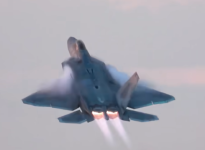
This is a follow-up post with supplementary images. As you can see, the FC-31/J-35 prototype bears far more resemblance to the F-22 than the F-35.
Image 5 here is a Photoshop edit I made—just to visualize how the FC-31/J-35 would look with 2D thrust vectoring nozzles, compared to the F-22. If you plan to share this image, please label it as a Photoshop creation.
 

Attachments

  • QQ20260119-233735.png
    QQ20260119-233735.png
    204.3 KB · Views: 12
  • 1.jpg
    1.jpg
    127.1 KB · Views: 10
  • 2.jpg
    2.jpg
    69.7 KB · Views: 10
  • 3.png
    3.png
    116.4 KB · Views: 13
  • 4.png
    4.png
    386.9 KB · Views: 13
  • 5.png
    5.png
    281 KB · Views: 14

Users who are viewing this thread

Back
Top