Chinese UAVs News & Discussions

There is no way you can use traditional way to counter swarm uav. It's just a matter of ROI.

You enemy can use millions of small UAV in the same time in future, but you can't never counter millions of small UAV no matter how many laser system and 625 you have.

UAV are cheaper and cheaper day after day, while 625 cost is fixed(plus inflation).

Something new is needed, it could be swarm to counter swarm, or not. But if you stick to traditional air defense system, there is no way out.

Last but not least, you have to consider the system cost, including full life cycle cost, otherwise, the ROI discussion is meaningless.

625 upper limit is low, 25mm calibar means short range. 6 means you can shoot thousands of bullets per minute at most.

25mm*6 means you can shoot down targets with 2-3 mach speed in 1-2km range. That's the upper limit. Realy combat effectiveness usually be even lower, much lower.

SDB is covered by armor, laser system is useless in this case basically. You have to use APFSDS to penetrate those target(cost goes up). Even though, due to 25mm caliber, SDB is too fast, and too close to you, the kinetic energy will make enough damage unless SDB was hit and exploded in the air.

SDB is high speed target, while 625 can only shoot target in 1-2km, the 625 system can shoot 1-2 SDB at most. Your enemy can offload tens of them, 625 system is doomed in a few munites.

SDB launch platform can be anything in future, UAV or F-35. That's out of discussion here. Completely different topic.
1, As I said before, offensive and defensive systems always spiral. And, defense systems always lag behind the development of offensive systems. So far, we haven't seen millions of small UCAVs in any local theater. we are talking based on reality. Any defense system has a saturation factor, and any defense system will fail when the base of offensive systems exceeds the base of defensive systems.
2, based on the technical level analysis. swarm UCAV is only suitable for the same level of security warfare, crushing level of clearance operations, as well as special operations, and is not suitable for the contract level of frontal war. swarm UCAV based on the cost and carrying considerations, it is a very small size, the working time and working distance is very short, and the explosive power is also very small. If the Swarm UCAV is made to a level where it can carry grenades, then its size and cost will skyrocket. The current Swarm UCAV is primarily aimed at soldiers, and it can't form an effective attack on armored targets unless it's made much larger. This means that to bring a very large number of Swarm UCAVs into battle, first its carrier would have to break through the outer defense ring. Even if the Swarm UCAVs are carried by bombers/fighters and dropped in a manner similar to cluster bombs, then the bombers and the cluster bombs themselves would have to break through the outer defense perimeter first. That's a whole other air defense topic.
3, UCAVs on the Russian-Ukrainian battlefield are still mainly medium UAVs dropping bombs and FPVs blowing themselves up. There is no evidence that Swarm UCAVs can break through armored targets. At the same time, both sides do not have laser defense systems, nor do they use CIWS to defend against UCAVs, but more often use electronic jamming systems. Electronic jamming systems have also been shown to be effective against Swarm UCAVs.
4, PLAGF confirmed in training that the Loitering Munition of HQ-17A can effectively counter Swarm UCAV. you can find the video on Chinese media platform. What I am against is using Swarm UCAV to defend against Swarm UCAV, but I am in favor of using the way UAV launch Loitering Munition to create the projectile to defend against Swarm UCAV.
5, The issue of SDB defense is not part of our conflicting views. It will not be discussed. If conventional defenses can't defend against it, Swarm UCAVs can't defend against it even more.
 
Small Diameter Bomb,SDB, it is bomb afterall, sometype may has seek. but nothing new.

for example : one of the existing SDB system consists of GBU-39 small diameter bombs, payload systems, mission planning systems, and logistics support systems. Including the ammunition rack and four GBU-39/B bombs, the entire device weighs 664 kilograms, is 3.6 meters long, 0.40 meters wide, and 0.40 meters high. similar weighs and volume of the other type of SDB.

so, need a big big UAV to carry them, then the carrier is a target also.

anyway, SDB is just a plane released missle, not a high tech weapon. Russian and China can make easily. do American has countless SDB ? Such discussion reminds me of a joke from a long time ago: 300 Tomahawk Paralyzed China. todays' is "swarm SDB is invincible", XSWL. traditional Intimidation and exaggeration。

swarm UAV IS NOT swarm SDB, don't mix them up, That is lacking of common sence and basic logic.

second, the air defence of a Chinese army is full range defence:
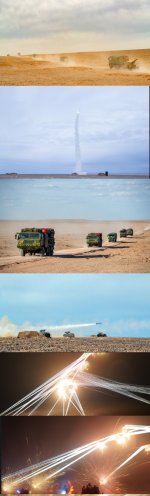
this is a recent drill of a certain brigade of the 82nd Army Group, anyone who has basic military knowledge can read:
001Oy5dFly1hsmbfvl8jhj64mo2ls1l102.jpg
 
This is an official agency article on Swarm UCAV analysis. Chinese version.
Don't read the articles of self media, they don't have much reference value.

 
Another day another UAV
To view this content we will need your consent to set third party cookies.
For more detailed information, see our cookies page.


W5000 animation
To view this content we will need your consent to set third party cookies.
For more detailed information, see our cookies page.
 
Last edited:
1, As I said before, offensive and defensive systems always spiral. And, defense systems always lag behind the development of offensive systems. So far, we haven't seen millions of small UCAVs in any local theater. we are talking based on reality. Any defense system has a saturation factor, and any defense system will fail when the base of offensive systems exceeds the base of defensive systems.
2, based on the technical level analysis. swarm UCAV is only suitable for the same level of security warfare, crushing level of clearance operations, as well as special operations, and is not suitable for the contract level of frontal war. swarm UCAV based on the cost and carrying considerations, it is a very small size, the working time and working distance is very short, and the explosive power is also very small. If the Swarm UCAV is made to a level where it can carry grenades, then its size and cost will skyrocket. The current Swarm UCAV is primarily aimed at soldiers, and it can't form an effective attack on armored targets unless it's made much larger. This means that to bring a very large number of Swarm UCAVs into battle, first its carrier would have to break through the outer defense ring. Even if the Swarm UCAVs are carried by bombers/fighters and dropped in a manner similar to cluster bombs, then the bombers and the cluster bombs themselves would have to break through the outer defense perimeter first. That's a whole other air defense topic.
3, UCAVs on the Russian-Ukrainian battlefield are still mainly medium UAVs dropping bombs and FPVs blowing themselves up. There is no evidence that Swarm UCAVs can break through armored targets. At the same time, both sides do not have laser defense systems, nor do they use CIWS to defend against UCAVs, but more often use electronic jamming systems. Electronic jamming systems have also been shown to be effective against Swarm UCAVs.
4, PLAGF confirmed in training that the Loitering Munition of HQ-17A can effectively counter Swarm UCAV. you can find the video on Chinese media platform. What I am against is using Swarm UCAV to defend against Swarm UCAV, but I am in favor of using the way UAV launch Loitering Munition to create the projectile to defend against Swarm UCAV.
5, The issue of SDB defense is not part of our conflicting views. It will not be discussed. If conventional defenses can't defend against it, Swarm UCAVs can't defend against it even more.
HQ-17A is expensive, the Tor missile system is very expensive. You need IFF array, radar, and other electronics, operators. How many Tor missle system you can offer for one brigage? Very limited. That's my point, ROI is bad. Meaningless in future, completely outdated concept and designed. Very limited potential to improve.

I am not talking about the current situation only today. I read some research paper, I think PLA must look beyond horizon. We can't afford the same sacrifice in Taiwan Strait conflict as Russians in Ukraine War. We must plan the war of tomorrow, of 10 years later.

I was ICT engineer, I am sure AI will develop faster and faster in all spectrum of human life, including warfare. We must take this into account.

Swarm with self-awareness, object identification, Ad-Hoc Network(decentralized network), is a reality already, and it will be much more powerful and threathening in coming years.

Long distance is not a problem for swarm. Midium size UAV can be powered by mini turbofan engine, working as power station. Midium size UAV can be spreader, offload swarm near the frontline. Midium size UAV can carry solar panels, and fuels, chargers, and many other things.

Those are not pipedeam, it's reality already.


【前沿动态】全球聚焦反无人机之战:挑战与创新并行(上)
在整个冲突期间,乌克兰和俄罗斯一直使用传统防空系统来对抗无人机。这些系统的优势在于,它们已经被大多数军队部署和理解。即使是被认为过时的防空系统也在反无人机的角色中找到了第二次生命,比如Gepard高射炮,它于1980年停产。不足之处在于,众多传统防空系统在应对小型无人机时,尤其是在远距离情况下,显得不够经济实惠。中程和远程防空系统,如爱国者、NASAMS或S-400,其操作和补给成本比除最昂贵的无人机之外的所有无人机都要高出一个数量级。较新的动能系统,如L3 VAMPIRE价格较低但射程较短,这意味着军队必须采购和使用许多此类武器才能覆盖与更先进平台相同的区域。攻击者可以将这些弱点转化为优势。俄罗斯使用大规模无人机袭击不断轰炸乌克兰的基础设施,迫使乌克兰防御者在低价值无人机上花费昂贵的弹药,并将防空系统远离前线以保护后方。


【前沿动态】全球聚焦反无人机之战:挑战与创新并行(下)
然而,定向能并非万能药。激光和微波各有优缺点,为适应性战术、技术和程序创造了机会。这两种系统的一个显著弱点是有效射程通常较短。虽然较短的射程可能适合战略目标的点防御,但其价值可能对区域防御有限。此外,激光通常需要几秒钟才能对目标造成伤害,而空气中的颗粒物(如雨水或烟雾)会破坏这一过程。例如,美国军队在测试安装在Stryker上的激光时发现该系统在恶劣条件下难以在移动车辆上运行。为了利用这些弱点,攻击者可能会在雨天或雾天部署无人机,依靠无人机更高的环境耐受力。虽然恶劣天气也可能抑制无人机上的视觉导航和瞄准系统,但对于已知位置的静态目标来说,这可能无关紧要。海军研究办公室有几项旨在对抗定向能武器的研究,包括材料硬化。同样,未来的反辐射导弹可能会有能够瞄准定向能系统的导引头。这可能是一个巨大的挑战。

虽然激光和微波的单次发射成本较低,但它们的单系统成本往往很高:Epirus从美国陆军获得了一份价值6610万美元的合同,交付四台“列奥尼达”原型机,每台约1650万美元。如果对手能够以可承受的价格瞄准并摧毁这些系统,低成本优势可能会变成高成本风险。此外,定向能通常需要大量电力,而这些电力可能会中断或耗尽。攻击者可能会使用胶合板和泡沫塑料等廉价诱饵来消耗系统存储的电力,然后再发动更大规模的攻击。


美空军实验室重点研究可相互“通信”的蜂群无人机
空军正在研究协作式分布自主系统,这些系统可以相互通信,以更有效地定位目标系统。第二个领域是扩大远程系统的覆盖范围。空军必须确保这些远程支援系统具有足够的生存能力和杀伤力。最后一个重点领域是快速技术植入,需启用开放式架构,特别是陆地开放系统架构,以实现现有系统和未来系统的弹药系统升级。

DARPA拟开发自主滑翔技术以减少小型无人机飞行能耗
DARPA将于10月2日举办“信天翁”计划的提案者日活动,该计划旨在开发用于小型无人机的自主滑翔技术,实现减少75%的小型无人机飞行能耗的目标。滑翔即利用高空气流来减少能源消耗,增加小型无人机航程和续航能力。

低慢小,大威胁:反无人机的技术与方法
大多数军用雷达的系统特性都是针对比小型无人机更大、更快的威胁而优化的。因此,更高频率的雷达常被用于探测无人机,尤其是Ku波段雷达和Ka波段雷达(频率分别为12至18千兆赫和26.5至40千兆赫)。使用这些较高频率雷达的缺点是大气衰减会增加,尤其是在下雨天,这将缩小系统的最大探测距离。关于雷达系统对小型无人机的有效探测距离,不同的文献众说纷纭,因为在实际应用中,理论上能够达到的最大探测距离有可能导致令人无法接受的高虚警率。在理想条件下,即假设雷达对目标的视线畅通无阻,雷达的有效探测距离在2至8公里之间。

激光探测与测距(LADAR)系统与雷达类似,但使用的是激光照射目标。与光电/红外系统一样,这种系统也很容易受到雨雾的影响。实际上,最新研究表明,LADAR系统探测30米开外的小型无人机的成功率不高,如此短的探测距离远不足以支持现代反无人机任务,但随着激光系统及其数据处理能力的不断改进,预计未来LADAR系统的性能将迎来提升。

尽管导弹和火炮在对付无人机方面效果显著,但在非战斗区域使用有可能造成极高的附带伤害。即使在战斗区域内使用,也需要协调火力弧和空域管制,以避免误伤友军。此外,此类武器以摧毁单架飞机为主,面对无人机群可能无法形成可观的防御效果。为有效对抗无人机群,可能需要使用弹仓深度深、可快速交战并具有区域杀伤性的武器系统。

然而,激光武器的效用有可能随着大气水蒸气的增多而降低,因为特定的激光波长有可能被水蒸气吸收,这在湿度较高的环境中尤为明显。高能激光对于对付其附近区域的目标具有极高的精确度。然而,被激光击毁的目标会以难以预测的方式坠落,有可能对地面建筑或人员造成伤害。高能激光的作战概念还必须考虑其对远处传感器(如在该区域内运行的本方机载传感器)可能产生的附带影响,以及激光在攻击目标时对暴露于目标镜面反射下的人体造成的危害,散射激光能或将对人眼造成永久性伤害。

激光和高功率微波武器都有相应的反制措施。对于激光武器而言,使用烟雾或其他遮蔽物可以阻挡激光束的路径,减少激光器对目标的直接照射;加固无人机意味着在无人机设计中采用能够反射或吸收激光的材料(这通常有助于减缓激光效果产生的进程,而非完全抑制其效果)。另一种反制措施是使用大量无人机进行压制,这能有效分散激光武器的注意力和火力,使其难以锁定真正的目标。此外,激光武器需要在多次发射之间进行冷却和/或再蓄力,无人机可利用这个时间窗口进行反击。对于高功率微波武器而言,无人机可通过加固电子设备进行防御,例如使用特殊的屏蔽材料来防止电磁脉冲进入飞机的电子系统。


美国海军发布“沉默蜂群2025”无人系统实验通知
“沉默蜂群”是一系列多域无人系统(UxS)的电磁频谱作战(EMSO)能力实验。“沉默蜂群2025”计划于2025年7月举行,重点关注自适应、模块化无人系统的协调性、一致性与反应能力,尤其是在偏海洋条件的高移动多域集成环境中。


反无人机集群态势感知应对策略研究
实际上由于无人机集群具有很强的突防能力和高度的协同性,反无人机集群的关键是进行区域拒止防御,而要实现该目标,关键在于尽早感知敌集群态势,从而为摧毁敌集群运载释放平台和地面站,干扰敌通信链路等预留时间窗口。因此,针对当前研究不足,本文以反无人机集群态势感知应对策略为研究对象,首先对反无人机集群联合多域探测手段进行阐述介绍,然后分别以集群目标的融合跟踪和意图识别为例对分级式融合结构进行分析讨论。


【研究报告】美军无人机反制装备能力现状及发展趋势研究报告
摘要

美军最全反无人机装备体系!!!


为解决低空空域控制权夺取问题,有效应对小型无人机威胁,美国近年来逐步加大对无人机反制技术的研究深度,着眼于近期、中期、远期三个阶段,美军成体系规划设计,研制了大量无人机反制装备,据开源情报统计分析约160余型。其中,综合指控系统属于无人机反制系统的神经中枢,主要包括ADSI、FAAD—C2、MEDUSA等3型系统,可以兼容24型无人机目标探测识别系统、36型干扰反制系统、14型作战指挥系统,并在不断的拓展完善。

本报告区分综合指控、目标探测、电子干扰、激光打击、微波打击、网式捕捉、火力打击、综合集成、无人反制无人等九大类型,对其研发公司、产品性能、功能特征、技术参数、测试运用等进行了详细介绍与剖析。报告最后还从美军无人机反制市场预测、发展挑战、发展特征、发展态势及重点出发,对美军无人机反制装备未来发展趋势做了简要剖析
1729289091849.png
 
Last edited:
008ywq9xgy1huqs2r5m7jj335s2dcnpd.jpg
Maximum commercial load of 5 tons

the world's No.1 unmanned cargo aircraft - the White Whale route W5000 has been launched in Changzhou.
 
  • Like
Reactions: HRK
To view this content we will need your consent to set third party cookies.
For more detailed information, see our cookies page.
 
Recent PLA anti swarm drone exercise
To view this content we will need your consent to set third party cookies.
For more detailed information, see our cookies page.
 
Recent PLA anti swarm drone exercise
To view this content we will need your consent to set third party cookies.
For more detailed information, see our cookies page.

PGZ-09 35mm Self-propelled Artillery:
The muzzle is equipped with a speed measuring device. This kind of self-propelled anti-aircraft gun is equipped with a radio control radar, although the performance is excellent, but the cost is expensive. It is reported that the cost is more than two Type-99A.


HQ-17:
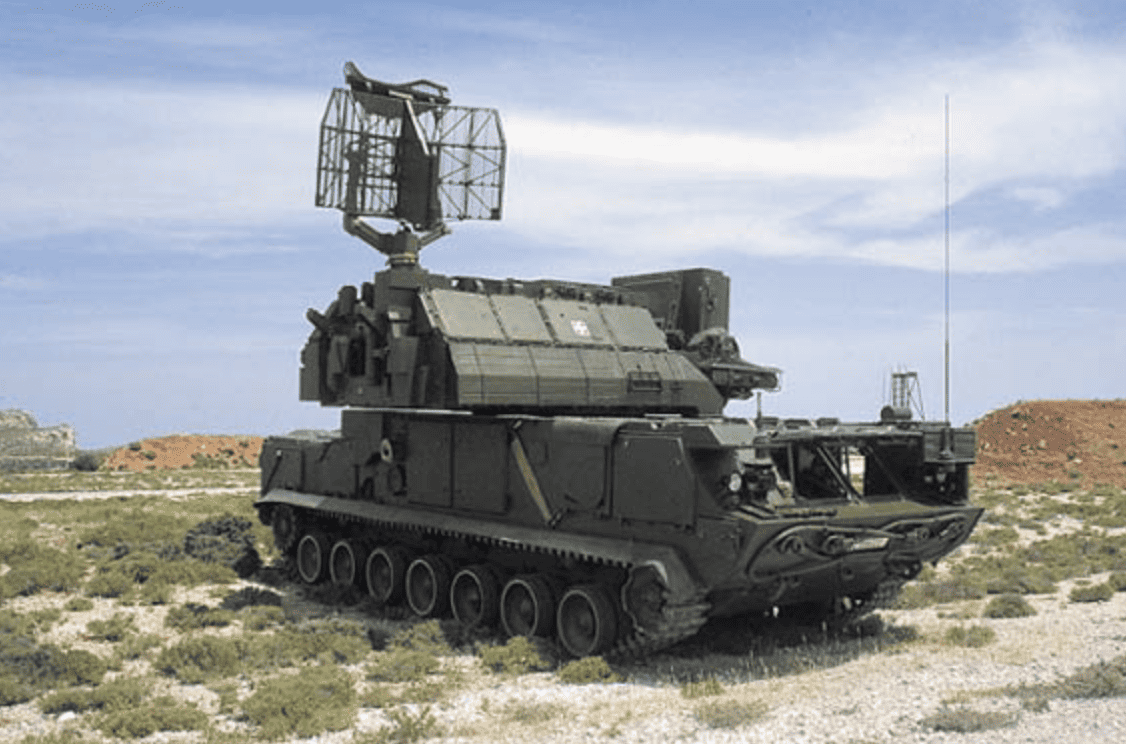
The HQ-17 fills the role of a short-range, highly-mobile point defense system within the Chinese aerial defense structure. The system was reverse-engineered and produced principally to repel the threat of American and Taiwanese cruise missiles. The HQ-17 can operate in any kind of weather and during nighttime. The chief drawback to the HQ-17 is its high cost, which averages $26 million per unit.[v]Due to its cost, the HQ-17 is not used as widely as the HQ-16. Though it is an extremely capable system, the HQ-17 will lose some of its strategic value with the development of the HQ-29, which is an indigenous point-defense system comparable to the PAC-3.


The ROI of PGZ-09 and HQ-17 is very bad to counter swarm.
 
PGZ-09 35mm Self-propelled Artillery:
The muzzle is equipped with a speed measuring device. This kind of self-propelled anti-aircraft gun is equipped with a radio control radar, although the performance is excellent, but the cost is expensive. It is reported that the cost is more than two Type-99A.


HQ-17:
The HQ-17 fills the role of a short-range, highly-mobile point defense system within the Chinese aerial defense structure. The system was reverse-engineered and produced principally to repel the threat of American and Taiwanese cruise missiles. The HQ-17 can operate in any kind of weather and during nighttime. The chief drawback to the HQ-17 is its high cost, which averages $26 million per unit.[v]Due to its cost, the HQ-17 is not used as widely as the HQ-16. Though it is an extremely capable system, the HQ-17 will lose some of its strategic value with the development of the HQ-29, which is an indigenous point-defense system comparable to the PAC-3.


The ROI of PGZ-09 and HQ-17 is very bad to counter swarm.
Well, there are various drones, and missiles to counter The one that was shown in the video is to counter high-altitude missiles and relatively large ones like Storm Shadow, Taurus, and Himar, Those kinds of missiles can do real damage So whatever cost it is worth.

But the video also shows a P90 gun which is relatively cheap and it has a high firing rate of cheap AHEAD munition. for fixed position, it is the ideal weapon to counter small drones. Some of them are automatic. The video shows portable Drone detectors, Anti-drone gun may not yet be the best and only limited use but that is the start

The problem is not so much the gun Any Gatling gun will make mince meat out of a drone China has all kinds of mini Gatling guns. The problem is small drones are hard to detect because they fly close to the earth causing cluttering and it is slow So special radar needs to be used. As well as reaction time since some Kamikaze drones are very fast when they swoop down the target. Yes, they need to rethink how to counter these drones and come up with a solution. It should involve some kind of rapid-firing gun, a small portable radar to detect the drone Russian had a portable drone radar

The Type 90 (PG99) is an anti-aircraft 35 mm twin gun designed and manufactured by the Chinese Company Norinco. The proven twin 35 mm towed AA gun system represents the advanced development by NORINCO of a high-performance, extremely accurate, and reliable air defense gun. The Type 90 35mm twin-gun was designed to engage high-speed, low-flying aircraft, helicopters, unmanned aerial vehicles (UAV), and cruise missiles. The gun is in service with the Chinese armed forces to provide field air defence for the ground forces at the division and group army level. The system’s reaction time to an airborne target is only 6 seconds, and the whole system can be set up or retreated within 90 seconds.

Munition they can use AHEAD
Advanced hit efficiency and destruction (AHEAD) ammunition is a type of airburst round ammunition that releases a cloud of sub-projectiles just ahead of a target, enabling it to engage conventional as well as low, slow and small (LSS) air threats including unmanned aerial vehicles and perform counter rocket, artillery, and mortar duties. The 35 mm variety produced by Oerlikon Contraves splits each projectile into 152 tungsten< submunitions "that form a cone-shaped pattern to destroy a target's control surfaces and other vital components". ammunition is listed as an official

China does not lack private sector engineering when it comes to anti-drone system https://novasky.en.made-in-china.co...LLVM/Anti-Drone-Defense-System-catalog-1.html
 
Last edited:
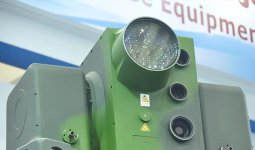
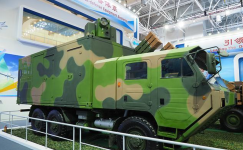
LW-30 Laser Weapon System,
developed by China Aerospace Sanjiang Group Co., Ltd. made its first public appearance in 2018, its improved type may show next month.
The LW-30 can quickly intercept various types of targets such as drones, air to ground missiles, guided bombs, etc. It can also undertake C-RAM combat tasks, ensuring effective defense against the threat of indirect fire such as rockets, shells, mortars, etc. It can also be used to deal with various electro-optical equipment for ground targets. In addition, it also has long-range detection function.
The LW-30 adopts a 6 × 6 tactical truck. It is reported that the LW-30 laser tank has strong maneuverability, fast response speed.
The power of iLW-30 laser cannon is between 30-100 kilowatts, and different versions can be selected according to requirements. The version purchased by Saudi Arabia has a power of 30 kilowatts and a maximum range of 4 kilometers. This weapon can not only deal with low flying small drones, but also defeat some armored targets. The power of laser is enough to burn through two 2mm steel plates within 800 meters, and even one 5mm steel plate within 1000 meters. The laser cannon system consists of a laser weapon launch vehicle and a 3D TWA radar vehicle. The former is used for launching laser strikes, while the latter is used for tracking and monitoring battlefield targets. This system can also be customized for exclusive use, and Saudi Arabia has even installed it on the chassis of Mercedes Benz trucks to reduce logistical pressure. If the UAE purchases this laser cannon system, they can also customize it and choose higher power versions to increase range and power, further expanding the alert range for drones.
It can lock onto a target 25 kilometers away within six seconds and launch an attack after locking onto the target.
Its laser emitter adopts advanced cooling technology, which can continuously emit laser beams with high power for a long time without interrupting or reducing performance.
maxthon_pic.jpg傲游截图20241021092057.png
 
China:

For the first time, the Chinese army is conducting exceptional maneuvers using giant transport aircraft to launch swarms of drones loaded with massive firepower.

What the Y-20 giant transport plane dropped were not supplies or conventional bombs, but rather swarms of drones in an operation
It says "Swarm Operations".

The Chinese Ministry of Defense says:
The People's Liberation Army has sufficient strength to sweep away any obstacles in its path.

To view this content we will need your consent to set third party cookies.
For more detailed information, see our cookies page.
 
China:

For the first time, the Chinese army is conducting exceptional maneuvers using giant transport aircraft to launch swarms of drones loaded with massive firepower.

What the Y-20 giant transport plane dropped were not supplies or conventional bombs, but rather swarms of drones in an operation
It says "Swarm Operations".

The Chinese Ministry of Defense says:
The People's Liberation Army has sufficient strength to sweep away any obstacles in its path.

To view this content we will need your consent to set third party cookies.
For more detailed information, see our cookies page.


Looks more like a CG than a real Y-20
 
It is feasible to use Hongqi-17 to attack swarm drone. Replace its 156kg fragmentation warhead with an electromagnetic pulse warhead, and detonate it in the middle of the drone swarm. a drone has EMP proof ability will be very very expensive. the tactic has high cost-effectiveness ratio.

War is art, victory or defeat lies in one thought

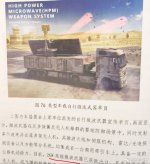
by the way, PLA do have high-energy electromagnetic pulse (HEMP) weapons and high-power microwave (HPM) weapons and one type of HPM have obtained export licenses, and new types of directed energy weapons that can be exported will soon be seen.

60cf4323ly1hujbfpj7tpj20k40lv7fg.jpg
 

Users who are viewing this thread

Country Watch Latest

Back
Top