Congo about to spill into 2nd africa world war?

retaxis

Trusted Member
Joined
Nov 16, 2007
Messages
4,782
Reaction score
6,543
Reputation
2,572.0
Country of Origin
Country of Residence
The South African government warned the M23 rebel group and Rwanda that continued attacks resulting in the deaths of South African peacekeepers in the eastern Democratic Republic of the Congo (DRC) constitute a de facto declaration of war. [1, 2, 3]

Key Details
    • Casualties: At least 13 to 14 South African soldiers serving under the Southern African Development Community Mission in the DRC (SAMIDRC) were killed during intense fighting against M23 forces around Goma. [1, 2, 3]
    • Official Response: President Cyril Ramaphosa and the Department of International Relations and Cooperation (DIRCO) condemned the killings, blaming M23 and elements of the Rwanda Defense Force (RDF) for supporting the offensive. [1, 2, 3]
    • Diplomatic Tensions: Rwanda's President Paul Kagame rejected the accusations, alleging that South Africa is operating as a belligerent force rather than a neutral peacekeeper. [1, 2]
    • Regional Impact: The escalating violence and troop vulnerabilities prompted regional bodies like the Southern African Development Community (SADC) and the African Union to reevaluate the mandate, safety, and potential withdrawal of deployed peacekeepers. [1, 2]
 
Rwandan and Burundian troops remain deeply entangled in the ongoing conflict in the eastern Democratic Republic of Congo (DRC), where regional dynamics continue to shift following the Washington Accords peace agreements. [1, 2, 3, 4]

Rwandan Troops and M23 Support
    • Active Deployment: An estimated 6,000 to 7,000 Rwandan troops remain actively deployed inside eastern Congolese territory, according to recent regional assessments and UN briefings. [1, 2]
    • M23 Alliance: Rwanda continues to face widespread accusations from the UN, Kinshasa, and the U.S. government of providing military backing to the M23 (March 23 Movement) rebel group, which Kigali consistently denies. [1, 2]
    • Territorial Control: M23 (backed by Rwandan forces) previously captured major eastern cities like Goma and Bukavu, and recent fighting has extended into the South Kivu and Uvira districts. [1, 2, 3]

Burundian Troops in the DRC
    • Deployment and Purpose: Burundi deployed thousands of troops to eastern Congo—initially with the approval of Kinshasa—to fight local rebel groups like RED-Tabara and assist pro-government forces against M23. [1]
    • Clashes and Captures: After M23 rebels launched an offensive into the border city of Uvira in late 2025, hundreds of Burundi soldiers were temporarily captured before Congolese forces later retook the area. [1, 2, 3]
    • Current Friction: Rwandan officials and reports allege that remaining Burundian forces have cooperated with the FDLR (Democratic Forces for the Liberation of Rwanda) and pro-Kinshasa militias, heightening cross-border tensions between Kigali and Gitega. [1, 2]
 
Meanwhile China is trying to mine lithium and cobalt and not have the war affect supply

Chinese companies hold minority or majority stakes in 54% of the critical mining projects (49 distinct projects) in the Democratic Republic of the Congo (DRC), dominating the global supply of copper, cobalt, and battery metals. [1]


Key Areas of Chinese Interest & Control
    • Cobalt and Copper Dominance: Chinese firms own or control the vast majority of the DRC's critical output, accounting for roughly 72% to 80% of cobalt and over 76% of copper production in the country. Major operations include Chinese-backed stakes in massive sites like the Tenke Fungurume Mining (TFM) mine. [1, 2, 3]
    • New Bilateral Agreements: In March 2026, the DRC Government and China signed a comprehensive mining and geological cooperation agreement. Under the deal, Congolese minerals enter China duty-free, while both nations prioritize geological data sharing and development of projects like the MIFOR Iron Ore Project. [1, 2, 3]
    • Local Processing Push: Kinshasa is increasingly pressuring Chinese operators to build domestic processing and refining infrastructure inside the DRC rather than shipping raw ores directly to Beijing. [1]
    • Regulatory and Security Pressures: While Chinese companies serve as preferred economic partners for major concessions, they face rising local friction. This includes recent crackdowns on unauthorized or illegal artisanal mining operations (such as the detention of Chinese nationals in South Kivu) and strict local demands for environmental and labor compliance. [1, 2]
    • Geopolitical Competition: China’s deep grip has triggered a direct counter-strategy from Western powers. The United States established a rival strategic minerals partnership and backs the multi-billion-dollar Lobito Corridor
 

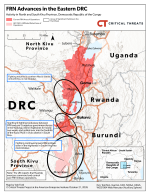
Key Takeaway: Former DRC President Joseph Kabila officially joined the M23 rebellion as the political leader of a rebranded movement called the Front pour la Refondation de la Nation (FRN). Significant fighting took place between FRN and pro-Congolese government forces in the Walungu district highlands for nearly two weeks and spilled over into the foothills of the Ruzizi Plain in Uvira district in South Kivu. Mercenaries linked to US security tycoon Erik Prince reportedly took combat losses in the South Kivu highlands in mid-September. Burundian security services have reportedly arrested dozens of people in recent weeks whom authorities alleged have collaborated with FRN and Rwanda.
 

Users who are viewing this thread

Back
Top