Covid-19 News and Discussions

Status
Not open for further replies.

COVID-19 cases on the rise throughout Nebraska​


Tehama County warns of rising COVID-19 cases as summer ends​


Saturday's Pandemic Update: New Covid Deaths Higher In Several States​


Pediatricians scale back on COVID shots amid declining interest from families​

Unlike other vaccinations, COVID shots aren’t required for kids to attend school.


Orange County pediatrician Eric Ball treats patients from birth to age 21.

Orange County pediatrician Eric Ball treats patients from birth to age 21. [ (JACKIE FORTIéR/KFF HEALTH NEWS) | KFF Health News ]
By
  • Jackie Fortiér, KFF Health News (TNS)

Published 4 hours ago
When pediatrician Eric Ball opened a refrigerator full of childhood vaccines, all the expected shots were there — DTaP, polio, pneumococcal vaccine — except one.

“This is where we usually store our COVID vaccines, but we don’t have any right now because they all expired at the end of last year and we had to dispose of them,” said Ball, who is part of a pediatric practice in Orange County, California.

“We thought demand would be way higher than it was.”

Pediatricians across the country are pre-ordering the updated and reformulated COVID-19 vaccine for the fall and winter respiratory virus season, but some doctors said they’re struggling to predict whether parents will be interested. Providers like Ball don’t want to waste money ordering doses that won’t be used, but they need enough on hand to vaccinate vulnerable children.


Related: Florida sees spike in COVID-19 levels as ‘FLiRT’ variants sweep US
The Centers for Disease Control and Prevention recommends that anyone 6 months or older get the updated COVID vaccination, but in the 2023-24 vaccination season, only about 15% of eligible children in the U.S. got a shot.

Ball said it was difficult to let vaccines go to waste last year. It was the first time the federal government was no longer picking up the tab for the shots, and providers had to pay upfront for the vaccines. Parents would often skip the COVID shot, which can have a short shelf life compared with other vaccines.

“Watching it sitting on our shelves expiring every 30 days, that’s like throwing away $150 repeatedly every day, multiple times a month,” Ball said.

This year, Ball slashed his fall vaccine order to the bare minimum to avoid another costly mistake.

“We took the number of flu vaccines that we order, and then we ordered 5% of that in COVID vaccines,” Ball said. “It’s a guess.”

That small vaccine order cost more than $63,000, he said.

Pharmacists, pharmacy interns, and techs are allowed to give COVID vaccines only to children age 3 and up, meaning babies and toddlers would need to visit a doctor’s office for inoculation.

It’s difficult to predict how parents will feel about the shots this fall, said Chicago pediatrician Scott Goldstein. Unlike other vaccinations, COVID shots aren’t required for kids to attend school, and parental interest seems to wane with each new formulation, he said. For a physician-owned practice such as Goldstein’s, the upfront cost of the vaccine can be a gamble.


“The cost of vaccines, that’s far and away our biggest expense. But it’s also the most important thing we do, you could argue, is vaccinating kids,” Goldstein said.

Insurance doesn’t necessarily cover vaccine storage accidents, which can put the practice at risk of financial ruin.

“We’ve had things happen like a refrigerator gets unplugged. And then we’re all of a sudden out $80,000 overnight,” Goldstein said.

South Carolina pediatrician Deborah Greenhouse said she would order more COVID vaccines for older children if the pharmaceutical companies she buys from had a more forgiving return policy.

“Pfizer is creating that situation. If you’re only going to let us return 30%, we’re not going to buy much,” she said. “We can’t.”

UD4IDQTGHFFUZM43GMJ7RO2ZFE.JPG

Keep up with Tampa Bay’s top headlines​

Subscribe to our free DayStarter newsletter

We’ll deliver the latest news and information you need to know every morning.
Sign up

You’re all signed up!​

Want more of our free, weekly newsletters in your inbox? Let’s get started.

Explore all your options
Greenhouse owns her practice, so the remaining 70% of leftover shots would come out of her pocket.

Vaccine maker Pfizer will take back all unused COVID shots for young children, but only 30% of doses for people 12 and older.

Pfizer said in an Aug. 20 emailed statement, “The return policy was instituted as we recognize both the importance and the complexity of pediatric vaccination and wanted to ensure that pediatric offices did not have hurdles to providing vaccine to their young patients.”

Pfizer’s return policy is similar to policies from other drugmakers for pediatric flu vaccines, also recommended during the fall season. Physicians who are worried about unwanted COVID vaccines expiring on the shelves said flu shots cost them about $20 per dose, while COVID shots cost around $150 per dose.


“We run on a very thin margin. If we get stuck holding a ton of vaccine that we cannot return, we can’t absorb that kind of cost,” Greenhouse said.

Vaccine maker Moderna will accept COVID vaccine returns, but the amount depends on the individual contract with a provider. Novavax will accept the return of only unopened vaccines and doesn’t specify the amount they’ll accept.

Greenhouse wants to vaccinate as many children as possible but said she can’t afford to stock shots with a short shelf life. Once she runs out of the doses she’s ordered, Greenhouse said, she plans to tell families to go to a pharmacy to get older children vaccinated. If pediatricians around the country are making the same calculations, doses for small children could be harder to find at doctors’ offices.

“Frankly, it’s not an ideal situation, but it’s what we have to do to stay in business,” she said.

Ball, the California pediatrician, worries that parents’ limited interest has caused pediatricians to minimize their vaccine orders, in turn making the newest COVID shots difficult to find once they become available.

“I think there’s just a misperception that it’s less of a big deal to get COVID, but I’m still sending babies to the hospital with COVID,” Ball said. “We’re still seeing kids with long COVID. This is with us forever.”
 

Covid 19 update: 1425 new cases, 19 further deaths​

4:48 pm on 2 September 2024
Share this
View of a Coronavirus Covid-19.

Photo: 123rf.com
The number of new cases of Covid-19 in New Zealand has increased since last week, although the number of deaths attributed to the coronavirus has dropped.

There were 1425 new cases of Covid-19 reported in New Zealand over the week to Sunday, and 19 further deaths attributed to the virus.

Of the new cases, 900 were reinfections.

There were 92 people in hospital, with none in intensive care.

The highest number of new cases were in Waitematā (266), followed by Canterbury with 201.

The previous week there were 1294 new cases with 31 more deaths attributed to the virus.

There were 115 cases admitted to hospital.
 

Marijuana Users Less Likely to Experience Severe Covid Infections, Study Confirms​

Nearly double the amount of non-users experienced serious infection compared to cannabis users.

A new study has potentially good news for marijuana users as we head into peak Covid season. People who use cannabis were found to be less likely to experience serious illness and even death.

The study, which was conducted by Northwell Health in New York and published last week in the Cannabis and Cannabinoid Research medical journal, found that cannabis users had better outcomes and mortality compared with non-users. The researchers believe that the beneficial effect of the drug use may be attributed to its immuno-modulatory effects, which helps the body fight off infection and disease.


0:07
/
0:59

Skip Ad


In coming up with the findings, the team analyzed Covid patient data from the National Inpatient Sample Database and then divided the patients into two groups based on cannabis use. A total of 322,214 patients were included in the study, with 2,603 being cannabis users. User and non-users were then matched to adjust for factors such as age, race, gender, and other comorbidities. Cannabis users also tended to be younger and had a higher prevalence of tobacco use.

According to Forbes, 28.2 percent of cannabis users were found to have experienced serious infection, compared to a near double 46.6 percent of non-users. The mortality rate was likewise just 2.8 percent for users and 5.1 for non-users, with intubation rates at 7.1 percent and 9.7 percent, respectively. Cannabis users also had shorter hospital stays of 6.4 days compared to 7.0 days for non-users.


"On initial analysis, cannabis users had significantly lower rates of severe COVID-19 infection, intubation, ARDS, acute respiratory failure, severe sepsis with multiorgan failure, mortality, and shorter length of hospital stay," the study's authors write. "After 1:1 matching, cannabis use was associated with lower rates of severe Covid-19 infection, intubation, ARDS, acute respiratory failure, severe sepsis with multiorgan failure, mortality, and shorter length of hospital stay."

This is not the first study that has linked marijuana use to Covid outcomes. In 2022, researchers at Oregon State University published a study that found certain cannabinoids, as in the naturally occurring biological compounds found in cannabis, prevented the virus from entering human cells. The cannabinoid acids, which are commonly found in hemp varietals of cannabis, had the ability to bind to the spike protein of the virus and neutralize it.
 

2 minutes ago

Long covid could be costing the economy $2b a year, research says​

2 minutes ago

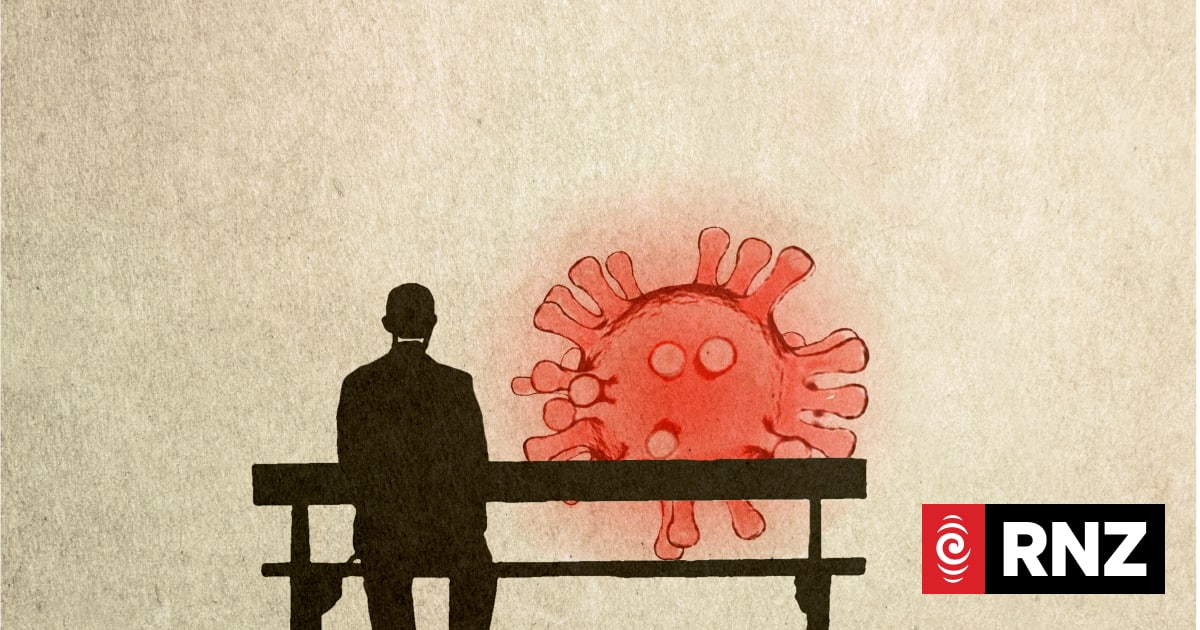
Man sitting on a bench next to Covid particle, illustration. (Photo by FANATIC STUDIO / SCIENCE PHOTO L / FST / Science Photo Library via AFP)

New Zealand needs more local research to quantify the true cost of long covid, a briefing paper said. Photo: FANATIC STUDIO / SCIENCE PHOTO L
  • Based on recent Australian research, the economic cost of long covid in New Zealand was likely around 0.5 percent of GDP, or $2b, a year.
  • More local research was needed to quantify the true economic cost.
  • Meanwhile, efforts should be made to prevent infection with better ventilation in schools and workplaces and tweaks to the vaccination programme.
  • Occupational and social support also needed to be strengthened including extended sick leave policies and comprehensive rehabilitation programmes.
Researchers estimate long covid is costing the economy $2 billion a year in lost productivity.

On Monday, the Public Health Communication Centre published a briefing summarising local and international research.

It found there had been no robust analysis of long covid prevalence or productivity loss in New Zealand.

4LARYS2_morning_report_internal_cover_april_2023_png

Long covid could cost NZ $2 billion each year: Research​

Morning Report8 September 2024

Queue

"But international estimates of economic impacts are concerning.

"Long Covid is more than a health crisis-it also imposes an important economic burden."

Economic analysis on the effects of long covid on productivity and GDP in Australia had recently been published, Auckland University health economist Professor Paula Lorgelly said.

"The research suggests that long covid is likely costing the Australian economy approximately A$9.6 billion, equivalent to 0.5 percent of Australia's GDP. And that's a conservative estimate."

The economic impact in New Zealand was likely comparable, equating to $2b per year she said.

"While this is an estimate, it's plausible that long covid significantly impacts productivity here."

Lorgelly told Morning Report the Long Covid Registry did have corroborating information about people working less hours and doing less activities because of their health.

Long covid symptoms included fatigue, cognitive burdens, muscle and joint pain.

"All the things that make going to work and being productive difficult," she said.

A conservative estimate of New Zealand's long covid Cases was 4 percent, given the early lockdown and vaccination programme, Lorgelly said.

And people who go sick should stay home and rest, she said.

"Don't do what the Olympians did".

Otago University Associate Professor Amanda Kvalsvig said more needed to be done to prevent infection and reinfection.

That included improving air quality in schools and workplaces, she said.

"Covid-19 vaccines are proven to reduce the risk of long covid and that knowledge should be reflected in NZ's vaccine strategy. Eligibility for boosters should be expanded to younger age groups with a strong emphasis on occupations at increased risk such as teachers."

The report also suggested more local research was needed to quantify the true cost of long covid on the New Zealand economy.

"Without accurate data, it will be difficult for policymakers to make informed decisions about how to efficiently and equitably protect New Zealanders from the health and economic harms of the ongoing Covid-19 pandemic."

Extended sick leave policies, workplace accommodations and safety assessments, and comprehensive rehabilitation programmes were also needed, the report said.
 
@Sharma Ji

Is this guy a psycho or what? A lot of these White males seem to have this condition lately. For example, Trump shooter, Georgia school shooter.

Sunday's Pandemic Update: Covid And Other Viruses In US Wastewater​


New discovery about repeat COVID-19 vaccinations & how they're doing more than many people realize​


Tobacco And Alcohol Are Healthier Than Covid Jabs
Politicians don't care about your health.

Fred Pawle
Aug 31, 2024


If the same government that coerced you into taking an experimental and potentially lethal “vaccine” is telling you to stop smoking and drinking, then logic dictates that you should now light up a dart, pour yourself a stiff one and toast your own health.

There are two main reasons why governments around the world are enthusiastically increasing their opposition to these relatively harmless vices, and your wellbeing is not one of them.

Firstly, they need your money, which they extract in wads every time you buy a bottle of wine or box of gaspers under the guise of a “disincentive tax”.

Drunken sailors might be notoriously profligate while on shore leave but the lamentable losses to which they wake up, alongside a banging hangover, after a night trawling the bars and brothels of some seedy port town are nothing compared to the costs of climate change and identity politics for which modern politicians leap ecstatically out of bed every damn morning.

Secondly, the friendless dullards who are drawn to politics these days abhor the idea that any of their constituents might exercise their own freedom in the pursuit of happiness. Nothing infuriates them more than a punter who has made a cost-benefit analysis regarding a vice, and disobediently chosen the vice anyway.

It speaks volumes for the benefits of tobacco and alcohol that they are still being consumed despite the most comprehensive and longest propaganda campaigns in history.

The benefits of alcohol barely need repeating. It can divert the most melancholic or idealistic youths towards the less regrettable pursuits of dancing and mindless pranks; it has encouraged generations of men to make the move that eventually led to a fruitful marriage; and later in life it helps smooth the transition from a hectic day to serenity and sleep.

You would know none of this from the propaganda about alcohol, of course. As far as our governments are concerned, alcohol causes nothing more than domestic violence, traffic fatalities and, according to the last scare campaign, cancer.

The benefits of tobacco are more subtle. Unlike alcohol, tobacco is a stimulant, which I discovered to my utmost delight when I was commissioned to write a book, back in 2019-22. I approached the task with a deliberate strategy. First, I needed to discard the lazy, prosaic habits acquired during 30 years of journalism, which I did by reading poetry.

But how would I manage the long hours spent alone at a desk? How would I break the cycle of writer’s block?

The answer was obvious. Like most of my literary heroes, I simply needed to take up smoking. It worked wonderfully. Every couple of hours, when I became trapped in a mental maze, I would pull out my packet of tobacco, roll up a dart whose thickness and density was proportionate to the problem at hand, and retire to the window to stare into the distance and drop ash on any pedestrians passing beneath my apartment.

It worked every time.

Aware of the health consequences of prolonged puffing, I ditched the habit (along with half a packet of unsmoked tobacco) soon after the book was sent to the printers. The first week was difficult, but I treated it like most things in life, as a challenge.

The anti-tobacco lobby portrays darts as insidiously addictive, the sort of product that only a sinister, greedy multinational would foist upon an unsuspecting customer.

This is partly correct - tobacco companies are not interested in the health of their customers. But neither is Big Pharma. Both want their customers to remain just healthy enough to keep consuming their products.

It is a mere accident of history that the lobbyists of one of these industries are banished from the corridors of power, just like the puffers of their products are forced to linger outside pubs and office buildings, while their pharmaceutical counterparts are given the red carpet and the sort of access to professional parliamentary protagonists that only enormous amounts of money can buy. We are reminded constantly about the dangers of tobacco and alcohol but the toll inflicted on us by the Covid jabs will, if the politicians and apparatchiks have their way, remain as secret as the number of Boris Johnson’s children or the whereabouts of Malcolm Fraser’s Memphis trousers.

It wasn’t always this way. Tobacco was handed out to soldiers during the two world wars primarily to maintain morale, but also, as subsequent studies found, to raise the testosterone levels of men who were ordered to run towards enemy fire.

The subsequent correlation between masculinity and smoking was acceptable for a couple of decades afterwards because masculinity hadn’t yet become toxic.

Now, smokers are so enfeebled that their addiction is considered immutable, like sexuality, skin colour or gender. And as such, tobacco addicts are no longer tough guys who enjoy a contemplative hit of nicotine, but benighted victims of corporate predators who couldn’t give up if they tried, and are therefore as deserving of sympathy as men trapped in women’s bodies or CEOs trapped in jobs reserved for uneducated female ethnics.

It’s no surprise that the people dishing out this sympathy are sanctimonious academics and bureaucrats, the kind of resentful bores whose greatest risk in life is cheating at solitaire or hitting the “shuffle” button on a Spotify playlist.

Last week, Australian Border Force boasted it had just seized 12 million darts being smuggled illegally into the country, bringing the total number nabbed during the past three years to a massive 5 billion.

How many others are making it through Border Force’s net, nobody is saying. But what isn’t ambiguous is that the crooks behind these operations are both organised and determined. That’s because illegal darts are hugely profitable.

Australia’s tax on cigarettes - about 65 per cent of the retail price - is one of the highest in the world. The profits for smugglers are commensurate. If you are able to sell those packs for a similar price, then the tax you’ve avoided becomes pure profit.

“Involvement in illicit tobacco is a serious offence,” Border Force said in a press release. “There are well documented links between the distribution and sale of illicit tobacco in Australia and serious and organised crime syndicates…

“Evading excise duty on tobacco also costs the community millions of dollars that could be spent on essential community services."

Essential community services, like pop-up clinics to jab you with a government-funded and pointless “vaccine” that might just kill or maim you. You could smoke a packet of cigarettes a day for a decade and the damage caused would not come anywhere near what the government does to you through taxation, censorship, red tape and the indoctrination of your kids in the “education” system. This era of overbearing governments with dubious ties to global overlords is not a good time to be rhapsodising about “essential community services”.

Besides, few “community services” are ever “essential” in a free society. That’s why the government sees tobacco and alcohol as threats. They embody the independence of ordinary people. They represent the freedom to choose, for better or worse, without any intervention from Karens who can’t stand the idea that other people make choices without first consulting them.
 
Status
Not open for further replies.

Users who are viewing this thread

Country Watch Latest

Back
Top