Navigation
Install the app
How to install the app on iOS
Follow along with the video below to see how to install our site as a web app on your home screen.
Note: This feature may not be available in some browsers.
More options
Style variation
You are using an out of date browser. It may not display this or other websites correctly.
You should upgrade or use an alternative browser.
You should upgrade or use an alternative browser.
DeepSeek, China's AI model: News & Discussion
- Thread starter Beijingwalker
- Start date
More options
Who Replied?
神威98
Registered Member

I don't mean Deepseek gotten "dumb" dumb but rather "ignorant" dumb.I feel like Deepseek gotten dumber. Sure you can now have threads of almost unlimited length whereas the chat length was capped before. But I asked Deepseek the same questions as last year and now it replies it doesn't know what I'm talking about or there is no info on this topic.
What I still don't understand is, the knowledge base of Deepseek seems to have surpassed Google search engine. It seems Deepseek knows anything about everything. How is this possible when Deepseek is only a small team of (software) engineers and an offshoot of some hedge fund? Where does the knowledge base of Deepseek actually come from?
Last year I went thru pages and pages to discuss a particular topic. This year, I asked Deepseek questions on the same topic. It replies there is no info on the topic I discussed in depth last year with Deepseek. Like what the heck?!?!
冖_冖
Registered Member


Days After The Gov Banned Fable 5 China Released GLM 5.2 a SOTA Open-Source & Weight Model
Three days after Anthropic launched Fable 5 as its most capable publicly available model, the US Commerce Department ordered the company to shut it off. The directive, delivered at 5:21 pm ET on June 12, required Anthropic to suspend all access to Fable 5 and its more powerful sibling Mythos 5 for a
 www.linkedin.com
Days After The Gov Banned Fable 5 China Released GLM 5.2 a SOTA Open-Source & Weight Model
神威98
Registered Member
USA gonna come down on Deepseek the same way they came down on TikTok USA. They are not backing down now becoz they fear China retaliation or anything remotely like that.
They don't want any external market shocks to affect their fragile SpaceX IPO. China retaliating for Deepseek ban would not only hurt the USA stock market but SpaceX IPO the most. (It's not that SpaceX relies on Deepseek, but any kind of small market shock can deal a lot of damage to the biggest IPO in world history)
They will be back. They didn't leave TikTok alone after granting some time extensions and they certainly will not leave Deepseek alone after pausing from blacklist addition. When the dust settles on SpaceX shares and USA pockets billions in exchange for toilet paper's worth of stock cerificates, they will be back...
USA's most fragile Achilles heel is their stock valuations. You don't even need to send missiles to the American continent. Just do something to cause their "house of cards" to come crashing down and they will be on their knees begging for mercy...
Their actions like extending TikTock ban and pausing blacklist addition of Deepseek seemed like displaying weakness at the time. But they served their purpose of stalling demise of TikTok USA to buy it out, and preventing Deep seek ban from affecting the stock market hence affecting SpaceX IPO.
USA is no clueless idiot. They show weakness to bide time the same way China would. Only China plans more moves in advance than them becoz her strategy is long-term gain not instant gratification.
(BTW, if you check my posting history, you'll see I was advocating for sale of TikTok USA while most Chinese members were celebrating TikTok given time extension by Trump. Good riddance! TikTok USA just humiliates all Asians by showing the world their CEO loves taking abuse from White man in USA court. Instead of walking away let White man have the trash shell of an app without the inner core algos. IMO, a Deepseek ban is also a just action. Why work for free for White man to enjoy the fruits of your labor?)
They don't want any external market shocks to affect their fragile SpaceX IPO. China retaliating for Deepseek ban would not only hurt the USA stock market but SpaceX IPO the most. (It's not that SpaceX relies on Deepseek, but any kind of small market shock can deal a lot of damage to the biggest IPO in world history)
They will be back. They didn't leave TikTok alone after granting some time extensions and they certainly will not leave Deepseek alone after pausing from blacklist addition. When the dust settles on SpaceX shares and USA pockets billions in exchange for toilet paper's worth of stock cerificates, they will be back...
USA's most fragile Achilles heel is their stock valuations. You don't even need to send missiles to the American continent. Just do something to cause their "house of cards" to come crashing down and they will be on their knees begging for mercy...
Their actions like extending TikTock ban and pausing blacklist addition of Deepseek seemed like displaying weakness at the time. But they served their purpose of stalling demise of TikTok USA to buy it out, and preventing Deep seek ban from affecting the stock market hence affecting SpaceX IPO.
USA is no clueless idiot. They show weakness to bide time the same way China would. Only China plans more moves in advance than them becoz her strategy is long-term gain not instant gratification.
(BTW, if you check my posting history, you'll see I was advocating for sale of TikTok USA while most Chinese members were celebrating TikTok given time extension by Trump. Good riddance! TikTok USA just humiliates all Asians by showing the world their CEO loves taking abuse from White man in USA court. Instead of walking away let White man have the trash shell of an app without the inner core algos. IMO, a Deepseek ban is also a just action. Why work for free for White man to enjoy the fruits of your labor?)
Last edited:


Menthol
Trusted Member

I don't mean Deepseek gotten "dumb" dumb but rather "ignorant" dumb.
Last year I went thru pages and pages to discuss a particular topic. This year, I asked Deepseek questions on the same topic. It replies there is no info on the topic I discussed in depth last year with Deepseek. Like what the heck?!?!
I don't know what question did you ask.
But I think every AI has their own advantages and in my opinion, DeepSeek is among the best.
It's the way how each AI presenting the answer.
Some like the big picture kind of answer, some more details, some friendly, some is too narrow (focusing on the words in the question too much), etc.
Menthol
Trusted Member

China ex-train driver creates US$440 short film, gets Hollywood praise, job offer
29-year-old technical school graduate shuns getting ‘dizzy’ on short-term success, vows to continue studying.www.scmp.com
China ex-train driver creates US$440 short film, receiving Hollywood director praise, job offer
29-year-old technical school graduate shuns getting ‘dizzy’ on short-term success, vows to continue studying

Published: 6:00pm, 26 May 2026
A moderately educated young man in China spent 10 days and just 3,000 yuan (US$440) to make a short film using artificial intelligence (AI) technology.
His efforts have won him the favour of a Hollywood director who even offered him a job.
The work, called Zombie Scavenger, was released on mainland social media websites on May 9 by Liu Ziyu, 29, who lives in Xinping County in southwestern Yunnan province, the Chuncheng Evening News reported.

Liu Ziyu, above, talks about the making of his short film. Photo: Weibo
It did not make waves in China until being recommended by PJ Accetturo, a famous Hollywood-based AI filmmaker, on social media the next day.
So far, the short film has been viewed more than 60 million times around the world, the report said.
“This is one of the best short films I have seen in years,” wrote Accetturo.
“If anyone can find the director, please link his socials. I would love to hire him but I cannot find him, I think he is a Chinese creator on Douyin,” the director added.
After some internet users forwarded Accetturo’s message to Liu, he responded honestly by saying: “I do not speak English. I want to focus on my work in China.”
Liu said he had exchanged several letters with Accetturo’s team. While he shared his other AI creations, Accetturo’s team told him that he could contact them if he hoped to make advertisements or films in the United States in the future.
“Right now, I do not have a plan to go to the US. For me, they are like my friends in the US,” Liu was quoted as saying.
Liu’s short film, which lasts three and a half minutes and is made in an Atompunk style, is a love story about a robot and a model doll. Liu said he was inspired by the movie WALL-E, a 2008 Disney computer-animated romantic sci-fi film.
Liu completed his creation alone in 10 days. It cost him 3,000 yuan buying software subscriptions and tokens.
Liu is not trained in information technology (IT) or art. Instead, he graduated from a technical school with a major in combustion engine driving and maintenance.
Before he took his current job as a wedding photographer, he had been a train driver for three years.
Liu began using AI to make videos at the beginning of this year after his parents urged him to prepare some promotional materials for their family-owned hotel’s opening ceremony.
He said one of his secrets is to tell the logic clearly to AI to produce vivid videos.

Film director PJ Accetturo, above, was mightily impressed by Liu’s work. Photo: Getty Images
“My prompt formula is: movement plus motivation plus mood, rather than simply telling AI to do what movements,” said Liu.
The intellectual property rights for Zombie Scavenger have been authorised to a Chinese film company, with Liu in charge of the major narrative direction of the story, he said.
“I hate becoming dizzy with a short-term success. I will continue studying,” said Liu.
“I look forward to my next work project and hope it can also pass the scrutiny of the public.”
It's too bad, that he needs to be acknowledged by foreign people instead of his own people.
It's perhaps a sign of how backward Chinese society is, how backward Chinese movie industry is.
Only people with talent can identify another talent, only people with the taste of art can identify a true artist.
And definitely China and Chinese people still need a long time to go to reach this level of understanding.
What a good short film!

Last edited:
Menthol
Trusted Member
This is amazing!
Just look at the difference in mentality between the Chinese and the rest of the world.
The rest of the world thinks AI will steal their jobs.
The Chinese think differently.
It's no wonder that China is developing AI like crazy because they want to retire and have fun.
It's a mentality difference between capitalism (slavery) and communism.
冖_冖
Registered Member

Milestones for China’s medical AI as robot wins EU nod and model tops benchmark
Medbot’s teleoperated robot gains EU clearance as Baichuan-M4 clinical AI outshines global rivals in OpenAI’s HealthBench.
www.scmp.com
Milestones for China’s medical AI as robot wins EU nod and model tops benchmark
China’s medical AI breaks ground as surgical robot wins EU approval, model tops benchmark
Medbot’s teleoperated robot gains EU clearance as Baichuan-M4 clinical AI outshines global rivals in OpenAI’s HealthBench
Richard Chen
Published: 9:00am, 24 Jun 2026
Medical AI from China has reached new milestones, with a teleoperated surgical robot gaining access to the European Union market and a clinical-grade model topping a major healthcare benchmark developed by OpenAI.
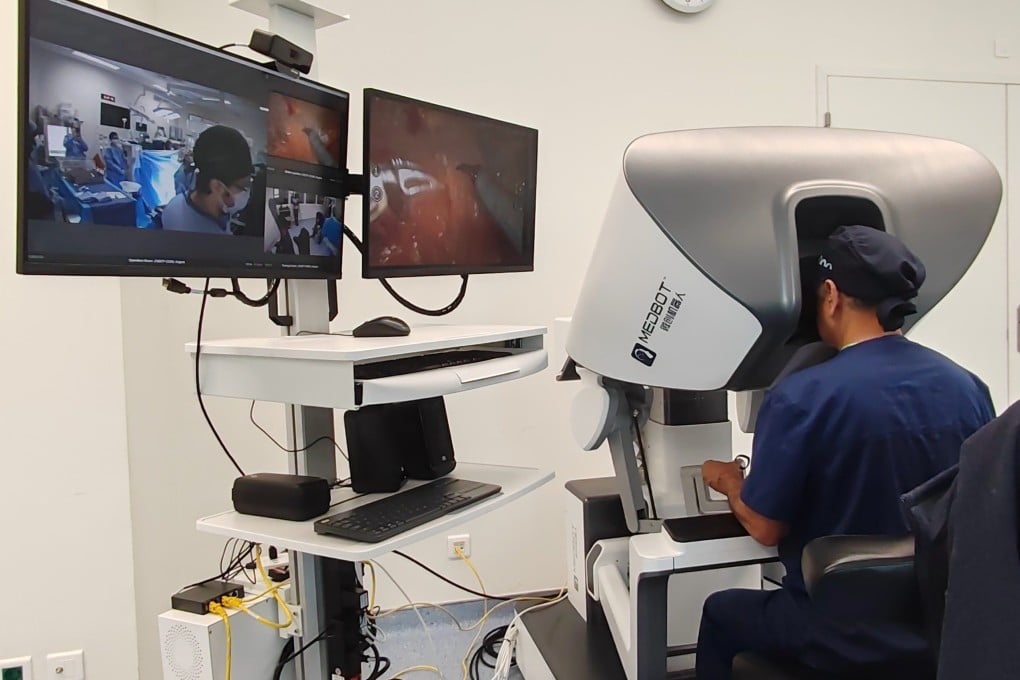
Shanghai MicroPort MedBot said its Toumai Remote robot, which allowed surgeons to remotely conduct laparoscopic surgeries, had received the “CE mark” from the European Union, a mandatory requirement to enter the market, according to its Hong Kong stock exchange filing on Monday.
The company said it was “the first remote surgical robot to obtain the CE mark”. The qualification indicated that a product met the requirements set out in EU rules allowing it to be “moved and marketed freely in the EU” regardless of where it was manufactured, according to the EU website.
According to MedBot, the Toumai robot consisted of three main components – a surgeon console, a patient cart and a vision cart. By integrating the latest 5G technology, it enabled remote procedures in urology, general surgery, thoracic surgery, and gynaecology.
Before the EU approval, the system was used in the UK, completing the country’s first robotic telesurgery, according to a BBC report in March. It enabled a London surgeon to remotely perform a prostate removal on a cancer patient in Gibraltar, some 2,400 kilometres (1,490 miles) away, according to the report.
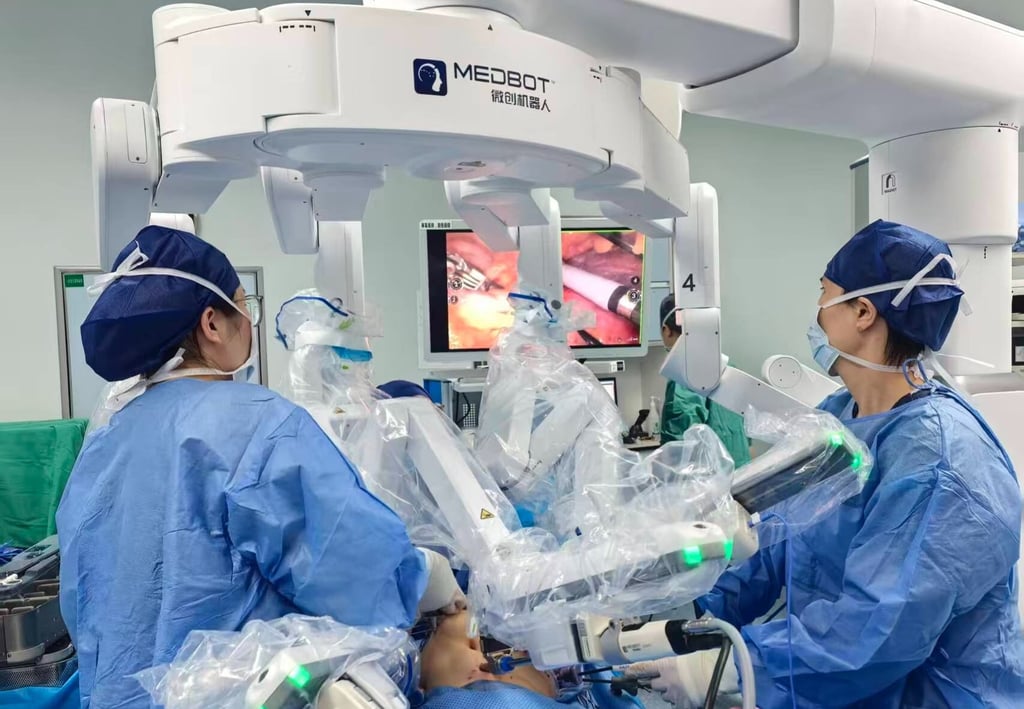
A robot-assisted comprehensive staging surgery for a 76-year-old patient using the Toumai system at The First Affiliated Hospital of Zhengzhou University in Henan province. Photo: Handout
Shanghai-based MedBot had delivered over 300 Toumai units across more than 60 markets worldwide, according to a post on its WeChat account on Monday.

Beijingwalker
VIP Member
- Thread starter
- #615
47% of Retail Investors Put China Ahead of US in AI Race, eToro Survey Finds
Wednesday, 24/06/2026 | 23:03 GMT+8 by Tareq Sikder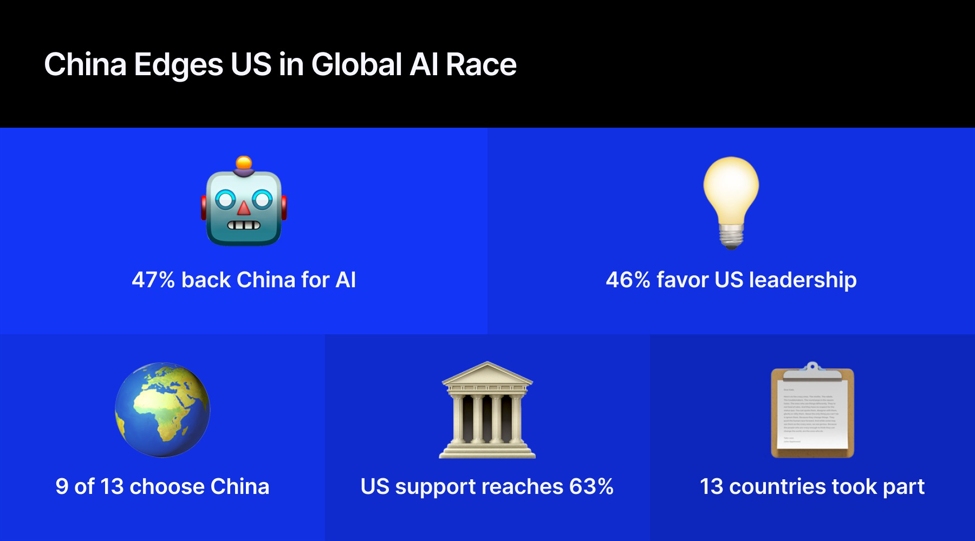
Retail investors now view China as slightly better positioned than the United States to lead the global artificial intelligence race, according to a new survey by trading platform eToro.
The latest Retail Investor Beat survey, based on responses from 11,000 retail investors across 13 countries, found that 47% selected China as the country best positioned to lead the AI race, compared with 46% for the United States.
Retail Investors See China Challenging US
The findings mark a shift in investor sentiment, suggesting that AI is increasingly viewed as a global competition for technological and economic leadership rather than a theme driven mainly by US technology stocks.Lale Akoner, eToro's Global Market Strategist, said investors continue to focus on major US technology and chip companies, including NVIDIA, Microsoft, Alphabet and Amazon. However, she said investors also recognize China's AI ecosystem, including Alibaba, Tencent and Baidu, as well as its strengths in cloud infrastructure and manufacturing.
The global figure masked regional differences. In nine of the 13 surveyed countries—including the UK, Germany, Spain, Italy, Poland, Denmark, the Netherlands, the Czech Republic and Australia—more investors chose China than the United States.
Investors Broaden AI Bets Beyond Chips
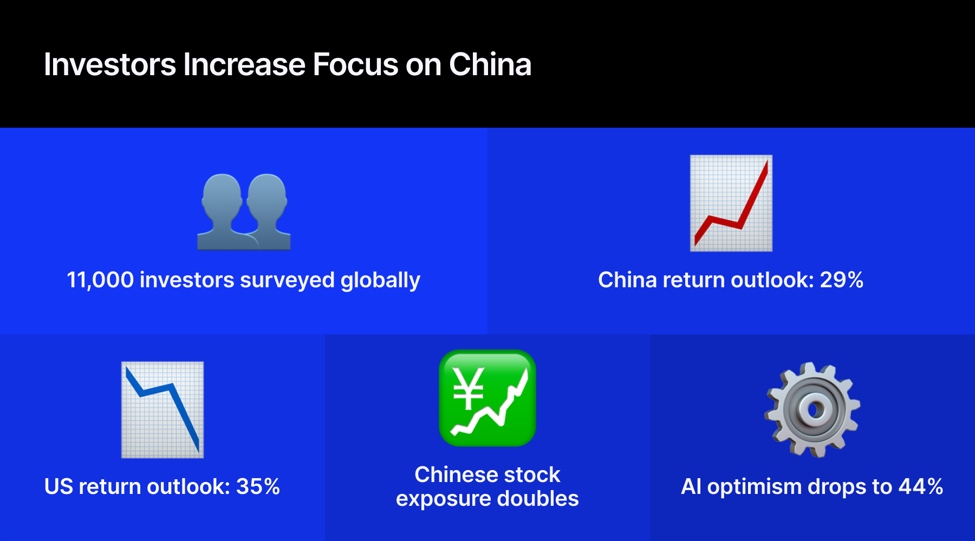
The United States was the main exception. Among US respondents, 63% said the US was best positioned to lead the AI race, while 41% selected China.The survey also showed a growing interest in China as a long-term investment destination. Since the fourth quarter of 2024, the share of investors who believe China will generate the strongest long-term stock market returns has risen from 24% to 29%, while the figure for the United States has fallen from 45% to 35%.
Exposure to Chinese equities also increased, with the proportion of investors holding Chinese stocks rising from 7% in Q2 2024 to 12% in Q2 2026.
At the same time, optimism toward AI-related stocks moderated. The share of investors expecting AI stocks to rise fell from 55% to 44% over the past year, while those expecting declines increased from 11% to 17%.
When asked which AI segment is most likely to generate the strongest returns over the next five years, 31% selected large technology platforms, 29% chose AI-focused companies and 28% favored semiconductor firms.
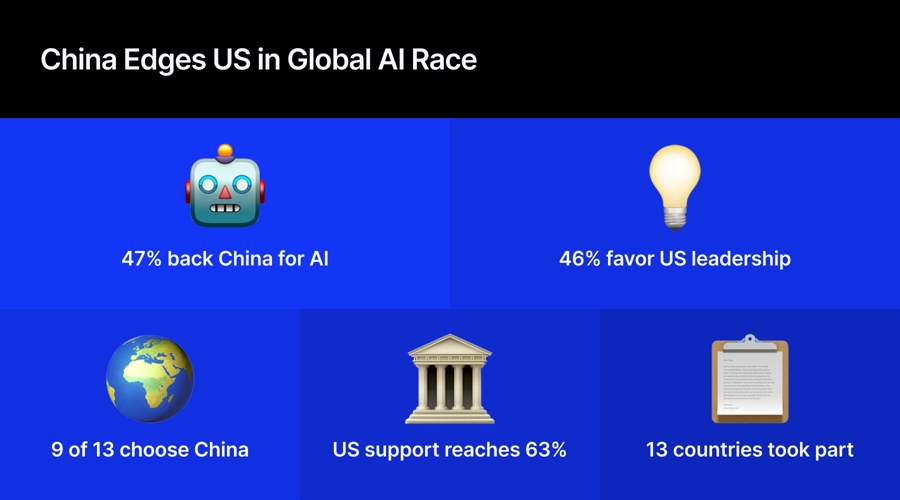
47% of Retail Investors Put China Ahead of US in AI Race, eToro Survey Finds
47% of retail investors back China over the US in AI leadership, while Chinese stock exposure rose from 7% to 12%.
Users who are viewing this thread
Total: 1 (members: 0, guests: 1)
Pakistan Defence Latest
-
PTI Murad Saeed in Afghanistan, was 'controlling KP govt' from there: Rana Sanaullah (8 Viewers)
- Latest: HAIDER
-
Federal cabinet gives nod to imposition of emergency in KP; summary sent to president (18 Viewers)
- Latest: HAIDER
-

-

-

Country Watch Latest
-
 Iran - Israel/US War: Israel-US declare war on Iran, Iran responds (110 Viewers)
- Latest: Khorasan Black Flags
-
India Has Lost Air Superiority to Pakistan, No Jets Left to Fight (21 Viewers)
- Latest: Aghor Warrior
-
 DRDO successfully conducts maiden flight tests of Integrated Air Defence Weapon System (3 Viewers)
- Latest: Faceless
-

Latest Posts
-

-

-
Iran - Israel/US War: Israel-US declare war on Iran, Iran responds (110 Viewers)
- Latest: Khorasan Black Flags
-
 Corruption and economic scandals thread of the caretaker and PDM governments. (9 Viewers)
- Latest: Goenitz
-
