DeepSeek, China's AI model: News & Discussion

To view this content we will need your consent to set third party cookies.
For more detailed information, see our cookies page.

China is closing in fast with a tenth of the spending.

This will bankrupt the American AI companies if China catches up and offers much cheaper cost per token. Then I can see US government stepping in and fully banning open and closes Chinese models.
 
This will bankrupt the American AI companies if China catches up and offers much cheaper cost per token. Then I can see US government stepping in and fully banning open and closes Chinese models.

Many American companies are now secretly running on the Chinese AI models, because they cannot afford the cost per toke from the US frontier models either.

The US is simply running their entire AI ecosystem into a dead end.
 
I Find it hilarious that all of the leading ai labs have a significant % researchers being Chinese nationals and everyone is shocked China is good at ai research as well
 
To view this content we will need your consent to set third party cookies.
For more detailed information, see our cookies page.
 
To view this content we will need your consent to set third party cookies.
For more detailed information, see our cookies page.

I tried fabled with a very complex piece of work and it failed. I havnt tried Kimi K3, might need to. I found SOL much better than fabled but so far that hasn't cracked this nut either.
 
This will bankrupt the American AI companies if China catches up and offers much cheaper cost per token. Then I can see US government stepping in and fully banning open and closes Chinese models.

Right now - the US stock market is basically an Ai bubble, and this type of news could pop that bubble. When that happens, with the combined effects of the fallout of the Iranian war, the USA could well head into a recession, if not an outright depression.

Ai is here to stay, though the economic model and valuations around it make no sense. The whole concept of centralized providers selling tokens for this is a model that will be tested severely, infavour of local deployments. There is no way, that the model of tokens as a service will survive given the costs involved for organizations.
 
Last edited:
Right now - the US stock market is basically an Ai bubble, and this type of news could pop that bubble. When that happens, with the combined effects of the fallout of the Iranian war, the USA could well head into a recession, if not an outright depression.

Ai is here to stay, though the economic model and valuations around it make no sense. The whole concept of centralized providers selling tokens for this is a model that will be tested severely, infavour of local deployments. There is no way, that the model of tokens as a service will survive given the costs involved for organizations.
For coding Qwens open source model 3.6 27B can run on a reasonably powerful PC, I have it on mine and its good for coding tasks but you have to have greater involvement and control with the work. Now compare this to frontier models which have trillions of parameters you would think its pointless, but for developers many are using frontier models to help with designing architecture and building the overall plan and this open source model to do the grunt of the work which drops costs massively, as open source models are free or super cheap!

If Chinese companies continue to push out these kind of models you can self host which can do 80% of what you want then its game over for the bottom line of the closed AI companies.
 

China Models Could Slash AI Costs by 90%

Singapore | Chinese AI providers are launching a price offensive that could reshape the global AI market.

With Western enterprise customers reporting savings of up to 90% and digital signage vendors increasingly embedding AI into their platforms, low-cost Chinese models are becoming impossible to ignore.

July 18, 2026 by Florian Rotberg
After a week of intensive meetings across Asia, it is time to take stock. One topic ran like a common thread through almost every conversation: artificial intelligence – and the rapidly escalating costs that come with offering AI-powered features to customers at scale.
For software vendors, a new category of operating expenses has emerged in the form of token-based AI usage fees, costs that are difficult to predict and are not covered by traditional per-screen licensing models. The key question is therefore: Will usage-based AI fees become a standard addition to screen licenses in the future? Or could significantly cheaper Chinese AI models offer a way out of the cost trap? Some thoughts on the future of AI in digital signage – and China’s growing role in the global AI race.
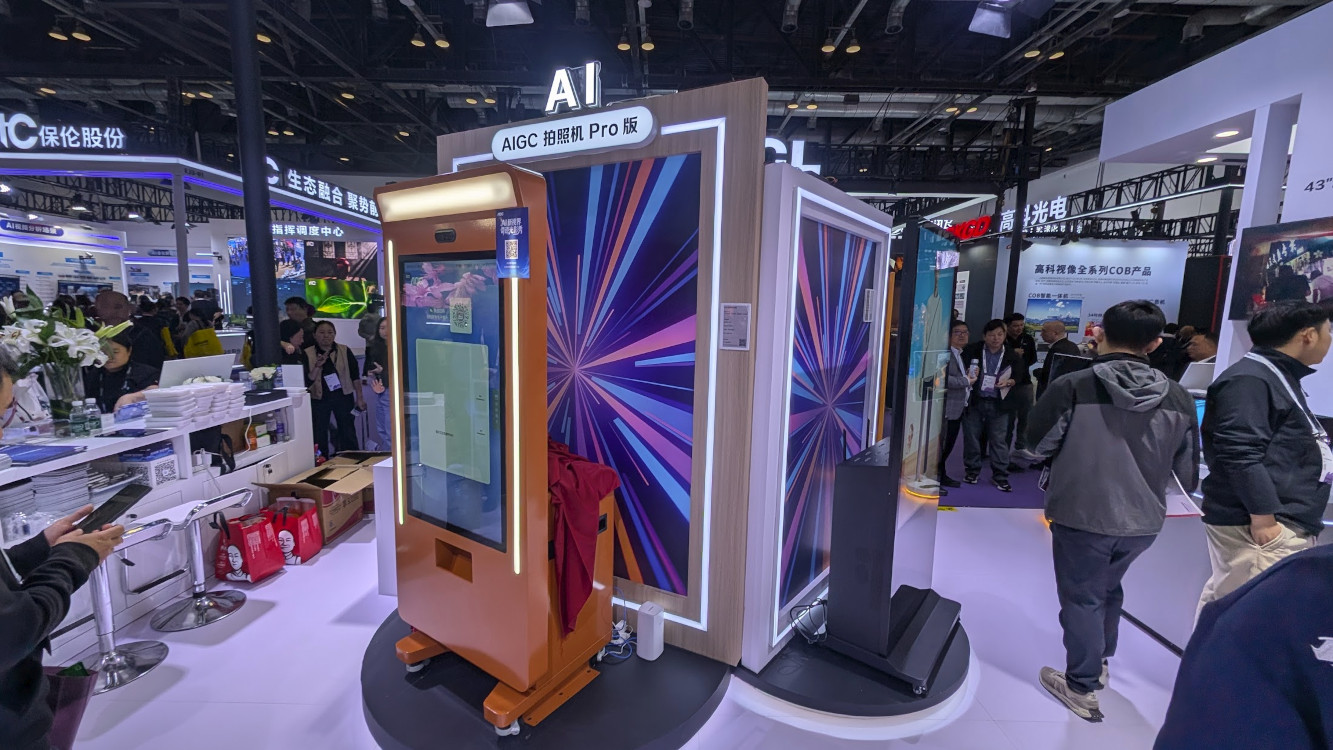
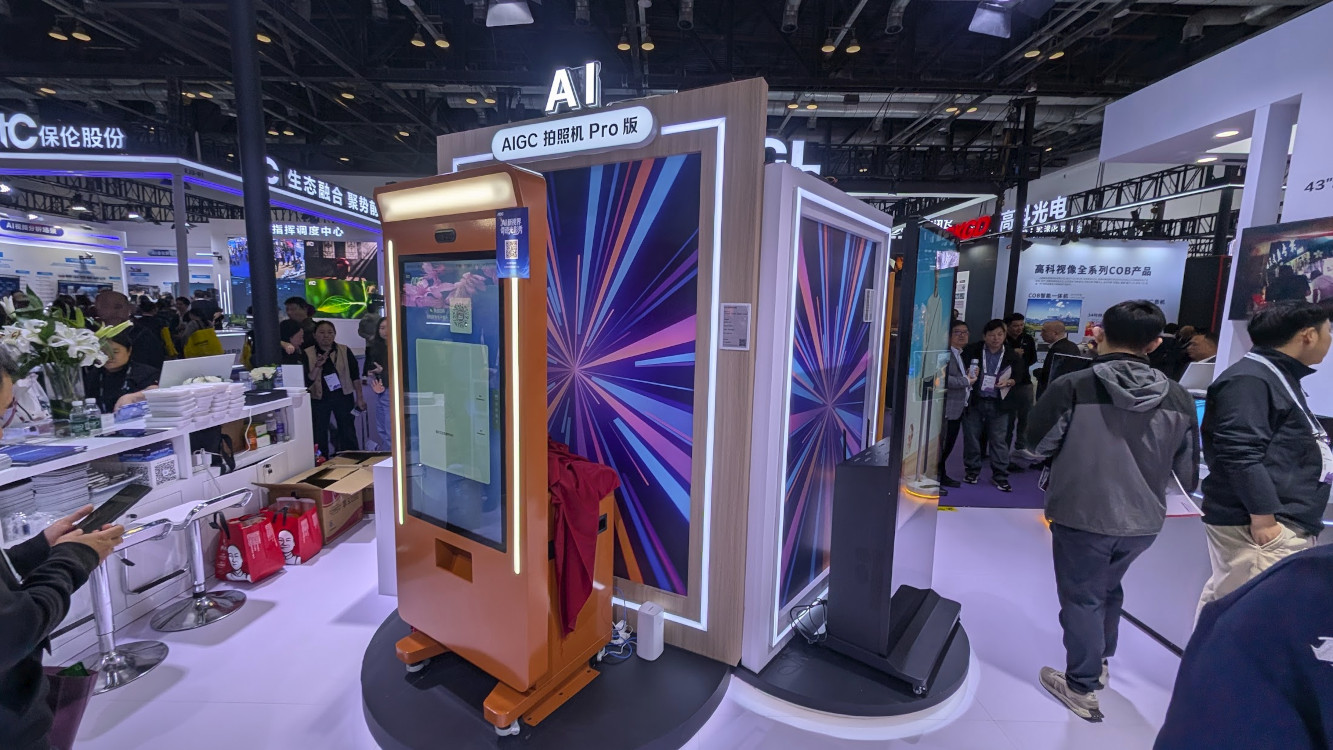
AI at Infocomm China 2026 (Image: invidis)AI at Infocomm China 2026 (Image: invidis)
The global AI market is dominated by US companies such as OpenAI, Anthropic, Google and Microsoft. But a new challenge is emerging from China, where AI developers are benefiting from strong government support, abundant investment capital and significantly lower operating costs.

One of China’s biggest advantages is energy. AI data centers consume enormous amounts of electricity, making power costs a critical factor in the economics of large language models. In China, energy remains comparatively inexpensive, helping local AI providers operate at far lower cost levels than many of their Western competitors.

Combined with subsidized infrastructure and aggressive investment strategies, Chinese AI companies are now using pricing as a strategic weapon.

AI Performance at a Fraction of the Cost​

The cost difference is becoming increasingly difficult for enterprises to ignore.

According to data from AI benchmarking platforms, performing a standardized intelligence task with Deepseek can cost as little as USD 0.02, compared to approximately USD 2.75 for the same task using Anthropic’s Claude. While actual enterprise deployments vary significantly, many large customers report savings of up to 90% when integrating Chinese AI models into their workflows.

For procurement departments facing growing AI budgets, these numbers are hard to overlook. The result is a growing willingness among Western enterprises to evaluate Chinese alternatives, particularly for less data and cyber security sensitive queries.

Open Source Disruption​

The competitive threat extends beyond pricing.

Many Chinese AI developers have embraced open-source strategies, enabling organizations to deploy models on their own infrastructure or through third-party cloud providers. This approach reduces vendor lock-in and further lowers costs.

For western AI-companies such as OpenAI and Anthropic, the challenge is significant. Their business models depend on premium AI services and consume-based usage fees. If increasingly capable Chinese models are available at a fraction of the price, profit margins and international growth prospects may come under pressure.

The risk is particularly pronounced in overseas markets where enterprises are largely focused on performance-to-cost ratios rather than geopolitical considerations.

Enterprise Buyers Are Mixing Models​

Rather than choosing a single AI provider, many Western enterprises are adopting a multi-model strategy.

AI aggregation platforms such as Perplexity and other model-routing services allow users to access multiple AI engines through a single interface. Organizations can then select the most cost-effective model for each task, balancing performance, compliance requirements and budget considerations.

This model arbitrage is becoming increasingly common. High-value tasks may still be routed to leading US models, while routine workloads are directed to lower-cost Chinese alternatives.

As a result, competition is shifting from model quality alone to a combination of quality, availability and price.

Implications for Digital Signage​

For the digital signage industry, lower-cost AI models could become a major catalyst for large-scale AI adoption. Network operators, retailers and DooH media owners are increasingly relying on AI-generated content, automated campaign creation, audience analytics and real-time content adaptation. Some of the task like content creation maybe outsourced to Chinese AI models, while audience analytics and coding will remain for cyber security reasons on Western models.

Chinese AI models with dramatically lower operating costs could make AI-powered signage applications economically viable. In April at Infocomm China vendors presented already ready to use AI-edge server with open-source Chinese AI-models for digital signage companies. invidis talked to a few albeit Middle East, Africa and Latam based ISVs and integrators praising the low cost and high performance,

A New Phase of the AI Race​

The first phase of the AI boom was defined by technological breakthroughs. The next phase may be decided by economics.

Chinese AI providers are entering the market with a cost structure that many Western rivals struggle to match. Backed by government support, private capital and inexpensive energy, they are positioning themselves to expand globally while undercutting established US vendors.

For OpenAI, Anthropic and other Silicon Valley leaders, the challenge is no longer just building the most powerful model. It is demonstrating why customers should continue paying a premium when increasingly capable alternatives are available for a fraction of the cost.

Western digital signage providers are understandably hesitant to use Chinese AI models. However, not all AI tasks raise privacy concerns; the industry should at least consider the available options.


Meet Yang Zhilin, the CEO and founder behind China's buzzy new Kimi K3 AI model​

搜狗截图20260719012322.png
 

China Models Could Slash AI Costs by 90%

Singapore | Chinese AI providers are launching a price offensive that could reshape the global AI market.

With Western enterprise customers reporting savings of up to 90% and digital signage vendors increasingly embedding AI into their platforms, low-cost Chinese models are becoming impossible to ignore.

July 18, 2026 by Florian Rotberg
After a week of intensive meetings across Asia, it is time to take stock. One topic ran like a common thread through almost every conversation: artificial intelligence – and the rapidly escalating costs that come with offering AI-powered features to customers at scale.
For software vendors, a new category of operating expenses has emerged in the form of token-based AI usage fees, costs that are difficult to predict and are not covered by traditional per-screen licensing models. The key question is therefore: Will usage-based AI fees become a standard addition to screen licenses in the future? Or could significantly cheaper Chinese AI models offer a way out of the cost trap? Some thoughts on the future of AI in digital signage – and China’s growing role in the global AI race.

AI at Infocomm China 2026 (Image: invidis)AI at Infocomm China 2026 (Image: invidis)
The global AI market is dominated by US companies such as OpenAI, Anthropic, Google and Microsoft. But a new challenge is emerging from China, where AI developers are benefiting from strong government support, abundant investment capital and significantly lower operating costs.

One of China’s biggest advantages is energy. AI data centers consume enormous amounts of electricity, making power costs a critical factor in the economics of large language models. In China, energy remains comparatively inexpensive, helping local AI providers operate at far lower cost levels than many of their Western competitors.

Combined with subsidized infrastructure and aggressive investment strategies, Chinese AI companies are now using pricing as a strategic weapon.

AI Performance at a Fraction of the Cost​

The cost difference is becoming increasingly difficult for enterprises to ignore.

According to data from AI benchmarking platforms, performing a standardized intelligence task with Deepseek can cost as little as USD 0.02, compared to approximately USD 2.75 for the same task using Anthropic’s Claude. While actual enterprise deployments vary significantly, many large customers report savings of up to 90% when integrating Chinese AI models into their workflows.

For procurement departments facing growing AI budgets, these numbers are hard to overlook. The result is a growing willingness among Western enterprises to evaluate Chinese alternatives, particularly for less data and cyber security sensitive queries.

Open Source Disruption​

The competitive threat extends beyond pricing.

Many Chinese AI developers have embraced open-source strategies, enabling organizations to deploy models on their own infrastructure or through third-party cloud providers. This approach reduces vendor lock-in and further lowers costs.

For western AI-companies such as OpenAI and Anthropic, the challenge is significant. Their business models depend on premium AI services and consume-based usage fees. If increasingly capable Chinese models are available at a fraction of the price, profit margins and international growth prospects may come under pressure.

The risk is particularly pronounced in overseas markets where enterprises are largely focused on performance-to-cost ratios rather than geopolitical considerations.

Enterprise Buyers Are Mixing Models​

Rather than choosing a single AI provider, many Western enterprises are adopting a multi-model strategy.

AI aggregation platforms such as Perplexity and other model-routing services allow users to access multiple AI engines through a single interface. Organizations can then select the most cost-effective model for each task, balancing performance, compliance requirements and budget considerations.

This model arbitrage is becoming increasingly common. High-value tasks may still be routed to leading US models, while routine workloads are directed to lower-cost Chinese alternatives.

As a result, competition is shifting from model quality alone to a combination of quality, availability and price.

Implications for Digital Signage​

For the digital signage industry, lower-cost AI models could become a major catalyst for large-scale AI adoption. Network operators, retailers and DooH media owners are increasingly relying on AI-generated content, automated campaign creation, audience analytics and real-time content adaptation. Some of the task like content creation maybe outsourced to Chinese AI models, while audience analytics and coding will remain for cyber security reasons on Western models.

Chinese AI models with dramatically lower operating costs could make AI-powered signage applications economically viable. In April at Infocomm China vendors presented already ready to use AI-edge server with open-source Chinese AI-models for digital signage companies. invidis talked to a few albeit Middle East, Africa and Latam based ISVs and integrators praising the low cost and high performance,

A New Phase of the AI Race​

The first phase of the AI boom was defined by technological breakthroughs. The next phase may be decided by economics.

Chinese AI providers are entering the market with a cost structure that many Western rivals struggle to match. Backed by government support, private capital and inexpensive energy, they are positioning themselves to expand globally while undercutting established US vendors.

For OpenAI, Anthropic and other Silicon Valley leaders, the challenge is no longer just building the most powerful model. It is demonstrating why customers should continue paying a premium when increasingly capable alternatives are available for a fraction of the cost.

Western digital signage providers are understandably hesitant to use Chinese AI models. However, not all AI tasks raise privacy concerns; the industry should at least consider the available options.

China’s AI model announcements at World AI Conference send US tech stocks tumbling

Moonshot AI's Kimi K3 and MiniMax's M3 model debuts triggered a broad sell-off across Nasdaq, S&P 500, and semiconductor stocks as investors reassess America's AI dominance.

Jul. 18, 2026

ai-world-congress-2026-november-25-26-london-europe-uk-ai-co-1-800x420.jpeg

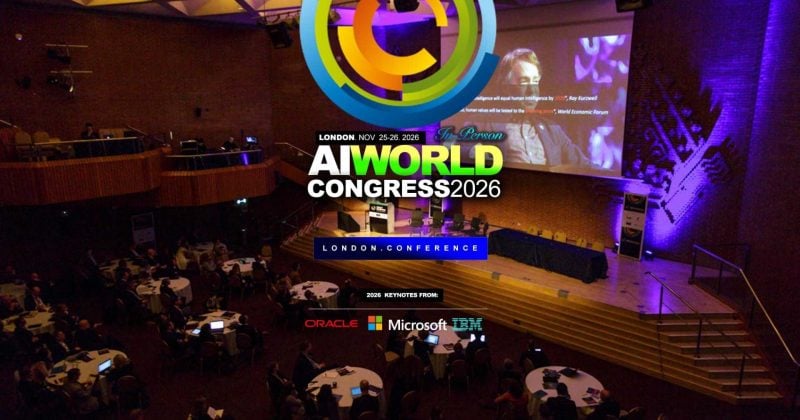
The World AI Conference in Shanghai delivered exactly the kind of news Wall Street didn’t want to hear. On July 17, Chinese AI firms unveiled a wave of powerful new models that immediately sent US tech stocks into retreat, with the Nasdaq dropping 1.4%, the S&P 500 falling 1%, and the Dow sliding 0.77%.

Semiconductor stocks got hit even harder. The sector declined 1.6% on the day, marking a 20% drop from its late-June peak, which officially puts it in bear territory.

What China actually announced​

Two announcements dominated the conference. Moonshot AI launched its Kimi K3 open-source model, which the company claims is closing the performance gap with Anthropic’s Claude, one of the leading US AI systems. The key word there is “open-source,” meaning anyone can access and build on it without paying subscription fees.

MiniMax, valued at over $5 billion in recent funding rounds, unveiled its M3 multimodal model. The standout feature is a 1-million-token context window designed for enterprise applications.

Chinese President Xi Jinping used the conference to emphasize open-source AI development and global governance, framing China’s approach as more accessible and collaborative than the closed, subscription-heavy model favored by US firms.

The scale of the event itself tells a story. WAIC 2026 featured more than 1,100 companies, over 300 global product debuts, 261 large AI models, and 108 chips.

The DeepSeek playbook, round two​

If this all feels familiar, it should. In January 2025, DeepSeek released a competitive AI model that triggered a similar wave of panic across US markets. That episode wiped hundreds of billions of dollars from tech valuations in a matter of days and forced investors to reckon with a question they’d been comfortable ignoring: what if the US doesn’t have a monopoly on AI innovation?

US export controls on advanced chips were supposed to slow China’s AI progress. The presence of 108 chips at the conference suggests those restrictions have been less effective than Washington hoped.

What this means for investors​

The immediate market reaction is straightforward. Investors are repricing the assumption that US AI companies can maintain premium valuations and pricing power indefinitely. When a free, open-source model approaches the capability of a $20-per-month subscription product, the unit economics of the entire US AI industry come into question.

There’s also a regulatory wildcard. As US companies show increasing interest in adopting cheaper Chinese AI solutions, regulators are almost certainly going to scrutinize those decisions. Data security, IP concerns, and national security considerations could create a messy compliance environment that slows adoption regardless of the technology’s merits.


Users who are viewing this thread

Pakistan Defence Latest

Country Watch Latest

Latest Posts

Back
Top