Disinformation and Propaganda Watch: Bangladesh Edition

Chief Adviser Asks Meta to Address Disinformation Campaign Against Bangladesh

Chief Adviser Professor Muhammad Yunus on Sunday asked Meta, the parent company of Facebook, to address the disinformation campaign against Bangladesh being carried out from certain countries to undermine the July-August mass uprising.

“There’s a massive disinformation campaign, and we are the sufferers,” the Chief Adviser told Meta’s director for human rights policy, Miranda Sissons, when she called on him at the State Guest House Jamuna in the capital. Sissons explained to the Chief Adviser the human rights policy of Meta, saying that they remained alert to prevent anyone from using their platforms to spread disinformation.

The Chief Adviser also asked Meta to make its technology more user-friendly for young entrepreneurs.
“Technology is a tool to make things happen. But technology doesn’t decide what we want to do with things. So, we have to reengineer it to make it perfect,” he said.

"With Facebook, you have a tremendous amount of possibility. Facebook could be used to make young people entrepreneurs,” the Chief Adviser added.

Professor Yunus also said the Bangladesh government would remain engaged with Facebook for the benefit of the country’s young population.

Lamiya Morshed, principal coordinator for SDG affairs; Shazeeb M Khairul Islam, Chief Adviser’s personal secretary-2; Ruzan Sarwar, head of Meta’s public policy for Bangladesh and Nepal; Nayantara Narayan, Associate General Counsel of Meta; and Alice Budisatrijo, Meta’s head of misinformation policy for Asia-Pacific, were present in the meeting, among others.

 
The Role of Indian Media in India-Bangladesh Tensions

By Sudhanshu Roy - December 10, 2024

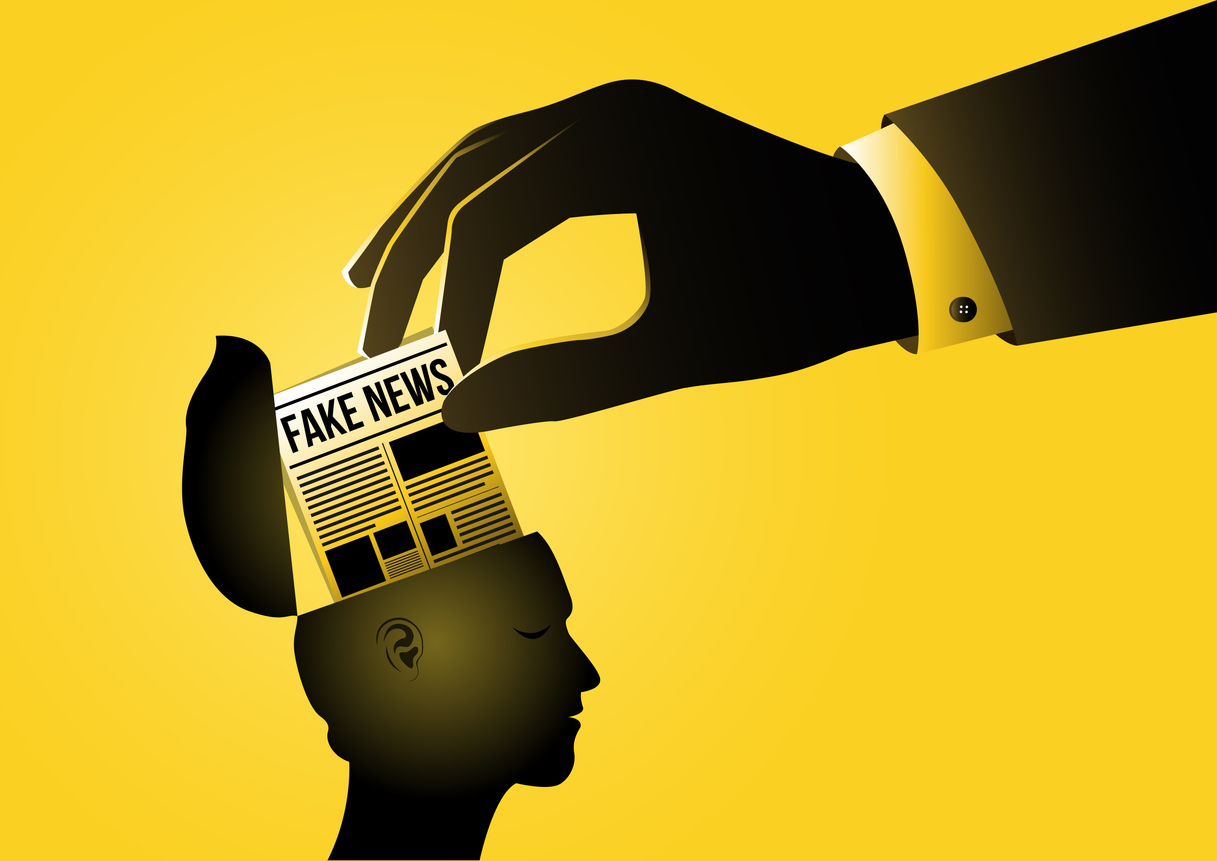
fake-news.jpg

Journalism, often described as the “fourth pillar” of democracy, plays an indispensable role in shaping public discourse, holding power to account, and fostering understanding between nations. However, when misused as a vehicle for disinformation, its impact becomes detrimental, exacerbating divisions and perpetuating falsehoods. Recent examples of Indian media’s portrayal of Bangladesh highlight the dangerous consequences of such practices, particularly concerning alleged minority oppression. Through selective storytelling, visual manipulation, and unverified claims, Indian media outlets have created a distorted narrative, straining bilateral relations and fueling regional tensions.

A recent interview conducted by India Today with Shafiqul Alam, the press secretary to Bangladesh’s chief adviser, provides a stark example of how narratives can be shaped to fit preconceived agendas. The interview began with a loaded introduction, describing Alam as someone who denies the existence of “Hindu hate” in Bangladesh. This framing not only casts doubt on Alam’s credibility but also signals to the audience that the discussion will revolve around proving or disproving a narrative that is already presumed to be true.

From the outset, the questions were framed around unverified allegations. The interviewer, Gaurav Sawant, claimed there was a “sharp rise” in attacks on minorities in Bangladesh without offering concrete evidence. By treating such claims as established facts, the interview created a premise that was difficult for the interviewee to counter effectively within the constraints of a live broadcast. This strategy exemplifies how media can set the tone of a discussion to align with a particular agenda, often leaving little room for nuance or alternative perspectives.

In addition to the verbal framing of the narrative, the interview relied heavily on visuals to reinforce its message. During Alam’s responses, India Today displayed images and captions suggesting a rise in violence against minorities in Bangladesh. One such caption alleged that Ramen Roy, a Supreme Court lawyer, was targeted for representing Chinmoy Krishna Das, a former ISKCON monk. However, the reality is that Roy’s attack occurred during a politically charged protest and had no connection to religious tensions. By presenting unrelated events as evidence of a broader pattern of minority-targeted violence, the visuals manipulated the audience’s perception. The emotional impact of such images, coupled with the interviewer’s leading questions, made it challenging for Alam to provide a balanced and comprehensive response.

The practice of using visuals to mislead audiences is not limited to a single instance. In an interview conducted by NDTV, unrelated footage from earlier protests in Bangladesh was aired as supposed evidence of ongoing violence against minorities. The strategic use of out-of-context visuals to evoke outrage or sympathy is a hallmark of disinformation campaigns, as it allows media outlets to shape narratives without relying on factual accuracy.

The use of disinformation to construct a biased narrative about Bangladesh aligns with broader political and ideological goals in India. Under the leadership of the Bharatiya Janata Party (BJP), India’s domestic and foreign policies have increasingly emphasized Hindu nationalism. By portraying Bangladesh as a hostile environment for Hindus, Indian media supports the BJP’s narrative of Hindu victimhood, bolstering its appeal to its core voter base. This strategy also seeks to position India as a global defender of Hindus, enhancing its soft power while diverting attention from domestic challenges. India has faced significant criticism for its treatment of minorities, with reports of rising communal violence, discriminatory policies, and hate speech under the BJP government. Highlighting alleged minority oppression in neighboring countries provides a convenient distraction from these internal issues.

For Bangladesh, the consequences of this narrative are far-reaching. The portrayal of the country as intolerant undermines its efforts to foster communal harmony and damages its international reputation. Furthermore, it creates unnecessary tensions in India-Bangladesh relations, which have historically been marked by cooperation and mutual respect. The increasing prevalence of disinformation in Indian media is indicative of a broader decline in journalistic integrity. While India has a long tradition of independent and courageous journalism, recent years have seen a shift towards sensationalism and propaganda.

Prominent journalists like Karan Thapar and Rajdeep Sardesai have voiced their concerns about this trend. In an interview with The Wire, Sardesai lamented the transformation of Indian media into a vehicle for political agendas, emphasizing the importance of evidence-based reporting and journalistic ethics. Despite the efforts of credible journalists to uphold these standards, their voices are often drowned out by the clamor of sensationalist coverage. The impact of this decline extends beyond the media industry. When journalism prioritizes sensationalism over accuracy, it erodes public trust and fuels polarization. In the context of India-Bangladesh relations, this trend exacerbates existing tensions and undermines efforts to build mutual understanding.

The manipulation of media narratives to serve political agendas is a disservice to both journalism and diplomacy. The recent portrayal of Bangladesh by Indian media highlights the dangers of disinformation, from distorting public perception to undermining regional stability. By embracing ethical journalism and fostering truthful narratives, both nations can work towards a future of cooperation, understanding, and mutual respect. The media, as a powerful institution, must reclaim its role as a pillar of democracy, committed to truth and accountability.

 
Spreading false narratives will get Indian media nowhere

By Bishakha Devnath
Wed Dec 11, 2024 12:00 PM


Meanwhile, the damage rendered by the Indian media is that they have created a virtual version of Bangladesh as the political unpredictability offered them a good business opportunity with more and more audiences drawn to whatever content they made and promoted on social media platforms. That was feeding into an already tense psyche. The outrage in India expressed through attacks on Bangladeshi missions is inimical to the relations between the two nations.

More at source: https://www.thedailystar.net/opinio...ratives-will-get-indian-media-nowhere-3773171
 
To view this content we will need your consent to set third party cookies.
For more detailed information, see our cookies page.
 
To view this content we will need your consent to set third party cookies.
For more detailed information, see our cookies page.
 
To view this content we will need your consent to set third party cookies.
For more detailed information, see our cookies page.
 
To view this content we will need your consent to set third party cookies.
For more detailed information, see our cookies page.


I was actually a bit skeptical about this. Does a journalist have the authority to seize the passports of foreign nationals visiting India?

I did a little digging around the net, and found this.

Source: https://www.jagonews24.com/en/national/news/78977

Family refutes claims

Shuvo’s mother, Namita Karmakar, expressed disbelief and frustration over her son’s statements, saying, “My son has been like this since childhood—stubborn and not listening to anyone. We’ve never faced persecution here. My daughters and relatives have also never experienced any such issues. Those Indian journalists did this intentionally. We feel safe in Bangladesh.”

His father, Sunil Karmakar, echoed her sentiments: “I was shocked to hear what he said. We have never been subjected to any harassment in this country. When I called Shuvo, he told me that Indian journalists confiscated his passport at Petrapole border and coerced him into making those statements, threatening not to return his passport unless he complied.”

To view this content we will need your consent to set third party cookies.
For more detailed information, see our cookies page.


@Joe Shearer

Apart from immigration and other legitimate travel document verifications, can any random Indian citizen demand that a foreign traveler show his/her passport to them and threaten to confiscate it due to any reason? How does this work in India from a legal perspective?
 
Apart from immigration and other legitimate travel document verifications, can any random Indian citizen demand that a foreign traveler show his/her passport to them and threaten to confiscate it due to any reason? How does this work in India from a legal perspective?
This is a bad joke, and can work only with the easily intimidated. Even the public authorities to confiscate a valid visa-holder's passport attracts legal sanctions. In this respect, Indian law and Bangladesh law are identical; however, a visa may be issued on condition of the holder reporting to a local police station on a prescribed basis.

Too many people from another country, not Bangladesh, have disappeared, and there is no mechanism to identify them once they are out in the general populace.

Incidentally, diverting from your original point, this is supposed to be a Bangladeshi habit. Just to give you an example, a Bengali electrician who works for our complex of several hundred flats, surnamed Biswas, claims domicile in Odisha, but speaks with a thick Dhaka accent. They have been settled in India for two generations now, and find it hard to shake off their original accent - as did my father and his brothers and sisters.

There are the Muslims from Malda, who are automatic suspects for being illegal immigrants, never mind if they have been living there since before Alivardi Khan. These last two categories have been brought up again and again in election campaigns by the BJP, to frighten their constituency into voting for them to take stern measures against illegal immigration.
 
Another fine day in Kolkata 😃

To view this content we will need your consent to set third party cookies.
For more detailed information, see our cookies page.


To view this content we will need your consent to set third party cookies.
For more detailed information, see our cookies page.


To view this content we will need your consent to set third party cookies.
For more detailed information, see our cookies page.
 
To view this content we will need your consent to set third party cookies.
For more detailed information, see our cookies page.
 
To view this content we will need your consent to set third party cookies.
For more detailed information, see our cookies page.
 

Users who are viewing this thread

Back
Top