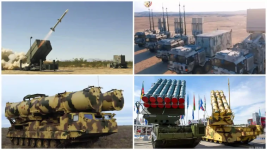
"Egyptian fly detector".
A giant radar network challenges stealth aircraft and ballistic missiles
Over the past years, Egypt has succeeded in building one of the most advanced and complex early warning and air surveillance networks in the region, based on a combination of Russian, American, and European radars, in addition to developing locally made systems, all of which form an integrated system capable of detecting various types of air threats, from stealth aircraft to ballistic and cruise missiles and drones.
The Egyptian radar and early warning network is one of the most advanced and complex air monitoring systems in the world. Military reports even indicated that NATO experts described its level of integration as among the strongest in the world, due to its great ability to monitor airspace and detect various types of air threats quickly and efficiently. Some call it the “fly detector” in reference to its accuracy and ability to detect both small and large targets.
This system is based on an integrated mix of Russian, American, European, and Chinese radars, in addition to radars that were developed or manufactured locally within Egypt. This network carries out aerial surveys at all altitudes, from very low, through medium and high, to high altitudes. It also uses multiple frequency bands that allow it to detect targets with a low radar signature, including stealth aircraft.
The Egyptian early warning system is not limited to radars only, but also includes visual reconnaissance battalions equipped with day and night vision devices and thermal binoculars, which gives it an additional ability to monitor targets flying at very low altitudes, whether in day or night conditions. All of these means are linked to an advanced command, control and communications network (C4I and C5I), which integrates data received from various radars and warning devices with air defense units and missile and artillery launchers, in addition to the air, naval and ground forces, to form a unified and very complex command and control system.
This network allows instant data exchange between fighters, interception aircraft, early warning aircraft, electronic reconnaissance aircraft, electronic warfare systems, as well as surface ships equipped with air defense and early warning radars, allowing the building of a unified operational picture of the battlefield.

Russian stealth Hunter
Since Israel possessed stealth aircraft that were inaccessible to radars, Egypt did not rest until it reached a huge deal with Russia that guaranteed it possession of the Russian long-range early warning and aerial survey radar “Resonance-NE,” which Egypt contracted to provide an advanced ability to detect stealth aircraft, cruise missiles, and ballistic missiles, in addition to air targets flying at speeds exceeding the speed of sound. This radar can track up to 500 aerial targets simultaneously, including targets flying at hypersonic speeds and targets flying at very low speeds such as helicopters in a stationary position in the air, with the ability to operate in all weather conditions.
The coverage range of this radar against projectiles and ballistic missiles reaches about 1,100 kilometers, and it has the ability to calculate the areas where ballistic missiles will fall even in light of exposure to electronic jamming operations. As for air targets, it can detect them at a maximum altitude of 100 km while providing guidance data to air defense systems up to a range of approximately 300 km.
Among the most prominent things that Egypt possesses is the Russian long-range early warning radar 59N6 Protivnik-GE, which is a three-dimensional radar with a detection range of about 400 kilometers, and can monitor targets at altitudes of up to 200 kilometers, with the ability to track fighters, bombers, early warning aircraft, and transport aircraft, as well as ballistic missiles. It can also deal with hundreds of air targets simultaneously.
The network also includes two-dimensional Russian P-14 warning radars with a range of about 600 kilometers and a height of 50 kilometers. It is distinguished by having advanced systems to protect against electronic interference, with the ability to identify and track sources of interference, in addition to processing data on more than 120 targets within just 10 seconds.
Cairo was not satisfied with these systems, but also introduced the famous Russian P-18 radar, which gained wide fame after its contribution to detecting the American stealth plane that was shot down by Serbian air defenses during the Kosovo War. This radar is characterized by the use of advanced digital processors for radar signals and advanced data processing systems, with a direct link to remote air defense units, as well as possessing means of resistance to interference and electronic obstruction.
The detection range of this P-18 radar is about 270 kilometers at an altitude of up to 35 kilometers, and it can detect targets flying at an altitude of 500 meters from a distance of approximately 60 kilometers, in addition to its contribution to electronic warfare and counter-jamming operations.
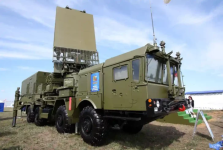
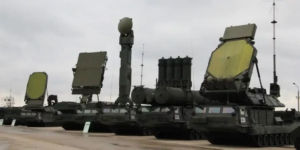
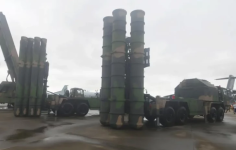
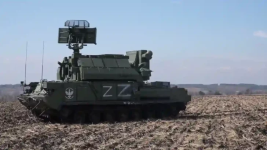
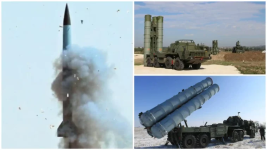
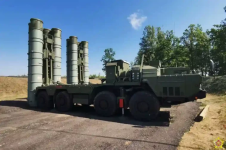
The Egyptian system also includes the Russian 96L6 radar used with long-range air defense systems such as the S-300VM, in addition to the Buk-M and Tor systems. It is distinguished by its ability to detect targets up to a range of approximately 300 kilometers and at altitudes of up to 100 kilometers, with great resistance to electronic warfare and jamming means.
Among the Russian radars is also the Podlet-K1 three-dimensional radar, which is designed to monitor air targets flying at low and very low altitudes, such as cruise missiles, drones, and helicopters, in addition to fighters with a small radar footprint. It is distinguished by its ability to provide early warning against threats that attempt to penetrate air defenses at low altitudes.
Silent detection
In the field of passive radars, Egypt has advanced Russian systems that rely on the principle of silent detection, as they do not send radar waves like traditional radars, but rather rely on capturing and analyzing electromagnetic radiation emanating from the targets themselves, which makes detecting the location of the radar almost impossible for enemy aircraft. Egypt possesses the Russian-made POST 3M radar, which is considered the most powerful type of passive radar due to its ability to detect various types of aircraft, including stealth aircraft, fighters, bombers, transport aircraft, and early warning aircraft, at distances of up to 800 kilometers. It also analyzes target frequencies, determines their direction and speed, with the ability to quickly switch between different frequency bands, which makes it one of the most advanced means of monitoring in the field of silent detection.
From Britain, Egypt has the Commander SL, a long-range three-dimensional radar dedicated to aerial survey tasks and identifying the enemy and friend, and is distinguished by its high ability to resist electronic interference. The range of this radar reaches about 470 kilometers, with the ability to detect a target flying at an altitude of 50 meters from a distance of approximately 200 kilometers.
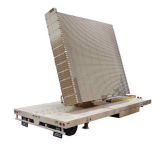
These radars can also detect aircraft, drones, smart munitions, and long-range missiles that are launched from outside the air defense range, in addition to their reliance on the electronic identification system (IFF), which allows distinguishing between friendly and hostile aircraft using electronic response devices.
As for the United States, it has provided Egypt with a number of advanced aerial survey radars, including the AN/SPS-48 three-dimensional radar capable of covering 360 degrees and detecting dozens of targets simultaneously, with the ability to monitor aircraft flying at various altitudes, whether very high or very low, in addition to detecting supersonic aircraft, helicopters, ballistic missiles, and cruise missiles, with a range of up to about 400 kilometers. These radars provide accurate data on distance, altitude, and direction, with the possibility of exchanging information and linking it to various weapon systems, ensuring rapid response and dealing with air threats.
Egypt also possesses an American AN/TPS-59 long-range multi-dimensional radar with a range of up to 750 kilometers, which specializes in detecting ballistic and tactical missiles, and works in integration with the Patriot and Hawk missile batteries. This radar can detect aircraft at a distance of up to 550 km and at an altitude of 30 km, while it can detect ballistic missiles up to an altitude of approximately 300 km.
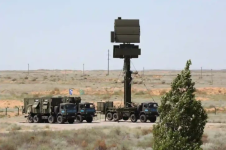 Local Egyptian radars
As part of the localization of technology, Egypt obtained an American AN/TPS-63 radar, then began assembling it locally before moving on to gradually manufacturing it, where the proportion of the local component reached about 47% in the first phase, then rose to 75% in the second phase, and reached about 95% in the third phase, becoming an advanced Egyptian radar based on the original American design.
This radar is characterized by conducting two-dimensional aerial surveys up to a range of about 280 km and a maximum height of 12 km, with the ability to detect air targets at distances of up to 150 km, while the new Egyptian version ESR-32A witnessed improvements that raised the monitoring capacity to about 250 km at an altitude of up to 12 km.
The Egyptian radar development project was launched in conjunction with programs to manufacture fire control systems, and appeared for the first time during the EDEX 2018 exhibition, before turning into the nucleus for developing an Egyptian 3D radar dedicated to early warning and aerial survey tasks.
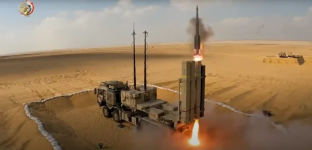
This network is integrated with the radars of various air defense systems, including the S-300VM, Buk-M, Tor-M, and other Russian systems, in addition to the Italian Skyguard systems, and other radar systems operating within the Egyptian command and control network.
Thanks to this great diversity of armament sources, reliance on active and passive monitoring techniques, and complete electronic connectivity between various systems, the Egyptian early warning network has become one of the most complex networks in the region, and is capable of dealing with various types of air threats, whether they are stealth planes, conventional fighters, ballistic or cruise missiles, or drones, which has given it a wide reputation as one of the most powerful air surveillance and air defense systems in the Middle East.