An Israeli expert monitors an underground complex in Egypt linked to the Rezonans-NE radar system
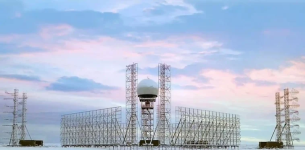
Egypt is close to completing an underground complex located about 70 kilometers east of Cairo, near the Cairo-Suez road, in a location seen as increasingly logistically and geographically sensitive.
This development was highlighted based on observations by Israeli geographer and satellite imagery analyst Ben Zion Makalis, who pointed to structural indicators in the area that warrant attention, especially in light of the site's proximity to the Russian-made Rezonans-NE (Over-the-Horizon) 3D radar system, which Egypt had installed during the period 2019-2020. He said that this spatial overlap opens the door to questions about the possibility of a functional or complementary connection between the underground facility and the radar system deployed within its scope.
Compared to other similar facilities in the vicinity of the region, or even with known underground sites within the Sinai Peninsula, the expert pointed out that this site stands out differently in terms of the nature of the infrastructure. For the first time, it has been observed that there are access roads paved with asphalt extending directly to the tunnel entrances, which is a striking element that may reflect a higher level of logistical preparation compared to the traditional patterns known in such facilities.
He said that after years of research in the Middle East, he came to the conclusion that the region had entered what could be described as the “underground era.”
He believes that this shift reflects a growing trend within the regular armies towards strengthening their presence in underground facilities, a phenomenon that has become more clear and widespread across various countries in the region in recent years.
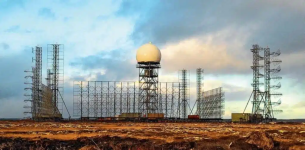
The Rezonans-NE radar system is classified as an Over-the-Horizon (OTH) radar, and is primarily designed to provide long-range early warning by exploiting the reflection of high-frequency waves in the ionosphere, allowing it to detect targets beyond the direct vision limits of conventional radars.
In terms of range, this system is credited with the ability to monitor the airspace at distances of approximately 1,000 to 3,000 kilometers, depending on the conditions of ionic propagation and the nature of operation, which gives it broad strategic coverage that includes the depth of the regional airspace and beyond. This large range is one of the most prominent elements of its strength, as it allows detecting threats at very early stages of their movement.
As for the targets that it can monitor, it is mainly designed to detect fighter aircraft, bombers, military transport aircraft, ballistic missiles, and stealth aircraft, in addition to the possibility of tracking low-altitude targets that attempt to infiltrate outside the range of traditional radars. Some estimates also indicate its ability to monitor large weather formations and even some marine activities near the surface, within certain limits related to the nature of the signal reflection.
The system is also distinguished by its ability to track several targets simultaneously, while providing approximate path, direction, and speed data, which makes it suitable for supporting multi-layered air defense networks, and not just for individual monitoring. However, its accuracy is usually lower than medium-range and tactical radars, due to its reliance on ion reflection techniques, which makes it more suitable for early warning and general guidance rather than direct engagement.
Rezonans-NE is seen as a "strategic early warning" component that adds significant depth to areal monitoring systems, rather than being used as a precise tracking tool in direct engagement.


 deployed forces and specialized military equipment in 4 Gulf countries to support the security of the Arab Gulf
 and Iran
  on an Egyptian initiative to support the allies.