Egyptian Armed Forces

The development of the infrastructure of the naval forces included the construction of the largest submarine hanger of its kind in the Middle East, with a surface area exceeding 30,000 square metres. It includes three berths with a total length of 509 meters and a draft of 10 metres. The berths contain a number of cranes for loading and unloading the combat and technical systems of the submarines, in addition to a repair workshop.

To view this content we will need your consent to set third party cookies.
For more detailed information, see our cookies page.


The process of developing and modernizing the infrastructure witnessed the addition of many training facilities with advanced equipment, the most prominent of which was the ship and submarine simulator complex, which is the seventh of its kind in the world, and provides a completely realistic training environment to train individuals to drive and operate ships and submarines.

To view this content we will need your consent to set third party cookies.
For more detailed information, see our cookies page.
 
Technical insurance and providing support for naval vessels is the most prominent element that indicates the efficiency of the naval forces and shows the extent of their readiness and effectiveness. Therefore, Egypt worked to develop the naval arsenals and specialized maintenance basins and workshops affiliated with the naval forces (Alexandria Arsenal - Naval Forces Arsenal - Egyptian Ship Repair and Building Shipyard) to be able Implementing all maintenance, technical support and repair work for all types of naval vessels from different origins that have recently joined the naval forces.

To view this content we will need your consent to set third party cookies.
For more detailed information, see our cookies page.
 
The development process in the aforementioned arsenals has contributed in an unprecedented way to the development of military maritime industries by building naval vessels of various types locally after transferring manufacturing technology and concluding partnerships with major international companies, including the German ThyssenKrupp, the French Naval Group, the American Swift Ships, and soon the Italian Fincantieri. .

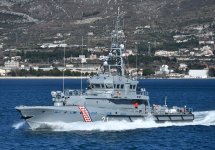
During the past period, these arsenals succeeded in manufacturing naval warships, starting with Swift Ship coastal passage and patrol boats, MRTP-20 fast passage boats, local models of patrol and border guard launches, and “Rafale” combat ships, all the way to Gowind corvettes and a MEKO frigate. A200EN and RSV unmanned marine vehicles for civilian purposes and USV combat maritime operations.

To view this content we will need your consent to set third party cookies.
For more detailed information, see our cookies page.
 
One of the most prominent development scenes is the structural modernization of the Egyptian Navy, as it was officially divided in 2017 into two fleets according to theaters of operations: the northern Egyptian fleet in the Mediterranean, and the southern Egyptian fleet in the Red Sea.

The command headquarters for the Southern Fleet was established at the Red Sea Naval Base, which includes a brigade of destroyers, another of missile launchers, and another of coastal traffic vessels, in addition to the establishment of a second brigade of marine special units, so that each fleet has its own special forces brigade. The first is for the Northern Fleet and the second is for the Southern Fleet.

The Southern Fleet is responsible for securing the theater of operations in the Red Sea, and organizing, commanding and managing the naval forces and units that are deployed in this direction to protect the borders and Egyptian interests, starting from Bab al-Mandab to the southern entrance to the Suez Canal, in addition to securing maritime transportation lines and international navigation.

To view this content we will need your consent to set third party cookies.
For more detailed information, see our cookies page.
 

The Egyptian army deals with American Stinger missiles and Indian BrahMos missiles​


To view this content we will need your consent to set third party cookies.
For more detailed information, see our cookies page.
 
GNXbaUKWkAAZf7x.jpg
Chinese solutions why not


The Egyptian Navy development program is almost stopped now

Egypt was unable to activate the contract for 4 Bergamini FREMM frigates

The same applies to Egypt, which has a request for 10 corvettes to protect economic zones

The same applies to Egypt, which is working on producing 12 light missile patrol boats PV-43, which are considered outdated in technology compared to Turkish boats, so there will be difficulty in marketing them in Africa in the face of Turkish competition

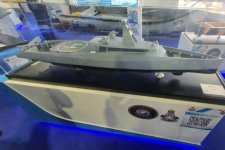
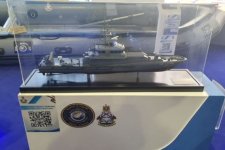
The same applies to a small missile corvette boat, Egypt needs 20 CC-60 model boats, the development of which has not been completed, especially since it is based on the old Lürssen design FPB62' type, giving it a ghostly touch instead of a completely new, advanced design, so its development has stalled so far, and the Italian deal has stalled due to the Europeans' refusal

The Egyptian justifications are of course not true, and they are the Egyptian economic situation, which is the opposite of the truth, as we have turned into a poor country with a poor government and a rich army due to its control over 50% of the economy, despite its failed management of the state during 10 years, which enjoyed a high level of corruption And monopoly

Generally, negotiations have not been concluded or contracts have been presented from the Qataris, Turks and Italians to provide new designs and components for the package of ships requested by Egypt. The Turks are promoting the Hisar corvette and there are indications that Egypt will request an initial batch of 4 locally produced and with full missile equipment, as the negotiations of the South Koreans on OPV ships and light corvettes have not been completed

As well as light Turkish coastal landing ships manufactured in Egyptian shipyards
1000138416qqq.jpg
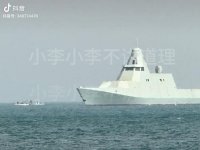
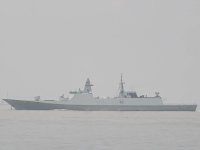
TYPE-54B with more firepower is nice solution

The current program that Egypt is working on is to equip the previously obtained parts with USV, Chinese, French and Turkish UUV

There are also negotiations with the Turks on a new missile boat manufactured in Egypt after the success of the MRTP-34 in Egypt previously by producing a new boat with a larger displacement and more intensive armament and as an alternative to the German TYPE-148 boats and the Ramadan-class missile boat

GaOu2Tlb0AAhBKJ.jpg
Upgraded AR-500 design is required Equal to VSR-700

And the Egyptians must provide quick solutions
Regarding the Chinese submarines, they have a great chance of replacing 4 Rambo submarines in Egypt with TYPE-26 submarines with various updates. This does not mean stopping negotiations with the French and Germans on heavier submarines, but the Chinese solution is considered fast and also a pressure factor on the Europeans. Egypt has not reached the point of obtaining alternative submarines with the Koreans and Japanese to replace European submarines such as Barcode or Scorpion, as the Europeans see the danger of the growth of the Egyptian Navy with the Egyptian surface-to-surface missile network that covers the Egyptian coasts, which compensates for the modest level of Egyptian surface-to-surface missiles of old models such as Harpoon and Exocet. Therefore, what we see of the Egyptian Navy’s propaganda about what has been developed in the past years is a concealment of the slow pace of the Navy’s development or the completion of its equipment in the past years. Simply put, within 18 months, Egypt will have completed the production of the modest PV-43 launches and the light Turkish landing ships, and Egypt will still have all its needs of supply and provisioning ships, attack submarines, small frigates, and light corvettes that have not been decided. Which of them is supposed to have been decided in order to prepare the shipyards, so the trend towards the Chinese side is considered very important, as China is the only country that can provide engines for various marine vessels outside the framework of Germany, Finland, England and America, and they are the ones who are responsible for building Egyptian ships with these engines.
 
  • Like
Reactions: ENS
To view this content we will need your consent to set third party cookies.
For more detailed information, see our cookies page.


Good shots from our F-16 different blocks

If I am sure we sent Block C (orange stripes) and D (grey camo)?
 
The Egyptian Air Force is in Pakistan for the first time to participate in the joint air training activities “Indus Shield” alongside the Saudi and Turkish Air Forces, in addition to the participation of several other countries as observers.

The Egyptian Air Force is participating in the training with 3 F-16 Block 52 fighters from the Aggressor Squadron, which is a squadron.

To view this content we will need your consent to set third party cookies.
For more detailed information, see our cookies page.
 
The Egyptian army 🇪🇬 is the only army that achieved a crushing and devastating victory for Israel in October 🇪🇬✌️ 1973
Other than that, nothing!

To view this content we will need your consent to set third party cookies.
For more detailed information, see our cookies page.
 
Harvest of the Egyptian army

To view this content we will need your consent to set third party cookies.
For more detailed information, see our cookies page.
 
To view this content we will need your consent to set third party cookies.
For more detailed information, see our cookies page.


@The SC Can you explain this?
 
The Egyptian Navy chooses Safran electronics and navigation systems to equip its maritime patrol ships.

The Egyptian Navy chose the French company Safran to supply 10 naval patrol ships with advanced optical and navigation systems to significantly enhance Egyptian naval defense technology.

This contract was signed with NVL Egypt, a joint venture between the Egyptian government and the German company Lürssen specialized in the marine industry.

To view this content we will need your consent to set third party cookies.
For more detailed information, see our cookies page.


The French Safran Group announced its selection by NVL Egypt, a partnership between German Lürssen and the Egyptian Navy, to equip 10 OPV maritime patrol vessels, which will be manufactured locally by the Alexandria Shipyard, with VIGY-4 optical systems and advanced inertial navigation systems.

The Alexandria Shipyard had previously announced during the EDEX 2023 exhibition the launch of a partnership between the Egyptian Navy and the German Lürssen Group with the aim of building a fleet of PV-43 coastal traffic launches and maritime patrol vessels, which will be available in two versions, the first for offshore patrol missions, and the second to operate as “ Missile launcher, equipped with 2 launchers for 4 Marte ER medium-range surface/surface anti-ship missiles.

1730800991806.jpeg

1730801135165.jpeg

1730801194164.jpeg
 
Last edited:
Military_Spokesman: Lieutenant General Abdel Majeed Saqr, Commander-in-Chief of the Armed Forces, Minister of Defense and Military Production, witnesses the implementation of the training activity “Deterrence 2024” using live ammunition in the Mediterranean Theater of Operations...

video
To view this content we will need your consent to set third party cookies.
For more detailed information, see our cookies page.
 

Users who are viewing this thread

Country Watch Latest

Back
Top