Navigation
Install the app
How to install the app on iOS
Follow along with the video below to see how to install our site as a web app on your home screen.
Note: This feature may not be available in some browsers.
More options
Style variation
You are using an out of date browser. It may not display this or other websites correctly.
You should upgrade or use an alternative browser.
You should upgrade or use an alternative browser.
Egyptian Military Industries & Products
- Thread starter The SC
- Start date
More options
Who Replied?

The SC
INT'L MOD
- Thread starter
- #482
Israeli concern about the Egyptian army’s use of Chinese artificial intelligence systems
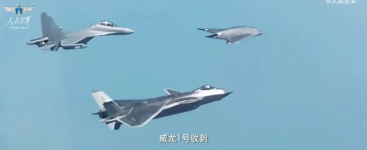
Arab Defense Website - February 11, 2026: The balance of power in the region is no longer measured by the number of tanks or aircraft. A recent Israeli report indicates that the most serious challenge facing Israel is no longer traditional military, but has become digital, algorithmic, and not easily measurable. The Israeli newspaper Maariv believes that the danger does not lie in the weapon itself, but in artificial intelligence, and specifically in Egypt’s increasing ability to develop systems supported by Chinese technology, where data is the fuel and the speed of learning is the weapon, while uncertainty has become a great pressure on the Israeli army.
According to the report, what confuses Israel is not the form of these systems, but rather their ability to continuously develop, based on Egypt’s complete control over the chain of data from its collection and analysis to decision-making, which means a shorter response time, less effective external pressure, and more resilient systems in the face of electronic warfare. Israel today faces unprecedented anxiety, because advanced systems outside the Western system are difficult to measure, imitate or disrupt by traditional means on which superiority has been built for decades. The most prominent message in the report is that “the era of multiple traditional military platforms is over, and future superiority will be for those who have advanced software, extensive data, and rapid decision-making.”
On the other hand, information indicates that Egypt is working on building an independent nervous system for artificial intelligence, away from Western software, while developing the Egyptian army into an independent digital force, capable of operating away from the eyes of observers. Cooperation with Chinese partners in developing the infrastructure for artificial intelligence and chips has contributed to strengthening its technological position, and making the Egyptian army an advanced digital force, capable of collecting data, analyzing it, and making military decisions within a few seconds. These capabilities make Israel a complex confrontation, because it can no longer rely on traditional military superiority to confront these regimes.
The Egyptian experience with conventional American weapons did not give it sufficient superiority, which prompted it to diversify its strategic partnerships away from Western eyes, while strengthening the independence of the Egyptian army in the digital field, in a way that protects national security. This shift worries the Israeli side, especially since Egyptian cyber developments and artificial intelligence depend on systems that are not linked to Western weapons, and thus are difficult for Israel to detect or disable.
Israeli reports confirm that any Egyptian digital threat supported by Chinese technology constitutes a strategic concern, especially since Israel has not yet developed algorithms capable of confronting this type of development, which increases the amount of uncertainty in the Israeli army. However, Israel remains keen to study all new technologies to ensure the ability to confront any potential threat, even though the current threat does not mean a direct dispute or hostile intent on the Egyptian side, but rather is a product of the nature of the digital and technological transformation.
On the other hand, the relationship between Egypt and China in the military and technical field is considered very advanced, as cooperation has contributed to the production of local drone systems with high capabilities, with the development of advanced models of drones that collect information and carry out reconnaissance and surveillance missions, with a local production rate of up to 85%, compared to a 15% Chinese contribution. This strengthens the independence of the Egyptian army, and puts it on the right path to becoming an independent digital force to be reckoned with in the region.
On the other hand, Israel is closely monitoring this transformation, realizing that cyber superiority and digital capabilities are no longer linked to traditional weapons alone, but rather to artificial intelligence, chips, and new technologies, which places future military superiority for those who possess the best data analysis systems and rapid decision-making.
The report and experts stressed that the transformations in the region require a reconsideration of traditional power measures, and that military superiority is no longer a matter of tanks and planes, but rather depends on a digital and cyber force capable of making decisions quickly and analyzing data efficiently, far from any external influence, which places Israel facing a challenge that it is not accustomed to facing in the past decades.
The SC
INT'L MOD
- Thread starter
- #483
Exclusive..
Artificial Intelligence Technology for the HAMZA-3 drone
The new unidirectional drone #HAMZA-3 will use a technology known as visual recognition with artificial intelligence (AI), which begins with the stages of teaching Vision Computer Vision, so that the dataset and training of the aircraft collect images of the target, so that images of the target are entered from different angles, at different heights, with different lighting, and partial camouflage, in addition to various backgrounds for 200 images, which constitute a strong #training_base upon which the aircraft’s artificial intelligence algorithms are based, so that it learns the shape, dimensions, and what is known as color contrast, edges, and geometric proportions. Thus, the drone turns the image into a digital fingerprint of the target, which is known as Model Training.
----------------------------
The plane and its technical system are not limited to one image because it believes that the target naturally changes due to many natural and unnatural factors, including shadow, directions, and speed. The 200 images that Hamza uses make the model flexible, non-blind, and strong with technical insight.
------------------------------
Comparison during flight: When the drone flies towards the target, the electro-optical camera broadcasts a video that is compared to the digital fingerprint of the target by comparing each frame with the mental image that it has learned. If the pattern matches a certain percentage that is determined in advance, then the target is identified directly and enters a stage called diving and attack.
---------------------------
The Hamza-3 dive drone is not a primitive model built to dive, attack, and pounce. Rather, it is an intelligent, strong and flexible model that inevitably meets the actual and operational requirements of the Egyptian Armed Forces.
×××××××××
An exclusive report produced by the Egyptian Military Capabilities Page

Artificial Intelligence Technology for the HAMZA-3 drone
The new unidirectional drone #HAMZA-3 will use a technology known as visual recognition with artificial intelligence (AI), which begins with the stages of teaching Vision Computer Vision, so that the dataset and training of the aircraft collect images of the target, so that images of the target are entered from different angles, at different heights, with different lighting, and partial camouflage, in addition to various backgrounds for 200 images, which constitute a strong #training_base upon which the aircraft’s artificial intelligence algorithms are based, so that it learns the shape, dimensions, and what is known as color contrast, edges, and geometric proportions. Thus, the drone turns the image into a digital fingerprint of the target, which is known as Model Training.
----------------------------
The plane and its technical system are not limited to one image because it believes that the target naturally changes due to many natural and unnatural factors, including shadow, directions, and speed. The 200 images that Hamza uses make the model flexible, non-blind, and strong with technical insight.
------------------------------
Comparison during flight: When the drone flies towards the target, the electro-optical camera broadcasts a video that is compared to the digital fingerprint of the target by comparing each frame with the mental image that it has learned. If the pattern matches a certain percentage that is determined in advance, then the target is identified directly and enters a stage called diving and attack.
---------------------------
The Hamza-3 dive drone is not a primitive model built to dive, attack, and pounce. Rather, it is an intelligent, strong and flexible model that inevitably meets the actual and operational requirements of the Egyptian Armed Forces.
×××××××××
An exclusive report produced by the Egyptian Military Capabilities Page
The SC
INT'L MOD
- Thread starter
- #484
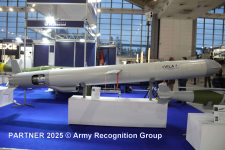
At the Partner 2025 exhibition, Serbia revealed a new weapon called vILA 1, which is a weapon that combines the features of a drone and a cruise missile at the same time. This means that you are in front of a munition that can loiter in the sky and wait for its target and then attack it or attack it directly. It also works with artificial intelligence so that it can recognize the target, track it, and change its course if there is a more important target without requiring direct intervention.
This weapon is fired from a tube on an 8×8 chassis, on which you can put three tubes in a large proportion, or it is possible from naval platforms. It operates first with a missile booster and then with a turbojet or turbofan engine, which allows it to fly at a subsonic speed of about Mach 0.75 and at an altitude close to sea level, in order to reduce the chances of monitoring and intercepting it while in the air. It is transmitted from the GNSS/INS navigation system at the beginning to an electro-optical sensor in the final stage with a two-way data link, which allows it to operate. It engages with high precision.
Its range reaches at least 300 kilometers, up to more than 1,000 kilometers. Also, its warhead is flexible and can range from 300 to 500 kilograms, depending on the nature of the mission and the range.
The most important advantage is that this weapon can operate as a ground-to-surface system as well as a surface-to-surface system. These are capabilities that Egypt clearly needs in order to be able to carry out precise long-range strikes without having to expose manned aircraft to danger.
The company itself announced that the weapon was actually tested in an allied country, and some intelligence websites said that this country is Arab, and other sources said that it is Egypt. The truth is that the great cooperation and continuous air traffic between Egypt and Serbia make this possibility very logical, especially that this missile, with its capabilities, range, and large warhead, can fill a large gap in Egypt's capabilities.
You can use it in a long-range hybrid attack against any strong army, such as the hybrid attack that Russia is pursuing against Ukraine, which consists of drones at different speeds and subsonic cruise missiles like this, in addition to ballistic missiles of course.
Loitering Mode:
This is a “drone-like behavior inside a cruise missile” feature


The SC
INT'L MOD
- Thread starter
- #486
Egypt is manufacturing armored vehicles and frigates and 5 types of drones and aircraft and all types of missiles and projectiles and artillery and warships and air defense systems and electronic warfare and all types of light weapons and transport ships and satellites and the pride of Egyptian industries, the armored vehicles Crocodile and Tiger in their multiple variants..Egypt returns to the era of industry ..
The SC
INT'L MOD
- Thread starter
- #487
Military leaks point to a South Korean offer to Egypt that includes the advanced Type 214 KSS-II submarines.The most prominent aspect of the offer is the "technology transfer" clause, which enhances local manufacturing capabilities and the development of the Egyptian naval fleet with the latest attack submarine technologies.
The SC
INT'L MOD
- Thread starter
- #488
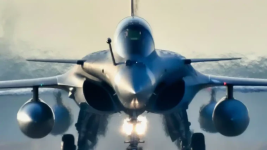
Egypt demands the “mind and heart” of the Rafale fighter
According to what was reported by the “Soho” website, Cairo has set major technical conditions for France, including establishing a maintenance center for M88 engines inside Egypt, in addition to obtaining the source code of the RBE2-AA radar, which Paris considers to be handing over the “brain and heart” of the fighter.
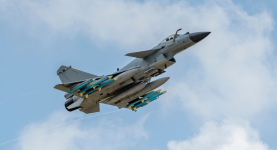
The report indicated that Egypt has new pressure cards, including the landing of three Chinese Xi’an Y-20 transport aircraft in Cairo, which are believed to have carried avionics testing equipment for the J-10CE.
He also pointed out that the commander of the Egyptian Air Force conducted a flight test on the J-10S training version, during which he carried out a 9G maneuver over the Red Sea. He stated after landing that “Eastern fighters are technically superior to their French counterparts by a difference of nearly ten years,” according to what the report stated.
Reshaping the arms market in the Middle East
In the geopolitical dimension, the report believes that any French concession on the basic technology of the Rafale will weaken its position globally, especially in markets such as India and Indonesia. In the event of rejection, Egypt’s move to the J-10CE may open a series of regional influences, which may affect the UAE’s deal, which includes 80 “Rafale” fighters.
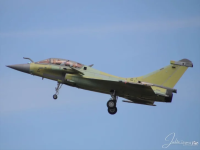
The report also highlighted the contradiction in the American position, as Egypt receives annual military aid worth $1.3 billion, while its F-16 aircraft do not receive AIM-120 missiles, which makes part of it - according to the description - “practically ineffective.”
On the other hand, the report indicates that China will not only supply Egypt with PL-15 missiles, but will also offer to establish ground stations for the BeiDou satellite navigation system, allowing the missiles to be guided with high accuracy and avoid Israeli airspace, which - according to the report - raised concern in Israeli media outlets such as “Haaretz,” which warned of the impact this would have on the superiority of the F-35 fighters.
Lower cost and higher capacity
Economically, the report highlighted that the complete J-10CE package - including training and logistical support - amounts to about $60 million per aircraft, much less than the cost of the Rafale in its basic version. Pointing out that the difference in cost allows Egypt, if funds are directed towards the Chinese alternative, to purchase 40 additional aircraft, while providing a budget sufficient to support two armored divisions for three years.
He also added that France is trying to entice Cairo with long-term loans extending for ten years, while Egypt - according to the report - tends to adopt financial settlements in the yuan or even use the “Chinese digital currency,” considering it more stable.
The “Soho” website concluded its analysis by pointing out that the use of “technology as a negotiating card” is no longer just an Egyptian means of pressure on France, but rather reflects - according to its description - a broader shift in the balance of the global arms market. The report believes that the dominance of Western companies is gradually declining in favor of less expensive and more flexible offers from China, in light of the increasing dissatisfaction of a number of developing countries with the political, technical and financial restrictions associated with Western arms deals.

Ali_Baba
VIP Member

Egypt demands the “mind and heart” of the Rafale fighter
According to what was reported by the “Soho” website, Cairo has set major technical conditions for France, including establishing a maintenance center for M88 engines inside Egypt, in addition to obtaining the source code of the RBE2-AA radar, which Paris considers to be handing over the “brain and heart” of the fighter.
France will not give over source codes, period, no matter how nicely people ask, and no matter how important Egypt considers itself to be. Egypt may get a engine maintenance centre, but not source codes. Egypt is being delusional on this front.
Egypt is too invested in the Rafale platform to walk away now and France knows that.
The SC
INT'L MOD
- Thread starter
- #490
This is according to a Chinese report not an Egyptian one..might be true or false anyways..France will not give over source codes, period, no matter how nicely people ask, and no matter how important Egypt considers itself to be. Egypt may get a engine maintenance centre, but not source codes. Egypt is being delusional on this front.
Egypt is too invested in the Rafale platform to walk away now and France knows that.

Watandar
SpeedLimited


There is no Egypt economy thread so I am putting this here. An example of "Egypt does nothing, wins!"

 africa.businessinsider.com
Egyptian pound becomes world's best-performing currency as oil prices collapse and investors confidence return
Egypts pound has become the worlds strongest-performing currency, appreciating over 7% against the US dollar since early May
The SC
INT'L MOD
- Thread starter
- #492
After years of US restrictions.. Türkiye might have a solution to the dilemma of modernizing the Egyptian F-16
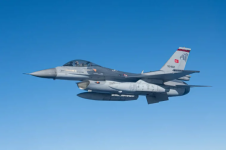
Military relations between Egypt and Turkey witnessed remarkable development during the period between June 4 and 17, with the implementation of joint air training in a number of Egyptian air bases with the participation of multi-mission fighters, including Turkish F-16 aircraft. While official statements focused on traditional goals of exchanging experiences, unifying combat concepts, and raising the level of operational readiness, the implications of this military activity appear broader than just routine maneuvers.
The training comes within an accelerated path of military rapprochement between the two countries. In February 2026, a framework agreement for military cooperation was signed in Cairo, followed by a direct meeting between the commanders of the air forces of the two countries, which reflected the transition of relations from the stage of political and diplomatic rapprochement to the level of practical military cooperation in the fields of training, armament, and operational coordination.
In the midst of this rapprochement, some media reports circulated information indicating the possibility of Egypt obtaining what is described as the “secret code” for the F-16 fighters through Turkey, after the United States refrained from providing it to Cairo. This concerns a set of software, mission management systems and flight computers that allow the integration of weapons, radars and local systems on the aircraft.
Although Turkey has made significant progress in modernizing its fleet of F-16 fighters through the “Ozgur” project, which includes software development and the introduction of active electronic scanning radars, defense reports indicate that Ankara does not have full access to all the software of the original American versions of the aircraft, especially with regard to some of its advanced versions.
Here the main obstacle arises, as the F-16 fighters are of American origin, and any transfer of technology, software or services related to them is subject to strict American controls and permits. Therefore, observers believe that the most realistic possibility is for Cairo and Ankara to search for an independent Turkish modernization package or specific integrative solutions, and not to transfer the “secret code” in the sense circulated in the media.
These discussions are particularly important given that Egypt has one of the largest F-16 fleets in the world, at a time when the issue of modernizing these fighters and arming them with long-range weapons has been on the table for years. Although Washington agrees during 2025 to new arms deals for Cairo, this does not automatically mean that all Egyptian fighters will have the full operational capabilities to use various advanced systems and weapons.
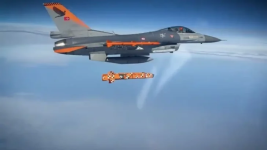
Turkey is constantly working to develop its defense capabilities based on its own capabilities, whether in the field of drones, missiles, or radar systems, with a parallel effort to strengthen its defense relations with Arab countries and neighboring countries within a broader vision of regional security.
This vision indicates that the current regional environment, with its multiple tensions and conflicts, is pushing towards increasing levels of military cooperation between countries in the region, including major Arab parties, within the framework of the concept of “common security” to confront the escalating challenges.
Regarding the file of military technology transfer, the Turkish approach - according to this vision - is to provide a greater degree of technical cooperation with regional partners compared to some Western powers, including joint production or development projects in areas such as drones and weapons systems.
As for the controversy related to what is known as the “secret code” for the F-16 fighters, it falls within the framework of strict agreements and controls with the United States, which makes the transfer of software or sensitive systems extremely complex and restrictive. On the other hand, Türkiye has developed some special software capabilities that allow for improvements to the aircraft’s systems and the integration of different armaments, without this meaning owning or transferring the original copy of the American software.
This type of military cooperation also comes within the framework of existing international understandings, which confirms adherence to agreements and not exceeding them, even in light of the sensitivity that some areas of technical cooperation may raise among other parties.
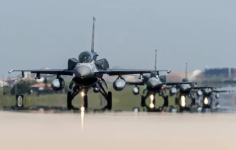
The “Ozgür” project (ÖZGÜR) is one of the most important defense modernization programs developed by Turkey to modernize F-16 fighters locally, with the aim of reducing dependence on American systems for updating software and avionics, and raising the capabilities of the Turkish fleet of these fighters, which are the backbone of the Turkish Air Force.
The project focuses on redesigning and developing the mission computers and flight and combat management software inside the aircraft, so that they become capable of integrating locally-made weapons systems, radars, and electronic warfare devices. This also includes developing display interfaces, navigation and guidance systems, giving the pilot a greater ability to use modern Turkish weapons without having to fully rely on original American software.
The project began in practice on older versions of the F-16 fighters, especially the Block 30, where extensive upgrades were made to the plane's mainframe, allowing the integration of Turkish-made munitions such as laser-guided bombs and local smart weapon systems. Over time, upgrades expanded to include improvements in radar and communications systems and integration with modern munitions.
Through Ozgür, Ankara seeks to achieve a higher degree of software independence in the field of military aviation, so that it becomes able to modernize its fighters without the need for complex external approvals, which represents a sensitive point in light of the fact that F-16 aircraft were originally subject to strict US export restrictions within the ITAR system.
But despite this progress, the project remains, according to defense estimates, primarily focused on software upgrades and partial reverse engineering, rather than a complete reproduction of the original F-16 system. Also, some advanced versions of the aircraft, especially the latest ones, are still not fully modified due to technical and political restrictions.
The importance of “Ozgur” is not limited to modernizing the Turkish F-16 aircraft only, but extends to being a strategic step towards building a local technological base in the field of combat aviation systems, which can later be used in Turkish new generation fighter projects such as the “KAAN” project.
The SC
INT'L MOD
- Thread starter
- #493
There is one..a big thread indeed..There is no Egypt economy thread so I am putting this here. An example of "Egypt does nothing, wins!"
Egyptian pound becomes world's best-performing currency as oil prices collapse and investors confidence return
Egypts pound has become the worlds strongest-performing currency, appreciating over 7% against the US dollar since early May
https://defencepk.com/forums/threads/egyptian-strategic-projects-updates.25113/
The SC
INT'L MOD
- Thread starter
- #494
The whole secret came out of a locked room in the “City of Peace”... The story and what it contains is that the Minister of Military Production, Dr. Salah Suleiman Jumblatt, sat very heavily with the delegation of the South Korean “Pongsan” company, and this is not any company, this is one of the ghouls of military manufacturing in the world.

This sitting wasn't just greeting and talking, it was Immediate implementation of high orders and directives from President Sisi: “Bring the latest technology in the world and put it inside Egypt immediately.”
The plan here is smart and a “win-win” game; Egypt will not take a ready-made solution, Egypt will take the “secret and technology” to manufacture it itself and train its youth on a second level, pure of artificial intelligence and Digital manufacturing.
When the Koreans turned around and saw the military production factories, they were amazed, and said eye to eye: "Egypt has terrifying infrastructure that would let us form an alliance to shake the region."The matter is a blow to the heart of the "import bill"; because Egypt possesses a network of local suppliers and raw materials of high quality and competitive prices that will enter supply chains Supplying to the Korean company means saving millions of dollars and the country's goodness goes back to our pockets.
The meeting was in the presence of the leaders of the Authority and the Ministry, and everyone looked holding their breath with great enthusiasm.. Egyptian military manufacturing is at a completely new level.
This sitting wasn't just greeting and talking, it was Immediate implementation of high orders and directives from President Sisi: “Bring the latest technology in the world and put it inside Egypt immediately.”
The plan here is smart and a “win-win” game; Egypt will not take a ready-made solution, Egypt will take the “secret and technology” to manufacture it itself and train its youth on a second level, pure of artificial intelligence and Digital manufacturing.
When the Koreans turned around and saw the military production factories, they were amazed, and said eye to eye: "Egypt has terrifying infrastructure that would let us form an alliance to shake the region."The matter is a blow to the heart of the "import bill"; because Egypt possesses a network of local suppliers and raw materials of high quality and competitive prices that will enter supply chains Supplying to the Korean company means saving millions of dollars and the country's goodness goes back to our pockets.
The meeting was in the presence of the leaders of the Authority and the Ministry, and everyone looked holding their breath with great enthusiasm.. Egyptian military manufacturing is at a completely new level.
The SC
INT'L MOD
- Thread starter
- #495
The Egyptian company "Shadow Wings" unveils a cruise missile with a range exceeding 1,000 kilometers and tactical and strategic drone systems
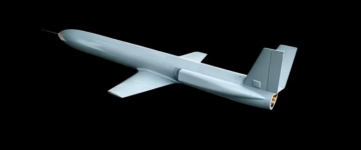
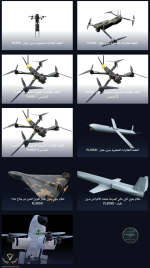
The Egyptian company Shadow Wings revealed an integrated set of unmanned systems ahead of the launch of the El Alamein International Air Show 2026, in one of the most prominent announcements related to the development of the Egyptian defense industries during the recent period. The new products included a wide range of solutions, ranging from long-range mobile munitions and jet attack aircraft, to anti-drone systems and drone swarm operating technologies.
One of the most prominent products unveiled by the company is the FL2050 platform, which is a high-speed jet attack aircraft that combines the characteristics of a mobile munition and a cruise missile. Its speed reaches about 900 km/h, while its range exceeds 1,000 km, with a combat load ranging between 25 and 30 kg.
FL2050 relies on a jet engine along with a rocket booster designated for the take-off stage, while its structure consists of carbon fiber and aluminum alloy. It was also equipped with a multi-mode guidance system, allowing the implementation of precise long-range strikes against ground targets, with the possibility of using it in air interception missions, according to the concept of “sensing, then striking,” which links target discovery, identification, and attack execution.
In parallel, Shadow Wings demonstrated the FL1050 tactical mobile munition, a fixed-wing platform designed primarily for attacking armor and fortifications. It has a range of up to 50 kilometers, with a flight speed of about 180 km/h and a maximum speed of 234 km/h.
The FL1050 carries a standard warhead weighing 2.5 kg, and the announced specifications indicate its ability to penetrate up to 300 mm of armor, with the possibility of changing the type of payload according to the nature of the mission and the target to be engaged, which gives the platform a greater degree of operational flexibility.
In the field of combating drones, the company unveiled an integrated interception system that combines radar, electro-optical sensors, and radio frequency receivers, along with a smart control unit and small interceptor missiles. This integration aims to provide a unified system capable of carrying out the entire engagement cycle, starting from detection, identification and tracking, all the way to intercepting the target.
According to the announced specifications, the system can carry out the interception operation within a period not exceeding 3 seconds, with an operating range of up to 4 kilometers and an engagement height of about 3,000 metres. It also allows the use of more than one means of interception, including direct collision or the use of nets, depending on the nature of the target.
Shadow Wings products were not limited to individual platforms, as they also included a family of attack drones capable of operating within swarms, as well as platforms dedicated to launching and managing these swarms. This reflects a growing trend towards the concept of saturation attacks, which rely on launching large numbers of low-cost drones to confuse and exhaust enemy air defense systems, which is one of the most prominent lessons imposed by modern wars.
These developments gain additional importance in light of the increasing reliance of armies on unmanned systems, not only to carry out strikes, but also for reconnaissance, surveillance, electronic warfare, and combating drones. The combination of long-range mobile munitions, swarms, and anti-drone systems indicates an attempt to build an integrated system capable of operating in a combat environment that increasingly relies on autonomous systems and artificial intelligence.
The Arab Organization for Industrialization had signed cooperation agreements with Shadow Wings during the previous EDEX exhibition, and announced the start of manufacturing two of the company’s products inside Egypt, in a step that reflects a trend towards expanding the local manufacturing base for unmanned systems.
In this context, the Authority had described Shadow Wings as a company of Chinese origin, while the company’s official website indicates that its current headquarters are in Egypt. If this cooperation develops into a broader transfer of technology and production lines, this may represent an important model in the path of localization of the Egyptian defense industries, by attracting foreign companies and technologies and transferring part of the development and manufacturing processes internally.
This approach is similar, in principle, to the model followed by some countries in the region, led by the UAE, by attracting foreign defense companies and technologies, then localizing their operations and developing a local industrial base capable of producing advanced systems. For Egypt, expanding this model to include drones, mobile munitions, and counter-drone systems may give the local defense industry greater ability to develop low-cost solutions that can be produced in large numbers, factors that are becoming more important on modern battlefields.
Users who are viewing this thread
Total: 1 (members: 0, guests: 1)
Pakistan Defence Latest
Country Watch Latest
-
Iran - Israel/US War: Israel-US declare war on Iran, Iran responds (87 Viewers)
- Latest: BananaRepublic
-

-

-

-


