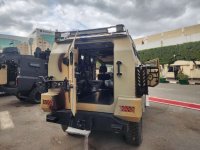
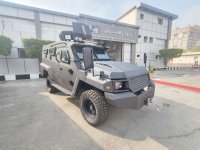
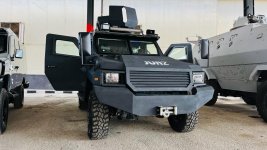
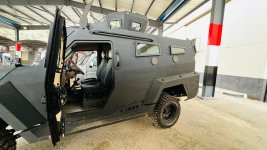
In a strategic step towards enhancing military manufacturing capabilities.. Egypt localizes the manufacture of
ceramic armor capable of resisting penetrating missiles and explosives.
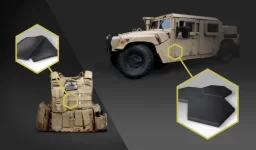
Egypt has succeeded in achieving a major step in the field of military manufacturing through the Qadir Factory for Advanced Industries, affiliated with the Arab Organization for Industrialization, where it was able to localize the manufacture of ceramic armor locally. This progress is part of Egypt's strategy to deepen military industrialization and enhance reliance on local supply chains.
Ceramic armor, which belongs to the Composite Armor category, is used in many military applications. The most prominent of these uses include armoring armored vehicles, tanks, and aircraft, in addition to manufacturing bullet-proof vests worn by soldiers. This armor is characterized by its high hardness and compressive strength, as well as its light weight compared to other types of traditional armor, which increases its effectiveness in resisting the penetration of projectiles and bullets.
Ceramic armor consists of two main layers: a ceramic layer on the outer surface and a composite backing layer, consisting of an elastic fiber-reinforced plastic material such as Kevlar or a metal layer. Ceramic is the key element in ballistic control, as it deforms or destroys the projectile tip on impact, reducing its impact on protected equipment. The ceramic layer also helps slow the movement of projectiles as they penetrate the layer, in addition to distributing the energy resulting from the collision over a larger area.
The second layer is a composite material, such as a ductile polymer or metal supports, which absorbs the remaining energy from the projectile after penetrating the ceramic layer. This combination of materials enhances the armor's effectiveness in protecting military equipment from high-speed projectiles.
The development and manufacture of these armor is an essential part of improving the effectiveness and protection of modern-day military equipment. This also represents an important development in the Egyptian military industry, after the success of the localization of the armored steel industry, which is the main component in the manufacture of tanks and armored vehicles. These steps enhance Egypt's ability to develop and localize advanced military manufacturing technologies.
Ceramic armor is a type of composite armor that is used to protect military equipment from various threats such as projectiles and bullets.
These armors mostly consist of two layers:
- Ceramic layer: It is the outer layer that is characterized by its high hardness, and works to break projectiles or deform their heads upon impact. It also helps slow the penetration of the projectile through the ceramic layer and distribute its impact over a larger area.
- The supporting layer: It is usually made of a plastic material reinforced with flexible fibers such as Kevlar, or a metal layer, which absorbs the remaining energy from the projectile and prevents its complete penetration.
Places to use ceramic armor:
- Armored vehicles and tanks: to provide protection against projectiles and missiles.
- Airplanes: to protect them from hostile attacks.
- Bulletproof vests: worn by soldiers to protect them from gunfire.
- Other military equipment: such as armored combat vehicles.
This armor is distinguished by its ability to provide effective protection in a modern battle, as it balances strength and light weight compared to traditional types of armor.