Egypt and Saudi Arabia agree to build the first joint satellite
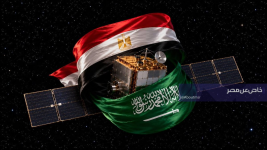
Egyptian-Saudi cooperation in the field of space entered a new phase after the Saudi Council of Ministers approved the initiative to design and build the first joint Saudi-Egyptian satellite in a step that reflects the transition of relations between Cairo and Riyadh from traditional cooperation in the economy, investment and energy to a more advanced field linked to sovereign technology and the space industry.
Saudi approval of the initiative does not mean that the satellite is ready for launch, but it represents the political and institutional green light to start a joint space project between the two countries that is expected to combine the accumulated Egyptian experience in designing, assembling and testing satellites with Saudi financial and technical capabilities and the rising ambition to build an advanced space sector within the goals of Vision 2030.
The first joint Saudi-Egyptian satellite
It has been officially announced so far that the project relates to the design and construction of the first joint satellite between Egypt and Saudi Arabia, without revealing yet the type of satellite, its weight, the date of its launch, the estimated cost, or the party that will undertake the launch process.
No technical detail has yet been issued to determine whether the satellite is intended for remote sensing and imaging of the Earth, for communications, for research and scientific purposes, or for testing new space technologies.
But the nature of cooperation between the two countries makes the scenario of a remote sensing satellite or an advanced research satellite one of the logical scenarios, especially since Egypt has clear experience in Earth observation satellites, while Saudi Arabia is moving strongly in the fields of communications, space research, and scientific missions.
Why is the project important?
The importance of the moon does not stop at being the first joint satellite between the two countries, but rather because it represents a possible beginning for establishing an Arab space axis between the two largest Arab countries in terms of political, economic and human weight.
The project opens the door to broader cooperation in designing satellites, assembling them, testing them, operating them, analyzing the resulting data, and perhaps establishing joint programs in the future to launch a constellation of Arab satellites that serve agriculture, water, borders, urban planning, communications, and climate change monitoring.
Egypt enters the project with a real space structure
Egypt is not entering this project from scratch. During recent years, the Egyptian state has built an advanced space infrastructure, most notably the Egyptian Space City located between New Cairo and the New Administrative Capital.
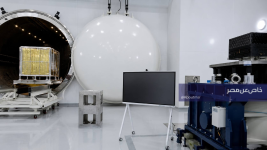
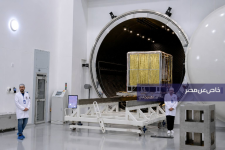
This city is not just an administrative headquarters for the Egyptian Space Agency, but rather includes an integrated system that includes satellite assembly, integration and testing centers, space environment simulation laboratories, control stations, training centers and laboratories for testing space components.
The presence of this city means that Egypt has become able to deal with important stages of the satellite’s life cycle within its territory, starting with engineering design and assembly, through environmental, thermal, and vibration tests, all the way to operation and control after launch.
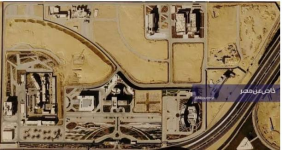 Egyptian Space City
The Egyptian Space City is one of the largest space projects in Africa and the Middle East. It includes the main headquarters of the Egyptian Space Agency and also hosts the permanent headquarters of the African Space Agency, which gives Cairo additional weight in managing and coordinating space activities on the continent level.
The city includes about 23 buildings specialized in space activities, and its area declared in various statements is about 115 to 123 acres. Through it, the state aims to localize satellite technology, train cadres, and increase the proportion of the local component in manufacturing satellites and their components.
The presence of the African Space Agency within Egypt gives the Egyptian-Saudi project an additional dimension because Cairo is not only moving as a country with a space program, but also as a country nominated to be a regional and African center for space services and technology.
 Did Egypt design satellites inside the city?
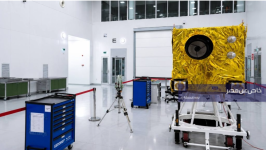
Egypt has already reached an advanced stage in assembling and testing satellites within the Space City, but it has not yet reached the manufacturing of a complete satellite with 100% of all local components.
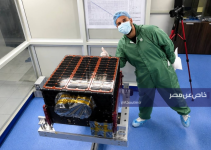
The most prominent example of this is the EgyptSat 2 satellite, which was assembled and important parts of it were tested inside the Assembly, Integration and Testing Center in the Egyptian Space City with the participation of Egyptian engineers in the design, engineering integration and technology transfer processes.
Egypt also participated in developing small satellites and nanosatellites such as NEXSAT-1 and SPNEX, which are important projects because they give Egyptian engineers practical experience in designing small space systems, control software, testing components, and managing space missions.
More precisely, Egypt has passed the stage of purchasing a fully ready-made satellite from abroad and now possesses the ability to assemble, test, operate, and design parts of space systems, while continuing to work on increasing the rate of local manufacturing of the most complex components.
Egyptian satellites
According to announced statements from the Egyptian Space Agency, Egypt has 13 satellites within its space program, including communications satellites, remote sensing satellites, and research and educational satellites.
Among the most prominent Egyptian satellites:
Taiba 1 is an Egyptian government communications satellite that was launched in 2019 and is used to support communications and Internet services, especially in remote and desert areas.
Nilesat 301 is one of Nilesat's newest satellites and is used in television broadcasting and communications services.
Misr Sat 2 is one of the most important Egyptian remote sensing satellites and is used for terrestrial imaging, supporting agriculture, urban planning, and managing natural resources.
EgyptSat is an imaging and remote sensing satellite.
In addition to the Horus series, including HORUS-1 and HORUS-2, which are satellites dedicated to photography and remote sensing.
In addition to small research satellites such as NARSSCube-1, NARSSCube-2, NEXSAT-1, and SPNEX.
 Where does Egypt stand in space?
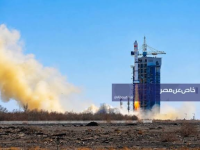
Egypt today does not have its own space launch rocket, nor a launch pad, nor a program for manned space flights, but it does possess what is important at this stage: the ability to build an industrial and engineering base for satellites.
Current Egyptian strength is concentrated in remote sensing, assembling and testing satellites, operating satellites, training cadres, and analyzing satellite data to serve development. These capabilities make Egypt an emerging space state with a real infrastructure and not just a state using satellite services.
 Saudi Arabia enters the project with a rapidly growing space program
On the other hand, Saudi Arabia is entering the project with different capabilities, but they are complementary to the Egyptian side. The Kingdom has huge funding, great ambition within Vision 2030, an independent space agency, and accumulated experience in satellites, communications, and scientific and manned missions.
Saudi Arabia established the Saudi Space Agency in 2018 and in recent years has begun to transform the space sector into a strategic sector within plans to diversify the economy and link advanced technology with investment and scientific research.
Saudi satellites
Saudi Arabia has launched a large number of satellites over the past decades. Saudi data indicate that the Kingdom launched 17 satellites between the years 2000 and 2021 before adding other satellites during subsequent years. Among the most prominent Saudi satellites is SaudiSat in its various versions, which is a series of Saudi satellites used in communications, technical experiments, and sensing.
And SaudiGeoSa-1, which is an important Saudi communications satellite.
And SaudiSat-5A and SaudiSat-5B, which are satellites for remote sensing and high-resolution imaging, and Shaheen Sat, which is a small Saudi satellite for remote sensing and ship tracking, and Najm-1, which is one of the modern Saudi satellites.
Saudi Arabia also has a strong presence in the field of satellite communications through its pivotal contribution to the Arabsat system.
Saudi Arabia and the astronauts
One aspect of Saudi distinction in the space file is the astronaut program. In 2023, Saudi Arabia sent astronauts Ali Al-Qarni and Rayana Barnawi to the International Space Station as part of a scientific mission, making Rayana Barnawi the first Saudi and Arab astronaut to reach the International Station.
This step gave the Saudi space program a great global and symbolic presence and confirmed that the Kingdom is not only moving in the field of satellites, but in broader fields that include space research, manned flights, and cooperation with international agencies.