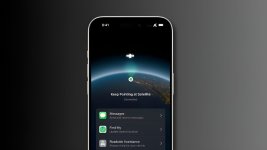
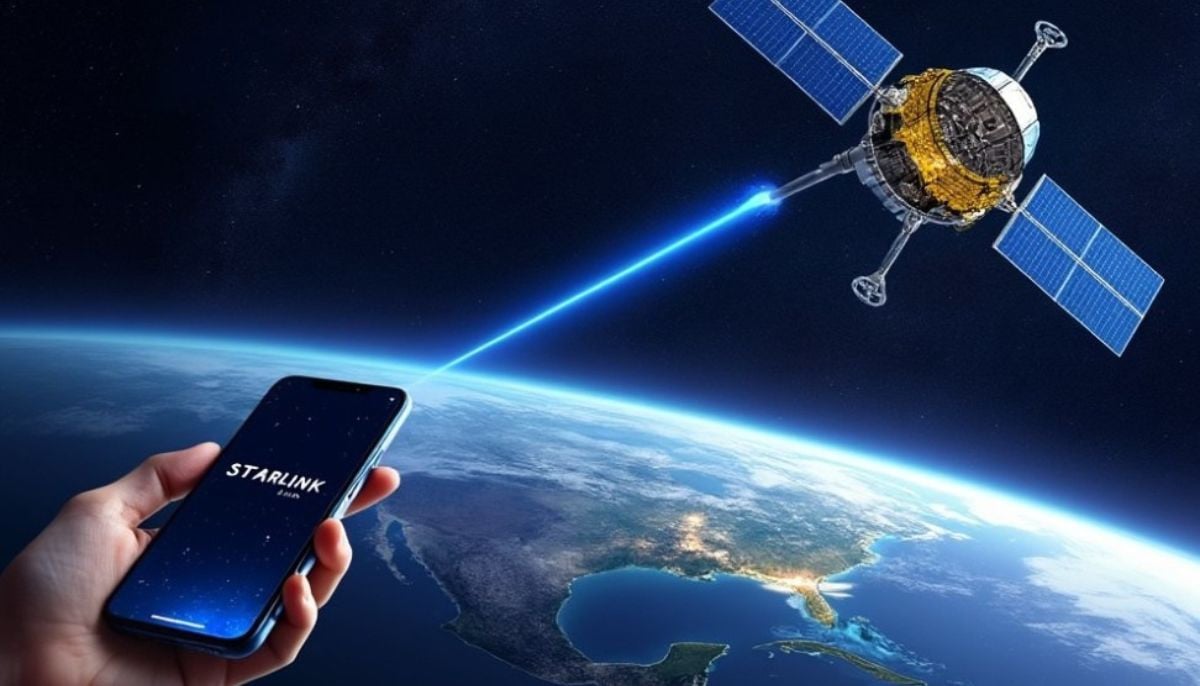
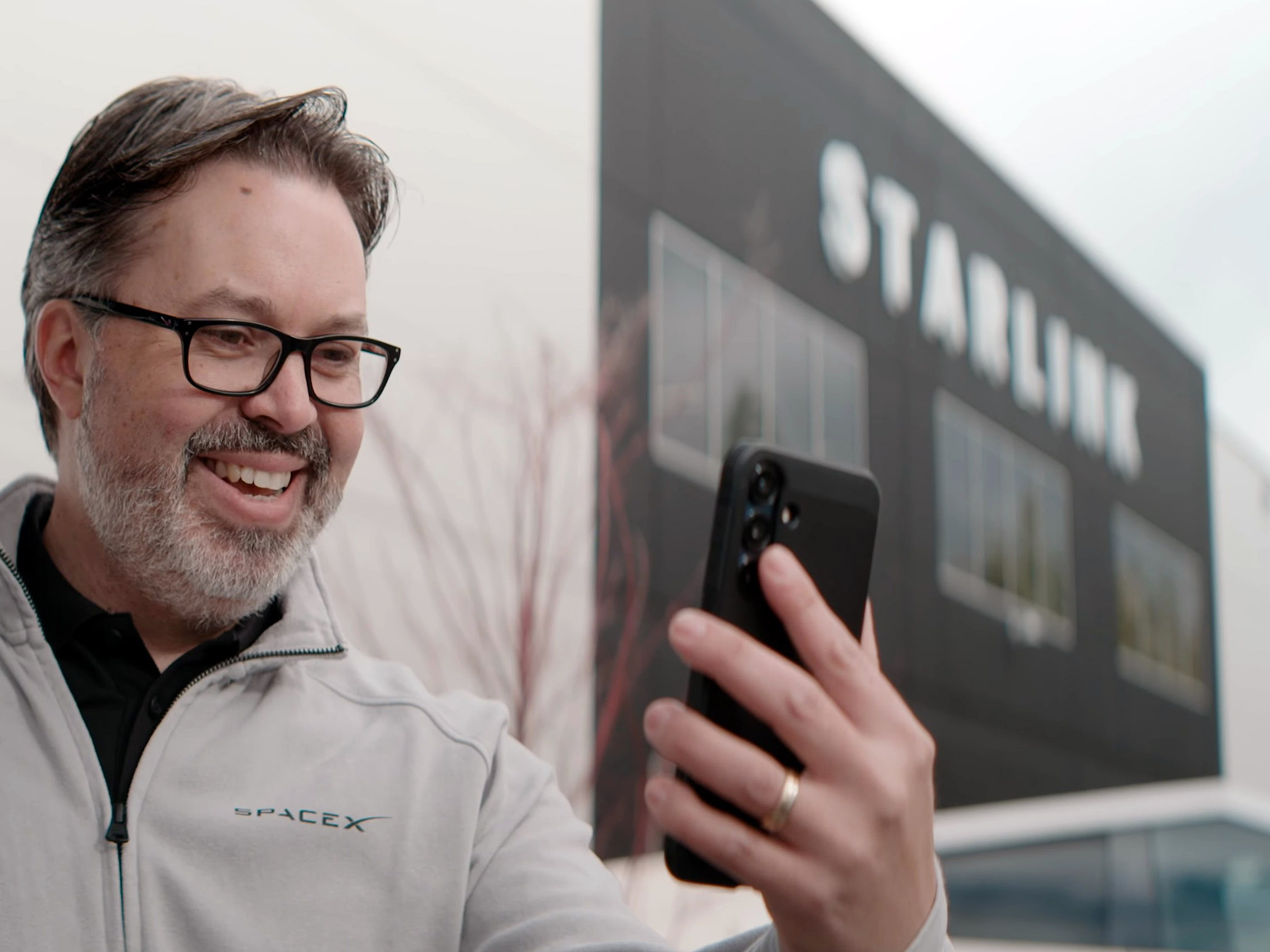
Elon Musk’s Starlink Launches 1st-Ever Cell Service Satellites

The satellite network is world class

The only hurdle is Government to Government hurdles to allow Star links consumers in Territory

Each country like to maintain control on own Telecom services

Global Tariff no doubt will discourage adoption of service at large scale
 
To view this content we will need your consent to set third party cookies.
For more detailed information, see our cookies page.

Elon Musk's Starlink Phone: The Future of Verizon?
 

Elon Musk’s SpaceX explores acquisition of Globalstar - report​

Satellite firm looks to buy Apple-backed operator

Globalstar is reportedly exploring a sale of the company, with prospective buyers including Elon Musk’s SpaceX.

Unnamed sources described as familiar with the matter shared the news with Bloomberg late last week, causing shares in the company to rise 24 percent.
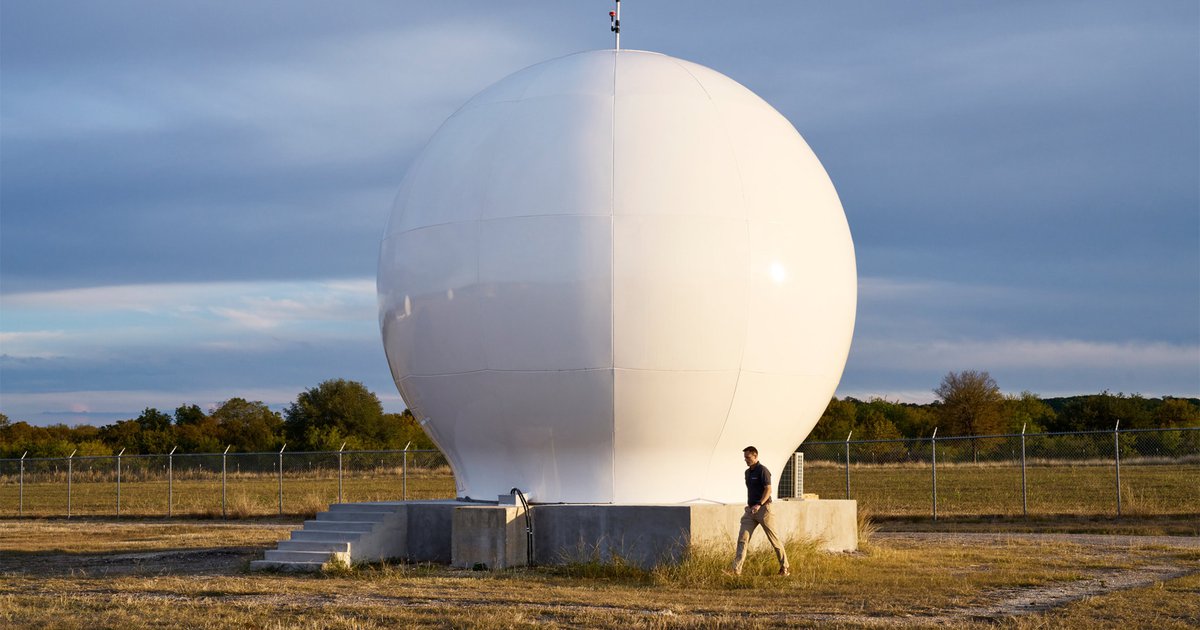
Apple Global Star Ground station.jpg

– Apple
Information suggests the Louisiana-based satellite-to-smartphone giant has entered early-stage conversations with a set of potential buyers. It has received assistance from an unnamed investment bank, the report said, noting there was a possibility that the company could remain independent.

“[SpaceX] will be initiating discussions with telcos in a different way now,” Gwynne Shotwell, president of SpaceX, told attendees at World Satellite Business Week in Paris in mid-September this year. “It’s our spectrum, but we want to work with them, almost providing wholesale capacity to their customers. We have to work with the device manufacturers, the chip companies, and working with telcos on the end game. It’s really exciting, but it’s a huge amount of work.”

Apple will be enmeshed in these proceedings, given that the company has invested $1.5 billion in Globalstar to fund the expansion of its iPhone communication services program late last year, with Globalstar noting that 85 percent of its network capacity would be allocated to Apple.

The deal with Apple underlines the value of Globalstar, which owns and operates its own 31-satellite low-Earth orbit satellite constellation, with an additional 26 planned for launch by SpaceX. Its network provides voice and data services worldwide, and has a long reputation for satellite direct-to-device technology development.

It is a significant player in the heating market for direct-to-device, which also contains AST SpaceMobile, Skylo, Lynk, and Iridium spoiling for dominance.

An earlier report from The Information suggested Globalstar chair James Monroe had briefed associates about selling the company for above $10 billion, above the company’s then $5.3 billion market cap. That sale price was declined by Microsoft in similar sale negotiations in the past.

Three years ago, Elon Musk pitched Apple on Starlink’s infrastructure, hoping to secure them as an anchor customer for the network, though the company ended up opting for Globalstar.

The leak of these proceedings, and its distortive impact on the company’s price, will make the continuation of an acquisition more difficult, with Globalstar’s valuation frothing from the hype of the story and investor scrutiny crowding negotiations. This suggests Bloomberg’s source(s) may have had a stake in the sale falling through or being processed at an inflated price.

So far, Globalstar, SpaceX, and Apple have not commented on the developing story.

In the summer, SpaceX reached a $17 billion agreement with Echostar Corporation to purchase terrestrial spectrum assets to enhance its position as a commercial 5G and satellite phone market player.

SpaceX quietly acquired IoT-satellite firm Swarm in 2021.
 

VEON’s Beeline Kazakhstan partners with Starlink Direct to Cell to launch satellite connectivity across Kazakhstan​


VEON Ltd. (Nasdaq: VEON) has announced that Beeline Kazakhstan, the firm’s digital operator in Kazakhstan, is partnering with Starlink Direct to Cell to make essential connectivity accessible across Kazakhstan, including in remote areas that have not been covered by terrestrial networks. Beeline Kazakhstan plans to first launch messaging in 2026 and then introduce data connectivity as the next phase.

VEON has signed a non-exclusive agreement with Starlink that establishes the conditions for future collaboration on bringing Direct to Cell satellite connectivity to all of VEON’s operating markets. With this agreement, VEON became the first global telecom operator to enter into such a multi-country framework arrangement with Starlink.

Evgeniy Nastradin, CEO of Beeline Kazakhstan, said, “From the mountains to the steppe, our aim is to provide reliable communication, and integrating Starlink Direct to Cell satellite with terrestrial connectivity brings that vision closer. This integration is a great opportunity to address the coverage gap in the most remote regions of our country in an efficient way.”
The unique conditions of the markets where we operate requires innovative solutions that empower communities to stay connected. I’m delighted to see that we are on track to deliver this through our collaboration with Starlink Direct to Cell in a second VEON market – Kazakhstan – following Ukraine,” said Kaan Terzioglu, VEON Group CEO. “We will explore the potential to offer integrated terrestrial and satellite connectivity to VEON’s more than 150 million subscribers across all five of the markets where we operate.”
 

Tesla files patent to integrate Starlink satellite antennas inside its cars​


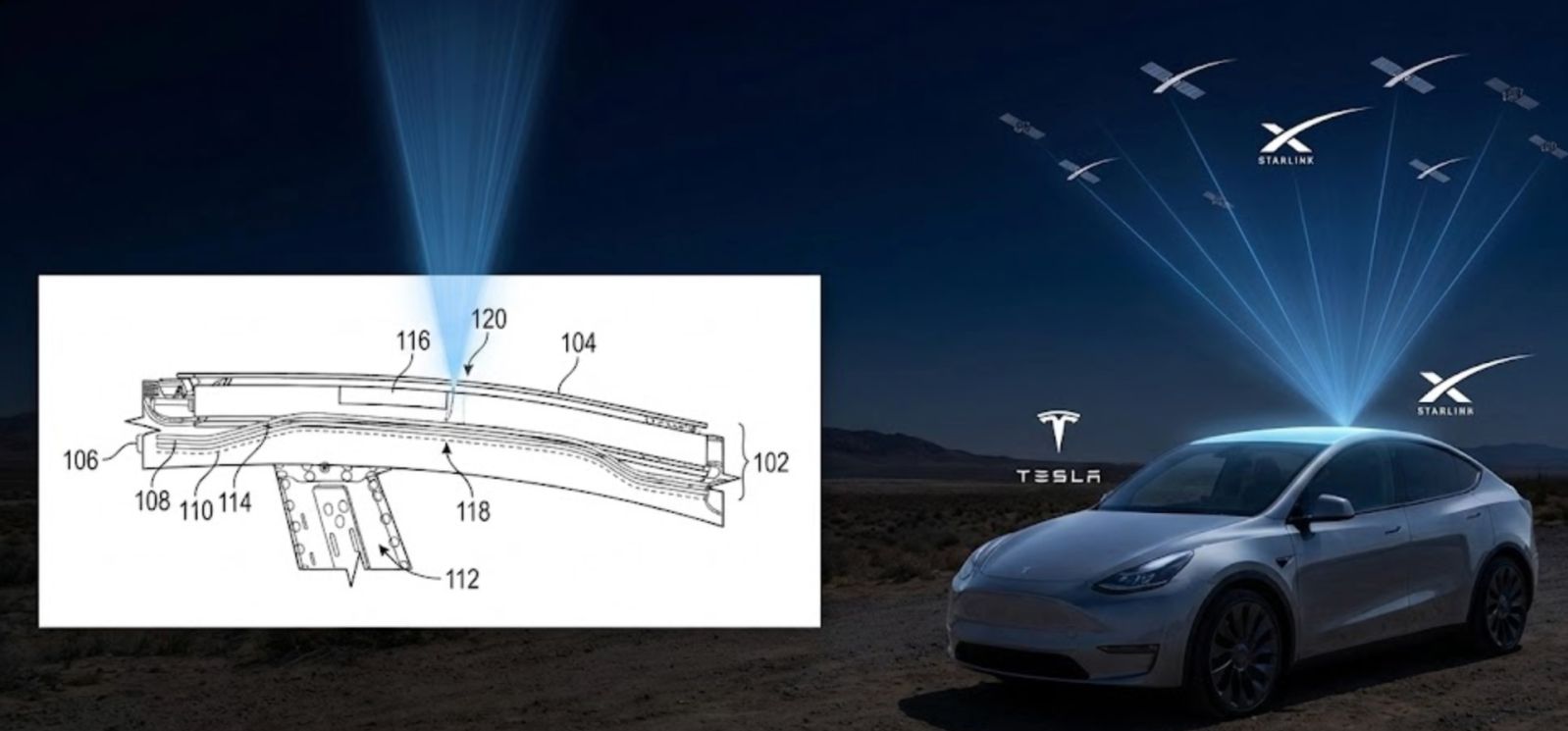
Tesla-starlink-satellite.png

Tesla has filed a new patent that strongly suggests the automaker is preparing to integrate Starlink satellite receivers directly into its vehicles.

The reason why is still unclear

Tesla vehicles are already some of the most connected machines on the planet, relying heavily on cellular networks for everything from Autopilot data collection to over-the-air software updates and streaming features.

But cellular coverage has limits.

Now, a new patent filing reveals Tesla’s solution.

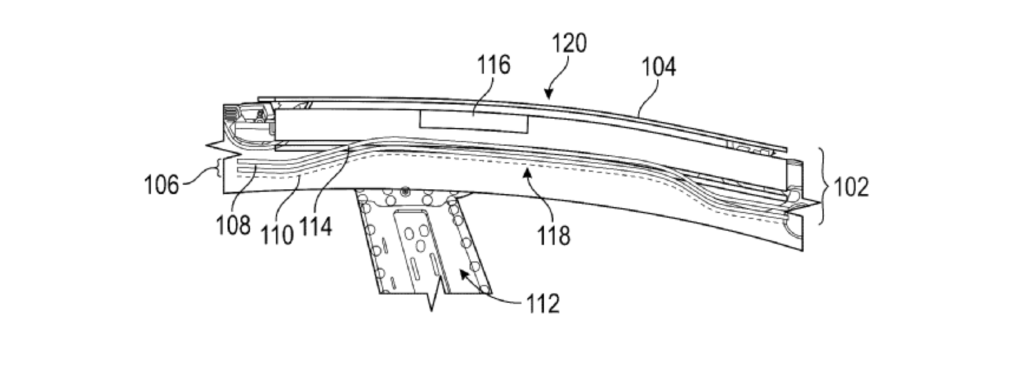
The patent, titled “Vehicle Roof Assembly with Radio Frequency Transparent Material,”describes a new roof structure designed specifically to allow satellite signals to pass through.

The filing notes that traditional automotive glass and metal roofs often block or attenuate satellite signals, making it difficult to hide an antenna inside the cabin. Tesla’s solution is to use specific polymer blends, such as polycarbonate or acrylonitrile styrene acrylate, that are “radio frequency (RF) transparent.”

The patent explicitly mentions that this assembly allows for the integration of “antennae directly into the roof structure, facilitating clear communication with external devices and satellites.”

Here is a drawing from the patent showing the multi-layer roof structure designed to hide the antenna while maintaining structural integrity:

Screenshot-2025-12-17-at-8.58.01-AM.png

While the patent doesn’t name “Starlink” directly (patents rarely name specific commercial products), the implications are obvious. Starlink, SpaceX’s satellite internet constellation, is a high-bandwidth, low-latency satellite network capable of supporting the kind of data Tesla vehicles consume.

We have already seen some Tesla owners retrofit Starlink Mini dishes onto their cars for off-grid camping, but this patent suggests a factory-integrated solution where the antenna is completely invisible, hidden inside the roof lining.

This would allow a Tesla to seamlessly switch between 5G cellular networks and the Starlink satellite network, depending on coverage, ensuring the car is always online.
 

Tesla files patent to integrate Starlink​


The reason why is still unclear


Unclear? How about ensuring a consistent internet connection from cars around the world so you can stream in things like maps, grok replies, movies, etc???

Tesla will be the only company on the planet to do this.
 
Last edited:

Lawmakers voice concerns about Echostar's $40B spectrum deals with AT&T, SpaceX​


Democratic lawmakers Elizabeth Warren and Greg Casar on Thursday expressed their concerns about EchoStar's (SATS) deals with AT&T (T) and SpaceX (SPACE) to sell key spectrum for $40B cumulatively, saying the move could be anticompetitive in wireless and satellite markets, according to a report by Reuters.

The report said the lawmakers urged the Federal Communications Commission and Justice Department to closely scrutinize the $23B AT&T deal and $17B SpaceX deal.


"AT&T’s proposed acquisition of spectrum from EchoStar threatens to further consolidate the wireless industry and exacerbate harms to consumers," the lawmakers reportedly said. "SpaceX's proposed acquisition of spectrum from EchoStar may entrench SpaceX's already dominant position in the satellite market."
 

Proximus Global, Starlink expand European direct-to-cell satellite connectivity


Collaboration enables satellite leader to expand its footprint in connecting more European operators with IPX network​


After spending the past few months sealing a number of connectivity deals with leading global airlines, satellite connectivity leader Starlink has returned to Earth in a strategic partnership with BICS, appointing the Proximus Global company as its preferred IPX provider in Europe for its direct-to-cell satellite connectivity services.

The collaboration will enable Starlink to use the current IPX network to connect mobile network operators, while also paving the way for Starlink’s next-generation network that will be capable of providing broadband service to smartphones.

Starlink’s Direct to Cell is claimed to be the world’s only and largest constellation with more than 650 satellites in low-Earth orbit that delivers data, voice, video and messaging to devices in mobile dead zones.

Connecting more than eight million customers across five continents and counting, Direct to Cell satellites are said to work with existing LTE phones wherever there is a line of sight with the sky. The constellation acts like “a cell phone tower in space”, with phased array antennas connecting across the Starlink network over lasers to any point in the globe, offering network integration similar to a standard roaming partner.

Proximus Global’s IPX network, which functions similarly to a roaming exchange, will act as a bridge to connect Starlink to mobile network operators, which enables standard smartphones to connect directly to satellites in remote areas without terrestrial coverage. In the future, it will support the next iteration of network coverage to optimise smartphone performance in non-terrestrial networks.

The first European operator set to use the offer from the partnership will be Kyivstar, Ukraine’s largest digital and mobile operator, which was serving nearly 22.5 million Ukrainians by the end of September 2025.

Proximus Global and Starlink’s work with Kyivstar demonstrates how critical this service can be, particularly in emergencies when network infrastructure is harmed. Satellite connectivity is playing a vital role in bridging these gaps, ensuring uninterrupted communication during a time when connectivity is crucial.

Proximus Global regards the partnership as representing a significant milestone in its mission to unite satellite companies with terrestrial mobile operators through their extensive roaming network. In addition, it says the collaboration underscores the importance of satellite connectivity as a crucial step towards achieving truly global, ubiquitous coverage – especially in underserved areas where traditional infrastructure is lacking.

“While satellites are a game-changer for global connectivity, it’s not inherently disruptive to existing players in the industry – there’s room for everyone,” said Proximus Global chief revenue officer Ben Vandermeulen.

“With partnerships like this, our IPX acts as a bridge to unlock new opportunities. Satellite providers gain access to broader consumer bases, mobile operators can seamlessly plug coverage gaps, and end users benefit from more reliable and consistent connectivity. It’s a win-win for everyone involved.”

Starlink vice-president of engineering Michael Nicolls added: “We’re excited to work with Proximus Global to ensure Starlink’s next-generation constellation can leverage harmonised spectrum to provide the most powerful satellite-to-mobile service across Europe to further our mission of ending mobile dead zones and providing connectivity when people need it most.

“This partnership is a critical step in preparation to not only advance seamless connectivity, but also interconnect European operators with enhanced data security,” he said.
 
To view this content we will need your consent to set third party cookies.
For more detailed information, see our cookies page.

T-Mobile Starlink Satellite Data: Does It Actually Work?​

 
:eek:

Apple Talking With SpaceX To Add Starlink’s Direct-To-Cell Connectivity Feature To iPhone 18 Pro Models​

1770762528353.jpeg


Apple is reportedly negotiating with SpaceX to leverage its Starlink network of satellites to provide direct-to-cell connectivity for the upcoming iPhone 18 Pro models, and that too without the need for any additional hardware on the user's part.

Apple is eyeing a tie-up with SpaceX to leverage its Low Earth Orbit (LEO) Starlink network to provide satellite-based connectivity on iPhone 18 Pro models​

For the uninitiated, Apple currently uses Globalstar's satellite connectivity for its 'Emergency SOS' service, which allows iPhone users to contact emergency services when outside of cellular and Wi-Fi coverage. The tie-up with Globalstar also enables iPhone users to share location and exchange messages with personal contacts and first responders.

Apple and Globalstar, however, appear to be drifting apart, with the chair of Globalstar, James Monroe, recently discussing the possibility of selling his company for over $10 billion amid Starlink's escalating dominance.

Even though Apple has invested around $2 billion in Globalstar over the past few years, a buyout appears unlikely as the Cupertino giant does not want to be regulated like a carrier. It is partially due to this reason that Apple has yet to charge iPhone users for Globalstar's satellite services.

This leads us to the core of today's topic. The Information is now reporting that Apple is in talks with SpaceX to bring Starlink's direct-to-cell connectivity feature to the iPhone 18 Pro and iPhone 18 Pro Max. Critically, the feature would not require any additional hardware to operate on a user's compatible iPhone. This echoes a previous report from the publication, where it had noted that Apple was planning to add support for satellite-based 5G internet as early as 2026.

Moreover, according to Bloomberg's Mark Gurman, next-gen iPhones are expected to support 5G Non-Terrestrial Network (NTN) technology, which allows cell towers to use satellites to extend their coverage.
To that end, Apple is also planning to furnish an API that would allow third-party developers to integrate satellite connectivity within their apps.

As for SpaceX, it recently acquired EchoStar's wireless spectrum for $17 billion, enabling Starlink to provide faster internet services to phones around the globe.

Also, SpaceX President, Gwynne Shotwell, recently announced that the company was working with chipmakers to integrate satellite connectivity directly into smartphones.

These developments come as SpaceX has now received authorization from the FCC to operate up to 15,000 of its second-generation (Gen2) satellites. This means that the company can now launch around 7,500 new satellites to bring its total second-gen strength to 15,000 units.

For the benefit of those who might not be aware, SpaceX's Gen2 Starlink satellites offer a higher capacity and lower latency, while allowing for:

  1. A 20x increase in throughput
  2. Direct-to-Cell capability by allowing Gen2 satellites to connect to unmodified cellular handsets.
  3. Greater orbital maneuverability and an autonomous collision avoidance system.
With this authorization, SpaceX has just enhanced its apex position as the leading global provider of satellite-based connectivity to commercial and defense sectors, rendering a tie-up with Apple quite logical.
 

Elon Musk’s SpaceX to launch Direct-to-Cell Starlink satellites in 2027​

The new upgraded Starlink satellites are designed to deliver space-based cellular connectivity, reducing reliance on ground towers in remote regions

The new constellation will initially be composed of 1,200 satellites.


SpaceX launches Starlink Mobile 5G cell phone carrier service to rival T-Mobile directly​

SpaceX has launched Starlink Mobile, a standalone carrier service aimed at delivering 5G connectivity directly to standard cell phones worldwide via its direct-to-cell satellite network. Starlink's next-gen V2 satellites will beam up to 150 Mbps download speeds directly to phones equipped with modems like Qualcomm’s new Release 19 X105 unit.
Expected Starlink Mobile 5G download speeds are up to 150 Mbps to each individual user once SpaceX starts launching its next-gen direct-to-cell (DTC) satellites to build a total Starlink Mobile constellation of up to 15,000 DTC units.
SpaceX only has 650 such satellites in low-earth orbit at the moment and still provides basic cell phone connectivity for millions of users in more than 32 countries, including T-Mobile subscribers in the US. The next-gen Starlink Mobile DTC satellites, which SpaceX now calls V2, have 20x the throughput capacity of the current crop


😲😲😲 Buh-bye cellphone towers!

To view this content we will need your consent to set third party cookies.
For more detailed information, see our cookies page.

SpaceX Updated Starlink Mobile page, Starlink Mobile will offer video calls, streaming.​

 
Last edited:

Deutsche Telekom aims to bring Starlink Mobile V2 to Europe in 2028​


DT-and-Starlink-Mobile-scaled.jpg

Starlink said its Deutsche Telekom partnership supports over 140 million subscribers across 10 European countries. Credit: Starlink


TAMPA, Fla. — Deutsche Telekom plans to deliver Europe’s first direct-to-smartphone services via upgraded Starlink satellites in 2028, aiming to use Mobile Satellite Service (MSS) spectrum to bring 5G speeds to remote areas across 10 countries.


The German telecoms giant announced the partnership March 2 for SpaceX’s Starlink Mobile service, formerly known as Direct-to-Cell, which currently uses spectrum from cellular partners and more than 650 satellites to connect subscribers in the United States, Canada and several other countries.


Services are currently limited to text messaging, voice and certain apps on select devices.


However, SpaceX has asked U.S. regulators for permission to deploy up to 15,000 Starlink Mobile V2 spacecraft designed to also operate in MSS spectrum, enabling what it says would be 20 times more throughput as it targets peak speeds of up to 150 megabits per second per user.


The first batch of V2 satellites is slated for launch around mid-2027 aboard SpaceX’s in-development Starship rocket, according to remarks by Michael Nicolls, SpaceX vice president of satellite engineering, during Mobile World Congress March 2 in Barcelona, Spain.

Each Starship could carry more than 50 satellites, Nicolls added, enabling deployment of the roughly 1,200 satellites needed for continuous global coverage within six months.


SpaceX is also awaiting regulatory approval to acquire EchoStar’s MSS spectrum, which underpins plans to provide the next-generation services in Europe. Handset makers must also develop and integrate chips capable of using the frequencies from space.


EchoStar completed a key regulatory milestone last year to maintain rights to its global MSS spectrum, but portions of the 2 gigahertz band are due for renewal in Europe next year.


The renewal has attracted direct-to-smartphone challengers such as U.S.-based AST SpaceMobile, which has teamed up with Vodafone, one of Deutsche Telekom’s main European rivals, to use the frequencies for a sovereign satellite network.


Deutsche Telekom is also the majority owner of T-Mobile US, which was the first operator to commercially launch Starlink’s direct-to-smartphone service, using cellular spectrum in the United States.
 
The days of cell towers are slowly coming to an end....

SoftBank Corp. Launches “SoftBank Starlink Direct” to Provide Connectivity in Remote Areas​


On April 10, 2026, SoftBank Corp. (TOKYO: 9434) began providing “SoftBank Starlink Direct” to customers in Japan. The service lets customers of SoftBank’s mobile services (‘SoftBank,’ ‘Y!mobile’ and ‘LINEMO’) connect directly to Starlink’s LEO satellites, enabling the usage of text messages, data communications and emergency communications in areas without cellular coverage across Japan, such as mountainous regions and at sea.

SoftBank Starlink Direct can also be used as a means to communicate during emergencies and disasters. Starting from April 13, selected apps provided by SoftBank’s group companies, such as “LINE,” “PayPay,” and “Yahoo! JAPAN,” will also be available for use, in stages, with SoftBank Starlink Direct.*

At a press conference held on April 10 to unveil SoftBank Starlink Direct and other new services and price plans, Executive Vice President Hiroyuki Terao noted that 82 devices offered by SoftBank are compatible with SoftBank Starlink Direct, and that customers signed up to applicable ‘SoftBank’ or ‘Y!mobile’ price plans will be able to use the service at no additional cost.

Stephanie Bednarek, Vice President of Commercial Sales at SpaceX and Starlink, commenting on the service launch by way of video message, said, “Starlink partnering with SoftBank will enable millions of customers to stay connected in remote areas where traditional coverage wasn't possible. Together, we'll deliver reliable connectivity during everyday adventures and keep people connected when it matters most—during natural disasters and emergencies.”

20260408164427.jpg


Ahead of the SoftBank Starlink Direct service launch, SoftBank engineers conducted extensive field tests across Japan. Basic functions, such as whether the network display on the device operated correctly and whether messages could be sent and received without significant delay, were thoroughly tested. Using measurement equipment, SoftBank teams confirmed that communication speeds met theoretical calculations, and that there was no notable degradation in communication quality or impact on SoftBank’s network.
 

Users who are viewing this thread

Pakistan Defence Latest

Country Watch Latest

Latest Posts

Back
Top