Energy Sectors / Industries / Projects

Circular debt in Pakistan is a severe, persistent cash shortfall in the power sector, with the debt reaching roughly Rs 1.69 trillion by December 2025, according to a DAWN.COM report, or as high as Rs 3 trillion as of March 2024 by other estimates. It is caused by inefficient power distribution (DISCOs), theft, delayed subsidy payments, and high-cost, over-capacity generation. This crisis forces government borrowing, drives up consumer electricity prices via surcharges, and restricts economic stability.

Key Aspects of Pakistan's Circular Debt
  • Definition & Mechanism: Circular debt occurs when DISCOs cannot recover full payments from consumers, causing them to fail to pay the Central Power Purchasing Agency (CPPA), which then fails to pay power producers (IPPs), leading to fuel shortages.
  • Scale of the Crisis: Despite efforts to reduce it, the debt remained high at Rs 1.689 trillion as of July-December 2025. Some reports indicate that debt peaked closer to Rs 3 trillion, impacting economic stability.
  • Root Causes:
    • Low Recoveries & High Losses: Inefficient distribution companies.
    • Costly Power Generation: Reliance on imported fuel (coal, LNG) rather than cheaper hydro.
    • Capacity Payments: Payments made to Independent Power Producers (IPPs) even when their electricity is not used.
    • Delayed Subsidies: Government failure to pay subsidies on time.
  • Impact on Consumers & Economy: A significant portion of this debt is passed on to consumers, who pay a "debt servicing surcharge" (e.g., around Rs 3.23 per unit) on their bills. The high cost of electricity, driven by this debt, has caused intense financial distress and triggered massive public protests.
  • Recent Developments (2025-2026):
    • The government has used commercial loans to pay off IPPs, with a 3.23 rupees per unit surcharge extended for 6 years to service these debts.
    • Despite this, circular debt saw a small increase of Rs 75 billion in the first half of FY26.
    • The government has aimed to reduce the debt through improvements in DISCO performance and better management of payments to producers.
To address the issue long-term, experts suggest curbing electricity theft, improving grid efficiency, and reducing reliance on expensive imported fuels, as noted in the CRSS report.
 
Time to Build the pipeline.

The Iran–Pakistan (IP) Gas Pipeline, also known as the "Peace Pipeline," is a long-delayed, roughly 2,775-kilometer project designed to transport natural gas from Iran to Pakistan. While construction began in 2011, the project has faced major delays due to US sanctions, funding issues, and geopolitical pressure, leading to threats of massive financial penalties for Pakistan.
Key Project Details and Status:
  • Purpose: To connect Iran’s South Pars gas field to Pakistan's energy-starved economy.
    • Construction Status: Iran has largely completed its section, while Pakistan, after stalling, took steps in March 2024 to build an 80-kilometer segment to avoid penalties.
    • US Sanctions: The primary obstacle, as Pakistan risks significant penalties for trading energy with Iran under international sanctions.
    • Background: Originally conceived as the "Iran-Pakistan-India (IPI)" pipeline in the 1990s, India withdrew from the project in 2009.
    • Future Outlook: While legal challenges and penalties loom over delays, some reports in 2026 suggested potential for revival if US sanctions are eased.

Key Challenges:
  • Geopolitics: Constant pressure from the US not to move forward with the project due to sanctions.
  • Funding: Pakistan has faced severe difficulty financing its portion of the pipeline.
  • Legal: Iran has pressured Pakistan with substantial fines for missing project deadlines.
 

Power minister reiterates govt’s apology for power cuts arising from ‘out of control’ situation

News Desk
April 16, 2026

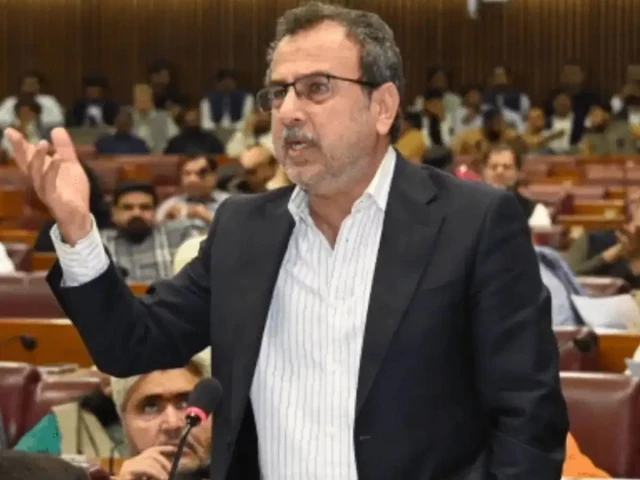
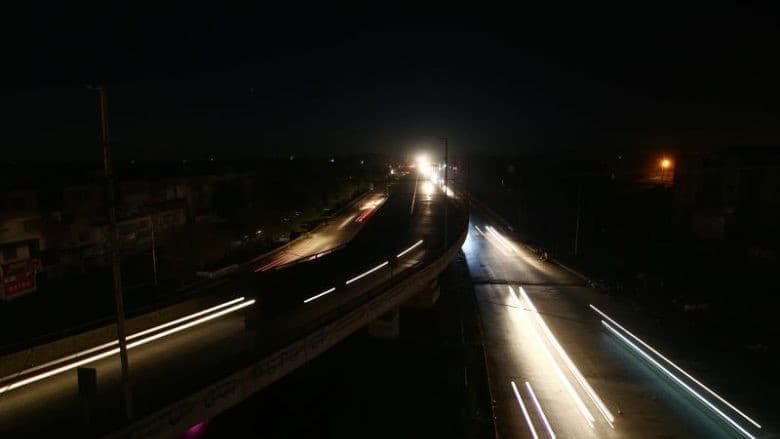
Power Minister Awais Leghari on Thursday reiterated the government’s apology for excessive loadshedding, explaining that the external factor of the fuel supply crisis due to the Middle East war was one of the main reasons.

Addressing a press conference in Islamabad, Leghari reiterated the apology for higher than promised “load management”, which the government had blamed on lower water availability for power generation.

“If the public his facing any inconveniences due to us not providing electricity at night and during peak hours, I am directly answerable,” he said.

“We apologise too but […] the circumstances are such that they are not in our control. Even then, we ought to apologise,” the minister noted.

He said the country had a total shortfall of 2,500 megawatts (MW) due to two reasons: the shortage of fuel imports due to the ongoing Middle East war and reduced hydropower generation due to a water shortage.

Leghari said the requirements of liquified natural gas (LNG) “stopped coming from abroad after April 1”.

He pointed out that Qatar’s state-run energy firm had declared force majeure, which resulted in a “huge gap” in the power requirements fulfilled through gas plants during peak hours.

The minister recalled that the electricity generated from water resources was 3,200MW in April 2025, while the output from LNG plants was 3,000MW.
 

Pakistan power generation increases 6.3% in March 2026

  • In February 2026, power generation in the country stood at 7,696 GWh.
BR Web Desk
April 17, 2026

Power generation in Pakistan rose by 6.3% year-on-year (YoY) and 16.2% month-on-month (MoM) to 8,939GWh in March 2026, Topline Research said in a statement on Friday.

In February 2026, power generation in the country stood at 7,696 GWh.

Power generation cost (fuel cost) decreased by 15% YoY and 1% MoM to Rs8.1/units in March.

“This takes 9MFY26 cost to Rs8.2/units, down by 5% YoY,” Topline said.

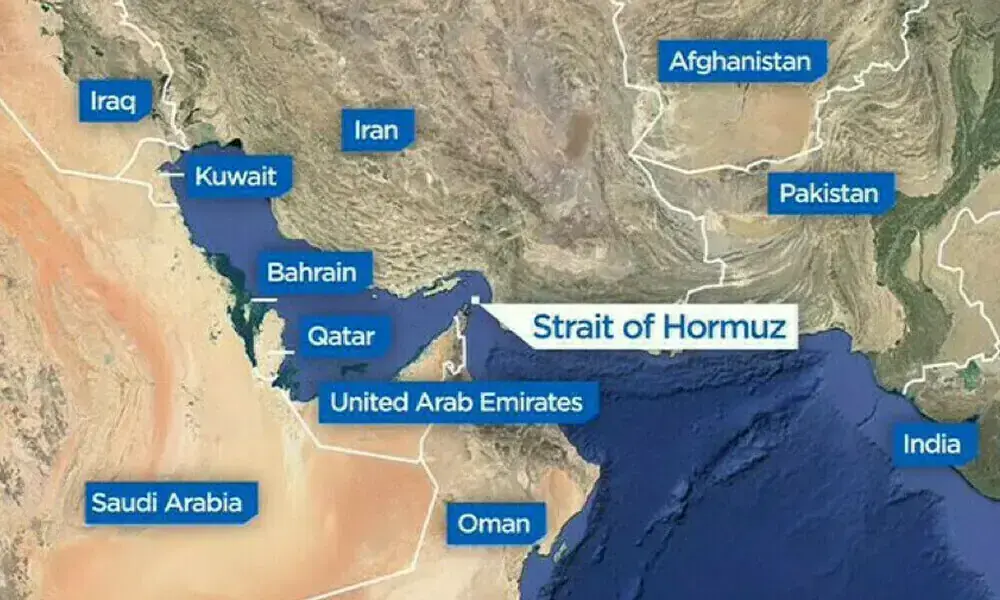
The war in Iran has triggered a sharp global energy crisis, with disruptions to oil and gas production and the near-blockage of the Strait of Hormuz.

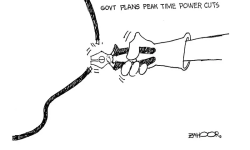
The March data shows an increase in power generation, but April figures might be different as the country is grappling with a widening electricity shortfall of around 4,500 megawatts (MW), largely driven by a sharp drop in hydropower generation, forcing authorities to extend load management to as much as five hours during peak evening hours in several areas.
 

Govt abolishes free electricity units facility for power sector employees​


Awais Leghari says ending free units was the public’s oldest and long-standing demand

Web Desk
April 17, 2026

power minister awais leghari photo file


Power Minister Awais Leghari.

The federal government has abolished the free electricity units facility for power sector employees, according to Radio Pakistan.

In a post on X, Power Minister Awais Leghari said for the first time in the country's history, under the leadership of Prime Minister Shehbaz Sharif, free units for power sector staff have been ended. He added that Lahore High Court accepted the Power Division's petition.

Leghari further said ending free units was the public’s oldest and long-standing demand. The minister maintained that government will take every step necessary for the collective betterment of the country.
 
Leghari's statement came after the Lahore High Court ruled that the government’s decision to discontinue free electricity units for senior officers was constitutional, dismissing a petition filed against the policy.

Justice Malik Javed Iqbal Wains issued the verdict while hearing a case brought by the GEPCO Officers Association. The petition had challenged the federal government’s move to withdraw free electricity units previously granted to officers.

In its ruling, the court observed that officers in grades 17 to 22 had been receiving between 450 and 1,300 free electricity units per month. However, it declared that the withdrawal of the benefit was lawful and did not violate any constitutional provisions.

The judgment also validated the government’s decision to end free units for gazetted officers working in key power sector entities, including WAPDA, DISCOs, GENCOs, NTDC, and PITC.

The court emphasised that such benefits were a facility, not a legal or constitutional right. It further stated that policy decisions fell within the domain of the government, and courts couldnot interfere in such matters as long as they remained within the legal framework.
 

Pakistan engages IFC for investors in installation of 10m smart meters across all Discos

Khaleeq Kiani
April 20, 2026


1776682374579.png
ISLAMABAD: Pakistan on Monday engaged the International Finance Corporation (IFC) of the World Bank as transaction adviser for inducting private investors in the installation of 10 million smart meters across all electricity distribution companies (Discos).

The Ministry of Energy (Power Division) had announced a large-scale rollout of smart meters across Discos in October 2025.

On Monday, the Power Division said it has signed a Transaction Advisory Services Agreement (Tasa) with the IFC, a member of the World Bank Group.

Under this agreement, the IFC will act as transaction advisor and conduct a comprehensive techno-commercial assessment for a service-provider model or public-private partnership framework to support the large-scale rollout of smart metering infrastructure for 10m single-phase connections.

The initiative was intended to attract local and international investors to install, maintain, and operate the infrastructure, thereby advancing Pakistan’s digital transformation in the power sector.

It said the digitisation process has been accelerated to reform the national power distribution network. The reform seeks to replace legacy systems with modern infrastructure, thereby enhancing transparency, operational efficiency, and long-term financial viability.
 
Officials said the cost of HSD-based generation, which exceeded Rs45 per unit before the US-Israel strikes on Iran, may now have risen beyond Rs80 per unit, but it was also difficult at present to consider HSD for power generation due to both its high cost and its critical demand in transport and agriculture, especially with the crop harvest at its last leg.

Summer peak demand typically rises beyond 28,000MW, compared to the current 19,000-20,000 MW during peak hours and below 9,000 MW in daytime, partly due to greater dependence on solar power, which has helped reduce grid demand. But, even solar consumers consume electricity from the grid after sunset.
 
All four mega LNG plants of the federal and Punjab governments and the medium-sized Nandipur plant can use HSD as an alternate fuel as the generation price difference when HSD is used is normally more than Rs25 per unit, which is estimated to be higher at present, given volatile oil pricing changing on a weekly basis. These plants are also required for system stability for the evacuation of surplus power from the southern part of the country.

In order to ensure smooth system operations and to avoid the aforementioned impacts, the Power Division has also provided a detailed weekly forecast of RLNG requirements – segregated for solar and non-solar hours, along with average demand — prepared for the National Grid Company (NGC) system.

“K-Electric has also conveyed its RLNG requirement for the KE system”, the Power Division said, formally requesting the Petroleum Division to manage and allocate the Qatar contracted RLNG cargoes in a manner that ensured the availability of RLNG in line with the demand plan for both NGC and KE systems, thereby supporting uninterrupted and cost-effective power generation.
 

Users who are viewing this thread

Country Watch Latest

Latest Posts

Back
Top