Navigation
Install the app
How to install the app on iOS
Follow along with the video below to see how to install our site as a web app on your home screen.
Note: This feature may not be available in some browsers.
More options
Style variation
You are using an out of date browser. It may not display this or other websites correctly.
You should upgrade or use an alternative browser.
You should upgrade or use an alternative browser.
Evidence : IAF Rafale Jet Shot Down
- Thread starter CombatCorner
- Start date
More options
Who Replied?


Han Patriot
Registered Member

India has certainly lost 1 Rafale, but I have looked through this thread and cant see any major evidence for a 2nd. I can see evidence for Mirage 2K, SU30 and maybe a Mig29 (these last three fall out of the sky often by themselves mind you). If India has lost a second Rafale, then things will get toasty when they finally expose the Def Sec to a decent media forum.
To be fair, both Pak and Indians will boast and overstate things. But evidence shows that only one RAFALE kill is confirmed but 3 baker seat ejections are still 'unidentified'. I have a feeling Pak side is telling the truth at least regarding shooting down 3 planes. Even the Hindu, Deccan Herald and reuters confirmed 3 crashes. Of course we can say it was not shot down and the crashes were due to Indian pilot incompetence instead of Pak pilot competence. LOLOL
Either way this was a deepseek moment for the West again. That a so called cheap Chinese plane can shoot down the Ferrari of 4th gen planes. The French are now getting humbled by some yellow c*inks.

ghazi52
THINK TANK: CONSULTANT
France has decided to have a Pakistani pilot check the Rafale jet because the Indian pilot had given the world's most expensive French Rafale jet to Pakistan in exchange for a cup of tea.

Han Patriot
Registered Member

By engaging Rafales with long-range missiles like the PL-15, which boasts a range of up to 300 km, Pakistan has now neutralise the Meteor threat before it materialises. The extended reach of the PL-15 allows our Pakistani fighters like the J-10C a to target Rafales well before they get within their own Meteor launch range. If a Rafale is forced to defend itself - by manoeuvring, deploying countermeasures a, or retreating — it loses the ability to guide or support its Meteor missile, rendering it ineffective or causing it to abort mid-flight. I think US Airforce is worried about PL-15. And on another note, Egypt, Qatar, & Greece have a very good argument to ask for a refund back and return Rafale jets back to Paris. Jets did not deliver as promised by the Dassault specs!!
Why Did the J-10C Dominate the Rafale?
https://www.china-arms.com/2025/05/...ealed-the-true-power-of-chinese-fighter-jets/m52k85
Registered Member

Upgrades are rushed, when upgrades are available. The French have felt no need to upgrade given the piss poor performance of Russian equipment. India's best short term bet is to apply the usual patch work solutions. Israeli jammer this, DRDO radio that.Depends on the user - India may rush the upgrade - other operators may not be that concerned unless Iran buys the J-10C.
Personally, I would not say that we have 100% confirmation of Pl-15 package superiority over IAF Meteor package. There were too many confounding variables in the first engagement, mostly to do with ROE, intent etc. The second battle will answer this question more definitively.

iblini
Trusted Member

The outcome of the aerial engagement has send a shock wave across the globe, there must be a hell of a show among those countries that is either equipping Rafale or in a negotiation stage, and those potential rival countries.
Beside the France themself and western world, other countries that I can think of like Gulf Arab, Egypt, Turkey with Greece, Indonesia, Malaysia, Philippines, SK in some extent as their KF-21 are equipping meteor, from top to bottom, there must be some heated debate going on.
Beside the France themself and western world, other countries that I can think of like Gulf Arab, Egypt, Turkey with Greece, Indonesia, Malaysia, Philippines, SK in some extent as their KF-21 are equipping meteor, from top to bottom, there must be some heated debate going on.
Han Patriot
Registered Member
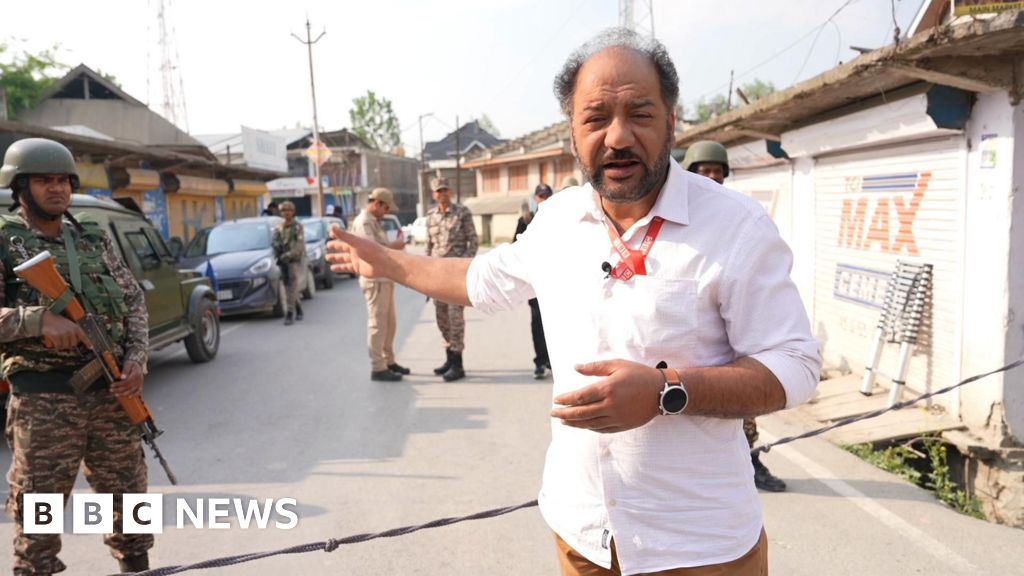
India: BBC reports from the crash site of unidentified aircraft
Debris from an unidentified aircraft has been found in Pampore in Indian-administered Kashmir.
 www.bbc.com
BBC confirmed on the ground one crash in Pampore. India media confirmed one crash in Bathinda. So 2 crashes confirmed so far. Previously Indian press confirmed 3 crashes but retracted.

Pradotlc
Trusted Member

Oh dear .. where are the Indians?
HAIDER
THINK TANK: CONSULTANT
Breaking News: First French Rafale Fighter Jet Loss? Pakistani J-10C from China May Have Used PL-15 to Down Indian Rafale
- 8 May, 2025 - 8:45
- Defense News Aerospace 2025
Amid the steadily intensifying standoff between India and Pakistan, speculation has erupted around the alleged shootdown of an Indian Air Force Rafale fighter jet by a Pakistani J-10C aircraft using a PL-15 beyond-visual-range missile. Though the Indian government has categorically denied any such loss, and no physical confirmation has yet been made public, the incident—if true—would represent a landmark moment in regional military history. It would not only be the first known combat loss of a Rafale fighter but also a significant validation of China’s long-range air-to-air missile technology as deployed by Pakistan.
Follow Army Recognition on Google News at this link

A Chinese-made J-10C multirole fighter jet of the Pakistani Air Force, reportedly involved in a long-range engagement with an Indian Rafale using the PL-15 missile. This marks a potential first combat loss of a French-built Rafale, pending official confirmation. (Picture source: REDDIT)
The backdrop to this alleged engagement is the Indian Air Force’s Operation Sindoor, a series of coordinated airstrikes on May 6 targeting what New Delhi describes as militant infrastructure across Pakistan-administered Kashmir and strategic nodes in Punjab province. Pakistan’s military response was swift. It reportedly scrambled several squadrons of frontline aircraft, including its latest acquisition from China: the Chengdu J-10C. According to the Inter-Services Public Relations (ISPR), Pakistan's air defense operations resulted in the downing of five Indian aircraft. Among them, it claims, were three Rafales, one of which was struck by a PL-15 missile launched from a J-10C fighter during a high-altitude, long-range engagement.
India has vigorously denied these assertions. Officials from the Ministry of Defence rejected the claims outright, while the Press Information Bureau accused Pakistan of spreading disinformation, noting that several images and videos shared online purportedly showing wreckage had been recycled from unrelated events. Nevertheless, the controversy gained traction when a report from a French intelligence official, cited by CNN, suggested that at least one Rafale had been lost in the engagement zone, though without confirming the cause or the identity of the attacking platform.
At the heart of this confrontation are two of the most advanced 4.5-generation fighter jets in South Asia: the French Dassault Rafale and the Chinese Chengdu J-10C. Each represents a distinct philosophy in modern air combat.
The Rafale, twin-engined and delta-winged, is optimized for multirole performance. It is powered by two Snecma M88-2 turbofans, achieving speeds up to Mach 1.8 with a combat radius exceeding 1,850 kilometers. The aircraft’s strength lies in its sensor fusion and survivability systems, particularly the RBE2-AA AESA radar and the SPECTRA electronic warfare suite, which provides 360-degree threat detection and countermeasures. The Rafale is also equipped with the MBDA Meteor missile, one of the most lethal BVR weapons in the world, with a range of over 150 kilometers and an expansive no-escape zone.
Facing off against it is the J-10C, the crown jewel of Pakistan’s recent modernization efforts. This single-engine multirole fighter, powered by the WS-10B engine, reaches Mach 2 and features a digital fly-by-wire system. It incorporates the KLJ-7A AESA radar and is compatible with China’s most advanced air-to-air missile: the PL-15. The J-10C is not just a lightweight strike fighter—it is a platform designed to outmatch regional adversaries in radar-guided BVR combat.
The PL-15 missile has become central to the debate surrounding this alleged engagement. Developed by the Luoyang Electro-Optical Research Institute, the PL-15 is powered by a dual-pulse solid-fuel motor and is believed to have an operational range of 200 to 300 kilometers. It features an active radar seeker for terminal guidance and inertial navigation with mid-course datalink updates. Its design emphasizes defeating sophisticated electronic countermeasures and targeting high-value aerial assets, such as tankers and AWACS. The PL-15’s existence has been seen by analysts as a direct response to Western BVR threats like the AIM-120D and the Meteor—and in theory, it rivals or surpasses them in range.
If a PL-15-armed J-10C did indeed neutralize a Rafale in combat, the implications are considerable. It would suggest not only a shift in tactical air superiority but a broader realignment of regional power dynamics. While India fields a diverse and numerically superior air force—including Su-30MKIs, MiG-29s, Mirage 2000s, and indigenous Tejas fighters—Pakistan’s focused investments in electronic warfare and missile reach may have introduced an asymmetric capability that challenges India’s technological edge.
Such a scenario also signals the transformation of air warfare into a domain where electronic warfare, radar range, and missile kinematics matter more than traditional dogfighting ability. In that context, the Rafale’s superiority in maneuverability and close-combat survivability may not be sufficient in a scenario where the first shot, fired from beyond 100 kilometers, determines the outcome.
Though the story remains unconfirmed, its very existence in media and strategic discourse shows how modern conflict now includes an information dimension, where perception and narrative are nearly as influential as kinetic action. Until wreckage is found, telemetry logs are released, or eyewitness accounts emerge, the truth of the Rafale’s fate will remain speculative.
However, this incident—real or not—demonstrates the rapidly evolving technological competition between India and Pakistan, and how platforms like the Rafale and the J-10C, armed with weapons like the Meteor and the PL-15, are redefining what air dominance means in 21st-century South Asia.

Oscar
Moderator
That is very true - we dont know the RoE of the IAF vs the PAF and also the loadout of the Rafale's as they were hit and in what circumstances.Upgrades are rushed, when upgrades are available. The French have felt no need to upgrade given the piss poor performance of Russian equipment. India's best short term bet is to apply the usual patch work solutions. Israeli jammer this, DRDO radio that.
Personally, I would not say that we have 100% confirmation of Pl-15 package superiority over IAF Meteor package. There were too many confounding variables in the first engagement, mostly to do with ROE, intent etc. The second battle will answer this question more definitively.
However, that being said even if taken down when it was "not in its element" the psychological impact of it is what matters.
m52k85
Registered Member
Yes, there is no doubt about the geopolitical impact, it has been massive. The tactical aspect is just something we ought to be careful about before coming to a conclusion.That is very true - we dont know the RoE of the IAF vs the PAF and also the loadout of the Rafale's as they were hit and in what circumstances.
However, that being said even if taken down when it was "not in its element" the psychological impact of it is what matters.
Per official/ semi-official sources, the targets were only engaged when they released pay loads, that would suggest, those shot down were in A2G config (though the Rafale is tauted as being Omni-role, but lets leave that aside for now). However, this official version doesnt make sense if interpreted as 'those very same aircraft that released the payloads', for a maltitude of reasons: matching munitions dropped versus target distances etc etc (its getting late, but its an easy triangulation). What is more likely in my opinion is the top cover of the respective packages that released payloads were engaged. In such a situation the presence of Su-30/ Mig-29 in Akhnoor would make sense. It would also imply the Rafale shot down could likely be a top cover configured with Meteor. If so, it would only mean ROE and intent assertation on both sides would play a large role in determining the outcome. Ofcourse, my knowledge is limited to DCS level, what additional cutting edge collab targeting, EW and its kinds played and their impact on this estimatorly calculus, I have no idea.
Oscar
Moderator
Which is why I asked why would this attempt be done without Meteor knowing the history from 2019?Yes, there is no doubt about the geopolitical impact, it has been massive. The tactical aspect is just something we ought to be careful about before coming to a conclusion.
Per official/ semi-official sources, the targets were only engaged when they released pay loads, that would suggest, those shot down were in A2G config (though the Rafale is tauted as being Omni-role, but lets leave that aside for now). However, this official version doesnt make sense if interpreted as 'those very same aircraft that released the payloads', for a maltitude of reasons: matching munitions dropped versus target distances etc etc (its getting late, but its an easy triangulation). What is more likely in my opinion is the top cover of the respective packages that released payloads were engaged. In such a situation the presence of Su-30/ Mig-29 in Akhnoor would make sense. It would also imply the Rafale shot down could likely be a top cover configured with Meteor. If so, it would only mean ROE and intent assertation on both sides would play a large role in determining the outcome. Ofcourse, my knowledge is limited to DCS level, what additional cutting edge collab targeting, EW and its kinds played and their impact on this estimatorly calculus, I have no idea.
Even in Omni role config with two tanks and hammers Rafale can carry a meteor centerline or even on side belly station.
Indians did not plan this attack overnight - they must have gamed this with French - Israeli and other advisors. Who would have plainly told them to use the advantage of meteor to push PaF back to give strike packages roomz
Users who are viewing this thread
Total: 1 (members: 0, guests: 1)


