Ex-Japan minister faults India for Modi bullet train delay

Beijingwalker

VIP Member
Joined
Nov 4, 2011
Messages
92,577
Reaction score
113,202
Reputation
2,080.0
Country of Origin
Country of Residence

Ex-Japan minister faults India for Modi bullet train delay

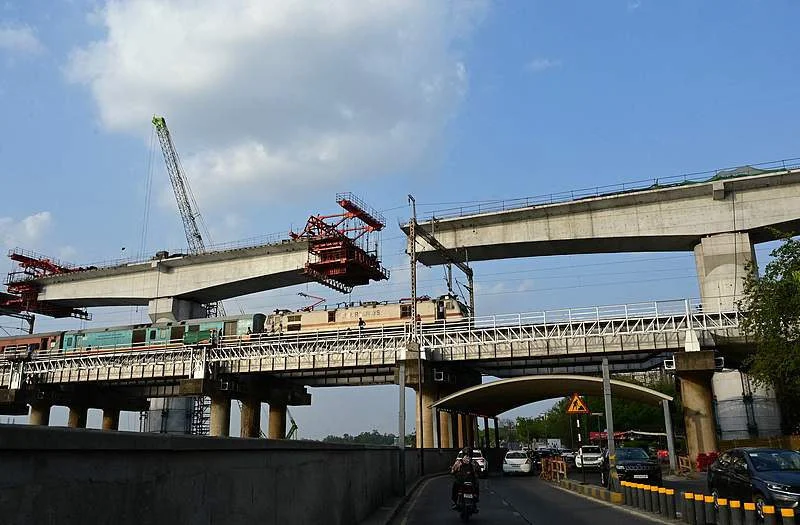
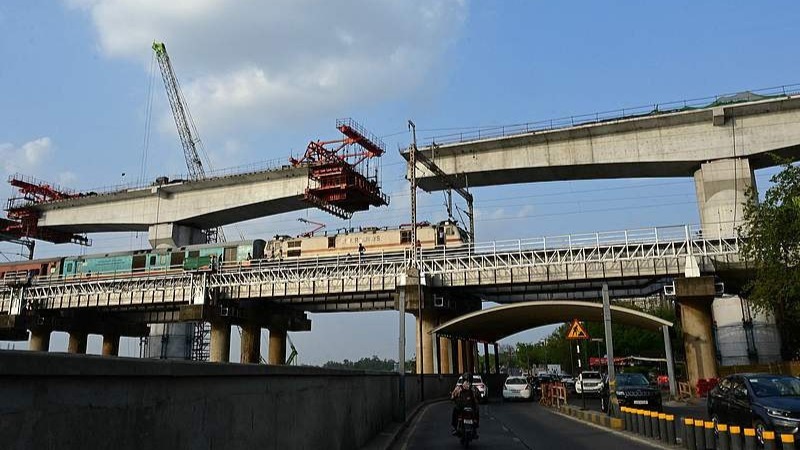
An under-construction section of the Mumbai-Ahmedabad High Speed Rail project in Ahmedabad, India.
An under-construction section of the Mumbai-Ahmedabad High Speed Rail project in Ahmedabad, India. | AFP-JIJI / GETTY IMAGES / VIA BLOOMBERG
BLOOMBERG

Jul 18, 2026

A former Japanese minister has blamed Indian authorities for a delay in completing Prime Minister Narendra Modi’s ambitious high-speed rail corridor backed by funding and technology from the East Asian nation.

“The shinkansen project in India is something I was involved with myself, but what stood out in international meetings and negotiations was the sheer chaos of the Indian side, repeated over and over,” Hideki Makihara, former state minister for economy, trade and industry, said in a post on X earlier this week.

“They just don’t keep promises, no matter what. Even if they make a promise, they flip it right away,” said Makihara, also a former justice minister who has not served as a lawmaker since losing his seat in 2024. His post came in response to an article highlighting the project’s delay.

The 508-kilometer high-speed rail in western India, linking the nation’s financial hub Mumbai with Ahmedabad in Modi’s home state of Gujarat, has faced delays because of slow land acquisition. When India and Japan signed the 2015 agreement, the project was to be completed in seven years at an estimated cost of 976.3 billion rupees ($10.1 billion). Japan agreed to provide 81% funding and uses the country’s shinkansen technology.

The discussions between the two sides are “progressing well,” said a spokesperson for India’s Ministry of Railways. “Japan will provide E10 series train in early 2030s. The train is still under development.”

Construction work has progressed rapidly and the first section will be opened in 2027, the spokesperson said.

Japan’s foreign ministry did not immediately respond to a request for comment. The country’s economy, trade and industry ministry also did not immediately respond to an emailed query.

“I will say for the honour of all the Japanese people involved and who have worked hard on this that I believe the reason this hasn’t moved forward is 100% on the Indian side,” Makihara said in the post.

Prime Minister Sanae Takaichi was in India earlier this month on a three-day trip to deepen economic ties and strengthen security cooperation as the two nations seek to balance ties with the U.S. and China.

The two sides have signed nearly 120 business agreements over the past year, paving the way for more than $10 billion in Japanese investment in the South Asian nation.

Japan is the largest bilateral donor to India, offering development loans of ¥439 billion ($2.7 billion) in 2024-2025. The funds have been used on projects ranging from a subway in New Delhi to the bullet train.
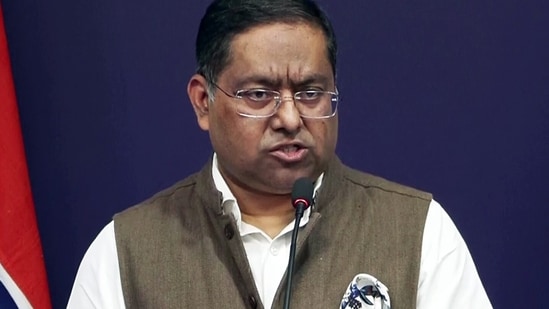
 

Japan BLAMES India for Bullet Train Delay? MEA Hits Back as Shinkansen Row Sparks Major Controversy​

Jul 18, 2026

Did India really delay the Mumbai-Ahmedabad Bullet Train project? A major controversy erupted after former Japanese Justice Minister Hideki Makihara accused Indian officials of causing delays, breaking promises, and pursuing self-interest during negotiations over India's flagship high-speed rail project. But India's Ministry of External Affairs strongly rejected the allegations, calling them an individual's opinion that does not reflect the facts.
To view this content we will need your consent to set third party cookies.
For more detailed information, see our cookies page.
 

'Sheer recklessness': Ex-Japan minister slams India for delays in bullet train project, MEA hits back​

Hideki Makihara, Japan’s former Justice Minister and a member of the ruling Liberal Democratic Party, had blamed India for delays in the Shinkansen project.

Updated on: Jul 18, 2026, 06:29:09 IST

ANI-20260714208-0_1784292428781_1784292435551_fb6cf2c2-6b3c-4ec6-a891-2e8b4a980ee8.jpg

MEA spokesperson Randhir Jaiswal speaks during a media briefing in New Delhi. (ANI Video Grab )

As a former Japanese minister stirred up a controversy through a social media post that blamed the Indian side for delays in the Mumbai-Ahmedabad high-speed railway project, India said on Friday that cooperation between New Delhi and Tokyo is “progressing well” and both sides have agreed to launch the first section in 2027.

Hideki Makihara, who was involved in the railway project while serving as Japan’s vice minister of economy, trade and industry, alleged in a social media post on July 15 that the Indian side’s “sheer recklessness” stood out during meetings and negotiations on the project and that New Delhi did not “keep promises”.

When external affairs ministry spokesperson Randhir Jaiswal was asked at a regular media briefing about Makihara’s accusations, he replied that this was “an individual opinion and at considerable variance with facts”.

Jaiswal contended that India-Japan discussions on the Mumbai-Ahmedabad high-speed train are “progressing well”, and construction work on the project has “rapidly progressed”, with plans for the first section to be opened in 2027.

As Japan will be in a position to provide the E20 train series for the project “only in the early 2030s”, since the train is still under development, “both sides agreed to start the operations with [an] Indian high-speed train”, Jaiswal said.

“The signalling equipment has been ordered accordingly and is in line with international specifications. No Japanese offer was received in this context,” Jaiswal said. “The project execution is in line with the common goal of starting the high-speed train project at the earliest.”

What Japanese ex-minister said​

The social media post by Makihara, who briefly served as justice minister, was linked to an online article written by Isao Tsujimura, a Japanese engineer based in India, that contended that India was opting for European-origin signalling equipment and a new Indian high-speed train to launch the first section, even though a majority of the funding for the project is being provided by Japan.

Tsujimura further contended that the European-origin signalling system will be incompatible with Japan’s Shinkansen bullet trains and that “India's Shinkansen project will almost certainly end up being a pipe dream”.

 
Chinese companies learned it the hard way that Indians never keep their promises and investments usually lost totally. Now it's Japanese turn to experience it first hand.

images
 
Well good, Japan this time took a bullet for China by winning the Indian HSR project from Chinese bidding by giving out very low interest loan on the project just to upset China. Otherwise, Chinese HSR company will be in real troubles in both losing money and ruining China HSR reputation. Lesson learned, China should never do projects in India.
 
Last edited:
Well good, Japan this time took a bullet for China by winning the Indian HSR project from Chinese bidding by giving out very low interest loan on the project just to upset China. Otherwise, Chinese HSR company will be in real troubles in both losing money and ruining China HSR reputation. Lesson learned, China should never do projects in India.

Let the two QUAD members quarrel amongst themselves.
 

The stalled Indian Shinkansen project prompts a former Japanese minister to say: "Indians have no credibility, it's all their fault."


July 17, 2026, 17:29:43, from Shanghai

Despite India's claim that its first high-speed rail line, considered a "flagship project" of the Japan-India cooperation, will be "partially operational" in 2027, the future of the project remains uncertain after more than a decade of setbacks, including land acquisition difficulties, construction delays, and soaring costs.

On July 15 local time, Hideki Makihara, who served as Minister of Justice in the Shigeru Ishiba cabinet, posted on the X website that the project's bumpy progress was entirely due to India's "lack of credibility" and "unreasonableness".

Hideki Makihara stated, "I was also involved in the Indian high-speed rail project. At various international conferences and negotiations, the unreasonable behavior of the Indian side was particularly prominent. They simply did not abide by the agreements, and even if an agreement was finalized, they would immediately renege on it, only caring about their own interests from beginning to end. The officials in charge of the project were especially excessive. With such behavior at the top level, it was impossible to reach a proper cooperative deal."

"To set the record straight for all the Japanese personnel involved in this project, I must say: the obstruction of this project is 100% the responsibility of the Indian side," Hideki Makihara wrote.

He added, "Even though PM Takashi visited India, she failed to achieve any results, and the Indian high-speed rail project has been declared a failure. Moreover, Japan has been excluded from the signaling system, which is the core of safety."

In December 2015, during then-Japanese Prime Minister Shinzo Abe's visit to India, the two countries signed a high-speed rail contract worth US$14.7 billion, with Japan to construct India's first high-speed railway—the Mumbai-Ahmedabad high-speed rail. Japan will provide US$8 billion in low-interest loans.

This high-speed rail line, spanning 508 kilometers and utilizing Japanese Shinkansen technology, began construction in 2017 and was originally scheduled for completion in 2023, but construction has been repeatedly delayed. Media outlets attribute the delays to obstacles in land acquisition, the impact of the pandemic, and mutual distrust between Japan and India, with India demanding revisions to the design.
On June 24, 2026, local time, a section of the Mumbai-Ahmedabad high-speed rail project under construction was seen in Ahmedabad, India. (Visual China)


On June 24, 2026, local time, a section of the Mumbai-Ahmedabad high-speed rail project under construction was seen in Ahmedabad, India. (Visual China)

Around 2024, calls arose within India for Japan to "lay the railway" and for French-made trains to be imported, or for Indian-made trains to be used. As construction continued to be delayed, the cost of this high-speed railway also increased.

India originally planned to import Japan's E5 series Shinkansen bullet trains, but production halts and other factors led to a price surge, sparking discontent from the Indian side. In August 2025, then-Japanese Prime Minister Shigeru Ishiba proposed during a meeting with Modi to begin importing Japan's "E10 series" Shinkansen bullet trains from the early 2030s. In a joint statement on July 2nd, Kaohsiung City and Modi explicitly stated their intention to import the "E10 series" trains.

However, according to Indian reports, the "E10 series" trains are still under development. The report did not specify when the Japanese trains would be deployed to India's high-speed rail system.

Indian Railways official Damandra Twari recently told AFP that a "significant amount" of work on the high-speed rail project has been completed, and the Surat-Vapi section will open in 2027.

According to a report submitted to Parliament by the Indian Railways Standing Committee in March of this year, the Surat-Waphi section is scheduled to be operational in August 2027, using the domestically manufactured B28 train, which has a design speed of 280 km/h.


Furthermore, in a report from Toyo Keizai Online that Hideki Makihara forwarded, a Japanese railway engineer pointed out that in January 2025, India issued a tender for the signal and communication system of the high-speed rail line, explicitly stipulating that the European ETCS-L2 signaling system should be used, excluding Japan's DS-ATC system.

The engineer emphasized that the Shinkansen trains are inseparable from the signaling system and cannot operate on the European ETCS-L2 system, therefore Japan is destined to be excluded in terms of trains as well.

“The joint statement from Takashi and Modi only reiterated the goal of introducing the E10 train, but did not mention compatibility with the signaling system. It is almost certain that India’s ‘Shinkansen’ project is destined to be a pipe dream,” he said. “It is no exaggeration to say that the Japanese government shot itself in the foot, ultimately leading to failure.”


They simply did not abide by the agreements, and even if an agreement was finalized, they would immediately renege on it, only caring about their own interests from beginning to end.
It's allowed over there, as per Indian contract law. They call this behaviour "abeyance".
 
Is it sheer recklessness or stupidity that India intends to use European HSR signaling system while wants to use the Japanese Shinkansen HSR trains on the tracks ? The two are incompatible ?
 
Is it sheer recklessness or stupidity that India intends to use European HSR signaling system while wants to use the Japanese Shinkansen HSR trains on the tracks ? The two are incompatible ?
If this is indeed the case, probably intending to save a buck (or some deal for a friend of a big wig), but penny wise and dollar foolish, a shortsighted strategy that is now falling apart and will cost the project time and money.
 
  • Like
Reactions: ety
Former Japanese Minister accuses India for sheer recklessness in India Japan Shinkasen Bullet Train project.

"Sheer recklessness on Indian side. They don't keep promises. Even if they make promise, they flip it right away."

"The Minister In charge was specially awful. If the top guy is like that, there's no way to have any decent dealings."

To view this content we will need your consent to set third party cookies.
For more detailed information, see our cookies page.


Japanese learned a very hard lesson and must avoid Bharat at all.
 

Users who are viewing this thread

Pakistan Defence Latest

Back
Top